https://www.jta.org/2015/03/20/archive/from-notre-dame-to-prague-europes-anti-semitism-is-literally-carved-in-stone
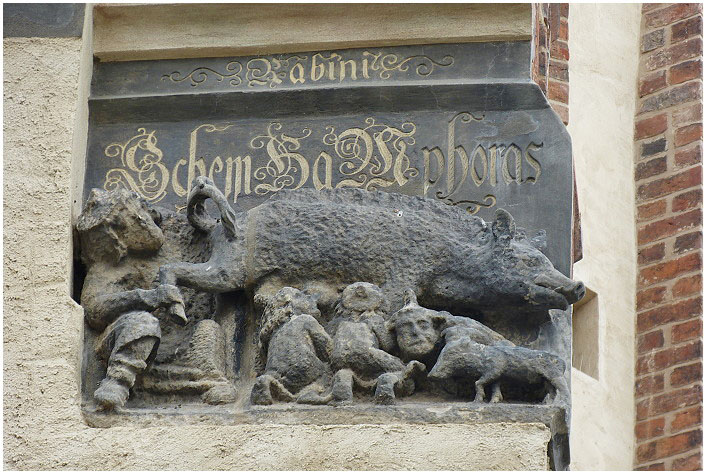
This carving on the facade of Martin Luthers church in Wittenberg, Germany, shows Jews suckling at a sows teat. (Toni L. Kamins)
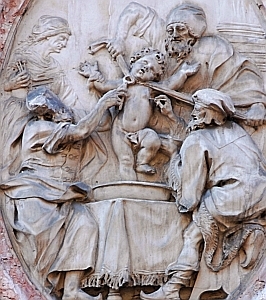
This plaque at the Palazzo Salvadori in Trent, Italy, illustrates the supposed martyrdom of Simon of Trent at the hands of Jews.
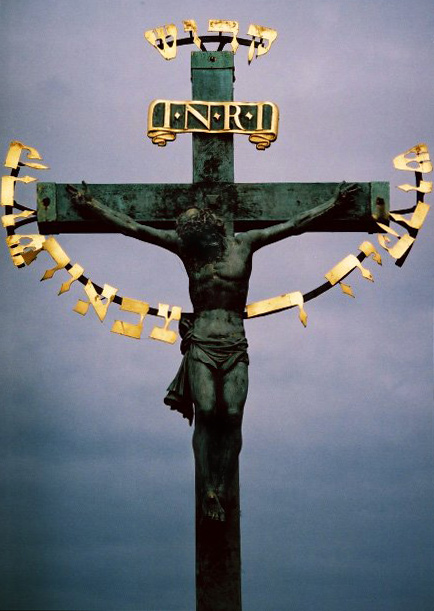
This statue on Pragues Charles Bridge combines a crucifix with lines from the Kedushah prayer and has a backward aleph. (Toni L. Kamins)
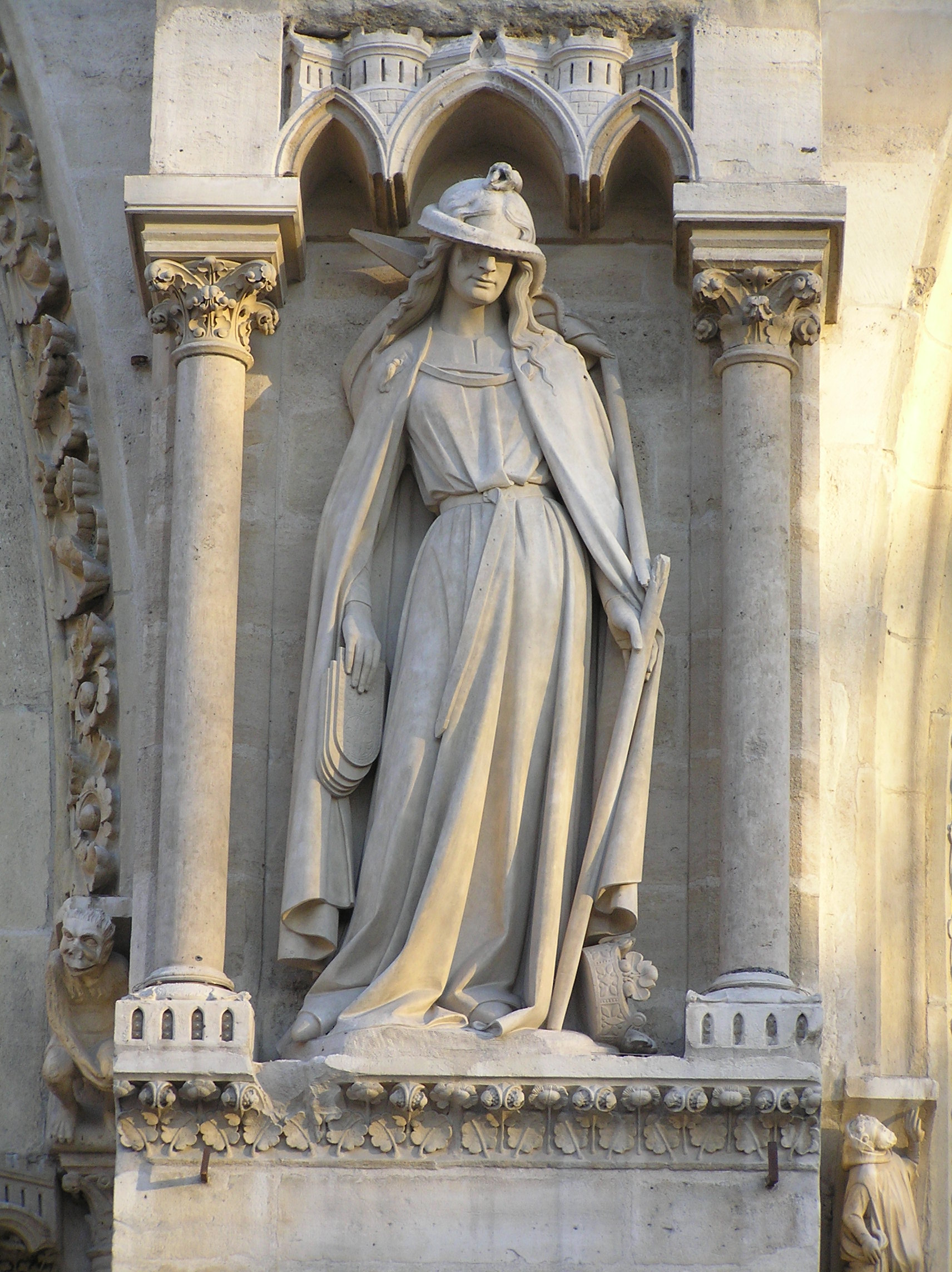
The disheveled Sinagoga, blindfolded with a snake, is a common motif in medieval art representing the Churchs supercessionism. (Toni L. Kamins)
(JTA) Notre Dame Cathedral in the heart of Paris is among the most visited sites on the planet and a splendid example of Gothic architecture.
Each year, millions flock to admire and photograph its flying buttresses and statuary, yet few take any real notice of two prominent female statues on either side of the main entrance. The one on the left is dressed in fine clothing and bathed in light, while the one on the right is disheveled, with a large snake draped over her eyes like a blindfold.
The statues, known as Ecclesia and Sinagoga, respectively, and generally found in juxtaposition, are a common motif in medieval art and represent the Christian theological concept known as supercessionism, whereby the Church is triumphant and the Synagogue defeated. Sinagoga is depicted here with head bowed, broken staff, the tablets of the law slipping from her hand and a fallen crown at her feet. Ecclesia stands upright with crowned head and carries a chalice and a staff adorned with the cross.