https://www.mmu.ac.uk/news-and-events/news/story/aviation-contributes-35-drivers-climate-change-stem-humans
3 Sep 2020
…
Lead author David Lee, Professor of Atmospheric Science at Manchester Metropolitan University and Director of its Centre for Aviation, Transport, and the Environment research group, said the findings show that two-thirds of the impact from aviation is attributed to non-carbon dioxide emissions and the rest from CO2.
…
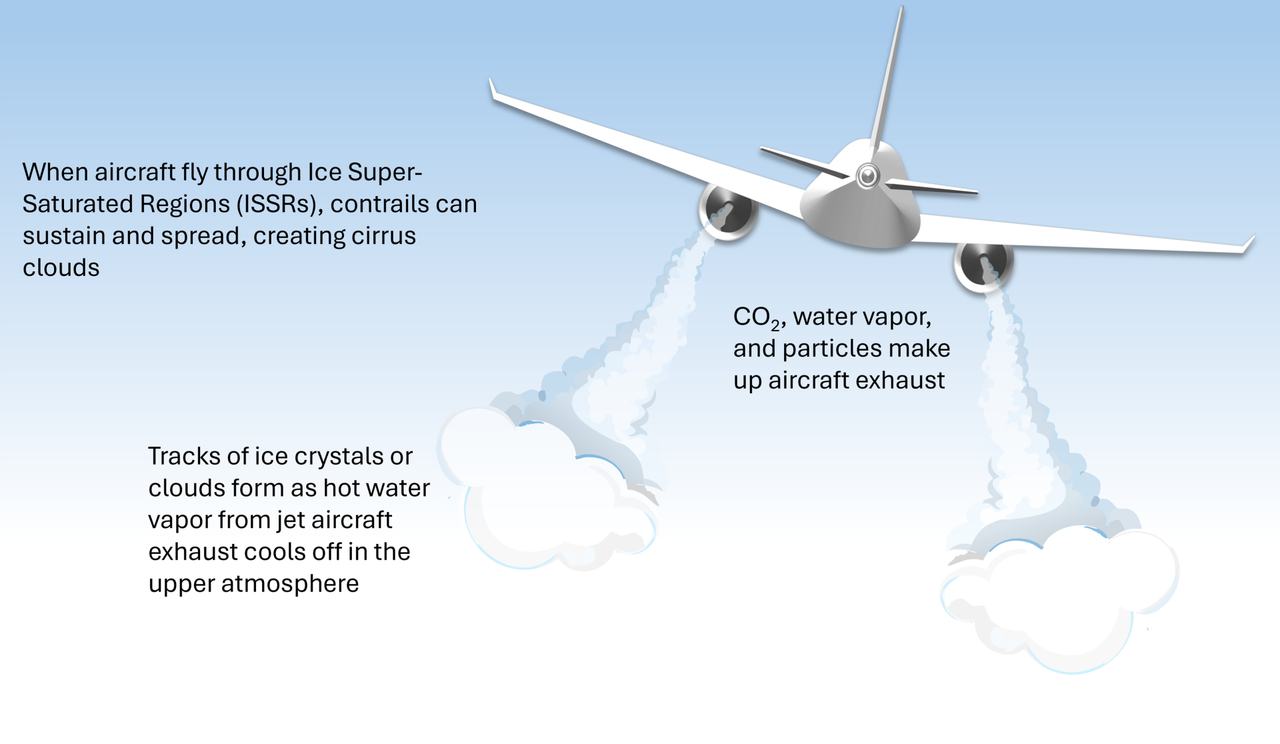
Using the new ERF metric, the team found that while contrail cirrus has the largest climate warming impact, it is less than half that previously estimated. The effects of CO2 emissions generated by aviation last for many centuries, and represent the second largest contribution. Approximately half the total cumulative emissions of CO2 were generated in the past 20 years.
“Given the dependence of aviation on burning fossil fuel, its significant CO2 and non-CO2 effects, and the projected fleet growth, it is vital to understand the scale of aviation’s impact on present-day climate change,” said lead author David Lee, professor of Atmospheric Science at Manchester Metropolitan University and Director of its Centre for Aviation, Transport, and the Environment research group.
Lee said that estimating aviation’s non-CO2 effects on atmospheric chemistry and clouds was a complex challenge. “We had to account for contributions caused by a range of atmospheric physical processes, including how air moves, chemical transformations, microphysics, radiation, and transport.”
…
1. Lee, D. S. et al. The contribution of global aviation to anthropogenic climate forcing for 2000 to 2018. Atmospheric Environment 244, 117834 (2021).
https://doi.org/10.1016/j.atmosenv.2020.117834
Hydrogen-powered flight will still generate water vapor, and leave “contrails” - “
condensation trails.”

 = new reply since forum marked as read