 |
Latest | Greatest | Lobby | Journals | Search | Options | Help | Login |
|
 Printer-friendly format
 Email this thread to a friend
 Bookmark this thread
 |
This topic is archived. |
| Home » Discuss » Topic Forums » Environment/Energy |

|
madokie
 (1000+ posts)
Send PM |
Profile |
Ignore
(1000+ posts)
Send PM |
Profile |
Ignore
|
Fri May-16-08 10:55 AM Original message |
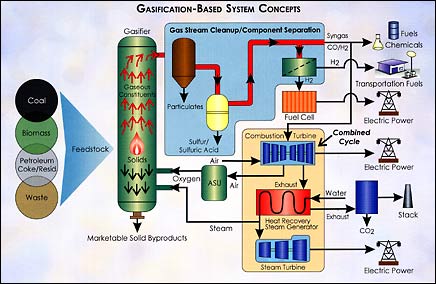
| A question about gasifiers and the coal plants we have already |
| Printer Friendly | Permalink | | Top |
| GumboYaYa
(1000+ posts)
Send PM |
Profile |
Ignore
|
Fri May-16-08 11:14 AM Response to Original message |
| 1. The capital cots is high and they have sunk capital in the existing infrastructure. |
| Printer Friendly | Permalink | | Top |
| madokie
(1000+ posts)
Send PM |
Profile |
Ignore
|
Fri May-16-08 11:19 AM Response to Reply #1 |
| 2. the existing infrastructure is already there |
| Printer Friendly | Permalink | | Top |
| phantom power
(1000+ posts)
Send PM |
Profile |
Ignore
|
Fri May-16-08 11:34 AM Response to Reply #2 |
| 3. I'm not sure there is very much reuseable hardware. |
| Printer Friendly | Permalink | | Top |
| madokie
(1000+ posts)
Send PM |
Profile |
Ignore
|
Fri May-16-08 01:48 PM Response to Reply #3 |
| 4. some parts are the same or could be utilized |
| Printer Friendly | Permalink | | Top |
| phantom power
(1000+ posts)
Send PM |
Profile |
Ignore
|
Fri May-16-08 01:58 PM Response to Reply #4 |
| 5. google turned this up: |
| Printer Friendly | Permalink | | Top |
| madokie
(1000+ posts)
Send PM |
Profile |
Ignore
|
Fri May-16-08 03:02 PM Response to Reply #5 |
| 7. It looks like its something that could be done and that the payback would be well worth it |
| Printer Friendly | Permalink | | Top |
| kristopher
(1000+ posts)
Send PM |
Profile |
Ignore
|
Fri May-16-08 04:33 PM Response to Reply #7 |
| 9. Did you read the reference I pointed you to? |
| Printer Friendly | Permalink | | Top |
| JohnWxy
(1000+ posts)
Send PM |
Profile |
Ignore
|
Fri May-16-08 02:47 PM Response to Original message |
| 6. No reason not to. Best place to capture the CO2 is at the source - link to Discover magazine article |
| Printer Friendly | Permalink | | Top |
| madokie
(1000+ posts)
Send PM |
Profile |
Ignore
|
Fri May-16-08 03:15 PM Response to Reply #6 |
| 8. Lots of pluses in using a gasifier |
| Printer Friendly | Permalink | | Top |
| kristopher
(1000+ posts)
Send PM |
Profile |
Ignore
|
Fri May-16-08 04:38 PM Response to Reply #6 |
| 10. There are mountains of sulfur piled up around coal plants worldwide. |
| Printer Friendly | Permalink | | Top |
| madokie
(1000+ posts)
Send PM |
Profile |
Ignore
|
Mon May-19-08 11:05 AM Response to Reply #10 |
| 13. so a reduction of co2 by a significant amount and making the rest easier to capture |
| Printer Friendly | Permalink | | Top |
| kristopher
(1000+ posts)
Send PM |
Profile |
Ignore
|
Mon May-19-08 11:24 AM Response to Reply #13 |
| 14. Read my lips |
| Printer Friendly | Permalink | | Top |
| NNadir
(1000+ posts)
Send PM |
Profile |
Ignore
|
Fri May-16-08 04:58 PM Response to Original message |
| 11. How come nobody has the guts to call simply for phasing out coal? |
| Printer Friendly | Permalink | | Top |
| madokie
(1000+ posts)
Send PM |
Profile |
Ignore
|
Mon May-19-08 10:57 AM Response to Reply #11 |
| 12. Amazing that you think your writings carry any weight |
| Printer Friendly | Permalink | | Top |
DU
AdBot (1000+ posts)     |
Tue May 19th 2026, 12:02 PM Response to Original message |
| Advertisements [?] |
| Top |
| Home » Discuss » Topic Forums » Environment/Energy |
|
Powered by DCForum+ Version 1.1 Copyright 1997-2002 DCScripts.com
Software has been extensively modified by the DU administrators
Important Notices: By participating on this discussion board, visitors agree to abide by the rules outlined on our Rules page. Messages posted on the Democratic Underground Discussion Forums are the opinions of the individuals who post them, and do not necessarily represent the opinions of Democratic Underground, LLC.
Home | Discussion Forums | Journals | Store | Donate
About DU | Contact Us | Privacy Policy
Got a message for Democratic Underground? Click here to send us a message.
© 2001 - 2011 Democratic Underground, LLC