General Discussion
Related: Editorials & Other Articles, Issue Forums, Alliance Forums, Region Forums
An anthropologist showed a game to the children of an African tribe ...
He placed a basket of delicious fruits near a tree trunk and told them: The first child to reach the tree will get the basket.
When he gave them the start signal, he was surprised that they were walking together, holding hands until they reached the tree and shared the fruit!
When he asked them why you did that when every one of you could get the basket only for him!
They answered with astonishment: Ubuntu.
"That is, how can one of us be happy while the rest are miserable?"
Ubuntu in their civilization means: (I am because we are).
That tribe knows the secret of happiness that has been lost in all societies that transcend them and which consider themselves civilized societies ....... !!
 = new reply since forum marked as read
Highlight:
NoneDon't highlight anything
5 newestHighlight 5 most recent replies
= new reply since forum marked as read
Highlight:
NoneDon't highlight anything
5 newestHighlight 5 most recent replies

FakeNoose
(42,896 posts)
Group hug?

Towlie
(5,585 posts)
←
jaxexpat
(7,794 posts)
MustLoveBeagles
(18,183 posts)
Wounded Bear
(64,802 posts)
Funny how many "primitive" societies are so much more civilized than capitalistic ones, eh?

Buckeye_Democrat
(15,546 posts)... reaching the point where you could exploit others, as far as I was concerned.
The basic message: "Work hard, and MAYBE someday you can own the capital while other people do all of the hard work for you!"


Demovictory9
(37,113 posts)
SweetieD
(1,673 posts)Last edited Tue Mar 30, 2021, 05:59 PM - Edit history (1)
The language of some remote people. Millions of people speak Zulu.
Edited: because I originally said Swahili. Same difference. 12 million people speak Zulu langauge and 16 million people speak Swahili.

reACTIONary
(7,395 posts)
MerryHolidays
(7,715 posts)Ubuntu (Zulu pronunciation: [ùɓúntʼù])[1] is a Nguni Bantu term meaning "humanity". It is sometimes translated as "I am because we are", or "humanity towards others", or in Zulu umuntu ngumuntu ngabantu, in Xhosa, umntu ngumntu ngabantu but is often used in a more philosophical sense to mean "the belief in a universal bond of sharing that connects all humanity".
soothsayer
(38,601 posts)Maybe it’s Swedish, ha. Oh no, is he danish? Norwegian? Crud.

spudspud
(676 posts)
Cerridwen
(13,262 posts)Ubuntu is developed by Canonical,[22] and a community of other developers, under a meritocratic governance model.[7][23] Canonical provides security updates and support for each Ubuntu release, starting from the release date and until the release reaches its designated end-of-life (EOL) date.[7][24][25] Canonical generates revenue through the sale of premium services related to Ubuntu.[26][27]
Ubuntu is named after the Nguni philosophy of ubuntu, which Canonical indicates means "humanity to others" with a connotation of "I am what I am because of who we all are". archived (from wiki) link from Canonical about Ubuntu https://ubuntu.com/about
wiki link: https://en.wikipedia.org/wiki/Ubuntu
nuxvomica
(14,367 posts)

Nonhlanhla
(2,074 posts)Ubuntu is an Nguni (Zulu,Xhosa, etc.) word. The Swahili version of the same idea is “utu.”

mzmolly
(52,879 posts)presentation about Ubuntu.
Thank you for sharing.
brush
(61,033 posts)Last edited Tue Mar 30, 2021, 02:51 AM - Edit history (1)
have much to learn. That philosophy is similar how Native Americans would only take down as many buffalo they needed to survive and leave the rest for the survival of the herd and for others in the future.
I'm sure similar sentiments are shared by other communal peoples around the world.

Your post reminded me of a photo. The story that goes along with it is disgusting.
We all know this, but still flips me out 
https://allthatsinteresting.com/buffalo-slaughter
triron
(22,240 posts)
wnylib
(26,759 posts)societies, too. While at one of the Seneca territories in NY state a few years ago, I saw a painting exhibited at a Native arts store. It showed a man in a canoe on a large lake, with a fishing net and spear. The canoe was so filled with fish that it was capsizing. The painting was titled "Greed."
This sense of unity and cooperation seems to be true of many tribal societies. The ancient Hebrews were a tribal society, too, and laws about sharing and wildlife preservation are written in the Biblical book of Deuteronomy. Yes, I know that some of those ancient laws, like stoning, among others, would not be practiced today. But the idea of sharing is expressed in the law that forbids people to go back and glean the remnants of crops that they missed in harvesting because they are supposed to be left for widows, orphans, and strangers.
On preservation of nature, it was permitted to take young birds, but not a female who was nesting because she must be allowed to live and produce more.
In many Native American societies, gambling and competitive sports were (and still are) popular. But on other matters, sharing and cooperation were, and often still are, considered religious obligations, at least within the tribe. Food, water, air, and materials for shelter are gifts of the Creator, to share with others.

Ilsa
(64,724 posts)the tribe comes across a huge plain of slaughtered buffalo, but not for their meat to eat or hides for warmth. The reaction was grief.
brush
(61,033 posts)the herds for greed. It was said that the herds were once so big that a person could stand in one spot as a mammoth herd ran by and it would take three days for the herd to finish passing.

Baitball Blogger
(52,848 posts)The test was given to Central American native indians. The test involved a checker board that was put between two children, and one checker was placed in the middle. He said whoever could get the checker piece to their side of the board, after altering turns, that person would get a reward.
The two native players alternated, allowing and helping the other player reach their end of the board to win a reward. This continued until the two players grew tired and bored of the game.
The same test was given to American children, and both subjects grew frustrated when neither could win. No cooperation. No one wins.
I knew about this "test" over forty years ago.

malaise
(299,344 posts)Great post
lookyhereyou
(140 posts)make someone else happy !
malaise
(299,344 posts)
alwaysinasnit
(5,672 posts)Frasier Balzov
(5,162 posts)
The concept of what community is in action. I was a Peace Corps volunteer twice in Africa and know first hand how this feeling of community prevails.

Sogo
(7,360 posts)is to our detriment.
Your story is one of a truly civilized society, IMHO.

reACTIONary
(7,395 posts).... tribe this was and exactly who the anthropologist might be.
I did find some information on a wiwpedia talk page:
https://en.wikipedia.org/wiki/Talk:Ubuntu_philosophy#Viral_Story

betsuni
(29,409 posts)They should change it to a visitor of some kind.
c-rational
(3,233 posts)on the translation of this word. "My humanity is inextricably bound up in yours. We belong in a bundle of life" You share what you have. How so much more advanced.
luckone
(21,646 posts)

WhiskeyGrinder
(27,337 posts)
Celerity
(55,259 posts)
obamanut2012
(29,652 posts)betsuni
(29,409 posts)Effete Snob
(8,387 posts)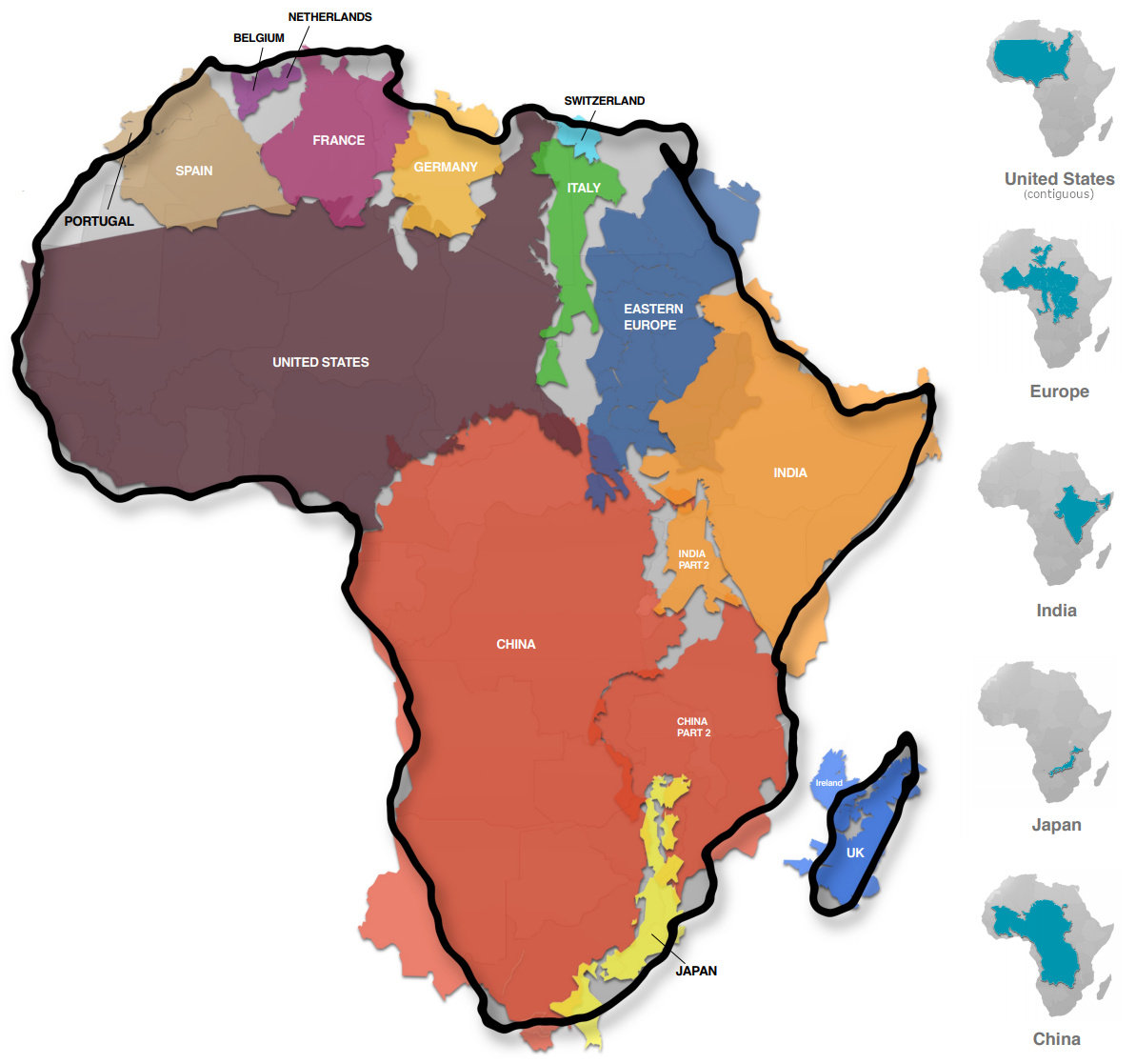
Seen one. Seen 'em all.

ancianita
(43,415 posts)
SheltieLover
(82,549 posts) 
ProudProgressiveNow
(6,189 posts)
PatrickforB
(15,554 posts)
iluvtennis
(21,558 posts)
TigressDem
(5,126 posts)luckone
(21,646 posts)I don’t see sharing being popular so much here in US to begin with , and then the whole
“It’s all on you and yours -no pie guy in the sky to praise / blame for anything happening instead “ really would be hard here imowhen directions are changed like that and a completely different way to order society
I think some of thier ideas about property would be called stealing ‘ my ‘ stuff around here
but it really is ‘ our ‘ stuff in the tribes
Some things of course are off limits and individual and not to be shared although hard boundaries to sometimes understand plus so many variations depending on the tribe or region it changes
At Nelson Mandela's memorial, United States President Barack Obama spoke about Ubuntu, saying,
“There is a word in South Africa – Ubuntu – a word that captures Mandela’s greatest gift: his recognition that we are all bound together in ways that are invisible to the eye; that there is a oneness to humanity; that we achieve ourselves by sharing ourselves with others, and caring for those around us.”
Here is some basics
it’s wiki so a lot of different input
https://en.m.wikipedia.org/wiki/Ubuntu_philosophy
BobTheSubgenius
(12,261 posts)Right out of the blocks, one of the runners started stumbling, then fell. The others looked back, saw their competitor on the ground and very upset. They went back, helped him up, then they all walked to the finish line, arm-in-arm. Everyone won. All the runners, and everybody that watched it.

DeeDeeNY
(3,977 posts)Layzeebeaver
(2,299 posts)It seems too good to be true.
When a story is presented in a manner that is designed to accent a moral lesson, it can often seem more like a fable.
Regardless, "this particular fable" does convey an important message.

NurseJackie
(42,862 posts)NurseJackie
(42,862 posts)There are a couple of versions as described here.
https://en.wikipedia.org/wiki/Talk:Ubuntu_philosophy#Viral_Story
Botany
(78,167 posts)n/t

cab67
(3,894 posts)I can’t find anything to confirm or reject the story’s accuracy, but a couple of anthropologists I know tell me it’s not. It gets the sense of the word Ubuntu right, and it’s definitely a lesson we should learn, but there are variants in which it’s a missionary or Peace Corps volunteer rather than an an anthropologist, and in which the tribe is in South America, Australia, or New Guinea.
That being said - it can and should be remembered as a powerful parable.
betsuni
(29,409 posts)Ridiculous. Do people not know this? Just make it an American missionary or Peace Corps volunteer, although even that is silly.

intheflow
(30,297 posts)This sounds amazingly similar in tone and style to the supposed "Native-American two wolves inside us" story which is not American Indian in origin but was first introduced to the world by Billy Graham.
Here's why this sounds like a BS story to me:
1) Who is this anthropologist?
2) When did this happen?
3) Where did this happen? Africa is pretty freaking big and I'm pretty freaking sure not every tribe practices Ubuntu.
4) Magical Negros who, via the simplistic minds of children, embrace an eternal wisdom.
5) Who brings the wisdom to the world? The (assumedly) white anthropologist.
I am a librarian and my research skills are awesome. While this story seems to correctly offer one definition of ubuntu (via it's most prevalent use in South Africa), I couldn't find any trace of this story being true.
Not an attack on you, elleng, for sharing. Just encouraging us all to think more critically about how we share information, and what, if any, implicit biases we bring to the table.
WhiskeyGrinder
(27,337 posts)
taxi
(2,772 posts)His bio:
Edward F. Fischer, Ph.D.
Associate Professor of Anthropology, Vanderbilt University
Edward F. Fischer was educated at the University of Alabama at Birmingham and Tulane University, where he received his Ph.D. in anthropology in 1996. His research focuses on the modern Maya peoples of highland Guatemala and the ways that they have revitalized their culture as they have become integrated in the global economy.
Professor Fischer is the author of numerous professional articles and several books, including Pan-Maya Activism in Guatemala (co-edited with R. McKenna Brown), Cultural Logics and Global Economies, Tecpán Guatemala: A Modern Maya Town in Local and Global Context (co-authored with Carol Hendrickson), and Pluralizing Ethnography (co-edited with John Watanabe). He is currently studying Maya farmers who grow broccoli for export to the United States and working on a project comparing economic attitudes in Guatemala, Germany, and the United States.
Professor Fischer has received grants from the John D. and Catherine T. MacArthur Foundation, the Inter-American Foundation, the Wener-Grenn Foundation, and others. Since 1996, he has taught at Vanderbilt University, where he is Associate Professor of Anthropology and Director of the Center for Latin American and Iberian Studies. In 2002, he received the Jeffrey Nordhaus Award for Excellence in Teaching, and in 2004, he received the Ellen Gregg Ingalls Award for Excellence in Classroom Teaching.
intheflow
(30,297 posts)Why are you promoting a real South American anthropologist in a discussion about an apocryphal anthropologist in Africa?
taxi
(2,772 posts)In the OP the author cites an unknown anthropologist recanting his experience.
Are we on the same page so far?
intheflow
(30,297 posts)Are you claiming the unknown anthropologist in "Africa" in the OP is actually this Fischer guy, whose work focuses on Guatemalan peoples in Central America? Because that is what your post indicates, which is the confusing part.
Africa and North America are different continents. Are we on the same page so far?
taxi
(2,772 posts)Your first response to me was: I'm confused by this post. Why are you promoting a real South American anthropologist in a discussion about an apocryphal anthropologist in Africa?
Let us work on that first. Clearly you are confused. Where did this South American anthropologist you mention come from? This is confusing as neither the OP nor I had introduced it.
Please try to state more clearly what you ask. I'm going out to dinner. Take your time.
intheflow
(30,297 posts)His bio:
Edward F. Fischer, Ph.D.
Associate Professor of Anthropology, Vanderbilt University
Edward F. Fischer was educated at the University of Alabama at Birmingham and Tulane University, where he received his Ph.D. in anthropology in 1996. His research focuses on the modern Maya peoples of highland Guatemala and the ways that they have revitalized their culture as they have become integrated in the global economy.
Professor Fischer is the author of numerous professional articles and several books, including Pan-Maya Activism in Guatemala (co-edited with R. McKenna Brown), Cultural Logics and Global Economies, Tecpán Guatemala: A Modern Maya Town in Local and Global Context (co-authored with Carol Hendrickson), and Pluralizing Ethnography (co-edited with John Watanabe). He is currently studying Maya farmers who grow broccoli for export to the United States and working on a project comparing economic attitudes in Guatemala, Germany, and the United States.
Professor Fischer has received grants from the John D. and Catherine T. MacArthur Foundation, the Inter-American Foundation, the Wener-Grenn Foundation, and others. Since 1996, he has taught at Vanderbilt University, where he is Associate Professor of Anthropology and Director of the Center for Latin American and Iberian Studies. In 2002, he received the Jeffrey Nordhaus Award for Excellence in Teaching, and in 2004, he received the Ellen Gregg Ingalls Award for Excellence in Classroom Teaching.
In other words, you posted about a lecture series by an anthropologist who doesn't appear to know shit about Africa. Or anything else remotely related to my post or the OP's. What's the name of the lecture? Why should I give a fuck about this anthropologist's resume? And why are you so antagonistic to me? Do you disagree with my analysis of the OP?
taxi
(2,772 posts)Celerity
(55,259 posts)Effete Snob
(8,387 posts)intheflow
(30,297 posts)
ecstatic
(35,154 posts)and self-centered. I think most of us on the middle-left can identify with the Ubuntu approach.

CaptainTruth
(8,291 posts)...I've said for a long time.
"We all do better, when we all do better."
You can apply that to social justice, healthcare, minimum wage, etc.

usaf-vet
(7,878 posts)And maybe just maybe the world would have FAR FEWER tRumps.
taxi
(2,772 posts)Edward F. Fischer, Ph.D.
Associate Professor of Anthropology, Vanderbilt University
Edward F. Fischer was educated at the University of Alabama at Birmingham and Tulane University, where he received his Ph.D. in anthropology in 1996. His research focuses on the modern Maya peoples of highland Guatemala and the ways that they have revitalized their culture as they have become integrated in the global economy.
Professor Fischer is the author of numerous professional articles and several books, including Pan-Maya Activism in Guatemala (co-edited with R. McKenna Brown), Cultural Logics and Global Economies, Tecpán Guatemala: A Modern Maya Town in Local and Global Context (co-authored with Carol Hendrickson), and Pluralizing Ethnography (co-edited with John Watanabe). He is currently studying Maya farmers who grow broccoli for export to the United States and working on a project comparing economic attitudes in Guatemala, Germany, and the United States.
Professor Fischer has received grants from the John D. and Catherine T. MacArthur Foundation, the Inter-American Foundation, the Wener-Grenn Foundation, and others. Since 1996, he has taught at Vanderbilt University, where he is Associate Professor of Anthropology and Director of the Center for Latin American and Iberian Studies. In 2002, he received the Jeffrey Nordhaus Award for Excellence in Teaching, and in 2004, he received the Ellen Gregg Ingalls Award for Excellence in Classroom Teaching.
Professor Fischer explains cultures from many areas and what their customs are. Cherry picking people or cultures that differ from his research is a lame excuse for not researching oneself things found unbelievable. People who don't believe there are people like this in the world show to others that they are unwilling or unable to look beyond themselves. Information along these lines can be found in any library.

AllaN01Bear
(30,058 posts)when we were children we were taught to share . at a certain age that is thrown out the window.
this does deserve a  and a
and a 


Ubuntu!

LAS14
(15,576 posts)
JCMach1
(29,264 posts)Tribalism is a curse that warps almost every country on the continent...
Having said that... Africa is HUGE and I avoid making generalizations about such a diverse place.
LAS14
(15,576 posts)
MineralMan
(151,953 posts)If there is a citation that shows that some anthropologist (Who?) actually did this, that would help support the claim.
I suspect that this is an "oft-told story" that has changed over time in multiple ways. That there are no actual citations for the story indicates that to me.
So, where did you read or hear this story? What was your source? Obviously you are not the anthropologist mentioned in it, so you found the story somewhere. Tell us where.
It's a nice story, for sure. However, it could easily be a made-up story to illustrate some point someone was making.
I'd like to see some attribution for it before simply accepting it as factual.
ironflange
(7,781 posts)pandr32
(14,307 posts) 
Collimator
(2,158 posts)In its moment of greatest sacrifice: "We are Groot."

LiberalLovinLug
(14,776 posts)I think it is more of a myth, but every myth is based in fact.
Ironically, if that's the right word, the next video YouTube had below this one when I searched, was The Majority Report, with a video on "Trump Caught Being a Total Moron at Wedding"
trof
(54,274 posts)Thank you.

Martin68
(28,237 posts)JCMach1
(29,264 posts)"Murder 'comes naturally' to chimpanzees - BBC News" https://www.bbc.com/news/science-environment-29237276
In terms of the nature vs. nurture competition and violence thing
Martin68
(28,237 posts)it isn't a Margaret Mead "the Polynesians are so enlightened about sex" thing, which kind of turned out to be no quite so black and white. The Nature vs Nurture thing is a very contested area in anthropology. Obviously they both play essential roles. But in certain cases, it is very important for policy to understand the roles each one plays. So far, we can't scientifically make a good case for either nature or nurture in any particular case unless it involves genes and DNA.
JCMach1
(29,264 posts)Bonobos, or Gorillas...
And, probably not as competitive and homicidal as chimps...
We also have the bonus of culture and critical thinking to steer us toward altruism...