General Discussion
Related: Editorials & Other Articles, Issue Forums, Alliance Forums, Region Forums"Absurd censorship:" Changes to Roald Dahl's books spark criticism
https://www.cbsnews.com/news/roald-dahls-changes-childrens-books-rushdie-telegraph/Changes to Roald Dahl's children's books have ignited a firestorm of criticism from authors, organizations and some readers online. The changes were approved by the Roald Dahl Story Company and the books' publisher, Puffin Books, and carried out by a sensitivity organization for children's books called Inclusive Minds, according to the Daily Telegraph, who first reported the revisions. Dahl was the author behind such popular works as "Charlie and the Chocolate Factory," "Matilda," and "The Witches."
The purpose of the changes is to ensure that Dahl's works "can continue to be enjoyed by all today," Puffin told the Telegraph. Descriptions of characters as "fat," "ugly" and "crazy" have been removed from the works in an attempt to bolster body-positivity and more sensitive depictions of mental health. Some gendered descriptions have also been removed from the texts, changing what had previously been references to "boys and girls" as "people" or "children," reported the Telegraph, who also said that a previous description of the character Miss Trunchbull in "Matilda" as a "most formidable female" has been changed to a "most formidable woman."
The paper also reported that new passages, which were not written by Dahl, have been added to the texts. "In The Witches, a paragraph explaining that witches are bald beneath their wigs ends with the new line: 'There are plenty of other reasons why women might wear wigs and there is certainly nothing wrong with that,'" said the Telegraph. CBS News has reached out to both Puffin Books and the Roald Dahl Story Company for comment. The changes have been generating backlash among both readers and literary figures. Author Salman Rushdie, who has been recovering after a stabbing attack last summer, wrote on Twitter, "Roald Dahl was no angel but this is absurd censorship."
Link to tweet
"Puffin Books and the Dahl estate should be ashamed," Rushdie added. Suzanne Nossel, CEO of PEN America — a nonprofit organization that "stands at the intersection of literature and human rights to protect open expression" — said the organization was "alarmed at news of 'hundreds of changes' to venerated works by [Roald Dahl] in a purported effort to scrub the books of that which might offend someone."
Link to tweet
snip
 = new reply since forum marked as read
Highlight:
NoneDon't highlight anything
5 newestHighlight 5 most recent replies
= new reply since forum marked as read
Highlight:
NoneDon't highlight anything
5 newestHighlight 5 most recent replies
Hugh_Lebowski
(33,643 posts)Obviously we know which side wingnuts will come down on (of course in an inherently disingenuous and gaslighting fashion, as always).
But ... for liberals, it's a much more interesting question, don't you think?
And when you decide which side you're on, also consider if your opinion remains the same if the author were a woman, or a person of color.
Just to make to it even more morally vague.
In case you've not noticed it about me ... I love these kinds of arguments 

SickOfTheOnePct
(8,710 posts)
Celerity
(55,293 posts)means centre right (ie. smaller government, less regulation, lower taxes, free (not fair) trade, generally not in favour of unions, increased privatisation, etc. but also liberals generally stand for freedom of speech and the rule of law as well).
The US overall seems pretty confused as to what being a liberal (and also what being a progressive is, for that matter) means. The US RW has turned into the term liberal into a pejorative that for them equates (insanely) to socialism and thus (in their reactionary dumbed down brains) communism. Some of the US non RW (often the type who join some of the RW in their dislike for what Americans often call progressives) seem to me to fit into the mildly centre right (especially when judging on the overall advanced world's spectrum of political ideology, not the US's artificially slanted to the rightward one) definition of liberalism.
Others look at liberal as being interchangeable with progressivism, but therein also lies further confusion, as 'progressive' also means different things to different Americans. The one thing progressive most certainly does not mean for me is that if you simply 'get something passed' that is nominally non RW, no matter what the price that was paid in terms of hollowing it out, and not matter what the results, over the long run, will be at the end of they day, then you are the only 'true' progressive. That is, to me, disingenuous and revisionist sematic game-playing.
I am a left to centre left believer in social democracy, and I also am most definitely NOT a socialist (democratic or otherwise), nor, of course, am I in any way, shape, or form, a communist. I am a big proponent of well-regulated and yet still robust capitalism, which works synergistically with an expansive social welfare system to provide a high standard of living for as big a slice of a nation's populace as is possible. The Nordic Model is a great example of this.
I also am not a believer in large parts of what the rest of the world calls liberalism; I am a firm believer in progressive (as opposed to regressive) tax policies, I believe in fair (not necessarily simply 'free') trade, I am not at all a fan of deregulation in many cases, nor the downsizing of government for downsizing's sake, and I am often very sceptical of privatisation and public/private partnerships.
In terms of this case of censorship that my OP talks about, I am going to go with Salman Rushdie's stance.
Hugh_Lebowski
(33,643 posts)I was not really considering the international definition of 'liberal' when I posted, but you make excellent points on that subject 
We are probably in agreement on many things ... and I also think I fall on Rushdie's side in this case.
To make a similar reference ... offensive as it is, if the Twain estate wanted the dreadful 'N****r Jim' removed from Huck Finn, I'd cry foul on that just the same.
If presenting it to young people, you just need to explain it to them, they'll get it. Be honest and let the chips fall where they may is my motto. This why you teach kids history in the first place, in many ways.
IOW let's not try to change history or important literary works in the name of PC-dom. Really, that's not far from what fascists do. In a fairly significant sense, their definition of political correctness is different from ours. Let history be history is my stance, no matter how 'values' change over time 
Effete Snob
(8,387 posts)Aside from which, the copyright on the revised works will last longer.
Nobody cares about revision of textbooks.
There’s a buttload of Disney and Warner Brothers stuff that is not shown to kids anymore and rightly so. If they want to re-cut it, they can.
But, frankly, there is a reason we don’t use a LOT of childrens material and educational material anymore, and it is simply because we’ve moved on from many of the ideas in it.
Hugh_Lebowski
(33,643 posts)Then I suppose that counts as something of a textbook, and I have a bit less of an issue with that.
If it means when I go to the public library to check one out, or go to the bookstore to buy one (his books are enjoyable to adults as well) and the only one I can rent/buy is the edited version ... that's where I have a problem.
Though I still favor the 'let the kids read them as they are, and have discussions with them about these words, educate them on how things have changed in society, etc.' approach.
I wouldn't call it 'censorship' in either case. It's the estate's decision to make. And for Dog's sakes, these are works of FICTION, not historical accounts of reality. So that word is over the top. But I think it's fair to question whether Dahl himself would've wanted them changed in these ways.
Effete Snob
(8,387 posts)They had childrens' books in the 1800s and early 1900s.
Children are only "children" for so long anyway. It's not as if there is some growing readership of children who stay that way for years.
So, what's the point of writing new childrens' books in the first place?
Maybe, if the point is to prepare children for living in the future, which is still going to be different from our current present, then perhaps having to explain what people thought several decades ago is more of a barrier to simply getting them to read.
But, why not simply keeping the same childrens' books that we had decades ago and leaving it at that?
However, if I'm the owner of intellectual property, then I can do whatever the fuck I want with it.
Hugh_Lebowski
(33,643 posts)But I have no idea what you mean in this post. Other than the last line ... lost me
Effete Snob
(8,387 posts)This childrens book was popular for generations:
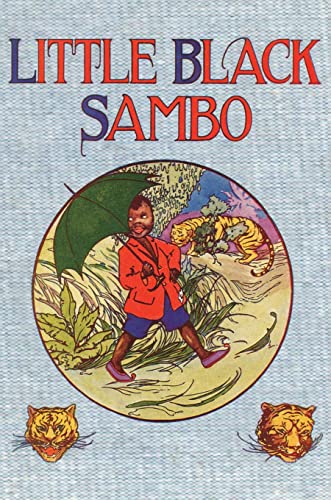
Lots of editions, too, like this pop-up version:

It is no longer available to children in school libraries.
Why isn’t that - and LOTS of other examples - upsetting.
Surely, one can explain the context to kids, right?
How about Disney’s Song of the South? Watched that one lately? Why not?
We move on and try to improve. We edit cultural works all of the time, for example by removing statues of persons for whom the judgment of history has been unfavorable.
The language itself evolves and moves on. I don’t know if the Flintstones are still in syndication, but I’d be surprised if they were still having “a gay old time”.
There are a lot of childrens books that have become irrelevant, obsolete or backwards.
I do not share the conceit that my childhood was somehow the pinnacle of civilization.
We evolve.
https://en.m.wikipedia.org/wiki/The_Story_of_Little_Black_Sambo
As one in a series of small-format books called The Dumpy Books for Children, the story was popular for more than half a century.
Critics of the time observed that Bannerman presents one of the first black heroes in children's literature and regarded the book as positively portraying black characters in both the text and pictures, especially in comparison to books of that era that depicted black people as simple and uncivilised. However, it became an object of allegations of racism in the mid-20th century due to the names of the characters being racial slurs for dark-skinned people, and the fact that the illustrations were, as Langston Hughes expressed it, in the pickaninny style.
———
Go try that out on a classroom and “explain the context” to the torchbearing mob the next day.
Hugh_Lebowski
(33,643 posts)I just wanted to make sure.
Charlie and the Chocolate Factory is hardly Little Black Sambo, though.
And as I said, my only real qualm is with changing the book that's available in public libraries or to buy. I was unclear from the OP what the exact context of the change was.
Cleaning the old one's up a bit for younger children, that are otherwise pretty damn good, in copies specifically for schools, I don't have much of a qualm with (especially if marked thusly), nor do I have an issue with schools simply abandoning the works in a scholastic setting if they're no longer appropriate.
Just don't like, make it so the copy that adults can buy (new) or check out are all altered versions. That'd be bullshit.
Fair enough?
Effete Snob
(8,387 posts)Correct. Sambo is actually a boy in India.
In the Chocolate Factory, in contrast, there are slave laborers who were imported from Africa to work for Willy Wonka.
These are the Oompa Loompas from the first edition of the book:

Where were you to decry the removal of that image in subsequent editions? It happened long before now, but for whatever reason, you did not care.
For the sake of integrity, why aren't you demanding the original Oompa Loompas restored to the book?
They came from "the very deepest and darkest part of the African jungle where no white man had been before."
But in the 1973 edition, they looked like this:

Where was the call for artistic integrity?
Well, that was when Dahl could speak for himself:
"I created a group of little fantasy creatures…. I saw them as charming creatures, whereas the white kids in the books were… most unpleasant. It didn’t occur to me that my depiction of the Oompa-Loompas was racist, but it did occur to the NAACP and others…. After listening to the criticisms, I found myself sympathizing with them, which is why I revised the book."
So, which, in your mind, is the "original"? The first edition Ooompa Loompas, or the ones that Dahl himself revised due to updated times, morals and understanding?
I'm sorry, but if you aren't arguing for the ORIGINAL book with the enslaved Africans, then this is just so much nonsense.
Dahl himself updated the book to address issues like this, and the current owners of the work are simply doing the same, and the relevant history suggests that Dahl himself would approve.
Reference: https://groovyhistory.com/oompa-loompas-the-original-ones/7
Hugh_Lebowski
(33,643 posts)For the record I can come down on a particular side of an issue while still admitting there are counter-arguments with merit 
Edit: read the article you posted, removed that bit.
Also, illustrations are different than text, and removing/replacing outdated racial stereotypes in illustrations that actually serve little purpose in the context of the story is different than adding post ex facto sections of text for the purpose of political correctness down to the finest detail, like the bit about the wigs.
Also Dahl changing his work himself is still different than the estate doing it, artistically-speaking, in my mind.
So while I get your points, and under certain circumstances I'm fine with it, this particular case rubs me the wrong way IIF this new version is meant to be the universal (i.e. not just for young readers in schools) version.

Dorian Gray
(13,851 posts)the work was written as is. Norms change. Roald Dahl was a complicated man. Like many artists before him.
The work should be published as was written, and context should given by parents who read to their children. My daughter (now 12) has read almost all of his books. He captures the imaginations of kids. But yes, there are ugly stereotypes in his books, and we discussed those.
Huck Finn should be read too. Even with bad words in it. Context can be discussed and the reasons why certian language is used. Absolutely.
Erasing things doesn't make us challenge hard truths.

Cuthbert Allgood
(5,339 posts)is problematic. It is hard to ignore the generational trauma of things like the n-word on students of color. Sure, the discussion can be had about why certain language is used, but I have taught a lot of students that would have 100% not processed the text due to the words.

meadowlander
(5,177 posts)Most five year olds aren't going to be able to understand a nuanced discussion of the ongoing cultural harm of racist or anti-semetic attitudes dropped carelessly into media they consume while a 12 or 13 year probably can. It's useful to teach the "grown up" version to the middle schooler and, if the story is likely to appeal and the book on the round has useful themes to teach kids, to have a "kids" version which is shorter, uses simpler language, and doesn't include more problematic content than can be reasonably discussed and understood by the target age group.
Nobody is talking about only having one version of the book available. It's a marketing decision, not government censorship. You might as well get upset about Shakespeare for Kids books or Children's Bibles for not making kids grapple with them in the original language.
Charlie and the Chocolate Factory is a great story about the problems with greed. We should have the option to buy a version to share with our kids without a side of unproblematized enslavement of African "pygmies". And none of that stops anyone else from buying the original if that's what they want.

unblock
(56,309 posts)This is being done by the owner of the works and publisher, not the government over their objections.
Fair debate as to whether or not it's a good idea or if it is a service or disservice to the author, but it's not censorship.
Celerity
(55,293 posts)unblock
(56,309 posts)Celerity
(55,293 posts)unblock
(56,309 posts)It is correctly labelled as censorship.
Salman Rushdie, for example, nails it.
unblock
(56,309 posts)It's a new edition and there was some editing done. That's it.
Celerity
(55,293 posts)we will simply keep going round and round
cheers
Cel
Effete Snob
(8,387 posts)I'm not meaning to continue the argument, but simply offer this for your further reading:
Are you aware that the first-edition Ooompa Loompas were captured in Africa, enslaved by Wonka, looked like this:
Dahl:
"I created a group of little fantasy creatures…. I saw them as charming creatures, whereas the white kids in the books were… most unpleasant. It didn’t occur to me that my depiction of the Oompa-Loompas was racist, but it did occur to the NAACP and others…. After listening to the criticisms, I found myself sympathizing with them, which is why I revised the book."
Dahl himself updated the book to deal with evolving attitudes, and there is every indication he would do so again.

Hekate
(100,135 posts)The desire for Bowdlerization comes and goes in society, but we rightfully scorn it today — or I thought we did. Bowdlerization is of a piece with censorship and book-banning.
Leave the classics on the shelves and in the bookstores. Encourage children to TALK to adults about what they read.
Huck Finn? A ragged, motherless boy, an outcast who runs away from his alcoholic and abusive father and who feels nothing but relief to discover he is dead? Who undertakes an epic journey with another outcast — a runaway enslaved man named Jim, called by a word so common then and so censored now that we call it by its initial? Man oh man is there a lot to talk about in that book.
But nope — bowdlerize the lot.
GGoss
(1,273 posts)I might have to frame that!


haele
(15,698 posts)I think the Dahl estate is a bit silly to be officially putting out a bowdlerize copy of Dahl's works, but have no problems with them authorizing a more child friendly version based on his works.
That sort of thing has been done for over a century as more children other than those of the aristocracy or bourgeois have been encouraged to read.
On edit - the thing to do is introduce these children to the real stories when they're 6 to 8 letting them know that those were baby books, these are the grown-up versions. Because honestly, if you're still trying to teach that little rug rat manners, classics like Huck Finn or Bambi in the original has concepts they may not be able to grasp.
Haele
Cuthbert Allgood
(5,339 posts)By a long shot. Though it was certainly common, Twain (and others) knew it was racist at the time and used as a power play. The true look is (and this is the short version) that Huck calls Jim that when Huck is under the control of society (a la Tom). Once he realized that Jim is human, he not only stops calling Jim that but calls himself that.
But, as I mentioned above, we can't ignore the generational trauma of the word.
Hekate
(100,135 posts)Cuthbert Allgood
(5,339 posts)Hekate
(100,135 posts)How old were you when you read it? Did you ever?
Did you think you were too young to deal with the themes and content and language? Do you think this book should be in an age-restricted section of the classroom/library/bookstore?
Did you have someone to talk to? Did that person explain the culture of the time and place? Were you encouraged to think/talk about the difference between that culture and the one we live in today? What has changed? What has not changed?
Why do you think so many scholars and authors for so many generations thought this might actually be the Great American Novel? If you disagree, why? Do you think there is one? Do you think there can be only one, or do you think there is a library of great American novels as diverse as our nation?
Yes? No?
meadowlander
(5,177 posts)then part of the point of teaching it would be "how can we get past our emotional response to this word to look at what the work is saying thematically"?
That's Literary Criticism and Critical Thinking 101. And kids absolutely need to practice and learn how to do it once they're at an age where that is achievable for them.
The problem is if you're teaching the original version to six year olds, they haven't cognitively developed enough to engage in that kind of higher order critical thinking.
So, like I said above, I think it's a judgement call on a book by book and kid by kid basis. Are the overall themes and merits of the book so positive for a particular age group that it's worth teaching it to them even if there are problematic bits the kids aren't going to be able to process? And if so, what is the actual harm in having a version available for that age group with includes the positive elements and remove harmful elements that are not central to the plot or main themes if that's what people want and nobody is removing access to the original version?
Cuthbert Allgood
(5,339 posts)should tell students of color how they should react to that word? Even if those students are high school age? No. Sorry. Not my place.
meadowlander
(5,177 posts)Part of learning critical thinking skills is being to separate how we feel/react to things from what we think about them.
As an adult or a reasonably mature teen you can read Huck Finn critically and decide at the end of it that the perpetuation of stereotypes isn't justified by what he is trying to do with them. But that's a totally different process to "this book I haven't read yet has a word that makes me feel bad and therefore nobody should ever read this book".
One is a process of critically engaging with the text and the other is an emotive non-engagement. And what we need a lot more of are people who can do the former whether the end result of that is they think the book has artistic merit or not.
But that is a skill you learn when you're old enough to learn it. So I also don't agree with "there is only one version of this story that can ever be read and how dare anyone ever alter one precious word of it".
If you are asking kids who are too young to have developed a critical facility yet to read a book, you need to be careful about what it contains. If there's some other reason to teach that book to kids that age, then I don't have a problem with parents and teachers having an option to provide an age appropriate version to pique the kids' interest and then come back to the original later when they are able to understand it better.

BannonsLiver
(21,014 posts)I generally give art and artists a wide berth and of course it’s totally ludicrous to apply current cultural morays to something created long ago. It is their property, however, I just think it’s lame.

gulliver
(14,149 posts)Let the reader decide. I think I know which would win.

DET
(2,669 posts)Roald Dahl was by his own admission an anti-Semite, a misogynist, and an all around nasty piece of work. Fortunately, not much of that made it into his books. Only the most intensely sensitive could take exception to most of the parts of his books that have been changed (wigs - seriously?).
I guess the Dahl estate can do what they want, although Dahl himself would undoubtedly be horrified at the changes. But this kind of ridiculous censorship (or whatever you want to call it) does our party no favors.
meadowlander
(5,177 posts)if a UK publisher and a British/Norwegian family decides to remarket books they own the rights to?

sl8
(17,155 posts)The article says that Netflix bought the literary estate in 2021
Effete Snob
(8,387 posts)He did the exact same thing to the Oompa Loompas:
"In the version first published, [the Oompa-Loompas were] a tribe of 3,000 amiable black pygmies who have been imported by Mr. Willy Wonka from ‘the very deepest and darkest part of the African jungle where no white man had been before.’ Mr. Wonka keeps them in the factory, where they have replaced the sacked white workers."
Did he make a fuss? Did he whine about artistic integrity?
No. He came to a more developed understanding and revised the book.
DET
(2,669 posts)“He came to a more developed understanding and revised the book.” Not from everything I’ve read. Dahl revised the book after intense pressure from the NAACP and other organizations. He was not happy about it.
Scrivener7
(60,317 posts)
TheBlackAdder
(29,984 posts)
LudwigPastorius
(15,231 posts)Overprotective House?
Or they could go with another publisher, Simon Schuster & Safe Space
Effete Snob
(8,387 posts)Dahl revised Charlie and the Chocolate Factory to address the origin story of the Oompa Loompas in his original first edition.
In the version first published, [the Oompa-Loompas were] a tribe of 3,000 amiable black pygmies who have been imported by Mr. Willy Wonka from ‘the very deepest and darkest part of the African jungle where no white man had been before.’ Mr. Wonka keeps them in the factory, where they have replaced the sacked white workers.
Dahl changed it:
I created a group of little fantasy creatures…. I saw them as charming creatures, whereas the white kids in the books were… most unpleasant. It didn’t occur to me that my depiction of the Oompa-Loompas was racist, but it did occur to the NAACP and others…. After listening to the criticisms, I found myself sympathizing with them, which is why I revised the book.
So, are you also taking issue with him and demanding that the original version be published instead?
LudwigPastorius
(15,231 posts)who had nothing to do with its creation...?
You believe these are the same?

roamer65
(37,980 posts)

Mz Pip
(28,539 posts)And I don’t like revisions by the left.
Somewhere someone is always going to be uncomfortable about something in books. I’m all for correcting factual inaccuracies in non fiction, but going after words in children’s books seems over the top.

Moosepoop
(2,076 posts)by people wanting to make sure they own the "classic" versions of the books, before the newer ones come out to replace them?
I remember "New Coke," and how that went. People freaked out and hoarded the "classic" version. There was all sorts of public protest and outrage. Then the company announced it was keeping the "classic" version available after all. That marketing decision -- changing the formula, then changing it back -- raised the brand awareness and sales of the product. Coca-Cola benefited hugely from it.
It would not surprise me if the publisher announces in a few months that it will also continue publishing the "classic" versions of Dahl's works.