General Discussion
Related: Editorials & Other Articles, Issue Forums, Alliance Forums, Region Forums6 ways the Inflation Reduction Act changed America and the world in 1 year
6 ways the Inflation Reduction Act changed America and the world in 1 year
Biden's massive green energy and industrialization law has accomplished a lot in a short time, but its future is up in the air
PETER WEBER
AUGUST 12, 2023
https://theweek.com/in-depth/1025685/6-ways-the-inflation-reduction-act-changed-america-and-the-world-in-1-year
"SNIP..........
The law has capped insulin prices and out-of-pocket drug expenses for Medicare beneficiaries and beefed up corporate and high-income tax compliance, but the IRA's biggest goal is "to spur clean energy buildout on a scale that will bend the arc of U.S. greenhouse gas emissions," using components made in America, The Associated Press reported. "In less than a year it has prompted investment in a massive buildout of battery and EV manufacturing across the states."
"The green energy portion of the bill" — already slated to be "the most aggressive effort to decarbonize the U.S. economy ever" — is "turning out to be even bigger than analysts thought at the time," Rick Newman wrote at Yahoo Finance. In fact, "the laughably misnamed and poorly understood Inflation Reduction Act" may end up being "the biggest sleeper event of the Biden presidency." Here are some ways the IRA has changed America, and the world, after one year.
1. Cut carbon emissions
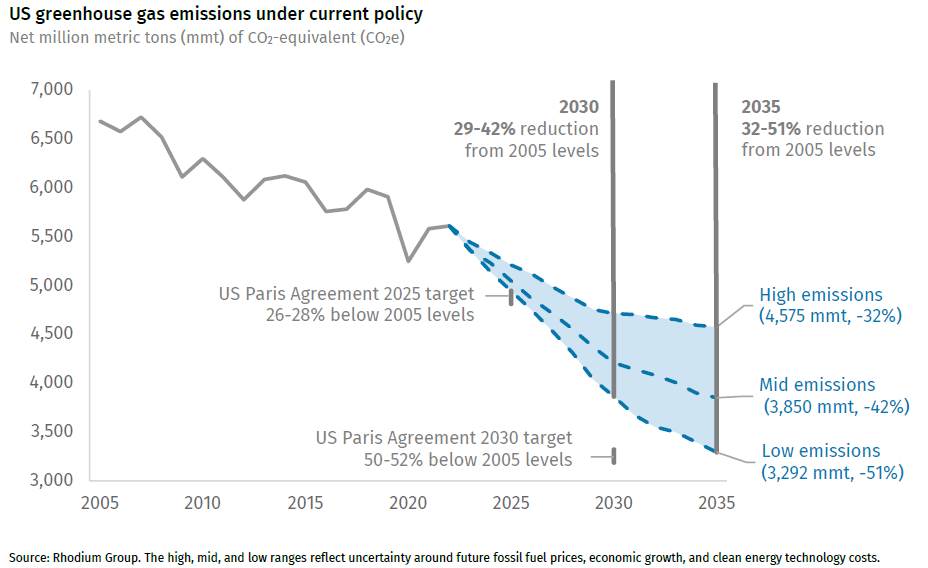
The U.S. pledged in the 2015 Paris Agreement to slash greenhouse gas emissions by half of 2005 levels before 2030. Former President Donald Trump withdrew the U.S. from the agreement two years later, and by the start of the Biden administration, analysts at Rhodium Group, an independent analytics firm, forecast that the U.S. would, at best, cut emissions by about a quarter.
Thanks largely to the IRA, Rhodium said in its July 2023 report, the U.S. is on track to cut emissions by as much as 42% by 2030 and by 32% to 51% by 2035. That's "a meaningful departure from previous years' expectations for the U.S. emissions trajectory," Rhodium analysts wrote.
.........SNIP"
 = new reply since forum marked as read
Highlight:
NoneDon't highlight anything
5 newestHighlight 5 most recent replies
= new reply since forum marked as read
Highlight:
NoneDon't highlight anything
5 newestHighlight 5 most recent replies

SunSeeker
(58,283 posts)
applegrove
(132,222 posts)SunSeeker
(58,283 posts)applegrove
(132,222 posts)
blm
(114,658 posts)applegrove
(132,222 posts)
WarGamer
(18,613 posts)Just to add some context because the claim in the OP is somewhat misleading.
The Paris agreement used 2005 as a baseline which to start measuring emissions and how much they needed to drop.
From 2005 to 2020, levels in the US dropped from approximately 6600mmt to 5300mmt an approximate 20% drop
During COVID levels actually went UP
So the Paris agreement is a 26-28% drop by 2025
Now, in the next 2 years, it's unlikely we'll meet the terms of the agreement technically.
But the potential for future drops is real, because of the IRA.
But at this point, just conjecture.
applegrove
(132,222 posts)