General Discussion
Related: Editorials & Other Articles, Issue Forums, Alliance Forums, Region ForumsSee The Bizarre Image That Just Won an Inaugural Award For AI Art

Excerpts from the Forbes piece and then an Australian news site below, followed by my comments. I consider this sort of thing not just creepy but harmful, as I'll explain in reference to some of what's quoted in both articles.
https://www.forbes.com/sites/lesliekatz/2023/10/08/see-the-surreal-image-that-just-won-an-ai-art-contest/amp/
The lifelike picture, titled “Twin Sisters in Love,” on Saturday won the inaugural Prompted Peculiar International AI Prize at the Ballarat International Foto Biennale, an Australian photography festival running through October 22. The competition is believed to be one of the first, if not the first, AI-art award.
For the winning image, Nordenskiöld, who lives and works in Sweden, partnered with Midjourney, an AI tool that quickly turns text phrases, or “prompts,” into hyper realistic images by scanning a massive database trained on visual art by humans. Artificial intelligence tools like Midjourney, Dall-E and Stable Diffusion continue to capture imaginations, as they let anyone generate images from text in mesmerizing and sometimes creepy and wildly absurd ways.
“None of the places, people or creatures in my prompts exist in the physical realm,” Nordenskiöld said of her winning creation in a statement. “They were conjured from the sum of human experience in our deep collective well, as seen from my dreamboat with its flickering light.”
-snip-
From Australia's Sydney Morning Herald:
https://www.smh.com.au/culture/art-and-design/world-s-first-ai-art-award-ignites-debate-about-what-is-photography-20231004-p5e9td.html
The term was coined this year when German photographer and judge at the Ballarat festival Boris Eldagsen turned down first prize in the creative open category of the Sony World Photography Awards because his image “The Electrician” was generated by AI, and in his words, was “not photography”.
“At the time, I was considered a fire starter in the photography world in opening up this conversation on ‘promptography’, but now I am seen as the Che Guevara of analogue photographers and how we approach the elephant in the room – AI-generated images,” he said.
“Now the default position for when you look at pictures online will be to assume they are artificially generated – rarely are they fact-checked ... which presents a problem for picture editors, photographers, developers, AI experts and social media consumers the world over.”
First of all - Eldagsen is absolutely right about photo-like AI images being "a problem for picture editors, photographers, developers, AI experts and social media consumers the world over."
But he minimizes it. They're a disaster. Not just for artists, but for society in general, including governments, especially democracies, because they make it possible for AI users to come up with potentially convincing deepfakes in under one minute (type in a brief prompt and the AI image generator will typically offer several different image options - I think most offer 4 options - in under 10 seconds). These images' existence can make people skeptical of even real photos they see. These AI deepfakes' existence is now being used by defense attorneys to tell juries not to believe their eyes. They undercut democracies and justice systems.
Second of all, there is no such thing as promptography. No such thing as a promptographer. It's a ridiculously pompous way to refer to giving a text prompt to an AI image generator, something that anyone, including any child, can do. Compared to the control photographers have and the decisions they have to make to get great photographs, "promptographers" are blindfolded in straitjackets strapped into canoes sent down rapids and over waterfalls in an AI river. God only knows where or how they'll end up, but they certainly don't. And neither does the AI, which is mindlessly following algorithms as it meanders through vast data sets of stolen images. Anything a "promptographer" puts in an image prompt does nothing more than the equivalent of trying to specify the location on that river in the hope the ride might land them somewhere safe and recognizable. But it doesn't always. I posted recently about an image generator tested with a prompt requesting an image of a ballerina in an arabesque position. Of the 4 options generated, only 1 showed that position - and that one had the ballerina's leg painfully if not impossibly contorted. Promptographers discard most of what AI offers and have real artistic control over none of it.
Finally, I can't ignore what the winning fake photographer said here:
That's not only sounds very sadly conceited, but it's BS.
The AI mindlessly throws together images following algorithms through countless stolen images. Sometimes watermarks that the creators of those original photos had hoped would protect their work will pop up and have to be erased with an editing tool. And there is no "dreamboat with its flickering light." It's software anyone can use, if they don't mind using unethical software that could very well offer the same or a nearly identical image to anyone anywhere at any time, because the AI has no awareness of what it's spitting out.
The prompt for this ridiculous AI image was probably something like: "Photorealistic black-and-white image of twin sisters in polkadot blouses hugging a pet octopus they love."
And by specifying black and white, the odds were increased of getting retro clothing and hairstyles.
Any number of images might have been discarded before this one was churned out. And maybe the prompt was tweaked a bit.
But that was all the "artistry" required, thanks to the theft of all those photos for Midjourney's data set.
The woman who used AI to churn out this fake photo may well be a fine artist otherwise, and she deserves applause for her real art.
But this isn't art. Any more than a 5 year old typing "puppy" as a Midjourney prompt would be an artist.
 = new reply since forum marked as read
Highlight:
NoneDon't highlight anything
5 newestHighlight 5 most recent replies
= new reply since forum marked as read
Highlight:
NoneDon't highlight anything
5 newestHighlight 5 most recent replies
Silent Type
(12,412 posts)
highplainsdem
(62,159 posts)AI is already being used for book covers, magazine illos, business pamphlets, ads of all types including clothing ads with AI models (no need tp pay a photographer, model, makeup artist and stylist, etc.), and in lots of other ways. Never mind that real people's photos, artwork and physical appearance were ripped off to train the AI. A lot of people don't care, or don't know, how unethical generative AI is.
hatrack
(64,890 posts)The future just keeps on sucking harder.

MorbidButterflyTat
(4,513 posts)And the flock follows. 
Oh, god! I'm getting that engraved on a brass plaque.
The future just keeps on sucking harder.
Nailed it.


Blue Owl
(59,111 posts)highplainsdem
(62,159 posts)discarded before this one was chosen.
I vaguely remember an article several months back about someone who'd used AI to create a fake photo of well dressed fake people at a rodeo, and it fooled some people on social media. As I recall, the woman who did that said she'd discarded hundreds, or maybe thousands, of images AI generated before getting that one, and she thought she deserved recognition and praise for it because she'd put so much time into it and felt that made her an artist.

marybourg
(13,642 posts)
Freethinker65
(11,203 posts)Think. Again.
(22,456 posts)highplainsdem
(62,159 posts)and she decided to use it. I'm sure if she'd meant it as a statement involving conjoined twins she'd have said so.

Ms. Toad
(38,643 posts)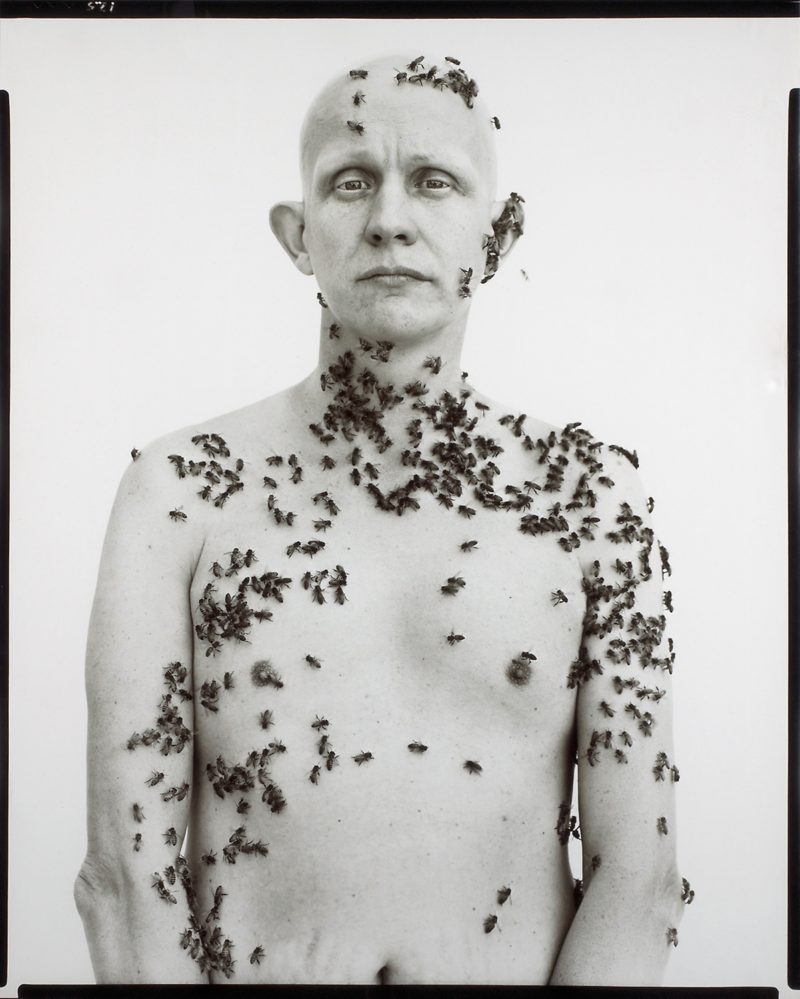
(Richard Avedon)
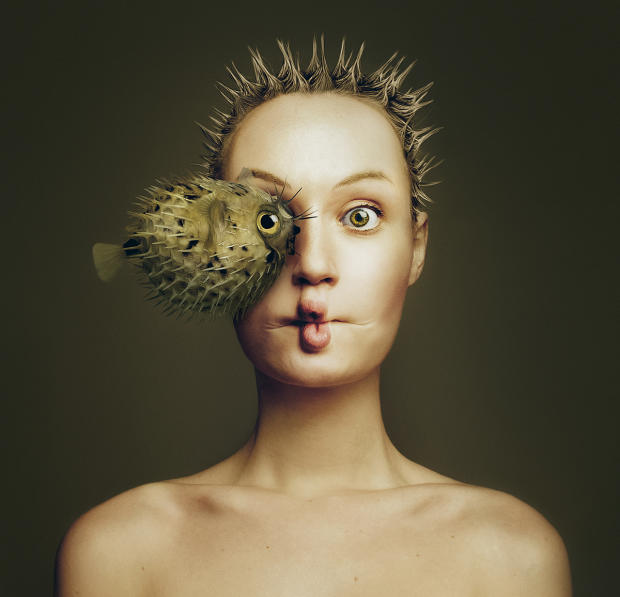
(composite photo by Flora Borsi)
Neither of these were created with generative artificial intelligence. Both would likely strike many viewers as bizarre - and unnatural. Both artists have received critical acclaim for their work.
It seems to me that this particular contest would be a good place to start a good, substantive, discussion of the place of AI in image-making.
The contest was expressly for images created using AI. So the images entered in the competition are not "deepfakes." The competition was created after an individual (Boris Eldagsen) won a photography competition with an image he created using artificial intelligence - one which he told those running the competition was created with artificial intelligence before they identified him as the winner. He declined the honor because he did not believe his image should have won a photography competition. Partly in response, this competition was expressly for images created using AI.
And, to further distinguish these images from photographs (and his work from that of photographers), he and others coined the term promptographer to describe what they do. Unfortunately, rather than celebrate the fact that they are doing exactly what you have been urging people on DU to do - to be up front about how the images were created - you are dismissing it as "no such thing." At one point photography didn't exist, nor did the term photographer. At some point after it did, the term photographer was created to designate those who practice it. There is a simiar process going on here. Promptographer may not stick - but it's a place to start.
I don't know how this promptographer created her image - I have been unable to find a detailed description. But I do know how the earlier promptographer created his image. It was far more than drafting a few words and picking which generated image he liked. He selected an image, identified parts of the image he didn't like, discarded those and generated a new sub-image to fill those parts. He also expanded his canvas beyond the boundaries of the initial image and filled those as well. It was an iterative process that required him to use an artist's eye to identify when he had the components he believed made a pleasing image. The process, for three images, took 80 hours.
Realism is just one form of art. Just because an image is bizarre - or not photo-realistic does not make it something other than art.
You may not believe images created using AI are art, but academic BFA programs would differ with you. I am currently pursuing a BFA in photography. We are using generative AI in our commercial photography class, and I expect we will using it in other photography classes as well. Because I started out taking a class here and there, I am now backtracking and taking the broad cross-section of classes required for the fine arts portion of the BFA. The use of AI was discussed in the broad overview class every BFA student is required to take as a new tool that we will learn to use in several of our classes. It's not just the local univeristy where I am enrolled. Look up the recognized names in art education (SCAD, Parsons, etc.) and you will find they are also embracing the use of AI as a tool.
Certainly there need to be ethical principles created. In general art is not represented as something it is not. This is often accomplished in the artist's statement which identifies the media. This helps the viewer distinguish between - for example - photorealistic drawings and photographs. It will also likely come to be used similarly for images created using AI.
This image which won was entered into a contest by a person who describes themselves as a promptographer - the very kind of practices you have been urging people on DU to adopt. Why use someone following those practices to rant about the danger of "deepfakes" - which inherently implies they are pretending their image is something it is not? This particular image was likely not generated in a single step from a prompt of a few words. It is far more likely it took 20-30 hours (like the one created by Egaldson). Why use it to suggest the process is a trivial one?
Finally, the software involved in generative AI is not inherently unethical. Software is a tool, nothing more. Training the software on images protected by copyright for which the person providing the training tools does not have a license is unethical (and illegal). But the software itself does not inherently require theft of art. So when you use a phrase like, "It's software anyone can use, if they don't mind using unethical software" it is a "when did you stop beating your mother?" kind of comment. It treats as unethical both those using AI trained on licensed databases and those AI trained on stolen images and builds on that premise, in the same way, "When did you stop beating your mother?" takes, as a premise, that you are actually beating your mother.
Personally - I don't think tools which use unlicensed databases are ethical. I hope the legal system catches up with these tools so that we can have a discussion about AI that is not tainted by how the tools are trained.
Beyond that - I have been making composite photos (like the Borsi one above) for decades in Paintshop Pro to do facial reconstruction by combining intact photos of the person (or relatives they resemble) with a damaged photo. I have been hand-painting in missing details - as well as using clone stamps (a manual version of generative fill) for a similar length of time. As long as I don't pretend it was an unretouched image, I don't see any inherent difference between using generative fill and using the hand techniques I've been using for years. Any more than I see any inherent difference between processing a photo in the darkroom to tailor its appearance - versus tailoring it in an electronic darkroom. It is my artistic judgment that matters, not whether I scratched it out with a stick in the sand or used iterative generative AI to create the image.
There will always be a amateurs who snap photos with their phones and occasionally get one that rivals those of professional photographers - and professional photographers who use cell phones as their tools. I suspect the same will happen with AI. Most of it will be cheap garbage. Occasionally a low-effort AI image will hit it out of the park. But most of the time it will take time, energy, and an artist's eye to use AI to create quality art. Bottom line - it is the artist (and the viewer) which determine if something is art - regardless of the tool(s) used to create it.
Does the availability of new, easier to use, tools mean some artists may no longer be able to make a living at it? Probably. In the same way any advance in technology shifts at least some jobs toward the new technology. We have very few blacksmiths, leech collectors, or human computers anymore.
The fact that alters the jobs available doesn't inherently mean the technology should be rejected.
highplainsdem
(62,159 posts)on. Whether or not other bizarre photos have been done is irrelevant. Other than the fact that actual untouched photos and composites are, if they're bizarre, bizarre because of the photographer's intention and control.
A lot of AI images, including the ones supposed to be photorealistic, are bizarre because there is NO artistic control. The person using the AI has no real control over what the software produces, and the software is mindless and unaware of what it's producing.
And that lack of control is why I find the term "promptographer" ridiculous and pretentious. If you've used image generators at all, you know full well that they can produce any number of different - often very different - images from the exact same prompt. That's why these programs typically offer 4 options to start, and you can keep feeding the same prompt in again and again and get different options every time with the same words.
That is not artistic control. Not in any way. Choosing an image after it's created is really no more being an artist than if you asked a number of people to paint an image for you and chose one of them. Maybe they should call themselves "AI image choosers." It would be more accurate.
Please read more carefully. I was not "ranting" when I said deepfakes are a disaster. There have been lots of articles about how dangerous they are, and AI companies have acknowledged that and talked about how concerned they are about the damage deepfakes can do, especially in elections. And what I said about deepfakes was in relation to what had been said in the second article I excerpted, the remarks by Boris Eldagsen, who admitted these fake photos are "a problem" and mentioned social media, but IMO minimized how much of a problem they are.
As for calling generative AI unethical - most are. Only a few image generators use licensed data sets. Midjourney, which was used for the contest-winning fake photo, is not one of them, as you almost certainly know, given how many articles there have been about it. I've posted about that here, too.
And even if the data set is legal, people using generative AI, whether for text or images, did NOT create what emerged. They might tweak it, but they didn't create it. A machine did it for them. And IMO anyone calling themselves a poet or a short story writer or a novelist because they had AI churn out text for them is a fraud, not a creative writer. And anyone using AI to churn out images for them, photorealistic or not, is someone using AI, an AI image chooser, but not an artist.
Ms. Toad
(38,643 posts)so it is easy to whack down.
That is not the process used by any artist I am aware of. I know that you have read the description of how Eldagsen created his winning image - which took somewhere between 20 and 30 hours to create. It was an iterative process, with repeated prompts, expanding the canvas, selecting out and regenerating portions of the image to create the resulting image. That's hardly providing a few words and picking the best image that pops out. I believe the image discussed in the article was created the same way, although I cannot absolutely confirm it because the articles written about it that might discuss her method are either hidden behind a pay way - or written in Swedish.
The number of images that might be generated in response to a prompt has nothing to do with whether something is art. It is the artist (and their skill/taste as an artist) who selects the composition which most closely matches their vision when they used the prompt. It is the artist who then decides which portions are finished - and which need to be altered. It is the artist who identifies the portion to be altered and creates the prompt for what will fill that space, and so on. AI is a tool that assists the artist in creating the ultimate image.
It is every bit as much a creative process as any other tool which creates an unpredictable/changeable image which the artist uses their skill to complete (either by adding to it, or by using the tool to alter parts of it). For example - Jackson Pollock's drip paintings - where the drips are not tightly controlled, but a response to how he held the brush or can. It was an iterative process with Pollock determinig which portions of the painting are finished, and which aren't. Using his tools to add more, or different, drips to the unfinished portion, etc. Or Alexander Kantros who works with alchemography in which an image is developed in a way which is unpredictable and the artist uses their artistic skill to select which image is the one they prefer (or even the starting point for subsequent digital manipulation).
Describing what artists like Eldagsen have done as writing a few words of text then picking a resulting image is insulting to such artists who are using it as a tool, and who expend every bit as much time and creative energy on their works as those not using AI.
The software (which is what you identified as unethical) is simply code which uses a database and is trained to use algorithms to generate output. There are no ethics at all involved in the software.
What is unethical is stealing the training materials. AI software does not require stolen training materials.
That many do use stolen training materials does not make the software itself unethical - any more, for example, that the fact that many/most drivers speed make driving a car inherently a violation of the law.
In the discussion of a contest/winning image which is expressly about openly using AI to create images, it is misleading - at best - to launch into the dangers of deep fakes.
highplainsdem
(62,159 posts)Last edited Mon Oct 9, 2023, 12:08 PM - Edit history (1)
because Boris Eldagsen did in the second article I quoted in the OP. He's VERY concerned about deepfakes, brings them up in a number of articles about him that I've read. He sees them as a real threat and wishes there was a way to clearly label AI images as AI and real photos as real, because he believes it's a threat to photo journalism.
He is concerned about photo journalism. I wish he were a tenth as concerned about photographers whose livelihoods are threatened by image generators, and artists and photographers whose work was stolen for image generator data sets. Disappointingly, he isn't. And he even uses the same verbal sleight-of-hand as Annika Nordenskiöld with the word "collective" used to obscure the theft, but where she refers to the AI's vast trove of images as a "collective well" he calls it a "collective unconscious." Which is crap. It's collective in the same way as a burglar's haul is collective.
And your excusing image generators as just software, as if they exist separately from the data sets, is disingenuous. They work only because of those data sets. And per the reviews I've seen, the very few image generators with more limited data sets that are legally licensed don't work as well as those with much larger data sets of stolen images. Like Midjourney, with over 100 million images, whose theft is making a lot of money for the thieves.
I am not impressed by what I've read of Eldagsen's work methods, especially with the fake photo he's become most famous for. The only really compelling part of that photo is the section with the faces, especially the one face which is clearly seen rather than half hidden, and that was the part of his fake photo that was the starting point, the initial image from the image generator that he kept and built around. He patched together everything else with prompts and God knows how many discarded images before he decided he was happy with the clothing, hands, etc. But he didn't create any of those pieces. That first image may very well have been taken intact from a real photo. We'll likely never know, and he doesn't know. I don't consider his AI collage any more artistic than any other collage, and I don't consider collages in general very impressive art. Midjourney can call its patching together of collages inpainting or outpainting, but it doesn't make what the artist is doing painting. It's collage assembly via AI, with the only real control the AI user has the discarding of images they dislike. Eldagsen has been open about AI's response to prompts being unpredictable. And as artistic as he might think his prompts are, and he has a high opinion of them, the fact remains that all of them can yield very different results at different times.
The only reason his AI-enabled creation got any real attention was that it was initially mistaken for a real photo, and he enabled that confusion, judging by what I've read. Which meant that in effect it was a deepfake, though he decries deepfakes used for other purposes.
I have much, much more respect for every single creative protesting the theft of intellectual property for AI data sets, and the use of AI to harm creatives' livelihoods, than I have for those who thought it was okay to steal that intellectual property, and who shrug off the theft if they enjoy and/or profit from using the image generator.
hatrack
(64,890 posts)Cool.
Ms. Toad
(38,643 posts)Did you even bother to try to understand?
You are aware that people said the exact same thing about photography for years, right? All photographers are doing is pushing a button.
It took years to acknowledge that just because the process is mechanical, and the image is rendered not by the ability of the artist to put pen or brush to paper, but by the process of light hitting paper - and the technical quality of the image is the result of the quality of the tools, not the skill of the photographer.
Just like wedding box cameras v. professional photographic equipment and access to professional darkrooms are miles apart, so is the "prompt and pick one" miles from what some promptographers are doing using AI. They ultimately control the appearance of the canvas not by their technical skill with a pen or brush, but by their imagination and ability to describe their vision in a prompt, their artistic skill in deciding what works/doesn't work - and their ability to selectively paint in (re-prompt) portions that don't work - or paint out (adding to the sides of the canvas.
hatrack
(64,890 posts).

Hugin
(37,848 posts)
redqueen
(115,186 posts)That 'artist' is lying when they said the images are pulled from the air or whatever. Most (all?) AI image generators scrape images and use that data. There's nothing mystical going on here just theft and further ensh*ttification
highplainsdem
(62,159 posts)what's supposed to be art.