General Discussion
Related: Editorials & Other Articles, Issue Forums, Alliance Forums, Region ForumsA Political/Cultural Glimpse Into America's Future: Generation Z's Views on Generational Change & the Challenges Ahead
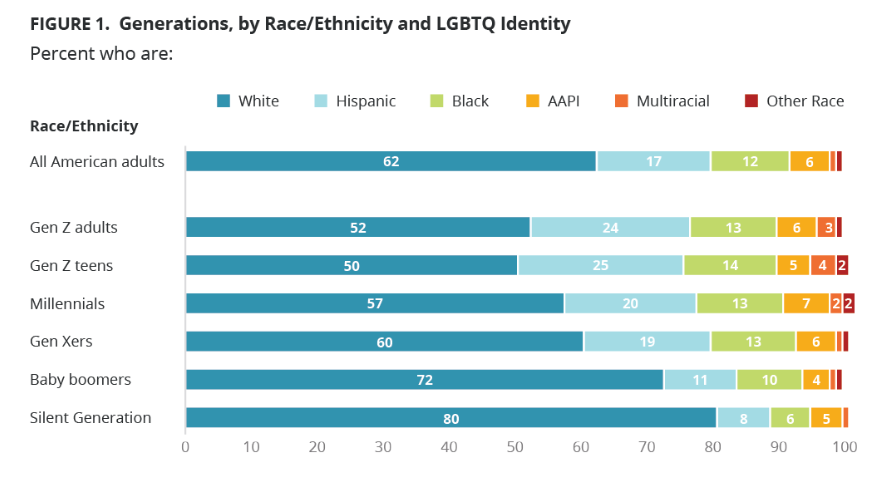
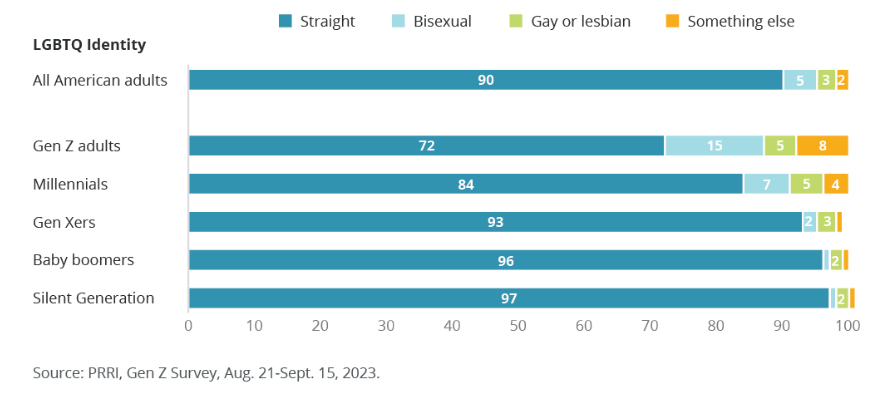
https://www.prri.org/research/generation-zs-views-on-generational-change-and-the-challenges-and-opportunities-ahead-a-political-and-cultural-glimpse-into-americas-future/Members of Generation Z are coming into their own politically, socially, and culturally, bringing their values and viewpoints to their communities and workplaces, and to our nation’s political system. In addition to being the most racially and ethnically diverse generation in our nation’s history, Gen Z adults also identify as LGBTQ at much higher rates than older Americans. Like millennials, Gen Zers are also less likely than older generations to affiliate with an established religion. This report considers what sets members of Generation Z apart from older generations in terms of their political and cultural values, their faith in communities and political institutions, and their views on religion and the importance of diversity and inclusion in the nation’s democracy. The report is based on both the results of a national survey of all Americans, which includes oversamples of Generation Z — both Gen Z adults (ages 18–25) and Gen Z teens (13–17) — and on an analysis of ten virtual focus groups that included a wide cross section of Gen Z adults from across the United States.
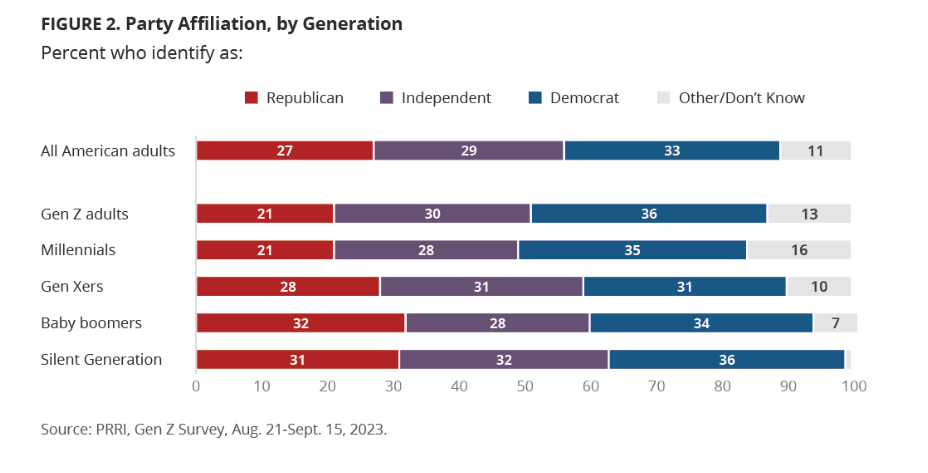
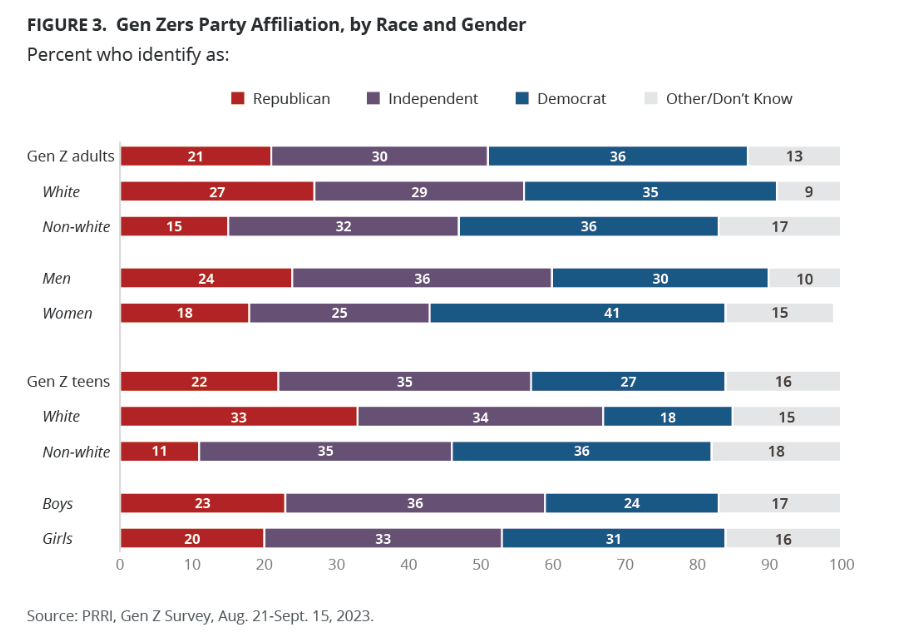
Gen Z adults (21%) are less likely than all generational groups except millennials (21%) to identify as Republican. Meanwhile, 36% of Gen Z adults identify as Democrats, and this rate is similar to other generations, with the exception of Gen Xers, who are less Democratic (31%). More than half of Gen Z teens (51%) do not identify with either major political party, compared with 43% of Gen Z adults. Most Gen Z teens share the same partisan identity as their parents.
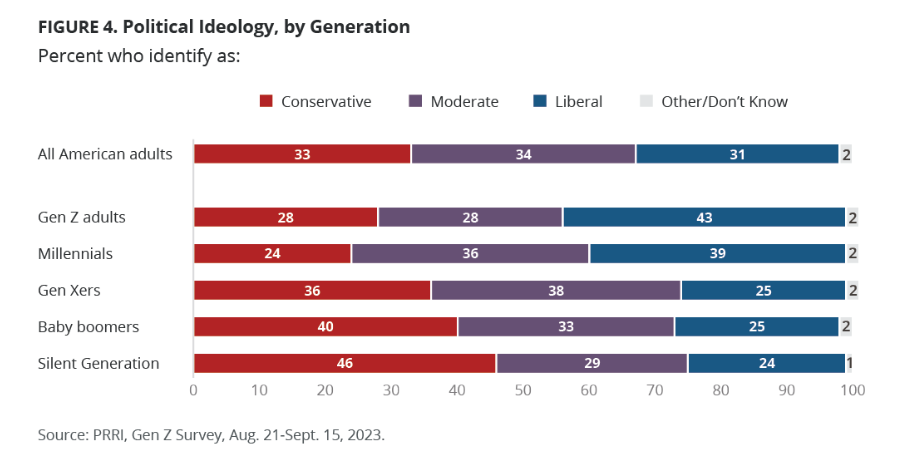
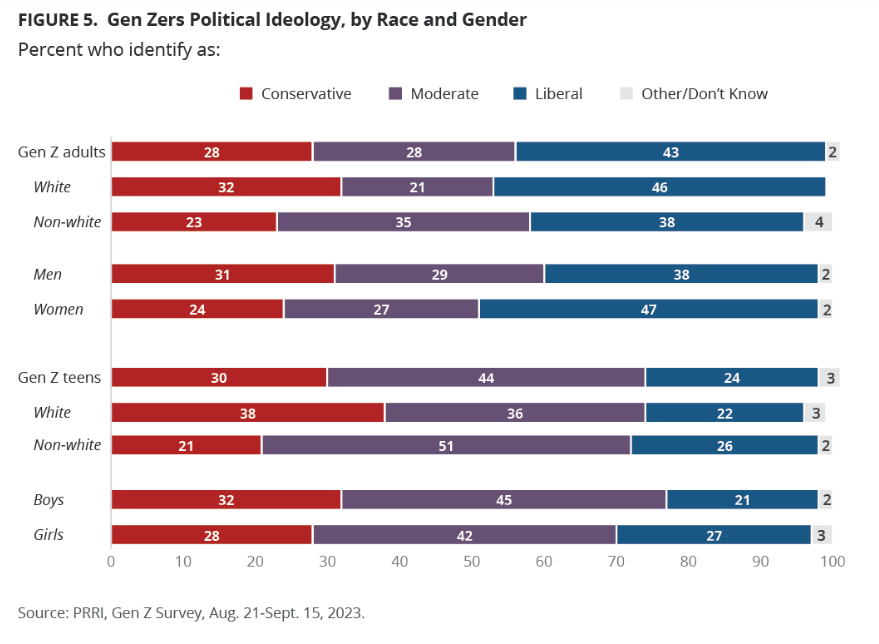
With the exception of millennials (24%), Gen Z adults (28%) are notably less likely than other generational cohorts to identify as conservative. And Gen Z adults (43%) identify as liberal at a higher rate than other generations. A plurality of Gen Z teens (44%) identify as moderate. While Gen Z women are substantially more liberal than Gen Z men (47% vs. 38%), that gender gap is smaller among Gen Z teens, with 27% of teen girls and 21% of teen boys identifying as liberal. By contrast, white teens are more likely to identify as conservative (38%) than non-white teens (21%).
Gen Z adults are notably less likely to identify as white Christians and more likely to identify as religiously unaffiliated than older generations, with the exception of millennials. More than eight in ten white Christian Gen Z teens (83%) and Christian Gen Z teens of color (85%) report belonging to the same religion as their parents, compared with 68% of religiously unaffiliated teens. Gen Z Republicans—both adults and teens—attend church more often, express that religion is more important to them, and have higher trust in organized religion than Gen Z Democrats or independents.
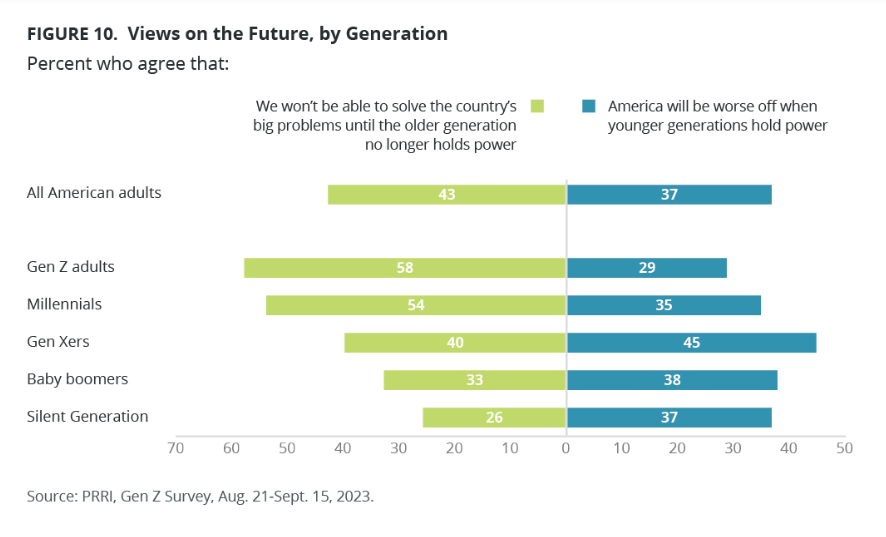
Most Gen Z Americans, particularly Gen Z Democrats, are more likely than older Americans to believe that generational change in political leadership is necessary to solve the country’s problems...................
snip
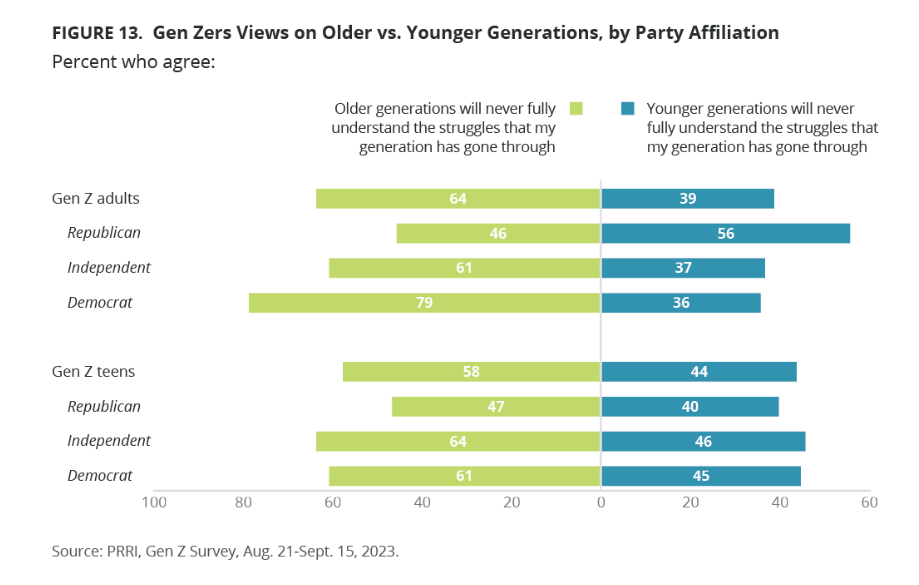
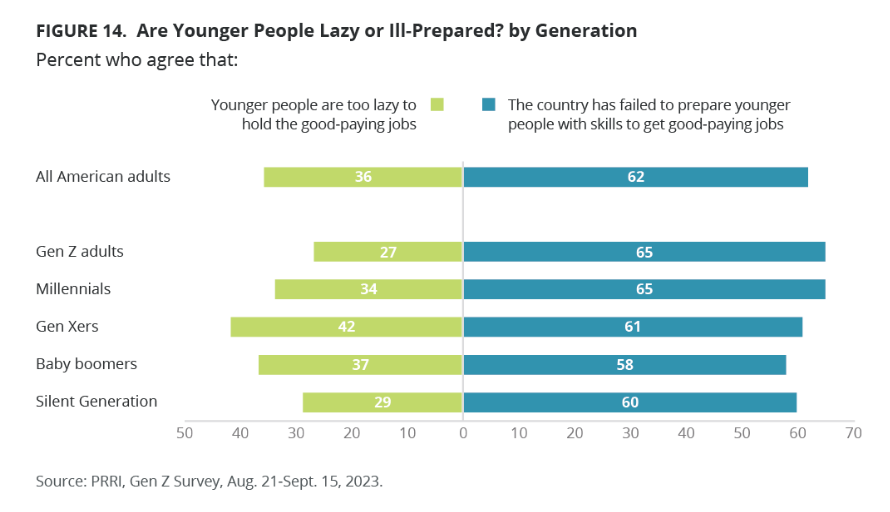
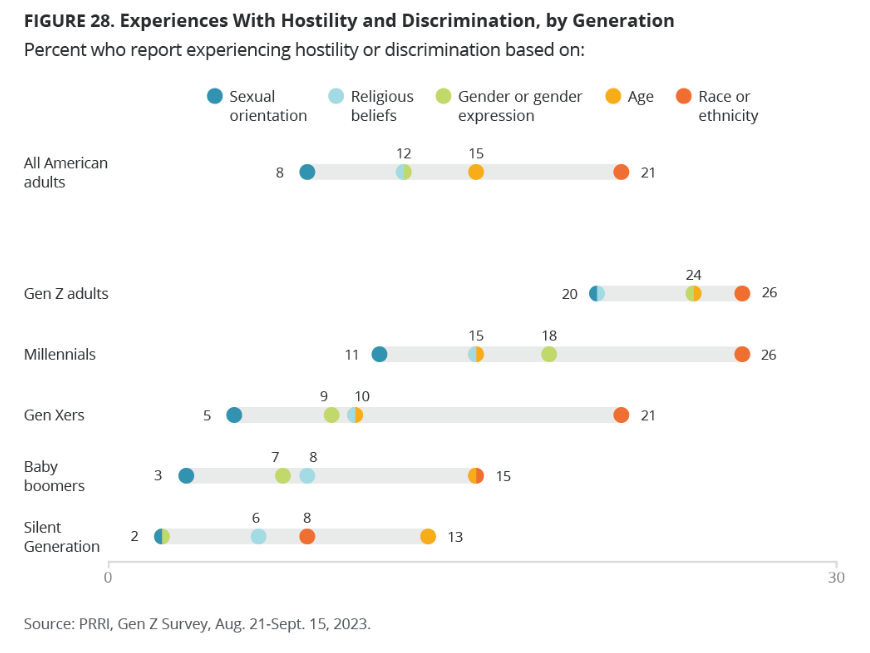
much much more at the top link
 = new reply since forum marked as read
Highlight:
NoneDon't highlight anything
5 newestHighlight 5 most recent replies
= new reply since forum marked as read
Highlight:
NoneDon't highlight anything
5 newestHighlight 5 most recent replies

Fla Dem
(27,772 posts)
Celerity
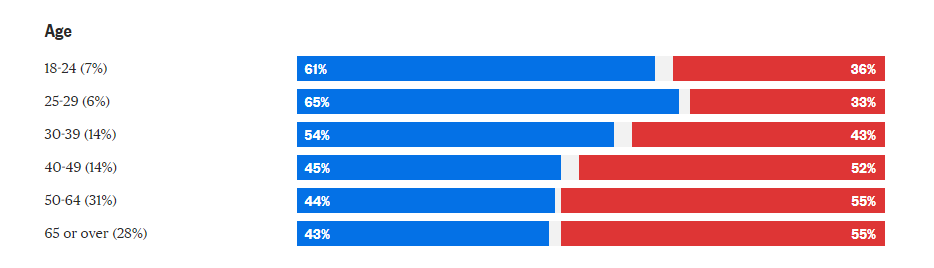
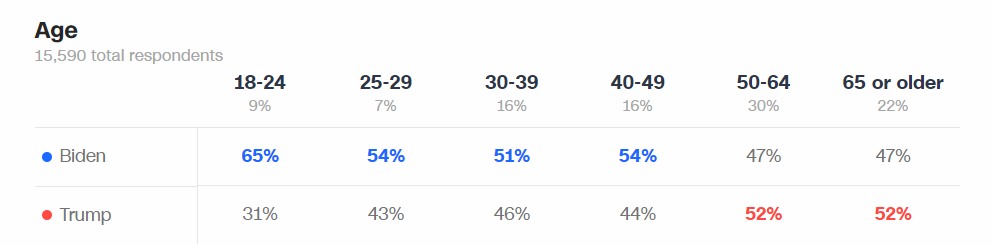
(54,878 posts)Gen X and white women slid significantly to the RW in 2022 (and that was POST Roe being overturned) compared to previous elections, as did Hispanics of both genders (in both 2020 and 2022 when compared to 2018).
White women went from +2 Dem in 2018 to +8 Rethug in 2020 and then to +11 Rethug in 2022.
Gen X overall voted solidly Rethug in 2022, with the 40 to 49 yo cohort especially sliding hard to the RW compared to previous elections.
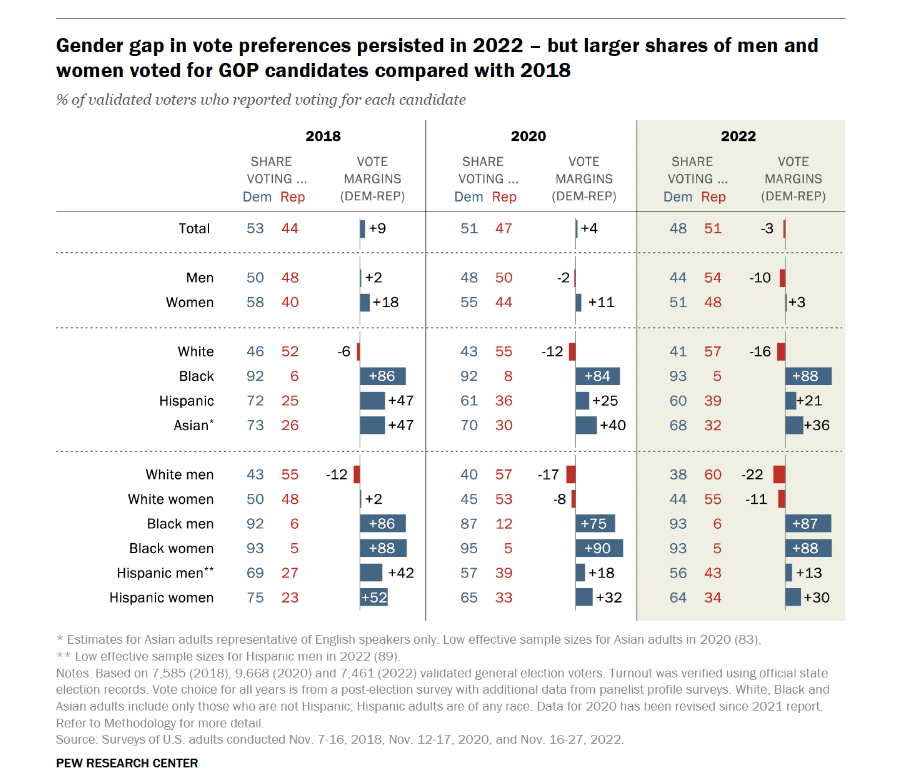
notice 2 things:
1. My (I had just turned 26yo then and now have turned 27, three months ago) Zillennial (born 1992/93 to 1998) group (in this poll, we are talking the youngest 4 years and 2 months of Millennials and a 'first 10 months of 1997-born' sliver of the very oldest of Gen Zers) voted Dem at a higher rate than the rest of Gen Zers (ages 18 to 24 years old on election day, so most all of Gen Z who were old enough to vote then).
My OP shows this cleavage continuing in certain vectors, and I fear we have perhaps hit peak liberal/peak Dem voting atm with the group born born approximately 1989/1990 to 1999/2000, and more narrowly, the 1992 to 1998 born (ie Zillennials) cohort being that most pronounced peak.
and then:
2. Look at the pretty significant sliding to the Rethugs by the Gen Xers. Gen X voted Rethug in toto by a pretty healthy margin, which worries me for 2024 and beyond.
also:
In the 2022 US House national number, Rethugs outvoted Dems by over 3 million total, and that again was POST Roe being overturned.
Popular national US House vote
Rethugs 54,506,136
Dems 51,477,313
Rethugs +3,028,823
Remove CA (capped by the Electoral College in terms of impact for POTUS) and we were outvoted by almost 6 million nationally (5,912,894):
CA-only popular vote for the US House
Dems 6,743,737
Rethugs 3,859,666
Dems +2,884,071

Kick in to the DU tip jar?
This week we're running a special pop-up mini fund drive. From Monday through Friday we're going ad-free for all registered members, and we're asking you to kick in to the DU tip jar to support the site and keep us financially healthy.
As a bonus, making a contribution will allow you to leave kudos for another DU member, and at the end of the week we'll recognize the DUers who you think make this community great.