General Discussion
Related: Editorials & Other Articles, Issue Forums, Alliance Forums, Region Forums
The movement to save democracy from threats is too quick to overlook problems that have been present since the founding.

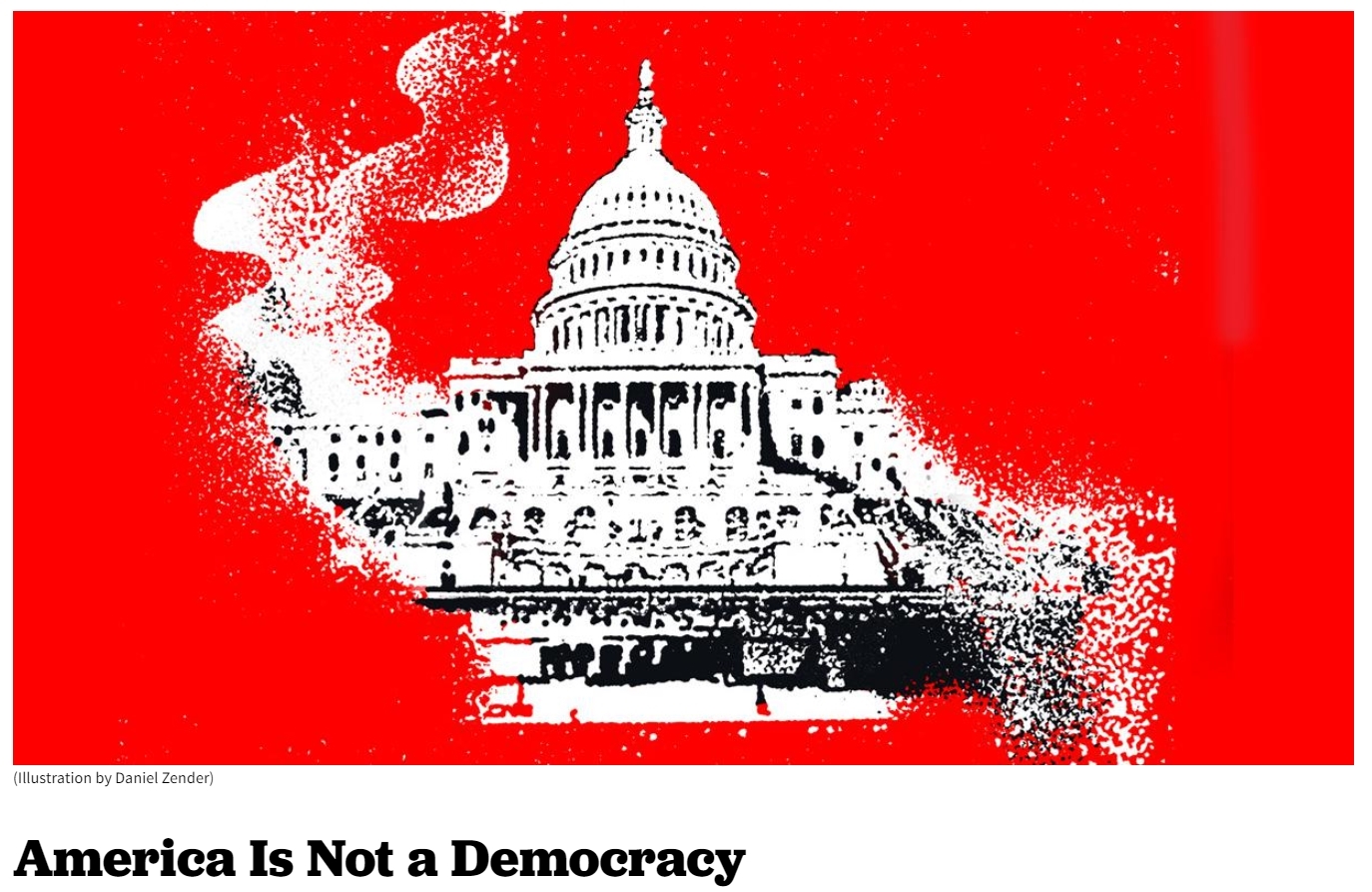
https://prospect.org/politics/2024-01-29-america-is-not-democracy/
Democrats have spent much—some might say all—of the last two presidential elections warning about the threats to democracy embodied by Donald Trump. The 2024 election is already being pitched not as a choice about taxes or health care or social policy, but a final test of whether we will have a republic or a dictatorship. Trump is a more than worthy subject of concern for anyone hoping for democracy in 2025. Last time he was president, he actively resisted the peaceful transfer of power, a hallmark of despots the world over. To the extent he and his authoritarian-friendly advisers learned anything from the first term, it was how to neutralize obstacles to expanding power. His musing about being a “dictator on day one” is really not loose talk. The plans emanating from Team Trump to destroy the civil service, hire government lawyers to rubber-stamp unconstitutional actions and prosecute personal enemies, and even deploy troops on American soil are truly alarming.

But something troubles me about that term, “threat to democracy.” It has become a catchall phrase for resistance to conservative extremism, and specifically Trump. Yet the deficiencies in American democracy go back to the very founding, and the long arc of history hasn’t come close to correcting all of them. The larger crisis we now face is not solely attributable to an individual with malign intent for our government; it’s more about the system of government itself. Exactly what part of democracy are we trying to save? Is it our democratic legislature, gerrymandered and malapportioned beyond recognition, with supermajority thresholds that deny rule even by that corrupted majority? Is it our democratic presidency, which Trump legally took over after losing the popular vote in 2016, and George W. Bush in the same fashion 16 years earlier? Is it our democratic judiciary, morphed into a super-legislature and habitually twisting the Constitution to advantage those with power, money, and influence?

Are we worried about a democracy that can be so easily purchased, where corporate lobbyists either win whatever they want on Capitol Hill, or win by regulatory change or international trade treaty whatever they don’t? Has this government, where the most important modification of our democracy’s original sin, the second-class citizenship of Black people, is now being steadily reversed by state legislatures and the courts, earned our support? Is there despair over losing something that has produced unequal opportunity, unequal justice, and the conversion of economic power into political power? Where can we find this democracy we need to fight to preserve? No democracy perfectly distills the will of the people. But America is uniquely terrible at achieving democratic outcomes. It’s worth focusing our energies to repair that, because the alternative really is too grim to contemplate. But there are only a few options here. We can defend “democracy” as an amorphous concept that this country has almost never lived up to. We can uncover escape hatches, short-term circumventions of the rules, either to disqualify Trump and the threat he represents, or to take action on policy challenges. We know the names of these band-aids: budget reconciliation, the Electoral Count Reform Act, the 14th Amendment.
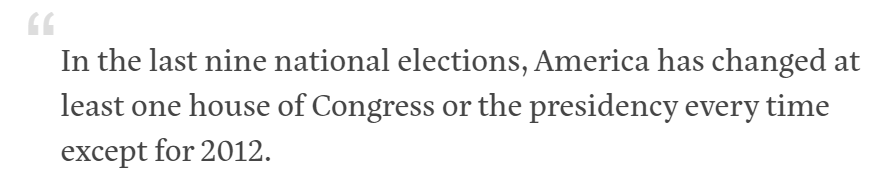
But we don’t deserve to live as political Houdini figures, trying constantly to work our way out of shackles imposed on us by our own system of government. If a political movement is going to style itself as the savior of democracy, it should also speak plainly about the myriad deficiencies in our democracy, and what it would actually take to fix them. American Democracy isn't very successful not despite being the world’s oldest, but because of that fact. The Founding Fathers—primarily aristocrats, land speculators, and slaveholders—had noble aspirations but limited belief in true democracy. They distrusted agglomerations of power, whether in a monarch, political parties, or the people. As historian Terry Bouton has written, Founders like Alexander Hamilton and Elbridge Gerry detested an “excess of democracy” that could lead to a dangerous outbreak of economic equality. They thus devised a system built for a small, agrarian country, intended to make addressing social challenges extremely difficult. Presidents don’t get to form the government, and the legislature responsible for enacting the laws is elected at different times. The framers wanted the House, Senate, and presidency to compete with one another, to curb each other’s power, and in that competition to disable the desires of the people, even if they constituted a majority. Montesquieu, the French philosopher who inspired the founders to build a system of checks and balances, hoped a government so conceived “should naturally form a state of repose or inaction.”
snip
much much more at the top link
 = new reply since forum marked as read
Highlight:
NoneDon't highlight anything
5 newestHighlight 5 most recent replies
= new reply since forum marked as read
Highlight:
NoneDon't highlight anything
5 newestHighlight 5 most recent replies

Progressive dog
(7,612 posts)Sounds like some people would like it to be more like the others.

Igel
(37,613 posts)If you're not majoritarian, you're not a true democrat. They say. Here there be idiots.
It's like saying if you like Sriracha on your haggis, you're not a true Scotsman.
It's defining the word to suit their power and ideological (but I repeat myself) requirements. Note that in many years after Roe a majority wanted restrictions on abortion--by this standard, SCOTUS and Roe were harshly undemocratic. And given polling, Biden's presidency is undemocratic. Many confuse "liberal democracy" and certain values with "democracy." Here there also be idiots. "Liberal" sets hedges; "democracy" sets process. (Yet I've heard some say that just because the majority vote for something doesn't mean it's a democracy. Yeah, yeah it does. Maybe not liberal, but we've redefined in media res the word, and that's a fallacy.)
I like being in the democratic form of government that's a republic and a liberal democracy. One distributes power widely; the other has strictures in place to prevent a majority mob from being oppressors (because mobs are oppressive--just look at any "local democracy" called a "lynch mob" .
.
All democracies require deliberation and mitigation of popular passions, and representatives more concerned about justice than paycheck must be willing to do what's right and not what's popular--otherwise some group is like Bede the Venerable described his group's position vis-a-vis the Anglo-Saxon onslaught--
The barbarians drive us to the sea; the sea drives us back to the barbarians: between them we are exposed to two sorts of death; we are either slaughtered or drowned.
(The standard translation for ‘Repellunt barbari ad mare, repellit mare ad barbaros; inter haec oriuntur duo genera funerum, aut iugulamur, aut mergimur.' I say original sources are always to be preferred, when possible--there y'all go. Hey, I'm a science teacher, compared to chemistry, Latin's duckpin.


thucythucy
(9,153 posts)Far from protecting us from "the mob" it actually empowered the MAGA mob in 2016 and may do so again later this year.
We wouldn't be in this tenuous position if the presidency was awarded without fail to the candidate who won the most votes. A Trump win under such a constitutional regime would be well nigh impossible.
As it is, several thousand votes in a half dozen states will determine whether or not we install as our next president a serial rapist, scam artist, Putin-lover fraud who has vowed to punish his critics, abandon our allies, and enshrine the idea that the president is above the law.
In this instance I would most definitely prefer majoritarian rule. I trust the majority of voters, who have given Democrats the vote in seven out of the past eight presidential elections.
Progressive dog
(7,612 posts)
muriel_volestrangler
(106,592 posts)Some features of the US process, such as the filibuster, are indeed still "democratic", though they do make the legislature sclerotic. But some (apportioning 2 senators to each state whatever the population, and the Electoral College) are clearly anti-democratic, while the influence of money is corrupt, as is the control of party politicians over districting.
If you aren't able to examine your own problems, you'll never fix them.
Bede, by the way, was Anglo-Saxon. He was talking about the reaction of the Britons to the new threat of the Anglo-Saxons, once the Roman legions had left. The Anglo-Saxons did indeed take control, in about a century (a fairly short space of time for those days), in most of Britain.

Kick in to the DU tip jar?
This week we're running a special pop-up mini fund drive. From Monday through Friday we're going ad-free for all registered members, and we're asking you to kick in to the DU tip jar to support the site and keep us financially healthy.
As a bonus, making a contribution will allow you to leave kudos for another DU member, and at the end of the week we'll recognize the DUers who you think make this community great.