General Discussion
Related: Editorials & Other Articles, Issue Forums, Alliance Forums, Region Forums
Planet Nine: Is the search for this elusive world nearly over?
Astronomers have been scouring the outer solar system for signs of a hypothetical ninth planet for almost a decade, without success. However, we may finally be on the cusp of finding it, experts say.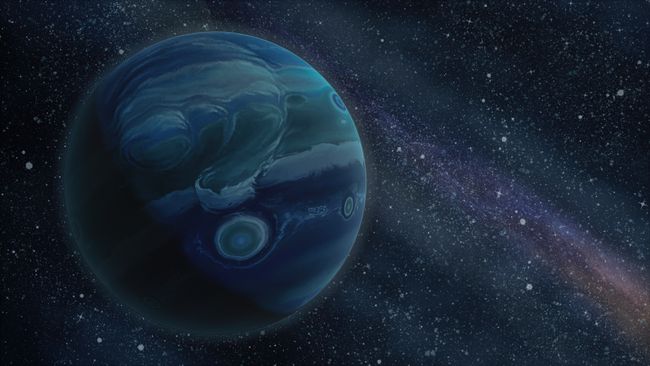
Scientists think there may be a ninth planet hiding in the distant reaches of the solar system — and a new telescope could finally prove its existence. (Image credit: Nicholas Forder for Live Science)
Deep in the outer reaches of the solar system — so far away from the known planets that the sun would barely be distinguishable from a nearby star — a massive, icy world may be lurking in the shadows, waiting to be discovered by humanity. And the day that we finally find this elusive planet may be coming soon, thanks to a state-of-the-art telescope that will begin scanning the sky next year.
The solar system has eight official planets: Mercury, Venus, Earth, Mars, Jupiter, Saturn, Uranus and Neptune. But in recent years, astronomers have proposed that a ninth world, imaginatively nicknamed "Planet Nine," could be hiding in the far reaches of our cosmic neighborhood.
And no, we're not talking about Pluto, which was demoted from full planetary status to "dwarf planet" in 2006. Instead, scientists believe Planet Nine is a gas or ice giant billions of miles farther out than the rest of the planets. If it exists, it could also rewrite our understanding of the solar system's origins and evolution.
Astronomers have predicted how big this hypothetical world could be, how far away it could lie and even where it should be in its orbit around the sun. Yet actually finding Planet Nine, sometimes called Planet X, has eluded scientists for nearly a decade.
But the hunt for the solar system's potential ninth planet may soon be coming to a close. With the opening of the groundbreaking Vera C. Rubin Observatory in 2025, we may either finally find Planet Nine within the next few years — or rule out the idea for good, experts told Live Science.
https://www.livescience.com/space/planets/planet-nine-is-the-search-for-this-elusive-world-nearly-over
 = new reply since forum marked as read
Highlight:
NoneDon't highlight anything
5 newestHighlight 5 most recent replies
= new reply since forum marked as read
Highlight:
NoneDon't highlight anything
5 newestHighlight 5 most recent replies

Duppers
(28,473 posts)I think there's much more out there to discover.
Silent3
(15,909 posts)Voyager 1 is currently around 162 AU away from us, and more than once has been reported to have "left the solar system", as different scientific and popular press notions have kicked in. Voyager 1 is now beyond the "heliopause", where the force of our own sun's solar winds drops to where it is indistinguishable the pressure of the interstellar medium.
Planet Nine, however, is estimated (if it exists) to be around 500 AU away, way far beyond the heliopause and Voyager. But we can't very well call it a planet in our solar system and say it's beyond our solar system at the same time.

yagotme
(4,136 posts)If Planet X is found out that far, that will just reset the outer limit of the solar system, as long as it actually abides by planetary rules.

Angleae
(4,816 posts)One that takes it from near pluto's orbit all the way out to the nether regions of outer space.

marybourg
(13,656 posts)going on for a decade, but I remember an astronomer named Chuck something speaking to an astronomy group on Long Island in the early 1970’s about his search for “Planet X”, the 9th planet. He was not accorded a heck of a lot of respect.

Hermit-The-Prog
(36,631 posts)
Hugin
(37,944 posts)I do about “Reagan” National. Pluto is a planet.
Hermit-The-Prog
(36,631 posts)bluesbassman
(20,385 posts)Sorry, was just in me and had to come out. 
muriel_volestrangler
(106,476 posts)It's heavier than Pluto, after all. How about Haumea and Makemake - they're closer to the Sun, on average, than Eris. What are your cut-off criteria that stop Ceres, or other asteroids, being a planet (remembering that Ceres used to be called a planet too)?

Hekate
(100,133 posts)💫 🪐