Impeachment and Removal of Judges: An Explainer
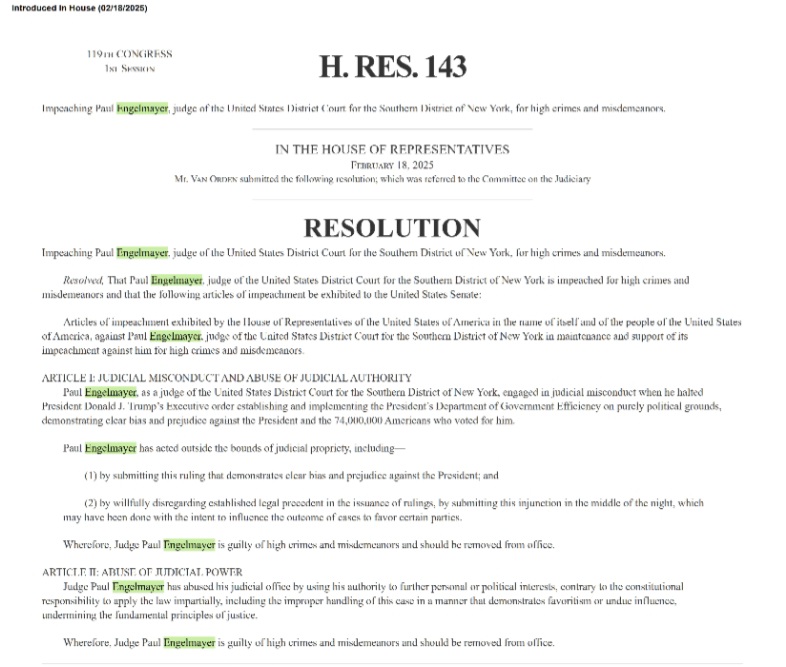
MAGA idiots want to impeach federal judges who are ruling against trump and Musk. Here is a good explanation of the law on the impeachment of federal judges from the Brennan Center. There have been few judiciaql impeachments and there have been no removals due to the rulings of a federal judge.
Judicial impeachment shouldn’t be used to punish judges for their rulings. Here’s why.
https://www.brennancenter.org/our-work/analysis-opinion/impeachment-and-removal-judges-explainer
The U.S. Constitution provides little guidance as to what offenses constitute grounds for the impeachment of federal judges: as with other government officials, judges may be removed following impeachment and conviction for “Treason, Bribery, or other high Crimes and Misdemeanors”; otherwise, under Article III, Section 1, judges “shall hold their Offices during good Behaviour.”
However, the impeachment power has historically been limited to cases of serious ethical or criminal misconduct. For example, in 2009, the House impeached U.S. District Court Judge Samuel B. Kent on charges of sexual assault, obstructing an official proceeding, and making false statements. Kent resigned before the Senate tried the charges. The next year, the House impeached U.S. District Court Judge G. Thomas Porteous Jr. on allegations of bribery and making false statements. The Senate convicted Porteous. Of the 15 federal judicial impeachments in history, the most common charges were making false statements, favoritism toward litigants or special appointees, intoxication on the bench, and abuse of the contempt power......
Can judges be impeached for their rulings?
Historical practice suggests a strong tradition against impeaching judges for their decisions. Chief Justice William Rehnquist, who wrote a book examining the history of judicial impeachment, found that early historical uses of the impeachment power established a norm that “judicial acts — their rulings from the bench — would not be a basis for removal from office by impeachment and conviction.”
According to Rehnquist, the attempted removal of Supreme Court Justice Samuel Chase in 1804 was, in particular, “enormously important in securing the kind of judicial independence contemplated by” the Constitution. President Thomas Jefferson, a Democratic-Republican, encouraged the House to impeach Chase, a Federalist, after Chase openly criticized the president and his policies to a Baltimore grand jury. In addition to the charge that his partisan statements undermined the judiciary, the charges against Chase ultimately included inflated allegations of misconduct in several trials. The House impeached Chase in 1804, but the following year, the Senate declined to convict, despite Jefferson’s party holding a supermajority. This failed impeachment helped set the bounds of the proper use of the impeachment power — including that judicial decisions should not be a basis for removing judges from the bench.
This norm contributes to the United States’ carefully balanced three-branch system of government, which requires that judges remain insulated from political pressure when deciding cases. Job security is one important contributor to maintaining judicial independence — so that judges are deciding cases based on their understanding of what the law requires and not worrying that they could be removed from office if powerful political actors disagree with their rulings.

 = new reply since forum marked as read