Cooking the Inflation and Jobs Numbers
 https://prospect.org/blogs-and-newsletters/tap/2025-08-13-cooking-inflation-jobs-numbers-trump-bls/
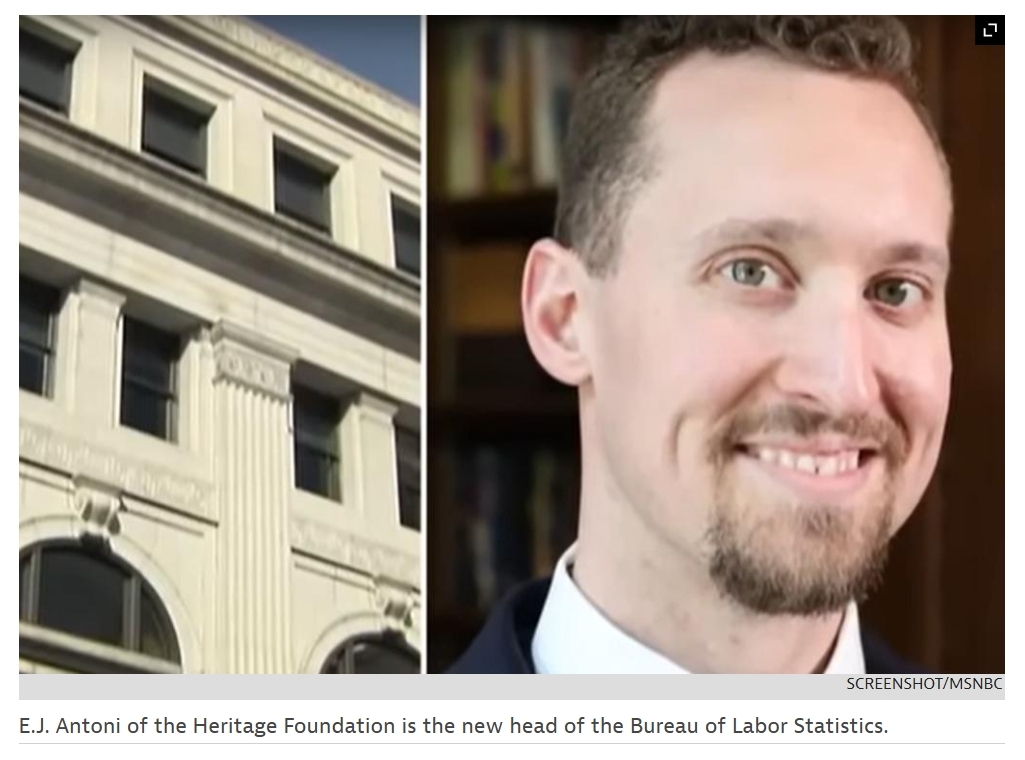
Trump’s appointment of a hack loyalist, E.J. Antoni of the Heritage Foundation, to head the Bureau of Labor Statistics could actually lead to some interesting debates if Trump’s goal were not to rig the data. The BLS derives the Consumer Price Index by sampling tens of thousands of actual prices in different parts of the country, and then weighting them to create a “market basket” of typical consumer purchases. To calculate the unemployment rate, the BLS conducts two different surveys, one of households and the other of employers.
Antoni has objected that the BLS often issues major revisions after the initial CPI numbers, because some sources are slower to report than others. Likewise jobs numbers. He recently called for the BLS to issue its own reports quarterly rather than monthly. More mainstream critics than Antoni have pointed out that the BLS methodology is outmoded in an era when large retailers keep all of their prices on computers updated minute to minute. MIT economists Alberto Cavallo and Roberto Rigobon have created a “
Billion Prices Project,” which scrapes daily online pricing data from retailers to compute real-time inflation.
Many other economists have also noted that the employer survey on jobs sometimes contradicts the household survey. The problem, however, is that Trump did not appoint Antoni to make technical refinements for the sake of better data. He appointed him to cook the numbers. And both things are not possible. The consumer price numbers that BLS released this week were pretty mixed. The July increase was only
0.2 percent, down from the June rate of 0.3 percent. But core inflation, less food and energy, rose at a 3.1 percent annual rate, which is above the previous several months.
Whatever the eventual effect of Trump’s tariffs, it hasn’t fully shown up in the CPI. So it’s awfully hard, even for Trump, to contend that his enemies have rigged the statistics when the numbers are bad but that the figures are legitimate when they are good. One of the main consumers of the BLS price data is the Federal Reserve. The Fed looks closely at inflation trends in deciding whether to raise or lower interest rates or keep them the same. The fact that inflation was relatively low in July suggests that the Fed could well make a modest cut in rates at its September meeting, though rising core inflation may cut against that.
snip
