General Discussion
Related: Editorials & Other Articles, Issue Forums, Alliance Forums, Region ForumsBecoming a USAF Russian Linguist in 1966.
I was just 20 years old, and only about four months in the USAF. I found myself in a dorm at Syracuse University in a remote part of the campus, called Skytop. I had checked in there after flying from California to Syracuse in a 707 and then on a small Mohawk airliner. I woke up the next morning, ate breakfast and the next thing I knew I was in a classroom being told we were only to speak Russian in the classroom and in our barracks dorms.
In Basic Training in the USAF, some Airmen were assigned to take a language aptitude test. I don't know how we were chosen, frankly, although I remember being asked if I spoke any languages besides English. I answered that I could speak French and Spanish. I think that and scores on the test we all took before enlisting was what triggered the language aptitude test. If I remember correctly, only 12 people from all of the basic training units at that time went to language school.
Привет, Нина. Куда вы идёте? - Hi Nina. Where are you going?
My first sentence in Russian, as it was for all of us. We dove in, learning to make Russian vocal sounds and beginning to learning to write in the Cyrillic alphabet. Total immersion language school.
Little did I know that after that 9 month school, my writing ability in English would be destroyed, so much so that I still have to to print in English. My cursive English writing is gone. I learned Russian history, too, along with singing in a men's chorus in Russian. We got a full year of college credits from Syracuse U. for that education.
I was lucky enough to have a roommate who agreed to speak only Russian. An English to Russian dictionary was always in our hands. I was amazing how quickly we began to be able to carry on conversations and read Russian documents.
With only native-speaking teachers, we made very fast progress. What an amazing thing to do at the age of 20. An adventure in learning to be sure.
One of the things we did at the school was to take dictation in Russian, writing down what we heard in Russian. A lot of that. So, it was very fast writing, using the Cyrillic alphabet. For 9 months. Many of the Cyrillic letters are used for writing common sounds for both languages, but with different characters. For example the "B" in Russian is pronounce the same as the English "V." "T" in English looks like "M" in the Cyrillic cursive alphabet. So, after doing that a lot for 9 months, cursive writing in English became difficult.
Since we were heavily involved in the Vietnam conflict at the end of the 60s, a lot of people forgot about the cold war, which was still a big deal in the mid to late 60s. In fact, the time period from about 1960 to 1970-something was huge when it came to the need for linguists. Army, Navy, and USAF all had linguists in several languages, with Russian at the top of the list.
The work we did was highly classified, but anyone with a brain can look at the places we were stationed, like the Black Sea Coast in Turkey, and get some sort of idea of what we were doing there. That has since been discussed openly, although the details remain classified. Was our work important? Yes, but it all changed after the early 1970s. As an example, the base I was at in Samsun, Turkey, was only operational from about 1960 to 1972. Twelve years. A lot got jammed into those 12 years, though. For lowly enlisted folks like me, the bigger picture was hard to see, although it could be figured out, one way or another.
It's not the same any more. Not anything like the same. Military service today seems to be at the whim of Donald J. Trump. He would not have understood what people like me were doing while in the military.
 = new reply since forum marked as read
Highlight:
NoneDon't highlight anything
5 newestHighlight 5 most recent replies
= new reply since forum marked as read
Highlight:
NoneDon't highlight anything
5 newestHighlight 5 most recent replies

dweller
(28,672 posts)RELEASE THE EPSTEIN FILES in Russian ?
https://www.democraticunderground.com/100220734973
🤔
✌🏻

MineralMan
(151,540 posts)
Mr. Evil
(3,472 posts)He'll probably think it's a direct order from Putin and release them! 
Swede
(40,066 posts)
the icing on the cake! 

eppur_se_muova
(42,507 posts)The script forms that changed from capital to lower case are especially confusing, especially since I knew the Greek alphabet better than the Cyrillic, so Roman, Greek, Cyrillic got mixed up frequently. I never got very far with Russian; quickly abandoned the "usual" grammar-drill-and-vocabulary-repitition classroom approach in favor of learning written Russian well enough to scan a chemical procedure in a Russian journal. Things move fast when you don't worry about conjugation, declension, tense, gender, etc. just get the root and charge forward with a small set of frequently repeated vocabulary. Once I got into grad school I found every important Russian scientific journal was available as a professionally translated and printed publication, so that process lost a lot of impetus.
Every now and then I try to pick up a little more Russian, but in 45 years I've never finished a single language book I've started. Kind of a shame, since I've found an old Russian non-fiction book I'd like to translate. Maybe if I can ever get back to where I can afford OLLI classes I'll take it up again, or actually register for college-level classes. Maybe I could translate that book for a thesis project :/ .

The word Шиншилла (shinshilla), which means "Chinchilla". In red, a decomposition of the handwritten text showing the block letter equivalent.

The word Лишишь (lishish), which means "you will deprive". In red, a decomposition of the handwritten text showing the block letter equivalent.
MineralMan
(151,540 posts)I was never called on to do a handwritten transcript of anything in my actual work. I believe that the reason for that dictation and transcription practice at the language school was to reinforce our vocabulary learning through repetition and transcription. Concentration seems to be the key. There might have been a reason somewhere to do a handwritten transcript of spoken Russian, but I never encountered it.
Later, I did a lot of transcription, but that was all done on IBM Selectric typewriters with Cyrillic balls. I was able to transcribe Russian speech at about 120 wpm using that typewriter. Now, that was a useful skill I developed. That, surprisingly, did not interfere with my typing in English, which I could do at about the same wpm rate.
My other skill that was useful was the ability to type a live translation of what was being said, with the output in English. Not with 100% accuracy, but about 80%. I could fill in the rest later with a second listening. A lot depended on what was being said. A lot of it was pretty predictable, really. Same stuff over and over again, with minor changes.
Of course, that was all 60 years ago. Now, I can barely have a social conversation in Russian. I no longer have opportunities to converse with Russian speakers, and practice keeps things alive in the brain. No practice, no fluency.
eppur_se_muova
(42,507 posts)
I once started typing 'cc' in English words where 'ss' was the correct spelling. I gave the Russian a break after that. It's been a decades-long break.
MineralMan
(151,540 posts)I appropriated one of those balls my last day in the NSA building. They were everywhere. I also asked for and received a stack of Russian specialized dictionaries from the library there.
At that time, I planned to get a degree in Russian. "No problem," the library guy said. Then he let me fill a box from their surplus shelves.

JoseBalow
(9,739 posts)Hmmm...
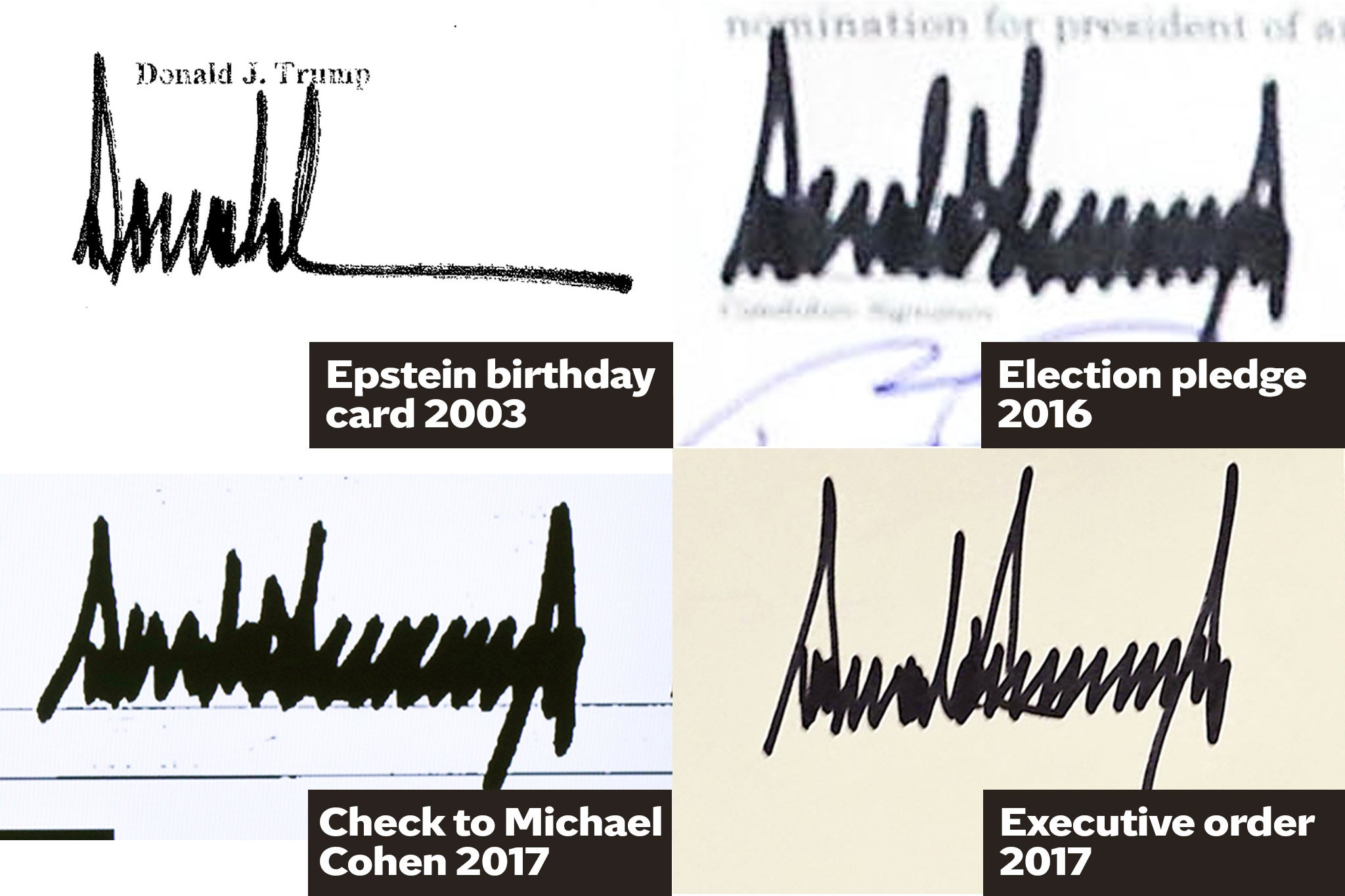
electric_blue68
(27,296 posts)electric_blue68
(27,296 posts)
Ohhhh, boy!

Aviation Pro
(15,762 posts)Don’t ask. 
erronis
(24,522 posts)
democrank
(12,680 posts)Thanks for posting.

John1956PA
(5,119 posts). . . he was assigned to monitor Soviet Communications. I think he was stationed in Greenland. He became the first person from the Western Hemisphere to learn that Stalin had died.
MineralMan
(151,540 posts)jmowreader
(53,394 posts)He was in the 12th Radio Squadron Mobile.
And he wouldn't have needed to know Russian to do his job, since he was a Morse interceptor. He would have just written down the Morse characters he received and someone else would translate them.
electric_blue68
(27,296 posts)
dobleremolque
(1,132 posts)Except for me, it was 普通话. Mandarin Chinese.
So how did we take "dictation?" We used the Tweksbury Romanization created at Yale University. This was before the Chinese Government finalized and adopted the official PinYin Romanization.
So with the Romanization, we could use typewriters....IBM Selectrics, top of the line back then!
After typing the Romanization, we took the typed page and wrote in diacritical marks over the vowels to express the five tones used in Mandarin.... High tone ā, rising tone á, falling tone à, "hook" tone ǎ. Neutral tone had no diacritical mark.
So 你好吗? Became Nī hǎo ma?
We were not taught Hanzi 汉字 or Chinese characters, because the emphasis was on comprehension and getting it down correctly on paper to send off to Intel for analysis. I didn't start learning 汉字 until I took a community college course years after separation from the Air Force.
MineralMan
(151,540 posts)But, there was work to do, wasn't there?
electric_blue68
(27,296 posts)One I didn't know about earlier in life.
Not that I was going to study Chinese but it's an interesting take in linguistics.
LudwigPastorius
(15,001 posts)But, he went to Army Language School in Monterey to study Russian. He was later stationed in Peshawar, Pakistan, Germany, and Japan.
He couldn't tell us much about what he did, but I assumed that most of the time he was on "ferret" flights listening to Soviet chatter. I think he was on specially equipped C-130s, then later, RC-135s.
MineralMan
(151,540 posts)He's a hero.
moondust
(21,352 posts)that because Russian does not have a Short-u they spell Donold's last name with an "a" -- which then transliterates as "Tramp".


MineralMan
(151,540 posts)Love it!
electric_blue68
(27,296 posts)Background.
NYC - I was in the gifted 5th & 6th grade classes. We had a French teacher, but I didn't like her, so I soured on French for some years.
Then when I got to JHS we had a choice.
French? Nope! Spanish... Eh, idk why re: my thinking then.
But then...
There was ....
Russian.
Russian?! This was 1966-67. Why?
Anyway, I thought- for some reason I knew Russian was similar to Ukrainian. I'm 2nd Gen half Ukrainian-American. My dad spoke Ukrainian to his dad.
I thought I'd be cool to sort of speak something similar. I didn't yet know about the emnity between many Ukrainians against The Soviet Union.
So I took it. I did well! 85% grade. Yay, me.
Then time for HS. I got into my specialized Art & Music HS (Art). But it didn't have Russian. So I muddled through 😑 Spanish, since I was still down on French.
So while not being military, if I'd continued - maybe in a parallel Earth- I'm a now retired UN Russian translator. Who knows!
MineralMan
(151,540 posts)
Kick in to the DU tip jar?
This week we're running a special pop-up mini fund drive. From Monday through Friday we're going ad-free for all registered members, and we're asking you to kick in to the DU tip jar to support the site and keep us financially healthy.
As a bonus, making a contribution will allow you to leave kudos for another DU member, and at the end of the week we'll recognize the DUers who you think make this community great.