Welcome to DU!
The truly grassroots left-of-center political community where regular people, not algorithms, drive the discussions and set the standards.
Join the community:
Create a free account
Support DU (and get rid of ads!):
Become a Star Member
Latest Breaking News
Editorials & Other Articles
General Discussion
The DU Lounge
All Forums
Issue Forums
Culture Forums
Alliance Forums
Region Forums
Support Forums
Help & Search
General Discussion
Related: Editorials & Other Articles, Issue Forums, Alliance Forums, Region ForumsThe Lyndon Johnson Tapes: Richard Nixon's 'Treason' - BBC (And It Gets Weirder)
The Lyndon Johnson tapes: Richard Nixon's 'treason'By David Taylor - BBC
3/15/13
<snip>
Declassified tapes of President Lyndon Johnson's telephone calls provide a fresh insight into his world. Among the revelations - he planned a dramatic entry into the 1968 Democratic Convention to re-join the presidential race. And he caught Richard Nixon sabotaging the Vietnam peace talks... but said nothing.
After the Watergate scandal taught Richard Nixon the consequences of recording White House conversations none of his successors has dared to do it. But Nixon wasn't the first.
He got the idea from his predecessor Lyndon Johnson, who felt there was an obligation to allow historians to eventually eavesdrop on his presidency.
"They will provide history with the bark off," Johnson told his wife, Lady Bird.
The final batch of tapes released by the LBJ library covers 1968, and allows us to hear Johnson's private conversations as his Democratic Party tore itself apart over the question of Vietnam.
The 1968 convention, held in Chicago, was a complete shambles...
<snip>
Much More: http://www.bbc.co.uk/news/magazine-21768668
******************************************************************
Gets Weirder Here:
Tapes show how President Johnson planned comeback in 1968
BBC
3/16/13
President Lyndon Johnson talks to an aide about whether the Mayor of Chicago, Richard Daley, can help him make a remarkable comeback at the Democratic Party convention in August 1968.
Link (w/Audio): http://www.bbc.co.uk/news/magazine-21799429


8 replies
 = new reply since forum marked as read
Highlight:
NoneDon't highlight anything
5 newestHighlight 5 most recent replies
= new reply since forum marked as read
Highlight:
NoneDon't highlight anything
5 newestHighlight 5 most recent replies
= new reply since forum marked as read
Highlight:
NoneDon't highlight anything
5 newestHighlight 5 most recent replies
The Lyndon Johnson Tapes: Richard Nixon's 'Treason' - BBC (And It Gets Weirder) (Original Post)
WillyT
Mar 2013
OP

leveymg
(36,418 posts)1. LBJ: ""We have found that our friend, the Republican nominee . . . has been playing with our enemies
It begins in the summer of 1968. Nixon feared a breakthrough at the Paris Peace talks designed to find a negotiated settlement to the Vietnam war, and he knew this would derail his campaign.
He therefore set up a clandestine back-channel involving Anna Chennault, a senior campaign adviser.
At a July meeting in Nixon's New York apartment, the South Vietnamese ambassador was told Chennault represented Nixon and spoke for the campaign. If any message needed to be passed to the South Vietnamese president, Nguyen Van Thieu, it would come via Chennault.
In late October 1968 there were major concessions from Hanoi which promised to allow meaningful talks to get underway in Paris - concessions that would justify Johnson calling for a complete bombing halt of North Vietnam. This was exactly what Nixon feared.
The US delegation, left, and North Vietnamese delegation at Paris peace talks The Paris peace talks may have ended years earlier, if it had not been for Nixon's subterfuge
Chennault was despatched to the South Vietnamese embassy with a clear message: the South Vietnamese government should withdraw from the talks, refuse to deal with Johnson, and if Nixon was elected, they would get a much better deal.
So on the eve of his planned announcement of a halt to the bombing, Johnson learned the South Vietnamese were pulling out.
He was also told why. The FBI had bugged the ambassador's phone and a transcripts of Anna Chennault's calls were sent to the White House. In one conversation she tells the ambassador to "just hang on through election".
Johnson was told by Defence Secretary Clifford that the interference was illegal and threatened the chance for peace.
President Nixon in 1970 with a map of Vietnam Nixon went on to become president and eventually signed a Vietnam peace deal in 1973
In a series of remarkable White House recordings we can hear Johnson's reaction to the news.
In one call to Senator Richard Russell he says: "We have found that our friend, the Republican nominee, our California friend, has been playing on the outskirts with our enemies and our friends both, he has been doing it through rather subterranean sources. Mrs Chennault is warning the South Vietnamese not to get pulled into this Johnson move."
He orders the Nixon campaign to be placed under FBI surveillance and demands to know if Nixon is personally involved.
He therefore set up a clandestine back-channel involving Anna Chennault, a senior campaign adviser.
At a July meeting in Nixon's New York apartment, the South Vietnamese ambassador was told Chennault represented Nixon and spoke for the campaign. If any message needed to be passed to the South Vietnamese president, Nguyen Van Thieu, it would come via Chennault.
In late October 1968 there were major concessions from Hanoi which promised to allow meaningful talks to get underway in Paris - concessions that would justify Johnson calling for a complete bombing halt of North Vietnam. This was exactly what Nixon feared.
The US delegation, left, and North Vietnamese delegation at Paris peace talks The Paris peace talks may have ended years earlier, if it had not been for Nixon's subterfuge
Chennault was despatched to the South Vietnamese embassy with a clear message: the South Vietnamese government should withdraw from the talks, refuse to deal with Johnson, and if Nixon was elected, they would get a much better deal.
So on the eve of his planned announcement of a halt to the bombing, Johnson learned the South Vietnamese were pulling out.
He was also told why. The FBI had bugged the ambassador's phone and a transcripts of Anna Chennault's calls were sent to the White House. In one conversation she tells the ambassador to "just hang on through election".
Johnson was told by Defence Secretary Clifford that the interference was illegal and threatened the chance for peace.
President Nixon in 1970 with a map of Vietnam Nixon went on to become president and eventually signed a Vietnam peace deal in 1973
In a series of remarkable White House recordings we can hear Johnson's reaction to the news.
In one call to Senator Richard Russell he says: "We have found that our friend, the Republican nominee, our California friend, has been playing on the outskirts with our enemies and our friends both, he has been doing it through rather subterranean sources. Mrs Chennault is warning the South Vietnamese not to get pulled into this Johnson move."
He orders the Nixon campaign to be placed under FBI surveillance and demands to know if Nixon is personally involved.

exboyfil
(18,372 posts)2. Anna Chennault and Kissinger
are still alive. There is no statute of limitations on treason.
WillyT
(72,631 posts)3. Good Point...


spanone
(142,053 posts)4. k&r...
WillyT
(72,631 posts)5. Kick !!!
WillyT
(72,631 posts)6. Morning Kick !!!

MinM
(2,650 posts)7. A small aside .. Nanci Griffith almost always dons her LBJ button...
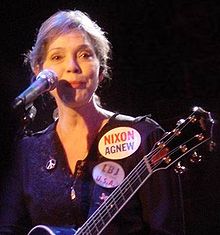
Nixon - Agnew too!?!


Solly Mack
(97,265 posts)8. K&R
Kick in to the DU tip jar?
This week we're running a special pop-up mini fund drive. From Monday through Friday we're going ad-free for all registered members, and we're asking you to kick in to the DU tip jar to support the site and keep us financially healthy.
As a bonus, making a contribution will allow you to leave kudos for another DU member, and at the end of the week we'll recognize the DUers who you think make this community great.