General Discussion
Related: Editorials & Other Articles, Issue Forums, Alliance Forums, Region ForumsHikikomori: Why are so many Japanese men refusing to leave their rooms?
As many as a million young people in Japan are thought to remain holed up in their homes - sometimes for decades at a time. Why? For Hide, the problems started when he gave up school.
"I started to blame myself and my parents also blamed me for not going to school. The pressure started to build up," he says. "Then, gradually, I became afraid to go out and fearful of meeting people. And then I couldn't get out of my house." Gradually, Hide relinquished all communication with friends and eventually, his parents. To avoid seeing them he slept through the day and sat up all night, watching TV. "I had all kinds of negative emotions inside me," he says. "The desire to go outside, anger towards society and my parents, sadness about having this condition, fear about what would happen in the future, and jealousy towards the people who were leading normal lives."
Hide had become "withdrawn" or hikikomori...
Andy Furlong, an academic at the University of Glasgow specialising in the transition from education to work, connects the growth of the hikikomori phenomenon with the popping of the 1980s "bubble economy" and the onset of Japan's recession of the 1990s.
It was at this point that the conveyor belt of good school grades leading to good university places leading to jobs-for-life broke down. A generation of Japanese were faced with the insecurity of short-term, part-time work.
And it came with stigma, not sympathy.
Job-hopping Japanese were called "freeters" - a combination of the word "freelance" and the German word for "worker", arbeiter. In political discussion, freeters were frequently bundled together with "neets" - an adopted British acronym meaning "not in education, employment or training". Neets, freeters, hikikomori - these were ways of describing the good-for-nothing younger generation, parasites on the flagging Japanese economy. The older generation, who graduated and slotted into steady careers in the 1960s and 1970s, could not relate to them.
"The opportunities have changed fundamentally," says Furlong. "I don't think the families always know how to handle that." A common reaction is for parents to treat their recalcitrant son with anger, to lecture them and make them feel guilty for bringing shame on the family...
http://www.bbc.co.uk/news/magazine-23182523
 = new reply since forum marked as read
Highlight:
NoneDon't highlight anything
5 newestHighlight 5 most recent replies
= new reply since forum marked as read
Highlight:
NoneDon't highlight anything
5 newestHighlight 5 most recent replies

msongs
(73,487 posts)
LuvNewcastle
(17,785 posts)still with their parents. I guess mom brings in a tray.

Bonobo
(29,257 posts)Bonobo
(29,257 posts)whereas in Japan, such anti-social behavior is clamped down on harder and, as a group-oriented society, would bring a lot of negativity down on the family group.
As a result, people shut down and close themselves in here. In the West, they would more likely turn such feelings into socially expressed anger.
It is not an easy society for those who do not succeed. There are many conveyer belts here that allow a person to get on board and ride to a smooth life. The problem is if you miss one of them, or any of them, it is hard to get back on track. Much harder to overcome some kind of initial social mistake (school, job) than in the West.

shaayecanaan
(6,068 posts)You can see exactly the same sorts of behaviour in other, "Western" ex-growth economies, especially those that have gone into population decline, such as the former Soviet Union and the Ukraine.
A related phenomenon is the "grass-eating men" or soushoku danshi:-
http://en.wikipedia.org/wiki/Herbivore_men
Essentially, there are no longer sufficient, reliable jobs to meet the needs of the young generation (and there havent been since the 1990s). Younger people are remaining with their parents longer. Women are unable to find a male of sufficient income-earning status to satisfy their preferences and are accordingly putting off having families, sometimes indefinitely.
The male response has been interesting. A lot of men have happily abandoned the search for a female mate and have instead busied themselves with books, video games and personal grooming. It reminds one of the rats in John Calhoun's Universe experiments:-
http://en.wikipedia.org/wiki/John_B._Calhoun#Norway_rat_experiments
Bonobo
(29,257 posts)And I don't think it is "Orientalistic Codswallop" although I do admire the turn of phrase you use.
My undergraduate and post-graduate studies have all been in Japanese culture, history and anthropology and I have lived here for about 8 years. I am the head of the PTA here at a Japanese elementary school and I think I have some insight into the issue.
snooper2
(30,151 posts)
shaayecanaan
(6,068 posts)and sometimes called the "lost generation" or somesuch in places like the Ukraine.
My wife is from Shizuoka and I have spent quite some time there. Americans tend to view Japan as otherworldly, and marvel at the clean streets and vending machines that never get vandalised, but to some extent this says more about the US than it does about Japan.
There are still plenty of places - for example, Iceland and Norway - where there is still strong social cohesion and a very distinct disapproval of anti-social behaviour. There are even plenty of places in small-town America where bikes lie around without locks because crime is virtually non-existent, and where there are strict social mores.
I come from Lebanon, originally. There is a very strong sense of identity politics there, and very little social cohesion at the national level. The US is probably closer to that model than it is to Japan.

Art_from_Ark
(27,247 posts)couldn't control his anger toward his parents, who were very respected in the community. Apparently this put too much pressure on him and he cracked and took it out on them. I happened to pass by his house as the police were cordoning it off with yellow tape.
Bonobo
(29,257 posts)LittleBlue
(10,362 posts)The young people over either live these kinds of existences or work as "salarymen", ie salaried slaves not making enough to justify their hellish hours. And they wonder why young people aren't starting families.
My wife left over a year ago and hasn't looked back.
Art_from_Ark
(27,247 posts)It takes 20 years to raise a child to adulthood in Japan, and a lot of money. In the past, one of the main reasons for having kids was so that the kids could take care of their parents when they got old and feeble, or carry on a traditional family occupation. But that is going by the wayside. On top of that, younger people see their parents living nearly completely separate lives, including separate sleeping arrangements and think, "Why bother?"
By the way, the average "salaryman" actually makes pretty decent money, especially when the semi-annual bonuses, social insurance, and other perks are included. However, most of that money is handed over to "O-kaa-sama", who controls the family finances and gives her husband a small allowance out of his salary. A lot of young men see that and think, "Screw it. If I need the company of a woman, I'll go to the hotel district."
LuvNewcastle
(17,785 posts)some significant changes in the near future. That, or the culture will die out completely. Their ancient culture hasn't mixed well with western capitalism.

backscatter712
(26,357 posts)shaayecanaan
(6,068 posts)they certainly have less social problems than most of the Western countries.
shaayecanaan
(6,068 posts)they have separate rooms, and largely separate lives. I don't think that there have been any conjugal relations for some considerable time.
On the other hand, my Westernised mother is on her second "eat pray love" divorce, whereby she has once again decided that she does not need a man to be happy, and is instead embarking on another journey of "self-discovery" fueled by vacuous, vapid self-help books and similarly minded, embittered 50-something female "friends" who are along for the ride. I think that the Japanese system has its advantages, to be honest.
Art_from_Ark
(27,247 posts)Would I rather spend my life with a woman who has essentially excommunicated me, or would I prefer to be dumped by a woman in a mid-life crisis who wants to set out on a journey of "self-discovery"? It's quite a conundrum 
shaayecanaan
(6,068 posts)either keep three women on the boil, and dump one whenever she gets too stroppy, or if you don't have the women skills for that, grow a beard and get a Playstation, and maybe visit the soaphouses once in a while.
Art_from_Ark
(27,247 posts)(if that is even a word), but I haven't reached the point yet where any of those scenarios are on the horizon.
shaayecanaan
(6,068 posts)
Democracyinkind
(4,015 posts)A tacit admission that there isn't a place for everyone. I think of it as a combination of economic factors and uniquely japanese cultural traits. We have our own hikikomoris - they just don't live with their parents.
LuvNewcastle
(17,785 posts)My life is comparable to that, although I'm not really withdrawn so much as financially unable to do anything much besides stay home. I've been on disability for a few years and I live alone. My disability allows me to work and I look for jobs, but no one wants to hire me, and the longer I stay out of work, the less likely it is that anyone will hire me. The economy is so bad that employers can pick anyone they want, and they're going to choose someone young and energetic over someone middle-aged. My only hope is for the economy to have another boom and allow businesses to give me a chance. I really don't see it happening, though.

Joe Shlabotnik
(5,604 posts)Very similar situation.
Sen. Walter Sobchak
(8,692 posts)Middle and upper-class kids who struggled in school when they were young are met with an unbroken regimen of tutoring along with verbal and possibly physical abuse and end up lacking the confidence and opportunity to build any sort of relationship outside the home. Then fast-forward adulthood and you have young men who aren't on the university/apprentice track and have absolutely no social skills and lack the family connections that are often required to get a blue collar job. They retreat into their childhood room and stay there and their parents are pretty content to have their little embarrassment stay there.

AsahinaKimi
(20,776 posts)Sono shirase o kiite totemo kanashikatta. very sad. 
LiberalEsto
(22,845 posts)My younger daughter, age 26, has been going nowhere for the past few years, like the young people described in the article. She dropped out of several colleges, leaving us with considerable student loan debt that she is incapable of paying. At the last school, the communi9ty college, she would sign up for a class or two per semester, seem to be doing fine until about halfway through, and then stop attending.
She adamantly refused to see a counselor. Usually she slept or lurked in her room all day, then sometimes went out to see a friend or two at night, coming home at 5 or 6 in the morning. She still does this. A few months ago she finally went out and got a job waitressing at a mall restaurant where she had worked some years earlier. She doesn't work many hours and of course the pay is negligible..
A couple of years ago we managed to get her to a psychiatrist, who diagnosed panic disorder and depression, and put her on a couple of medications, which help a little. I think the diagnosis is on target, but I think she is depressed is because a) she feels like a failure and b) she doesn't see any kind of future for herself. The loss of hope is the key here. She once wanted to become a high school math teacher, but became discouraged and gave up when she saw teachers being laid off everywhere.
I'm glad she is finally working a little bit, but whenever we try to ask her what her plans are for the future, she evades the subject or refuses to discuss it. She doesn't help around the house at all, and I wonder if we are ever going to get her out of the house and on her own, or if we're stuck with her for the rest of our lives. I wish I knew what to do.

devils chaplain
(602 posts)I went through a period like this in my early twenties. The economy had went south and even "McJobs" were hard to come by. Even the best life I could foresee into my future was a $35,000 a year career with negligible health care benefits.
Thankfully a family member helped me find a government job. Were it not for that, I shudder to think where I'd be.

pipi_k
(21,020 posts)what these men are doing, it occurred to me that it's similar to, or maybe even exactly like, what I've been doing...off and on...for over 40 years.
Panic disorder, combined with Agoraphobia. Mix in some depression and social anxiety and you have a brew that's going to make someone feel like shit, personally and professionally, which is going to add to the depression and anxiety, which is going to exacerbate the feelings of self hatred and guilt, etc., etc.
It's a vicious circle.
To feel that way, and then be lectured for bringing shame on the family...holy shit. It's a wonder they don't take their own lives. Perhaps some of them do.
Nobody who has never gone through that can ever know what a living hell it is.

hunter
(40,596 posts)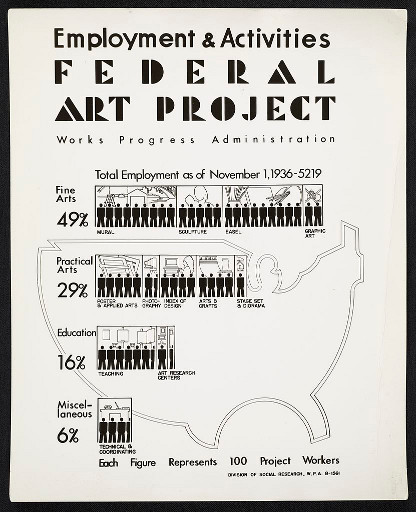
http://en.wikipedia.org/wiki/Works_Progress_Administration
Meaningful work and peaceful revolution are the only acceptable solutions.
These lost kids in the USA, Europe, Japan and elsewhere are a standing army that will eventually be rallied as a force for good, or a force for evil.
There is a lot of work that needs to be done to make this world a better place.
We can do that work, or we can rot away in corruption.