General Discussion
Related: Editorials & Other Articles, Issue Forums, Alliance Forums, Region ForumsThese Photos Of Detroit's Golden Age Show The Dramatic Decline Of One Of America's Greatest Cities
The city has long been in decline and rapidly losing population, but it hasn't always been that way.
The automobile industry had its home base in Detroit and the population spiked from just over 285,000 in 1900 to over 1.5 million by 1930. Downtown was bustling with large industrial buildings, hotels, trolleys and street cars. There were also numerous parks, theaters and opera houses for recreation.
These photos from the Library of Congress and Wikimedia Commons show what Detroit looked like in its prime.
Read more: http://www.businessinsider.com/detroits-golden-age-in-photos-2013-7?op=1
 = new reply since forum marked as read
Highlight:
NoneDon't highlight anything
5 newestHighlight 5 most recent replies
= new reply since forum marked as read
Highlight:
NoneDon't highlight anything
5 newestHighlight 5 most recent replies

bemildred
(90,061 posts)
SunSeeker
(58,283 posts)I am not sure if those buildings are even still standing.
We're letting Detroit go bankrupt but we saved NY from bankruptcy and it is now a thriving city again. How can we just write off one of our greatest cities? I think it is the same reason we let New Orleans drown...
FarCenter
(19,429 posts)• The city was forced to hike fees for services, especially for the city university and the subway. Other services were cut. The city’s work force was trimmed and a wage increase was rescinded.
• Up to 40 percent of the assets of the city pension fund were invested in MAC securities. The state pension fund also invested in MAC securities. A total of $2.7 billion of city debt was bought by the pension funds.
• The banks who had served as the underwriters for New York’s securities agreed to purchase additional securities and/or lengthen the maturity or lower the interest rate on the securities that they held. Other holders of securities had to exchange them for ten-year MAC securities or face a three-year moratorium on the repayment ofprincipal on the notes. The banks turned in $819 million in notes for MAC debt and restructured the interest and maturities of the other debt they held.
• The city raised taxes an additional $200 million.
• The city would have to balance its budget by 1978. The budget had to be balanced using generally accepted accounting principles. Most notable of these were the elimination of financing operations from capital funds and a requirement that the city fully fund its pension plans.
• The First Deputy Mayor, Deputy Mayor for Finance, and the budget director all had to resign so that trustworthy staff could be appointed.
• The federal loans were made at 1 percentage point over the cost of funds to the federal government.
• The city was obligated to regain access to the credit markets in 1978.
At this point, New York City was again able to borrow, but only from the institutions that had a stake in its survival, namely the banks, the state and federal government, and from the employees' pension funds. The city was still unable to borrow in the municipal bond market.
http://www.library.ca.gov/crb/95/notes/V3N1.PDF
The Gerald Ford administration initially refused to assist New York City. Eventually, the Municipal Assistance Corporation was set up by the State of New York. MAC took over funding and borrowing, and it oversaw the fiscal matters of the city.
I suppose that the New York solution could be applied to Detroit, but I doubt whether there is sufficient future tax revenue available to get Detroit back to a balanced budget in 3 years. In New York, enough budget cuts could be made and enough taxes could be raised in order to restore a balanced budget and eventually pay off all the creditors in full, including the US Treasury.
SunSeeker
(58,283 posts)If we invested in our own country, like all other industrialized countries do, we can establish it as the site of the home of our countries electric car companies, solar panel companies, high speed rail manufacturing and infuse money to get them going. China did this in their country. Do we love our country less than the Chinese love their country?
FarCenter
(19,429 posts)You need to locate a business where you have customers, transportation, infrastructure, an effective work force, access to materials or other resources, and where people want to live and work.
There are lots of sites in Michigan and other states that offer businesses in the areas you mention a better environment for success.
Bombardier, for example, makes rail cars outside of Pittsburgh and in Plattsburg, NY, and it has maintenance operation in LA, San Diego, Boston and south Florida, near some of its major rail customers.
The M1 line on Woodward is looking to order 5 streetcars as part of some other cities purchase. None of the potential bidders are from the Detroit area as far as I could see.

Wednesdays
(22,611 posts)that shows what were some of the most beautiful places in Detroit, now in ruins.
http://blogs.denverpost.com/captured/2011/02/07/captured-the-ruins-of-detroit/2672/
Edit: added another photo album:
http://izismile.com/2012/09/22/abandoned_landmarks_of_detroit_35_pics.html
Pretty depressing.

Edit 2: Here's a good place to see a "then and now" comparison of some of the landmarks. A few (very few) are still in relatively good shape.
http://historicdetroit.org/galleries/
awoke_in_2003
(34,582 posts)really saddens me (I am a bookworm)
SunSeeker
(58,283 posts)
WCGreen
(45,558 posts)They used a lot of these buildings as background for the show.
The problem with Detroit was it was far too dependent on the Auto industry. I remember going to a convention in Detroit in 1996. Non of the out of towners ventured out beyond the area.
Cleveland, a much smaller city than Detroit, had the good fortune of having some civic minded people who worked hard to revitalize several strategic hubs across the city.
It took a long time and a lot of people working together. A few, a very few, lost their way and did not develop beyond the cool bar and restaurant area.
The Cleveland Clinic and University Hospitals anchored their large Campus around Case Western Reserve which has a MD program.
The fantastic Theater District has finally blossomed after 35 years of people raising money, carefully developing. The development around the area pushed east and now Cleveland State and the Theater District flow into each other.
One thing I would like to point out. Detroit seems to have bet a lot of it's future in Legal Gambling. The development didn't seem to go outside the Casino's.
Cleveland waited and put the Casino between the Flats or River area that once blossomed and the Sports Arenas. The Redevelopment of the Flats Oxbo association is managing the area by making the area into a neighborhood.
There are some real Bleak Areas, the area where those recently captives were found. Still, the city has a real chance to blossom the further we get into the 21st Century.
By the way, we had our default decades ago before anyone was thinking of redeveloping. It was that moment that people decided to work together with realistic goals.
FarCenter
(19,429 posts)I was really disappointed that it only lasted one season. Great show. It appears to be on hulu.
WCGreen
(45,558 posts)ABC can't get a break. It was a really gritty, naturalistic and well written...
PowerToThePeople
(9,610 posts)seriously. these haters are a main reason we fail as a country.
Looking up the history of the riot and so many names from Detroit in '67 are still around. Some doing great things, some still haunting us.
FarCenter
(19,429 posts)SunSeeker
(58,283 posts)
Downwinder
(12,869 posts)ZX86
(1,428 posts)Couldn't we kill two birds with one stone if we offered citizenship to immigrants and undocumented workers if they live and work in cities like Detroit for a period of ten years? I have no experience in urban planning or immigration issues but on the surface it seems like a win win situation to me.
FarCenter
(19,429 posts)It is probably happening informally.
brooklynite
(96,882 posts)It's a lack of jobs for the workers, and thus a lack of tax revenue to cover expenses. What jobs would the immigrants fill, and if those jobs exist, why aren't the remaining locals filling them.
HiPointDem
(20,729 posts)I think detroit's golden age was late 50s-early 60s.


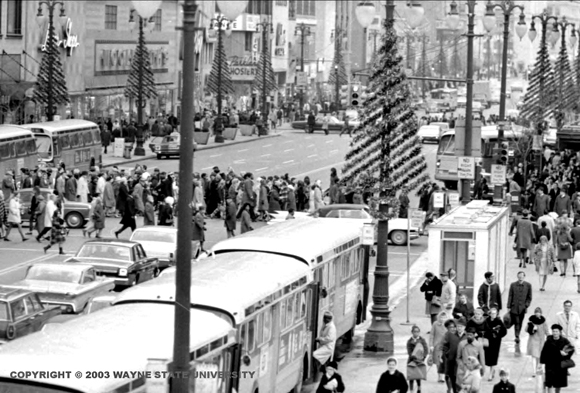

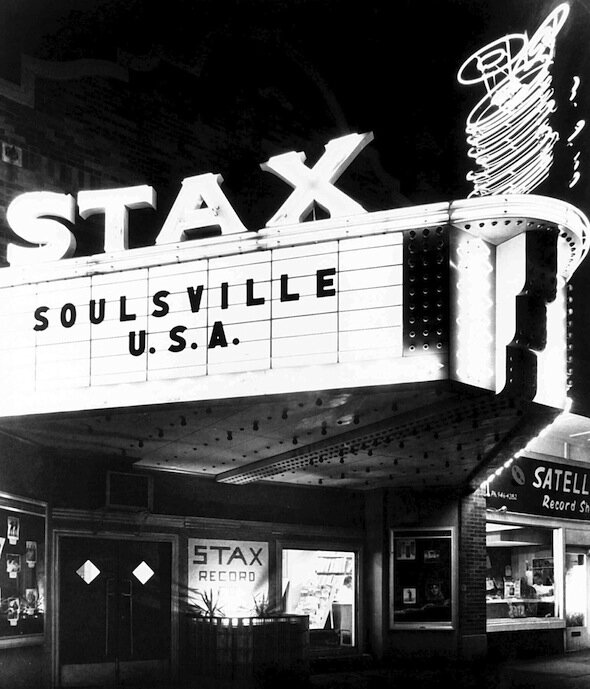


(walk with mlk 1963)


ZX86
(1,428 posts)It's not the people that failed Detroit.
FarCenter
(19,429 posts)The heaviest casualty, however, was the city. Detroit's losses went a hell of a lot deeper than the immediate toll of lives and buildings. The riot put Detroit on the fast track to economic desolation, mugging the city and making off with incalculable value in jobs, earnings taxes, corporate taxes, retail dollars, sales taxes, mortgages, interest, property taxes, development dollars, investment dollars, tourism dollars, and plain damn money. The money was carried out in the pockets of the businesses and the white people who fled as fast as they could. The white exodus from Detroit had been prodigiously steady prior to the riot, totally twenty-two thousand in 1966, but afterwards it was frantic. In 1967, with less than half the year remaining after the summer explosion—the outward population migration reached sixty-seven thousand. In 1968 the figure hit eighty-thousand, followed by forty-six thousand in 1969.[70]
http://en.wikipedia.org/wiki/1967_Detroit_riot

Brigid
(17,621 posts)In his book "Here Comes Trouble." He and his family went there sometimes when he was a kid, during its heyday. It's very poignant to see these pictures of what he was talking about.