General Discussion
Related: Editorials & Other Articles, Issue Forums, Alliance Forums, Region Forums1-ton WWII-era bomb discovered near Marseille port
MARSEILLE, France (AP) — Officials in Marseille are evacuating an area around the French Mediterranean city's port so they can remove a 1-ton German bomb that dates to World War II.
Around 1,000 people have been asked to clear out Sunday. Boat traffic has been halted and access to several coastal roads blocked. The bomb will be taken to a military base to be detonated.
It was discovered a week ago by construction workers who accidentally pierced the explosive with their back hoe.
The regional government says the bomb's ignition system no longer works but the sheer amount of explosives — 1,400 pounds (650 kilograms) — made it dangerous.
The bomb was apparently buried by German soldiers, who had planned to destroy the city's port, as they retreated near the end of the war.
http://www.usnews.com/news/offbeat/articles/2012/03/18/1-ton-wwii-era-bomb-discovered-near-marseille-port
Old munitions never die.
WWI mines did some damage in the Persian Gulf.

 = new reply since forum marked as read
Highlight:
NoneDon't highlight anything
5 newestHighlight 5 most recent replies
= new reply since forum marked as read
Highlight:
NoneDon't highlight anything
5 newestHighlight 5 most recent replies
Bigmack
(8,020 posts)...we've spread all over the world is gonna be harder to clean up.
War... the gift that just keeps on giving!

Are_grits_groceries
(17,139 posts)The stuff with fairly high radioactivity will haunt us forever. Plutonium is nasty because it is highly radioactive and takes a long time to decay. The most radioactive stuff only lasts for moments.
Motown_Johnny
(22,308 posts)I still wouldn't want to spend any length of time in close quarters with it but it isn't like Plutonium.
I think characterizing it as "stuff with fairly high radioactivity" is misleading.
Are_grits_groceries
(17,139 posts)I give up. What is DU?
Post your own definition. I was speaking in generalities.
I am soooooo glad the Science Police are on duty.
Motown_Johnny
(22,308 posts)Wasn't that the subject of this sub thread?
I did say it was less radioactive than natural uranium, that didn't help?
Sorry. I will try to be more attentive to details in the future.

GiveMeFreedom
(976 posts)Around every 22 minutes 1 person somewhere
in the world is killed or injured by a landmine.
Today there are an estimated 110 million anti-personnel mines in the ground around the world and another 100 million in stockpiles. Between 5 and 10 million more mines are produced each year.
Mines recognise no cease-fire and long after the fighting has stopped they continue to maim and kill.
http://members.iinet.net.au/~pictim/mines/history/history.html

pokerfan
(27,677 posts)This is a documentary about the illegal US bombing of Laos for nine years during the Vietnam war. Americans bombed the living hell out of the country by dropping a quarter of a billion bombs on it and 30% did not detonate. There are still 70 million bombs lying in the ground, on the ground, in trees, etc. that are killing hundreds of people every year, for the past 30-40 years.
Small, impoverished and landlocked, Laos usually receives less attention than its Southeast Asian neighbors. Yet in one unfortunate aspect, Laos stands out: it has the distinction of being the most bombed country in history.
More than three decades following the end of conflict, Laos is still dealing with the residual effects of its violent past. Land mines and other unexploded ordnance dot the Laotian landscape and threaten the lives of the the country's people, the majority of whom reside in the countryside.
http://vimeo.com/25923268

aint_no_life_nowhere
(21,925 posts)When I was a kid she would tell me about living under the German occupation when there was almost no food and German soldiers everywhere. She described the bombing of the port by the allies when they destroyed much of the docks and the older part of the city. She said that instead of seeking shelter, the people were all out in the streets under the bombs cheering with joy. When the allies later landed as part of the southern version of D-Day and fighting raged throughout the city, the Germans did start destroying the old port but couldn't finish the job. They did destroy an internationally-famous landmark called le pont transbordeur, an engineering marvel of steel that spanned the old port, to jam sea traffic.
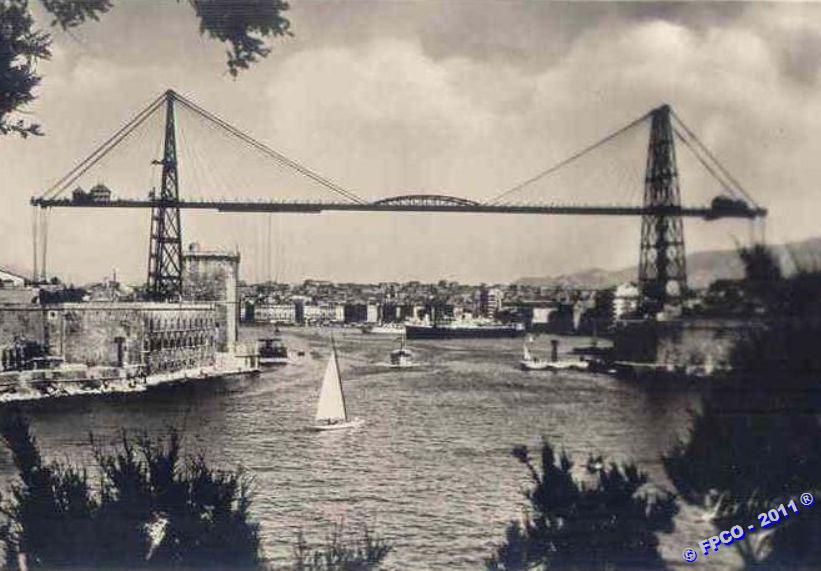
My mother's sister worked for the boss of Renault. His kids went out hiking in the hills above Marseille in about 1960, found a hand grenade left over from the fighting, and accidentally blew themselves up.
When I was a kid, my dad was transferred to the U.S. air force base in Bitburg, Germany in the mid 1950s. The other kids and I would play in old German foxholes and encampments that were everywhere. Under some bushes we found some heavy machine guns and their tripods along with ammo belts. It was too rusty to work but we played with it for weeks until our parents found out and freaked out.

Kick in to the DU tip jar?
This week we're running a special pop-up mini fund drive. From Monday through Friday we're going ad-free for all registered members, and we're asking you to kick in to the DU tip jar to support the site and keep us financially healthy.
As a bonus, making a contribution will allow you to leave kudos for another DU member, and at the end of the week we'll recognize the DUers who you think make this community great.