General Discussion
Related: Editorials & Other Articles, Issue Forums, Alliance Forums, Region ForumsMUST READ: 'The Case for Reparations' - The Atlantic
The Case for ReparationsTwo hundred fifty years of slavery. Ninety years of Jim Crow. Sixty years of separate but equal. Thirty-five years of racist housing policy. Until we reckon with our compounding moral debts, America will never be whole.
Ta-Nehisi Coates - TheAtlantic
MAY 21, 2014
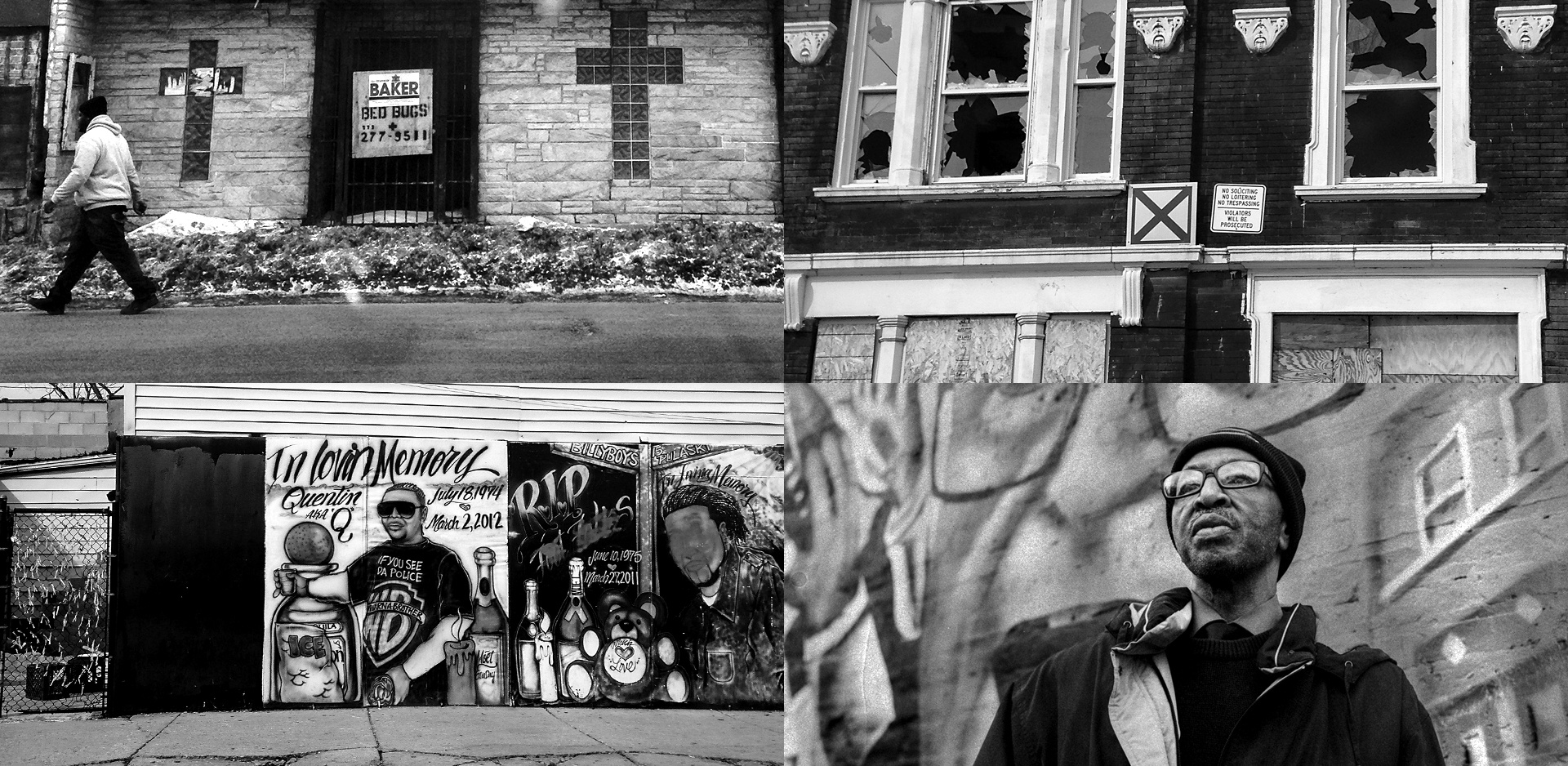
<snip>
Clyde Ross was born in 1923, the seventh of 13 children, near Clarksdale, Mississippi, the home of the blues. Ross’s parents owned and farmed a 40-acre tract of land, flush with cows, hogs, and mules. Ross’s mother would drive to Clarksdale to do her shopping in a horse and buggy, in which she invested all the pride one might place in a Cadillac. The family owned another horse, with a red coat, which they gave to Clyde. The Ross family wanted for little, save that which all black families in the Deep South then desperately desired—the protection of the law.
In the 1920s, Jim Crow Mississippi was, in all facets of society, a kleptocracy. The majority of the people in the state were perpetually robbed of the vote—a hijacking engineered through the trickery of the poll tax and the muscle of the lynch mob. Between 1882 and 1968, more black people were lynched in Mississippi than in any other state. “You and I know what’s the best way to keep the nigger from voting,” blustered Theodore Bilbo, a Mississippi senator and a proud Klansman. “You do it the night before the election.”
The state’s regime partnered robbery of the franchise with robbery of the purse. Many of Mississippi’s black farmers lived in debt peonage, under the sway of cotton kings who were at once their landlords, their employers, and their primary merchants. Tools and necessities were advanced against the return on the crop, which was determined by the employer. When farmers were deemed to be in debt—and they often were—the negative balance was then carried over to the next season. A man or woman who protested this arrangement did so at the risk of grave injury or death. Refusing to work meant arrest under vagrancy laws and forced labor under the state’s penal system.
Well into the 20th century, black people spoke of their flight from Mississippi in much the same manner as their runagate ancestors had. In her 2010 book, The Warmth of Other Suns, Isabel Wilkerson tells the story of Eddie Earvin, a spinach picker who fled Mississippi in 1963, after being made to work at gunpoint. “You didn’t talk about it or tell nobody,” Earvin said. “You had to sneak away.”
When Clyde Ross was still a child, Mississippi authorities claimed his father owed $3,000 in back taxes. The elder Ross could not read. He did not have a lawyer. He did not know anyone at the local courthouse. He could not expect the police to be impartial. Effectively, the Ross family had no way to contest the claim and no protection under the law. The authorities seized the land. They seized the buggy. They took the cows, hogs, and mules. And so for the upkeep of separate but equal, the entire Ross family was reduced to sharecropping.
This was hardly unusual. In 2001...
<snip>
More: http://www.theatlantic.com/features/archive/2014/05/the-case-for-reparations/361631/

 = new reply since forum marked as read
Highlight:
NoneDon't highlight anything
5 newestHighlight 5 most recent replies
= new reply since forum marked as read
Highlight:
NoneDon't highlight anything
5 newestHighlight 5 most recent replies
WillyT
(72,631 posts)
WillyT
(72,631 posts)
joeglow3
(6,228 posts)Sorry it took so long, but I wanted to take my time. This article summarized what I always thought: racism still exists. That said, much of what the black community experiences are not "black issues" but poor issues. Issues that black disproportionately experience because centuries of oppression have thrown them into this cyclical culture.
I would LOVE to see a study done on reparations. My only concern is that it took centuries to get to this shitty place, so there probably is not a quick answer.
Anyway, thanks for posting this piece.
Liberal_Stalwart71
(20,450 posts)...we absolutely must deal directly with race, racism, race discrimination. Skin color matters, regardless of income!
joeglow3
(6,228 posts)The issue is fighting those that want to prevent education. There ARE companies that want to hire minorities. When I left two Big Four public accounting firms, both asked the same question in the exit interview: how do I think they could attract more minorities? My response was invest in programs to get minorities into accounting programs in college. The key to solve that is to invest in programs to help minorities achieve that.
There is a grade school I volunteer at that is almost 100% minority. One of the biggest things they look for role models from all professions to volunteer. The kids only know the role models they see and many don't even consider most professions because they don't see it as an option. This particular school has had a lot of success with this route.
Finally, my current employer (a Fortune 500 company), has flat out told us if there are two qualified candidates and one is a minority, always take the minority. They recognize the value of minorities as an untapped market and how hard it is to attract talent if you are an all white company. Not the most altruistic approach, but they want the best talent and recgnize investments will pay off tomorrow.
My personal opinion is that the key is investment in education. I am not talking about some bullshit program here and ther: REALLY invest in schools in inner cities.

Recursion
(56,582 posts)The white middle class was created by taking money from the richest African Americans in the 20th century.
That said, much of what the black community experiences are not "black issues" but poor issues.
Well, no. Poor whites weren't redlined. Blacks of any class were (and still are).

mountain grammy
(29,331 posts)Spider Jerusalem
(21,786 posts)(snip)
Today, progressives are loath to invoke white supremacy as an explanation for anything. On a practical level, the hesitation comes from the dim view the Supreme Court has taken of the reforms of the 1960s. The Voting Rights Act has been gutted. The Fair Housing Act might well be next. Affirmative action is on its last legs. In substituting a broad class struggle for an anti-racist struggle, progressives hope to assemble a coalition by changing the subject.
(snip)
To ignore the fact that one of the oldest republics in the world was erected on a foundation of white supremacy, to pretend that the problems of a dual society are the same as the problems of unregulated capitalism, is to cover the sin of national plunder with the sin of national lying. The lie ignores the fact that reducing American poverty and ending white supremacy are not the same. The lie ignores the fact that closing the “achievement gap” will do nothing to close the “injury gap,” in which black college graduates still suffer higher unemployment rates than white college graduates, and black job applicants without criminal records enjoy roughly the same chance of getting hired as white applicants with criminal records.

Supersedeas
(20,630 posts)Liberal_Stalwart71
(20,450 posts)
gwheezie
(3,580 posts)I've read the article twice and have it saved to refer to and pass on. I have had arguments for years that our government and society has yet to right the wrongs committed by us and that the problems in the african american community today are directly traced to the systemic racism that grew from our founding and still festers. We the people and the government we elect did this. In my lifetime the schools where I live were closed because of racism, I still meet people today who cannot read or write because they were poor when the schools closed and didn't have wealthy parents to send them to a private school. They worked on the farms. Those farms paid cash and never paid in social security. I sometimes volunteer at the local church when they do health fairs and meet people who never got a paycheck for the work they did, in my lifetime. In my lifetime it was illegal for inter racial marriage in this state. Programs like the great society, affirmative action etc attempted to correct what our government did racism didn't fade away. The election of a black president did not end racism.

malaise
(299,344 posts)Rec
riderinthestorm
(23,272 posts)WillyT
(72,631 posts)
malaise
(299,344 posts)Coates on