General Discussion
Related: Editorials & Other Articles, Issue Forums, Alliance Forums, Region ForumsWatch Lists & ACLU comments
Saw this in Reuters, which was new information. How many "watch lists" are there?
"U.S. authorities maintain several watch lists - the FBI maintains three and the Office of the Director of National Intelligence runs one database. People are placed on such a list according to the threat level they are believed to pose.
The Orlando shooter, Omar Mateen, had been on a government watch list at one point when he was being investigated by federal authorities in 2013 and 2014, but was not on it at the time of his weapons purchase. The couple who carried out the San Bernardino shooting were not on watch lists."
http://www.reuters.com/article/us-florida-shooting-guns-idUSKCN0Z31T8
From the ACLU:
There is no constitutional bar to reasonable regulation of guns, and the No Fly List could serve as one tool for it, but only with major reform. As we will argue to a federal district court in Oregon this Wednesday, the standards for inclusion on the No Fly List are unconstitutionally vague, and innocent people are blacklisted without a fair process to correct government error. Our lawsuit seeks a meaningful opportunity for our clients to challenge their placement on the No Fly List because it is so error-prone and the consequences for their lives have been devastating.
Over the years since we filed our suit — and in response to it — the government has made some reforms, but they are not enough.
We filed the suit in June 2010 on behalf of 10 U.S. citizens and permanent residents who the government banned from flying to or from the U.S. or over American airspace. (Three more people later joined the suit.) Our clients, among them four U.S. military veterans, were never told why they were on the list or given a reasonable opportunity to get off it. Some were stranded abroad, unable to come home. As one response to our lawsuit, the government began to allow Americans to fly home on a “one-time waiver,” with stringent security precautions.
Separately, the government made two basic arguments in its defense of the No Fly List, both of which the court rejected. First, it argued that U.S. persons had no constitutionally protected right to fly. In August 2013, the court disagreed, holding that constitutional rights are at stake when the government stigmatizes Americans as suspected terrorists and bans them from international travel.
Second, the government asserted that national security concerns meant the government couldn’t confirm or deny whether people were on the No Fly List, and it couldn’t give them reasons or a hearing before a neutral decision-maker. This is absurd as a practical matter and violates due process as a constitutional matter. Practically speaking, people know they are on the No Fly List when they are banned from flying and surrounded — and stigmatized — by security officials publicly at airports. Some of our clients were told they would be taken off the list if they agreed to become government informants. Again, the court agreed with us and held that the government’s refusal to provide any notice or a hearing violates the Constitution. As a result, the government announced in April that it would tell U.S. citizens and lawful permanent residents whether they are on the No Fly List, and possibly offer reasons.
Unfortunately, the government’s new redress process still falls far short of constitutional requirements. In our case, it refuses to provide meaningful notice of the reasons our clients are blacklisted, the basis for those reasons, and a hearing before a neutral decision-maker. Much as before, our clients are left to guess at the government’s case and can’t clear their names. That’s unconstitutional.
There’s another important aspect to the government’s case at this stage. The government has emphasized that it is making predictive judgments that people like our clients — who have never been charged let alone convicted of a crime — might nevertheless pose a threat. That’s a perilous thing for it to do. As we’ve told the court based on evidence from experts, these kinds of predictions guarantee a high risk of error. If the government is going to predict that Americans pose a threat and blacklist them, that’s even more reason for the fundamental safeguards we seek.
We disagree with Speaker Ryan about many things. But he’s right that people in this country have due process rights. We want to see them respected.
https://www.aclu.org/blog/speak-freely/until-no-fly-list-fixed-it-shouldnt-be-used-restrict-peoples-freedoms
 = new reply since forum marked as read
Highlight:
NoneDon't highlight anything
5 newestHighlight 5 most recent replies
= new reply since forum marked as read
Highlight:
NoneDon't highlight anything
5 newestHighlight 5 most recent replies

PoliticAverse
(26,366 posts)No Fly List: https://en.wikipedia.org/wiki/No_Fly_List
Secondary Screening Selectee List: https://en.wikipedia.org/wiki/Secondary_Security_Screening_Selection
Terror Watch List: https://en.wikipedia.org/wiki/Terrorist_Screening_Database
linuxman
(2,337 posts)“William Roper: “So, now you give the Devil the benefit of law!”
Sir Thomas More: “Yes! What would you do? Cut a great road through the law to get after the Devil?”
William Roper: “Yes, I'd cut down every law in England to do that!”
Sir Thomas More: “Oh? And when the last law was down, and the Devil turned 'round on you, where would you hide, Roper, the laws all being flat? This country is planted thick with laws, from coast to coast, Man's laws, not God's! And if you cut them down, and you're just the man to do it, do you really think you could stand upright in the winds that would blow then? Yes, I'd give the Devil benefit of law, for my own safety's sake!”
― Robert Bolt, A Man for All Seasons
jtx
(68 posts)"U.S. authorities maintain several watch lists - the FBI maintains three and the Office of the Director of National Intelligence runs one database." What is the fourth?
I wonder if there are more beyond that.
I'm old enough to remember the surveillance and dossiers from the 60's and 70's on anti-war, pro-environment, and others the FBI and military were spying on.
This really seems like a bad idea to be pounding on the table to give the government authority to strip people's rights of any kind based on their secret lists.
sarisataka
(22,355 posts)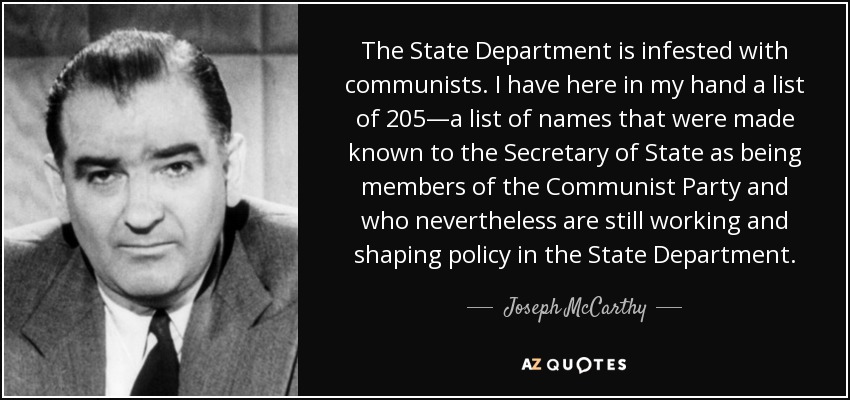
jtx
(68 posts)nm