East Austin village opens, renting houses to homeless for $225 a month
Source: Austin
On saturday, East Austin’s Community First Village opened after years of anticipation. The village is the brainchild of Alan Graham, who has been dedicated to helping people who are homeless for nearly 20 years.
Community First is a groundbreaking development designed for the homeless population of Austin. Located on Hog Eye Road near Walter E. Long Park, the community is 27 acres containing 140 tiny homes. Each home is 180 square feet with a porch, and residents have access to communal outdoor kitchens, private bathrooms, showers, and laundry facilities.
The community also boasts covered RVs and tipis for additional living spaces, a medical center, movie amphitheater from Alamo Drafthouse, community garden, a woodworking shop, chapel, and market.
Currently there are about 40 people living at Community First with rent starting around $225 per month. By the end of the year, 150 or so people are expected to be living there, and the development is projected to reach its capacity of 250 people by early 2017.Kimi
Read more: http://austin.culturemap.com/news/city-life/04-04-16-community-first-new-east-austin-micro-village-opens-homeless-alan-graham-mobile-loaves/#slide=2
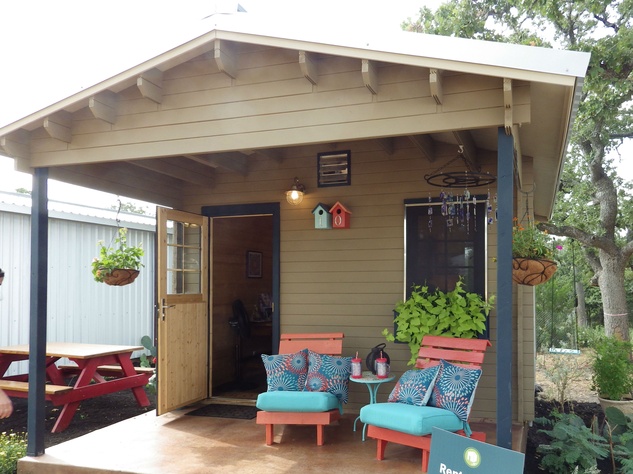
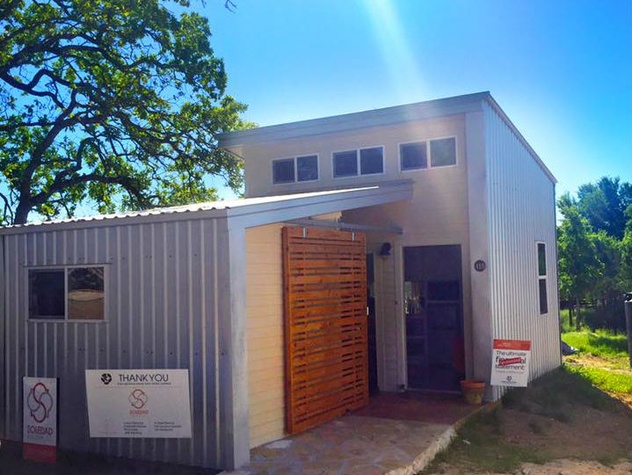
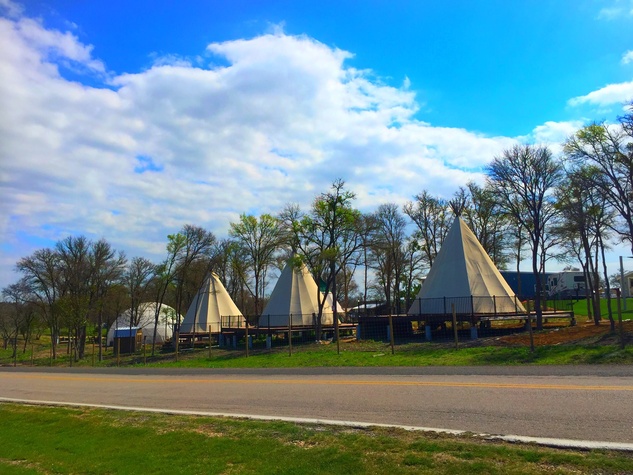
Community First! Village Includes:
An innovative mix of affordable housing options
Places for worship, study, and fellowship
Memorial garden and columbarium
A community garden featuring fruit- and nut-bearing trees and vegetables
A chicken operation, bee hives producing fresh honey, and aquaponics
A workshop with tool bank and art gallery for micro-enterprise opportunities
A medical facility for physical and mental health screenings and support services including hospice and respite care
Walking trails
An outdoor theater and bed & breakfast for mission visits
CAP Metro bus stop
WiFi


http://mlf.org/follow-our-progress/
 = new reply since forum marked as read
Highlight:
NoneDon't highlight anything
5 newestHighlight 5 most recent replies
= new reply since forum marked as read
Highlight:
NoneDon't highlight anything
5 newestHighlight 5 most recent replies

Lodestar
(2,388 posts)What a great model. Hope it functions like the community it is set up to be.
I assume the tenant will need to have employment in order to pay rent.

TexasBushwhacker
(21,289 posts)Many of the chronically homeless are disabled. Austin actually does a pretty good job of helping the homeless who are disabled to get benefits, healthcare etc. This community is part of a larger charity called Mobile Loaves and Fishes. They have food trucks that go out every day and night to provide meals to the homeless where they congregate.
Bluenorthwest
(45,319 posts)a larger better second version is being planned so it's working well so far
http://www.squareonevillages.org/#!opportunity/c959

byronius
(8,017 posts)The odd statistic about ten vacant houses in the US for every homeless person is kinda/sorta/absolutely shameful.
Every homeless person I see I count as an indicator of societal failure. Since Reagan closed all the mental hospitals and threw hundred of thousands of mentally ill Americans into the streets in 1981 our culture has failed to successfully deal with the problem, primarily because a good chunk of our population requires viewing the misery of others to feel good about themselves as well as other unexamined tendencies toward mass sociopathic murder by indifference -- standard tribal fare for millions upon millions of primate years.
So, good on these folk. More.

redwitch
(15,273 posts)Let's hope other communities follow this lead!

mainer
(12,579 posts)What an amazing community. That's really what's needed -- a community of people helping each other. Not people isolated in temporary hotel rooms.
hamsterjill
(17,756 posts)Austin makes me proud to be a Texan. The rest of the state, well, not so much most of the time.
Go, Austin!!!!
Paladin
(32,354 posts)Seriously though: Looks and sounds like a very worthwhile project. A nice offset to some of the wretched excesses that have rendered my old home town virtually unworthy of a visit.

maxsolomon
(39,127 posts)that's about the same density as a suburban street of 2500sf homes. an extravagant waste of developable land.
further, 140 180sf homes is only 25K of conditioned space. each of those detached 180 sf homes has 4 walls and a roof that require heating and cooling - incredibly inefficient compared to the shared walls of townhomes or apartments. you could fit 140 SROs of the same size into one 5 story building on a 10,000sf parcel.
and it took years to develop.
I hate to be eeyore, but this is not going to be the way the homeless crisis is solved. it's a band aid on a sucking chest wound.
closeupready
(29,503 posts)There's also the idea that people who finance and promote low-income housing want to be careful not to repeat the mistakes of, for example, Cabrini-Green - not to ghettoize low-income and homeless people, and also to build something which residents take pride in, and will be willing to tend to, as their own homes.
maxsolomon
(39,127 posts)housing 1,000s of people. a single 140 unit SRO building is not "high density development".
in seattle, we're seeing these tiny house developments going up around town as well. an 18' x 10' living space is not a permanent housing solution. its transitional. the need is so much greater than can ever be accommodated by such a low-density model.
my experience with low-income housing is that "tending to" homes is not high on the priority list of tenants. in meeting after meeting, the residents wanted zero yard maintenance, zero house maintenance beyond cleaning. but those were families, not homeless individuals. a rare few, usually retirees, wanted to tend a garden.
closeupready
(29,503 posts)in some jurisdictions.
But even if a proposed SRO meets local building code standards, there will be opposition from many in the surrounding community leading to opposition from housing authorities.
I take it from your last paragraph that you've never heard of Habitat for Humanity.
maxsolomon
(39,127 posts)I've designed homes for them. H4H is home ownership for families. These are transitional rental units for individuals or couples. IMHO, Owners and Renters have very different desires as far as maintenance goes.
I'm aware that there is zoning that limits heights and densities. I'm aware that NIMBYs might oppose an SRO (though I have never experienced opposition to SROs from any HAs - they typically seek to develop them). Excuse my French, but fuck NIMBYs - they need to be persuaded to abandon their irrational fears, particularly when the existing zoning allows the density.
My point is simply that detached tiny houses at 5 du/acre is an inefficient model for delivering the massive amount of shelter the homeless crisis requires, despite the probable initial low cost, volunteer opportunities, and aesthetic appeal.
TexasBushwhacker
(21,289 posts)Even this low density development had a fair amount of NIMBY push back. It's all being done with private money and a lot of donated labor. Sometimes it's easier to do these things one little unit at a time.
maxsolomon
(39,127 posts)But the scale of the problem is such that it cannot be solved one at a time.
Seattle, for example, has over 5,000 people sleeping on the streets every night. That's over and above what the shelters can accommodate. to shelter 5,000 people would require 36 of these developments. there simply isn't enough land to build 36 tiny house developments.
Housing Authorities and Low-Income Housing Providers are chasing after limited HUD funding, or fighting each other for Tax Credit funding, and are barely adding new units. Waiting lists are years long.
America, meaning the Federal Government, needs to fund a massive new housing program to address homelessness. Of course, that would take a Congress very different than the one we have today.
TexasBushwhacker
(21,289 posts)These small communities and SROs address chronic homelessness, which make up less than a fourth of all homeless people and that number is going down.
Most homelessness is temporary, thank goodness. So the question is, are there enough shelter beds and are the shelters safe? Are homeless people being helped through outreach efforts to help them get disability if eligible, healthcare, food stamps etc.
Is there enough temporary shelter available to get people off the street IF they want. We cannot force people to stay at a shelter if they don't want to. I do think its in everyone's best interest to provide clean public toilets because the alternative is people going behind buildings and such.
When faced with the possibility of homelessness, I spent a night at a shelter. The shower was hot, the towels were clean. The food was adequate. I slept on a mat on the floor. The 2 things I learned - bring my own pillow and eye mask. They leave the lights on through the night to cut down on theft. It wasn't luxury, but it wasn't horrible. But you can only sleep there night to night. You cannot STAY.

Kick in to the DU tip jar?
This week we're running a special pop-up mini fund drive. From Monday through Friday we're going ad-free for all registered members, and we're asking you to kick in to the DU tip jar to support the site and keep us financially healthy.
As a bonus, making a contribution will allow you to leave kudos for another DU member, and at the end of the week we'll recognize the DUers who you think make this community great.