Beginning of the End of CA Drought, But Whats Next?
Last edited Fri Jan 13, 2017, 09:07 PM - Edit history (1)
Source: Climate Central
By Andrea Thompson
January 13th, 2017
After a week of being walloped by major storms that have dumped copious rain and snow on the state, California is finally emerging from a deep, years-long drought.
Ski resorts in the Sierra Nevada mountains are flush with snow, while key reservoirs have filled back up. On Thursday, the U.S. Drought Monitor erased all drought in Northern California from the map and dialed back the severity over the southern half of the state.

A plow clears snow after a heavy winter storm in Tahoe City, Calif.
There are, of course, still major deficits in groundwater levels that could take decades to replace and lingering ecological impacts, several experts said, but they agreed the situation had much improved.
I think overall weve gotten through this drought amazingly well, Jay Lund, a water resources analyst at the University of California, Davis, said.
Read more: http://www.climatecentral.org/news/end-of-california-drought-but-whats-next-21054
Okay! Problem solved! Now let's party with carbon!

I thought "woohoo let's party with carbon" made that clear, but, apparently not.
 = new reply since forum marked as read
Highlight:
NoneDon't highlight anything
5 newestHighlight 5 most recent replies
= new reply since forum marked as read
Highlight:
NoneDon't highlight anything
5 newestHighlight 5 most recent replies
Dream Girl
(5,111 posts)Haven't had one in over two years. (I do shower regularly however...)

underpants
(195,615 posts)Last week when I saw the stories of the massive storms and possible flooding and landslides I actually thought "But man, they need the water". Sorry if that's insensitive.


briv1016
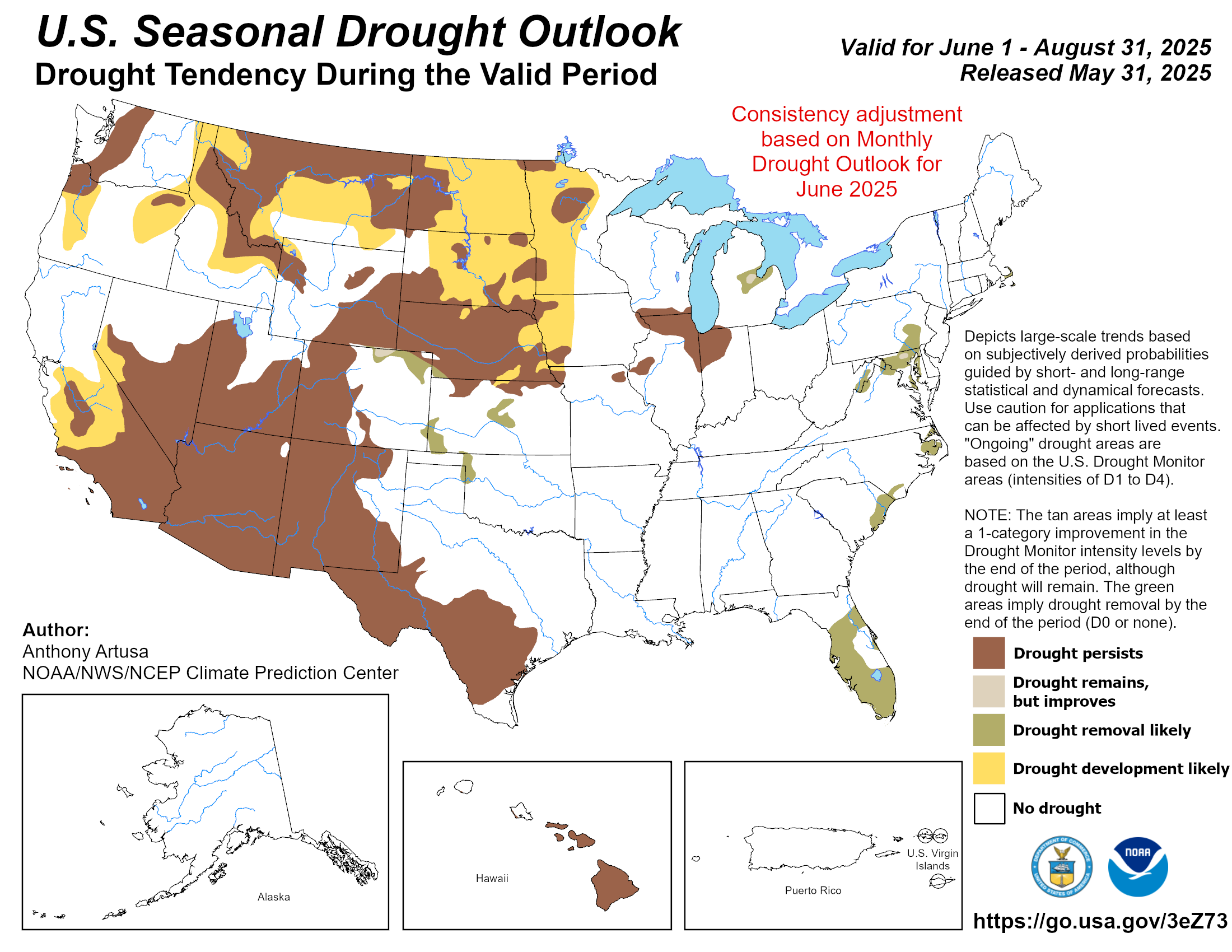
(1,570 posts)The season outlook for southern California still looks pretty bad.
GliderGuider
(21,088 posts)The climate is still changing out from under us. In fact the end of the drought is probably the result of the ongoing jet stream disruptions brought on by ... climate change.
Brother Buzz
(39,717 posts)California has outgrown its storage capacity
All the keen minds are suggesting we will have more rain and less snow in the future; California needs to increase storage capacity to capture this water instead of watching it rush down the rivers and into the ocean like shit through a goose. All the ideal locations for new reservoirs have all but been exploited, so the idea is is to build off-stream reservoirs.
One proposed project the Feds, state, farmers, and even the conservationists are warming to is Sites reservoir, west of Maxwell.
The proposed, though yet to be built, Sites Reservoir would be a large off-stream reservoir in the Sacramento Valley in Northern California, a project of the California Department of Water Resources. Its primary purpose is to collect winter flood flows from the Sacramento River, diverting the water upstream of the Sacramento–San Joaquin River Delta and pumping it into an artificial lake located west of Colusa. The estimated water yield would be between 470,000 to 640,000 acre feet (0.58 to 0.79 km3) per year, depending on yearly rainfall and environmental regulations.
The reservoir would be operated as part of the California State Water Project (SWP) and is projected to cost between $2.3—3.2 billion. According to a 2013 Bureau of Reclamation study, it would provide economic benefits of between $248.8–276.2 million per year, while annual operating costs would be in the range of $10–20 million.
https://en.wikipedia.org/wiki/Sites_Reservoir
The new buzzword in water management is off-stream storage

Auggie
(32,999 posts)Dream Girl
(5,111 posts)
LeftInTX
(34,031 posts)It's pretty cool. When we are in non-drought situations, water is diverted to an underground facility. There is no evaporation. Holds about 120,000 acre feet.
http://www.saws.org/Your_Water/WaterResources/projects/asr.cfm
Brother Buzz
(39,717 posts)They started it on the Sacramento River two years ago, and I hear they just started doing in on the San Joaquin River this year. They are simply opening the irrigation canals and running flood water into fields and orchards and let it percolate down. It's helping charge the shallower aquifers below the ground water, but does squat for the deeper ones. It cost money to pump the water down to the deeper ones, and I've only heard a few operations that are having to resort to that. Remember, this is a region that is accustomed to cheap water, but that is changing.

jgmiller
(677 posts)In OC we have the Santa Ana river which was dammed back in the late 30's to stop floods. Yes it really used to flood in the desert that is SoCal. Vast areas would be covered by several feet of water every few years. After they dammed the river they actually thought things through and while sections of the Santa Ana river are concrete in the northern part through Santa Ana Canyon it's only concrete on the banks and the bottom is natural and they divide it into settling ponds that allows the water to percolate into deep aquifers that wells draw from.
It's actually pretty cool to watch when it's dry they have bulldozers in the bottom of the river making huge berms to divert the runoff into the ponds.They also open channels to allow some water to run free downstream. After these last storms some reservoirs down here are almost full and river is running high it's very nice to see.
Brother Buzz
(39,717 posts)water conservation for decades. Huzzah to all of them. This is all new to us up in the valley where water has never been a problem; it was always there, cheap and plentiful.
And thanks to SoCal for their copious consumption of OUR water, we are learning how to conserve! 
Response to Mister Midnight (Original post)
Name removed Message auto-removed

Retrograde
(11,396 posts)but it will be back. California has had cycles of wet years followed by dry years for as long as people have been keeping records - and probably long before that. It's nice seeing the hills all green and the creeks running, and we should enjoy it while we can - because in a few years we'll be back to some dry years.

Crash2Parties
(6,017 posts)Look at the California ecosystems; this is exactly what they evolved for on both yearly and multi-year time scales. Long stretches of drought punctuated by brief periods of excess water.

tinrobot
(11,998 posts)
yortsed snacilbuper
(7,947 posts)to where you need it.
Brother Buzz
(39,717 posts)You'd save a ton of money by simply letting gravity do the work? 135 million acre-feet, baby! Hell, one could even generate enough electricity to run those desalination plants on the coast. Shit, just watching the 'Mother of all' pressure heads defeat our damn water restrictors would be entertaining as Hell, "There she blows!".