Biden confronts extreme heat, a silent climate killer
Source: Washington Post
President Biden launched a government-wide strategy Monday to combat extreme heat, including the development of new federal labor standards aimed at protecting workers from the impact of rising temperatures linked to climate change. Extreme heat has cost the lives of hundreds of Americans this summer and affected the health and livelihoods of many thousands more. It now ranks as the leading weather-related cause of death in the country, according to the National Weather Service.
The push could lead to new federal Occupational Safety and Health standards for employers, as well as more funding for cooling centers and other efforts to reduce heat-related illness and death. Nearly two-thirds of Americans live in places that experienced a multiday heat wave between June and August, according to a recent Washington Post analysis. The initiative comes after wildfires and floods threatened Americans across the country this summer, from the Caldor Fire in California to the deadly remnants of Hurricane Ida in Louisiana, New York, and New Jersey. After a heat dome roasted the Pacific Northwest in June, at least 115 people died in Oregon. Many of them lacked access to air conditioning.
In a statement, Biden said that six federal agencies would coordinate to protect vulnerable populations — including outdoor workers, children and the elderly — from heat-related illnesses and other public health risks linked to rising global temperatures. Unlike more dramatic disasters, he noted, extreme heat often poses a silent but deadly menace. “While we have all seen the graphic and heart-wrenching images of superstorms, wildfires, and floods in recent weeks, another climate disaster is lurking just below the radar: extreme heat,” he said in a statement.
The Labor Department will undertake an initiative “to protect outdoor workers, including agricultural, construction, and delivery workers, as well as indoor workers, including those in warehouses, factories, and kitchens” from outdoor heat exposure, according to a White House fact sheet. Labor’s Occupational Safety and Health Administration will develop a nationwide workplace heat standard, the White House said, which does not currently exist.
Read more: https://www.washingtonpost.com/politics/2021/09/20/biden-extreme-heat/
Here is the press release - https://www.whitehouse.gov/briefing-room/statements-releases/2021/09/20/statement-by-president-joe-biden-on-mobilizing-the-administration-to-address-extreme-heat/
September 20, 2021 • Statements and Releases
Over the past few weeks, I have traveled across the country to see firsthand the devastating human and economic toll of extreme weather exacerbated by climate change. I have walked down streets in Louisiana, New Jersey, and New York, where deadly storms have blown apart the lives of working families, wiping homes and businesses off the map. I’ve sat with firefighters in Boise, Idaho, and surveyed the damage of the Caldor Fire in northern California – just one of dozens of large wildfires that together have burned more than 5 million acres of American land so far this year. Communities that over 100 million people – one in three Americans – call home have been struck by extreme weather events in the last few months alone. This is a blinking code red for our nation.
And while we have all seen the graphic and heart-wrenching images of super-storms, wildfires, and floods in recent weeks, another climate disaster is lurking just below the radar: extreme heat. As with other weather events, extreme heat is gaining in frequency and ferocity due to climate change, threatening communities across the country. In fact, the National Weather Service has confirmed that extreme heat is now the leading weather-related killer in America. Rising temperatures pose an imminent threat to millions of American workers exposed to the elements, to kids in schools without air conditioning, to seniors in nursing homes without cooling resources, and particularly to disadvantaged communities.
My Administration will not leave Americans to face this threat alone. Today, I am mobilizing an all-of-government effort to protect workers, children, seniors, and at-risk communities from extreme heat. The Department of Labor, the Department of Health and Human Services, the Environmental Protection Agency, and other agencies will work together to help ensure that the American people have safe and healthy working conditions, provide cooling assistance to homes and neighborhoods, and coordinate with state and local officials to bolster their resilience and address the impacts of this threat.
As we deliver this relief, we cannot wait to act to meet the broader crisis of climate change. Extreme weather cost America $99 billion in damage last year – and we will break that record in 2021. We need to rebuild with resilience in mind; we have to act, and act fast, to save lives, homes, jobs, and industries, and build the clean energy economy of the future. I urge Congress to deliver both the Bipartisan Infrastructure Deal and my Build Back Better Agenda to my desk, so that we can make the urgent investments the American people want and our nation needs – to strengthen our nation’s resilience, create millions of new jobs, and protect our families and communities from the growing climate crisis.
###
 = new reply since forum marked as read
Highlight:
NoneDon't highlight anything
5 newestHighlight 5 most recent replies
= new reply since forum marked as read
Highlight:
NoneDon't highlight anything
5 newestHighlight 5 most recent replies

SheltieLover
(81,418 posts)

BumRushDaShow
(171,334 posts)where we see reported "official" temperatures that are mostly coming from airports and measured by units that are purposely sited so that they capture the true "air temperature" without having other potential heat sources skewing that.
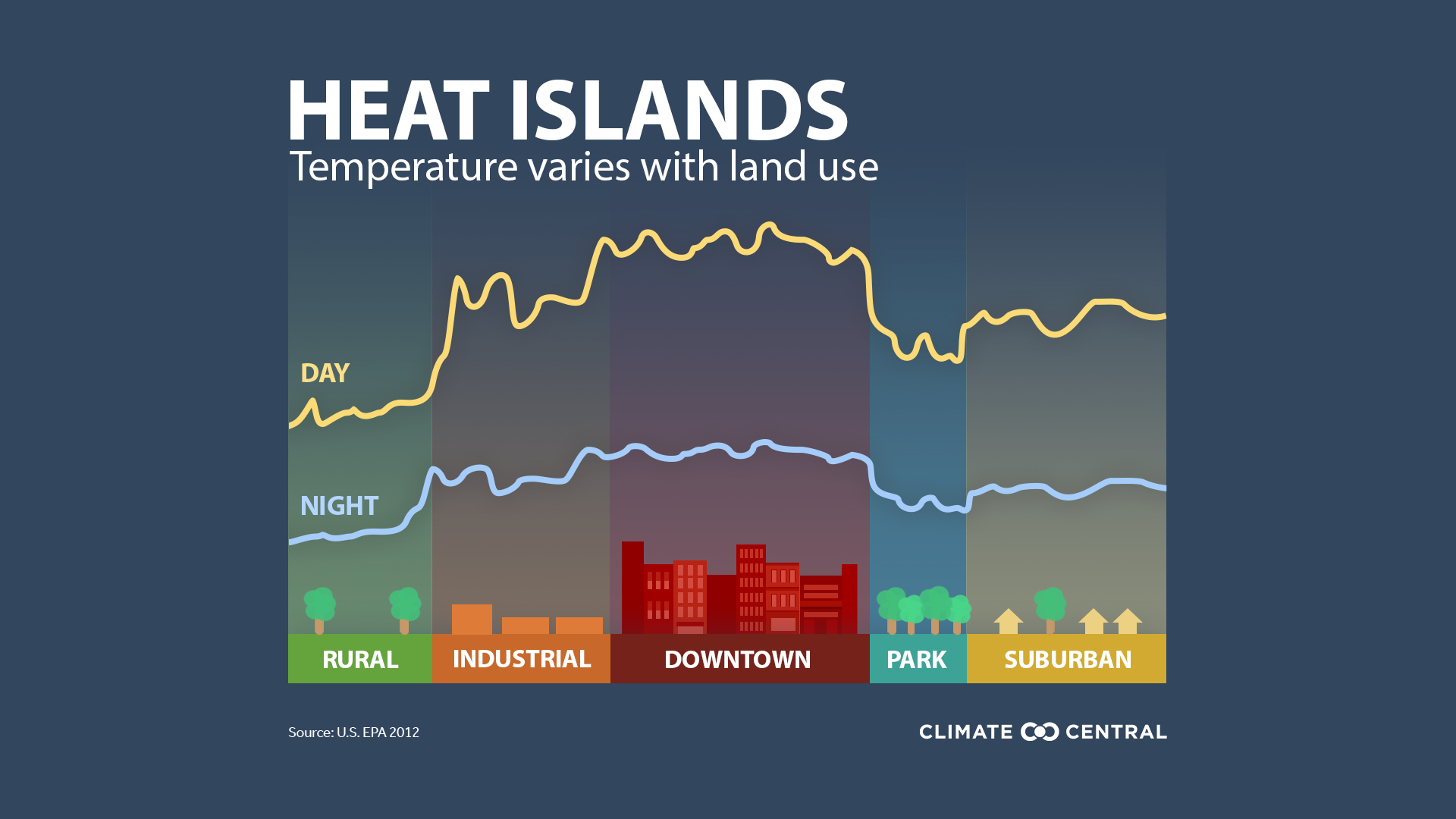
However those temps are so far off from the "actual" temperatures experienced by people living and working in congested, asphalt and concrete-paved cities, where heating can cause them to reach 10 or more degrees higher than that measured by an ASOS unit installed near an unused runway, and the building materials make it slow to cool at night. So these locations are already hot by the next day and can potentially get worse during a multi-day heatwave.
There was research published about a year ago that looked at a way to determine the "heat island" effect across Europe - https://www.nature.com/articles/s41598-020-75018-4
and a subsequent use of that method was applied to a review and ranking of 159 U.S. cities this past summer to determine what they looked like with respect to heat - https://medialibrary.climatecentral.org/resources/urban-heat-islands
SheltieLover
(81,418 posts)Tyvm for sharing!
BumRushDaShow
(171,334 posts)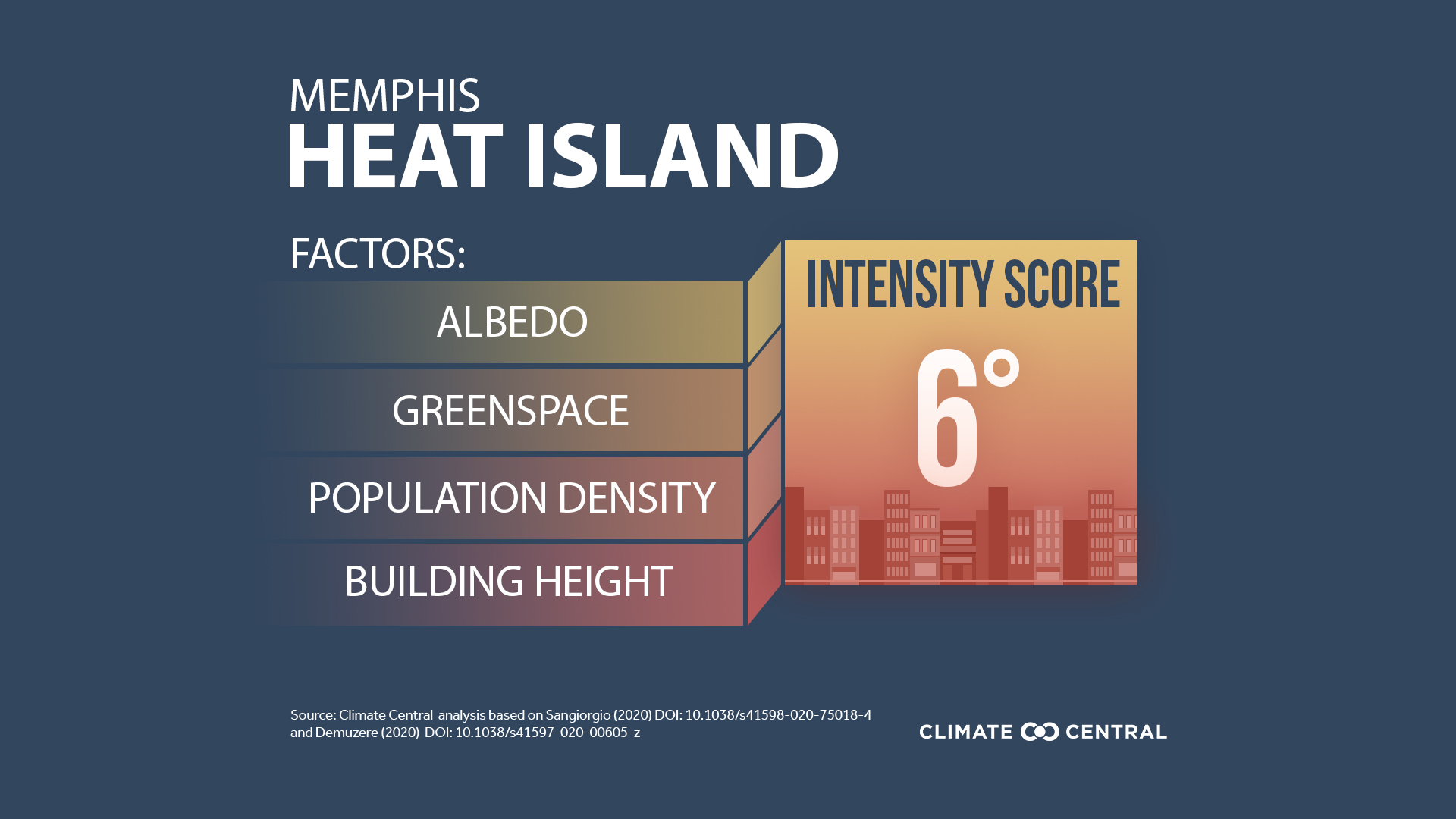
SheltieLover
(81,418 posts) 
Backseat Driver
(4,671 posts)creativity to flow: citizen memes, signage, and coloring contests depicting the new OSHA directives.
Don't get beat; stay out of the heat!
Kids drawings in the library.
A new sign on the boss's wall.

young_at_heart
(4,056 posts)to this urgent need? No.....me neither!

OneCrazyDiamond
(2,070 posts)I don't think that will help our carbon footprint per capita.
BumRushDaShow
(171,334 posts)One of the issues that hit the PNW this year (and has hit Europe multiple times now over the past decade) is that there was no need for AC in many areas due to their original climate norms... But when freak heatwaves hit, the deaths were sobering. And these heat events weren't just one-offs but have been more and more persistent.
I posted this above about the "Urban Heat Islands" - https://www.democraticunderground.com/?com=view_post&forum=1014&pid=2802535
where studies have been done - initially in Europe, and recently in the U.S., to get a gauge on the actual "heat islands" because those are where your deaths are occurring - often in buildings that literally become brick ovens, and in areas with little or no green-scaping that can trap heat and/or reflect heat.
For example, it appears that EPA has some heat-related items already posted on their site - https://www.epa.gov/heatislands and it includes promotional info that states and municipalities can use to encourage mitigation strategies to reduce the impact - https://www.epa.gov/heatislands/heat-island-cooling-strategies
and they include informational content as part of a media toolkit that can be used for social media - https://www.epa.gov/heatislands/cool-your-community-social-media-toolkit
E.g., graphics like this -


OneCrazyDiamond
(2,070 posts)I don't know what cooling looks like for elderly living, but would feel ok with assuming AC.
Climate change is going to cause a migration from the hottest parts of the world already.
More dirty electricity making people cooler in the desert won't help.
Everything you posted about heat islands is spot on, but it will be easier and cheaper to install an AC unit then better building planning.
I hope I am wrong.
BumRushDaShow
(171,334 posts)For areas in the SW, the "outdoor cooling" and many "indoor cooling" stations are essentially "swamp coolers". I.e., they are misters to add moisture to the desert dry air, and just doing that effectively drops the temp down 20 or more degrees. Those are the places that normally get daily triple-digit heat each summer, which are not even really considered "heat waves" since they are "normal" (although temp spikes into the mid-upper teens and even 120s is well above "normal" ). The housing there is also more sprawling and not as dense as the urban east and midwest.
However that type of "cooling" doesn't work in humid areas, so what they have started to do here in Philly (to also preclude the issue of COVID spread in the original senior cooling centers that were usually at libraries or some rec centers) is to roll up SEPTA buses at designated locations where people can sit on the bus to get some AC. And for the kids, they have set up "spraygrounds" at playgrounds -

They have also started adopting what they call the "cool roof" where the old black asphalt, that absorbs every bit of heat that the sun can throw at it, is painted with an elastomer-based white material to seal and reflect.

Back in 2017, it was estimated that some 40% of homes had a "cool roof" here (i.e., one with some light-colored sealant and might also be including use of light-colored asphalt shingles too) - https://whyy.org/segments/tackling-the-heat-island-problem-in-concrete-jungles/

Part of the 2009 ARRA (American Recovery and Reinvestment Act), money was designated to update many federal buildings (including the one that I worked in) to replace the old drafty windows and install energy-efficient fiberglass and I believe Low-E type glass, designed to look like the historic windows that were there, but more importantly, they planted a "green roof" on various federal buildings.
A "green roof" article here - https://billypenn.com/2018/08/05/inside-philadelphias-green-roof-revolution/
An example is the "main" (Central) Branch of the Free Library of Philadelphia downtown near the Parkway that has this on part of its roof -

Philadelphia Electric's PECO building has a green roof - https://www.roofmeadow.com/case-studies/selected-case-studies/peco-main-office-building/

So... many blue cities like here in Philly, have been moving forward with mitigating what we can for at least the past decade.
OneCrazyDiamond
(2,070 posts)The article doesn't mention any of that though.
BumRushDaShow
(171,334 posts)(which can be tricky to do in an LBN OP).
Here is that paragraph again with the link that is bolded (was also at the link for the full OP article but I know WaPo has a paywall - possibly after a couple free articles) -
That "Fact Sheet" link is this -
https://www.whitehouse.gov/briefing-room/statements-releases/2021/09/20/fact-sheet-biden-administration-mobilizes-to-protect-workers-and-communities-from-extreme-heat/
And here is the entire content, with the embedded links, of the "Fact Sheet" that the Biden Administration has with some more detail regarding what the OP article is referencing (and chose not to delve into lest they be forced to write many more pages to include it) -
September 20, 2021 • Statements and Releases
New Initiatives at OSHA and Across Agencies Will Enhance Workplace Safety, Build Local Resilience, and Address Disproportionate Heat Impacts
Today, President Biden is launching a coordinated, interagency effort to respond to extreme heat that threatens the lives and livelihoods of Americans, especially workers, children, and seniors. While climate-related disasters like hurricanes, wildfires, and floods produce dramatic images of devastation, extreme heat often takes place out of sight and out of the news. But heat is the nation’s leading weather-related killer.
The United States experienced a dangerously hot summer this year, breaking records last set during the Dust Bowl. The climate crisis is making heat waves more intense and frequent – endangering workers and communities. During the June 2021 heat wave in the Pacific Northwest, states reported hundreds of excess deaths and thousands of emergency room visits for heat-related illness. Climate scientists have concluded that this heat wave would have been virtually impossible without climate change. Millions of U.S. workers are exposed to heat in their workplaces, and essential jobs with high exposure levels are disproportionately held by Black and Brown workers. Heat also poses higher risks in urban centers and to children, seniors, economically disadvantaged groups, and those with underlying health conditions.
Recognizing the seriousness of this threat, the Biden Administration is taking immediate action on heat hazards to protect workers and communities as part of a broader commitment to workplace safety, climate resilience, and environmental justice. The Departments of Labor, Health and Human Services, Homeland Security, and Agriculture; the Environmental Protection Agency; and the National Oceanic and Atmospheric Administration are announcing a set of actions that will reduce heat-related illness, protect public health, and support the economy:
The Department of Labor is launching a multi-prong initiative on occupational heat exposure to protect outdoor workers, including agricultural, construction, and delivery workers, as well as indoor workers, including those in warehouses, factories, and kitchens. Other new and recent agency actions will provide cooling assistance to households; use schools as cooling centers; launch a heat resilience innovation challenge; address social vulnerabilities and disproportionate impacts; reduce urban heat through tree cover; and improve local preparedness through data-sharing. The Biden Administration’s Interagency Working Group on Extreme Heat will continue to coordinate a holistic response.
These actions would also supplement President’s Build Back Better Agenda, which includes historic funding levels to support resilient communities and improve the assessment and mitigation of climate-related impacts like extreme heat.
Specifically, the Biden Administration is announcing a whole-of-government approach to address extreme heat by:
Developing Workplace Heat Standards and Increasing Enforcement
The Department of Labor’s Occupational Safety and Health Administration (OSHA) is responsible for setting and enforcing standards to ensure safe, healthy working conditions. Heat is a growing workplace hazard, with the climate crisis making extreme heat more frequent and severe. Workers in agriculture and construction are often at highest risk, but the problem affects all workers exposed to heat, including indoor workers without climate-controlled environments. Too often, heat-induced injuries and illnesses are misclassified or not reported, especially in sectors that employ vulnerable and undocumented workers.
To better protect heat-exposed workers, OSHA is:
Launching a rulemaking process to develop a workplace heat standard: OSHA is announcing today the issuance of an Advance Notice of Proposed Rulemaking (ANPRM) on heat illness prevention in outdoor and indoor work settings. This is a significant step toward a federal heat standard to ensure protections in workplaces across the country. The ANPRM, which will be published next month in the Federal Register, will initiate a comment period allowing for OSHA to gather diverse perspectives and technical expertise on topics including heat stress thresholds, heat acclimatization planning, and exposure monitoring. Implementing an enforcement initiative on heat-related hazards: In parallel with beginning rulemaking on a heat-specific standard, OSHA can use existing tools to protect workers in hazardously hot indoor and outdoor settings. Through a new enforcement initiative, OSHA will prioritize heat-related interventions and workplace inspections on days when the heat index exceeds 80°F. On these days, OSHA Area Directors will dedicate additional resources in responding to heat-related complaints and expand the scope of programmed and unprogrammed inspections to address heat-related hazards. In addition to shaping the focus of OSHA field staff, this initiative also will expand on OSHA’s campaign to educate and assist employers on heat illness prevention. Developing a National Emphasis Program on heat inspections: OSHA is also working to formalize a National Emphasis Program (NEP) on heat hazard cases, which will target high-risk industries and focus OSHA resources and staff time on heat inspections. Establishing a new NEP requires extensive data review, which OSHA is working to complete in order for the NEP to take effect before the Summer 2022 heat season. In doing so, OSHA will build on the existing Regional Emphasis Program for Heat Illnesses in Region VI, which covers Arkansas, Louisiana, New Mexico, Oklahoma, and Texas. Forming a heat work group to engage stakeholders and inform ongoing efforts: Within OSHA’s National Advisory Committee on Occupational Safety and Health (NACOSH), OSHA is forming a Heat Illness Prevention Work Group to provide better understanding of challenges and best practices in protecting workers from heat hazards. This group will include three members of the full NACOSH—a public representative, labor representative, and management representative—as well as new members from a range of sectors and industries. OSHA will convene periodic meetings of the work group to provide diverse perspectives on topics including identification, monitoring, and response to workplace heat hazards; heat emergency response plans; and worker training and engagement.
Providing Cooling Assistance to Households and Communities
Beyond the workplace, extreme heat also threatens Americans in our homes and neighborhoods. For households that lack air conditioning altogether, have inadequate equipment, or cannot afford the energy costs of running their units, extreme heat conditions can pose severe risks of health impacts. Greater access to in-home air conditioning and to public cooling centers will address systemic injustices, improve quality of life, and prevent illness and death.
The Biden Administration is providing ongoing support to expand this access, including by:
Directing LIHEAP Resources to Cooling Programs: The Department of Health and Human Services (HHS) recently issued guidance for the Low Income Home Energy Assistance Program (LIHEAP) that provides flexible options for states, territories, Tribes, and Tribal organizations to adjust their LIHEAP programs to address extreme heat. LIHEAP provides grants to these governments to assist low-income households with meeting their home energy needs. Through these flexibilities, grantees can expand their programs to allow for the purchase of air conditioning units; increase cooling assistance payments for electric bills; establish cooling centers; conduct targeted outreach to ensure at-risk households are in a safe temperature environment; and pursue a range of other options to respond to extreme heat. Using Schools as Cooling Centers: The Environmental Protection Agency (EPA) is leveraging American Rescue Plan funding to provide technical assistance for the development of neighborhood cooling centers within existing public school facilities. This specialized support will help align broader investments in healthy schools with needs for cooling centers in vulnerable communities. EPA has issued a call for letters of interest from state agencies, school districts, and community-based organizations, with recipients to be selected in October and projects to begin in early 2022.
Launching an Innovation Challenge on Heat Protection
The Department of Homeland Security (DHS) is launching a series of prize competitions focused on strengthening our nation’s resilience to climate change. The first competition in this series will focus on new ways to protect people at risk of heat-related illness or death during extreme heat events or in connection with other disasters. Through this competition, DHS aims to motivate American talent and creativity toward innovations that will save lives and make our nation fundamentally more resilient to heat.
Identifying and Addressing Disproportionate Heat Impacts
Extreme heat poses threats to communities across the country—but some communities are more at risk because of longstanding economic and racial injustices and ongoing vulnerabilities. Black, Indigenous, and other people of color, as well as people with low incomes, are more likely to live in areas with intensifying heat impacts and often have less access to air conditioning and other risk-reduction resources. Cities also face higher impacts due to the “urban heat island” effect, referring to elevated temperatures from the prevalence of surfaces that retain heat. This effect can be more severe in neighborhoods affected by redlining and other forms of institutionalized discrimination, as these areas often have lower tree cover and higher pavement concentration.
The Biden Administration is working to develop better understandings of disproportionate heat impacts and promote targeted solutions for disadvantaged communities, including through two new resources:
New EPA Analysis of Heat Impacts on Socially Vulnerable Groups: This month, EPA released a report on “Climate Change and Social Vulnerability in the United States” which confirms that climate-driven changes in extreme temperatures disproportionately impact groups that are socially vulnerable based on income, educational attainment, race and ethnicity, and age. In the 49 cities analyzed, increases in high-temperature days are projected to cause premature deaths, and Black individuals are 40-59% more likely than non-Black individuals to currently live in high-impact areas. The report also includes projections of lost labor hours due to high temperatures, finding that people of color and low-income individuals are more likely to live in areas that will be most disrupted. Forest Service Guide on Using Tree Cover to Address Urban Heat: The U.S. Department of Agriculture’s Forest Service recently issued a report on “Climate Adaptation Actions for Urban Forests and Human Health,” which includes a menu of tangible, neighborhood-level options for using urban tree, forest, and greening projects to reduce extreme temperatures and heat exposure. In addition to addressing heat hazards, the actions presented can provide additional public health benefits by improving air quality, enhancing storm resilience, and promoting mental health and social cohesion. The guide also provides local governments with guidance on prioritizing the needs of disadvantaged communities and vulnerable populations.
Improving Local Preparedness through Data Sharing and Technical Assistance
Responding to extreme heat requires action at all levels of government, and demand for science-based information is growing. The Biden Administration is committed to partnering with local officials to provide and enhance data, research, and planning tools on extreme heat and health impacts.
New and ongoing data collaboration efforts of the Biden Administration include:
The National Integrated Heat Health Information System (NIHHIS), jointly developed by the Centers for Disease Control and Prevention (CDC) and the National Oceanic and Atmospheric Administration (NOAA), convenes federal agencies and local partners to develop science-based products and services to improve our national heat response. Today, the NIHHIS is announcing plans for an April 2022 National Meeting to bring together scientists and decision makers working to reduce the health risks of heat and enhance resilience of communities on multiple time scales. The CDC’s Heat and Health Tracker, which provides heat and health data to help communities better prepare for and respond to extreme heat events, will issue an update this week to provide a nationwide heat forecast for October 2021. The forecast will include the expected number of days at or above a dangerous level of heat, based on climatological norms. This county-level information will help health departments and emergency planners identify the needs of vulnerable populations and take appropriate public health action. The Interagency Working Group on Extreme Heat, formed by the White House Climate Policy Office in July 2021 and co-led by HHS, NOAA, and EPA, will continue to regularly convene agencies to communicate, coordinate, and improve the federal response to extreme heat. These efforts will include facilitating the use of federal data sharing and mapping resources to help states, Tribes, territories, and local governments improve heat-related planning and decision-making. HHS co-leads this group through its recently established Office of Climate Change and Health Equity, which works to protect communities with disproportionate exposures and vulnerabilities to climate-related threats and will engage the health workforce in our climate response.
Calling on Congress to Deliver Build Back Better Investments in Resilience
President Biden will continue to work with Congress to protect communities across the country from heat hazards. The President’s Build Back Better Agenda provides historic funding levels to support resilient communities and improve the assessment and mitigation of climate-related impacts, including extreme heat. Related investments include $1 billion for the Federal Emergency Management Agency’s Building Resilient Infrastructure and Communities (BRIC) program, over $12 billion for weatherization assistance and residential energy efficiency and electrification, and $1.2 billion for NOAA research and forecasting.
###
OneCrazyDiamond
(2,070 posts)That's a lot more fleshed out. Thanks for pushing a little further.

Hekate
(100,133 posts)
peoli
(3,111 posts)And now we are going to get all excited about cooling centers to address the damage that we as a nation have caused?!!
This is literally like beating someone and then throwing them a handkerchief to wipe the blood off their mouth and then cheering the person for giving the handkerchief!!!!!!!
BumRushDaShow
(171,334 posts)the result of a century's worth of buildup of industry that precipitated this climate change. 
A shift of practices to make/try to put a dent in the problem is not going to happen "overnight" and that is NOT what the point of this particular policy move is about. Addressing the causes have and will continue to be covered by other initiatives.
Your solution is to let a house burn down because the fucking fire hose on the fire truck "uses water" and should use something else that hasn't been invented yet.
peoli
(3,111 posts)That humanity is on the threshold of the Sixth Great Mass Extinction Event ever on this planet
And to have that leader act as if all our lives depended on acting with great urgency and extraordinary extremity right now and every god damn day until we are able to live on this planet in harmony with the natural world that we are a part of
Because all of the other issues that we are talking about won't matter when we're all dead because we chose not to focus on the impending doom that is staring us in the face
That's my solution
BumRushDaShow
(171,334 posts)The "Fact Sheet" spells out what is just one part (which is what the OP article focused on) of an entire climate change policy.
It will require a 2-prong approach, one for the short-term mitigation that acknowledges the damage that has already been done and minimize the impact on affected communities, and one for the long term.
In fact, since the U.N. is meeting this week, things are already rolling ahead of the Scotland Climate Change summit - I just found this article to start to address the "long term" -
Ben Adler·Senior Climate Editor
Mon, September 20, 2021, 5:18 PM·3 min read
In an effort to tackle the low-hanging fruit in fighting climate change, President Biden and the president of the European Commission, Ursula von der Leyen, announced a joint pledge to cut methane emissions by at least 30 percent by 2030 and urged other nations to join them. “This will not only reduce the rate of global warming, but it will also produce a very valuable side benefit, like improving public health and agricultural output,” Biden said Friday from the White House.
Methane is the second most prevalent greenhouse gas and is 25 times more potent than carbon dioxide at trapping heat in the atmosphere. However, it also cycles out of the atmosphere much more quickly than CO2, meaning that cutting methane emissions delivers a lot more bang for the buck in the immediate future. (Methane is a major component of natural gas, but it has a much stronger warming effect when it escapes into the atmosphere than when it is burned.) Methane currently accounts for 10 percent of U.S. emissions, but it is also relatively easier to reduce than CO2.
Most methane emissions come from leakage in oil and gas wells, pipelines and processing plants, and they are growing rapidly because of the boom in gas and oil drilling from a process called hydraulic fracturing, or fracking. Recent studies have found that the rate of methane leakage is much higher than originally assumed: As much as 3.7 percent of the gas being drilled is escaping. Fixing those leaks doesn’t require new technology, and it can actually save fossil fuel companies money, since they can sell the gas they don’t lose.
Earlier this month, Environmental Protection Agency Administrator Michael Regan said his agency will propose a strict rule on methane leakage for new oil and gas wells. To meet the U.S.’s own pledge, the EPA would then have to make a rule for existing infrastructure as well. Methane also emerges from decomposing natural waste, which can instead be collected in pipes at landfills and on farms and burned for heat or electricity. Friday’s announcement occurred at the Major Economies Forum on Energy and Climate, convened by Biden to build momentum for an agreement ambitious enough to stop catastrophic climate change at the upcoming U.N. Climate Change Conference in Glasgow, Scotland.
https://news.yahoo.com/us-and-europe-agree-to-slash-methane-emissions-as-biden-tells-world-time-is-running-out-on-climate-change-211853700.html
peoli
(3,111 posts)A new report finds that no major economy in the world is on track to meet obligations under the Paris Agreement on climate change ahead of the UN climate change conference in November.
—
What is Happening?
None of the world’s leading economies, including every single G20, have a climate action or are on track to meet the commitments made under the Paris Agreement, reveals a new study.
Gambia is the only country that has a climate plan compatible to meet the climate goals.
Climate pledges made by Russia, Iran and Saudi Arabia are “critically insufficient”.
Every major economy in the world, including all the nations that comprise the G20, is failing to meet the obligations under the Paris Agreement on climate change, according to a new report by policy-analyst Climate Action Tracker (CAT).
The tracker analysed the climate pledges and policies of 36 countries, as well as the 27 nations that make up the European Union (EU), and found that no country is on track to limit global warming to 1.5 degrees Celsius above pre-industrial levels. These countries combined contribute 80% of global greenhouse gas emissions.
Under the Paris Agreement, each signatory country is committed to reducing the country’s greenhouse emissions, improving financial preparedness against impacts of the climate crisis alongside, as well as directing finance flows to projects which align with emission reduction targets.
Climate pledges made by Russia, Iran and Saudi Arabia are “critically insufficient”, the analysis said. Countries including Australia, Brazil, Indonesia, Mexico, New Zealand, Singapore, Switzerland and Vietnam are deemed “highly insufficient”, all of which have failed to submit more ambitious pledges for 2030, six years on after signing the Paris Agreement in 2015. They have either proposed the same plan or even less ambitious policies.
Seven countries’ policies are considered to be “almost sufficient”, including the United Kingdom. While the UK, which will soon play host to the UN climate change conference COP26 in Glasgow in November, have pledged targets that are in line with the accords, the policies in practice are still lacking.
The CAT report also found that global progress has stalled since US President Joe Biden’s Climate Leaders’ Summit in April. “In May, after the Climate Leaders’ Summit and the Petersburg dialogue, we reported that there appeared to be good momentum with new climate action commitments,” said Niklas Höhne, a founding partner of the NewClimate Institute, a partner organisation with the Climate Action Tracker analysis “But since then, there has been little to no improvement: nothing is moving.”
“Anyone would think they have all the time in the world, when in fact the opposite is the case,” he added
https://earth.org/every-g20-country-is-failing-to-meet-paris-agreement-on-climate-change/
BumRushDaShow
(171,334 posts)and 5 months later, in the middle of a goddamn pandemic, it's supposed to be "fixed". 
Remember that for the past 4 years, after TFG announced the U.S. would withdraw from that Paris accord and before the withdrawal actually became official less than a year ago, EVERY mention of the word "climate" was systematically stripped from the Rules, Regulations, and informational websites of EVERY government agency that had any impact or say about it.
I posted in a GD thread about what is being done "behind the scenes" that the media is not reporting, regarding the systematic but tedious rollback of all the bullshit that happened the past 4 years including in this post - https://www.democraticunderground.com/?com=view_post&forum=1002&pid=15848659
An example of a climate-related Rules negation was included -
S.J.Res.14 - A joint resolution providing for congressional disapproval under chapter 8 of title 5, United States Code, of the rule submitted by the Environmental Protection Agency relating to "Oil and Natural Gas Sector: Emission Standards for New, Reconstructed, and Modified Sources Review".
ROLL CALL - Vote Counts: YEAs 52 | NAYs 42 |Not Voting 6
This joint resolution nullifies the Oil and Natural Gas Sector: Emission Standards for New, Reconstructed, and Modified Sources Review rule published by the Environmental Protection Agency on September 14, 2020. The rule finalized amendments to new source performance standards under the Clean Air Act for the oil and natural gas sector, such as an amendment that removed limitations on methane emissions from such sector.
There is a summit coming up which is what the article I posted is an attempt to get back on track.
There is sadly a breathtaking lack of Civics 101 on DU and what has to happen to legally get things done. I know in fairy tales someone can stomp their feet and pound the podium and wave a magic wand to make things all better instantly, but we are not there yet.
peoli
(3,111 posts)All I see is more talking and talking and talking and talking
BumRushDaShow
(171,334 posts)is also the country with the largest population in the world - China.
Now we could just "go to war" against them to try to force them to shut down their smog-producing industries, despite our military being outnumbered 2 to 1, but I suppose we could try.
But as you'll notice, that since they and other countries in Asia make the very chips you are using to even post here, then you can do your part by discarding your devices to help eliminate the demand and thus the manufacture of such parts, which generates a huge carbon footprint.
Go ahead. Log off and make the world a better place.
