NASA probe makes closest-ever pass by the sun
Source: VOA/Agence France-Presse
December 24, 2024 7:25 PM
WASHINGTON — NASA's pioneering Parker Solar Probe made history Tuesday, flying closer to the sun than any other spacecraft, with its heat shield exposed to scorching temperatures topping 930 degrees Celsius (1,700 degrees Fahrenheit).
Launched in August 2018, the spaceship is on a seven-year mission to deepen scientific understanding of our star and help forecast space-weather events that can affect life on Earth. Tuesday's historic flyby should have occurred at precisely 11:53 Greenwich Mean Time, although mission scientists will have to wait until Friday for confirmation as they lose contact with the craft for several days due to its proximity to the sun.
"Right now, Parker Solar Probe is flying closer to a star than anything has ever been before," at 6.1 million kilometers (3.8 million miles) away, NASA official Nicky Fox said in a video on social media Tuesday morning. "It is just a total 'yay, we did it,' moment."
If the distance between Earth and the sun is the equivalent to the length of an American football field, 109.7 meters, the spacecraft should have been about four meters from the end zone at the moment of closest approach — known as perihelion. "This is one example of NASA's bold missions, doing something that no one else has ever done before to answer long-standing questions about our universe," Parker Solar Probe program scientist Arik Posner said in a statement on Monday.
Read more: https://www.voanews.com/a/nasa-probe-makes-closest-ever-pass-by-the-sun/7913023.html
 = new reply since forum marked as read
Highlight:
NoneDon't highlight anything
5 newestHighlight 5 most recent replies
= new reply since forum marked as read
Highlight:
NoneDon't highlight anything
5 newestHighlight 5 most recent replies

PJMcK
(25,048 posts)Building such a craft then getting to the Sun is remarkable!
There's a flaw in the article, however. An American football field is not 109.7 meters, it's 100 yards or 91.44 meters.

JustABozoOnThisBus
(24,681 posts)It's a very big deal if you're programming a Mars lander.
https://www.simscale.com/blog/nasa-mars-climate-orbiter-metric/

BumRushDaShow
(169,756 posts)Blame the French! 
(AFP/Agence France-Presse)

NutmegYankee
(16,478 posts)An error made by someone who doesn’t watch 🏈.
BumRushDaShow
(169,756 posts)Canadian football where this can happen -
PJMcK
(25,048 posts)I realized my error after I logged off. Oops. Too much Christmas "cheer," if you know what I mean!
We're going to watch the Ravens/Texans game this afternoon. You?
NutmegYankee
(16,478 posts)Not going to be much TV viewing here. 

SpankMe
(3,720 posts)
BobsYourUncle
(215 posts)One hundred yards is approximately 91.44 meters.
Divide by NOT multiply by, 1.094!
NutmegYankee
(16,478 posts)The problem is the average American doesn’t count the end zones.

JohnnyRingo
(20,870 posts)I love following cosmic science. Thanx for posting!

paleotn
(22,218 posts)A rather warm, spicy neighborhood. And should put to rest Roosevelt E. Roosevelt's question....were you born on the sun? Nope.

AllaN01Bear
(29,490 posts)thunderbirds epi, sun probe.

C0RI0LANUS
(3,017 posts)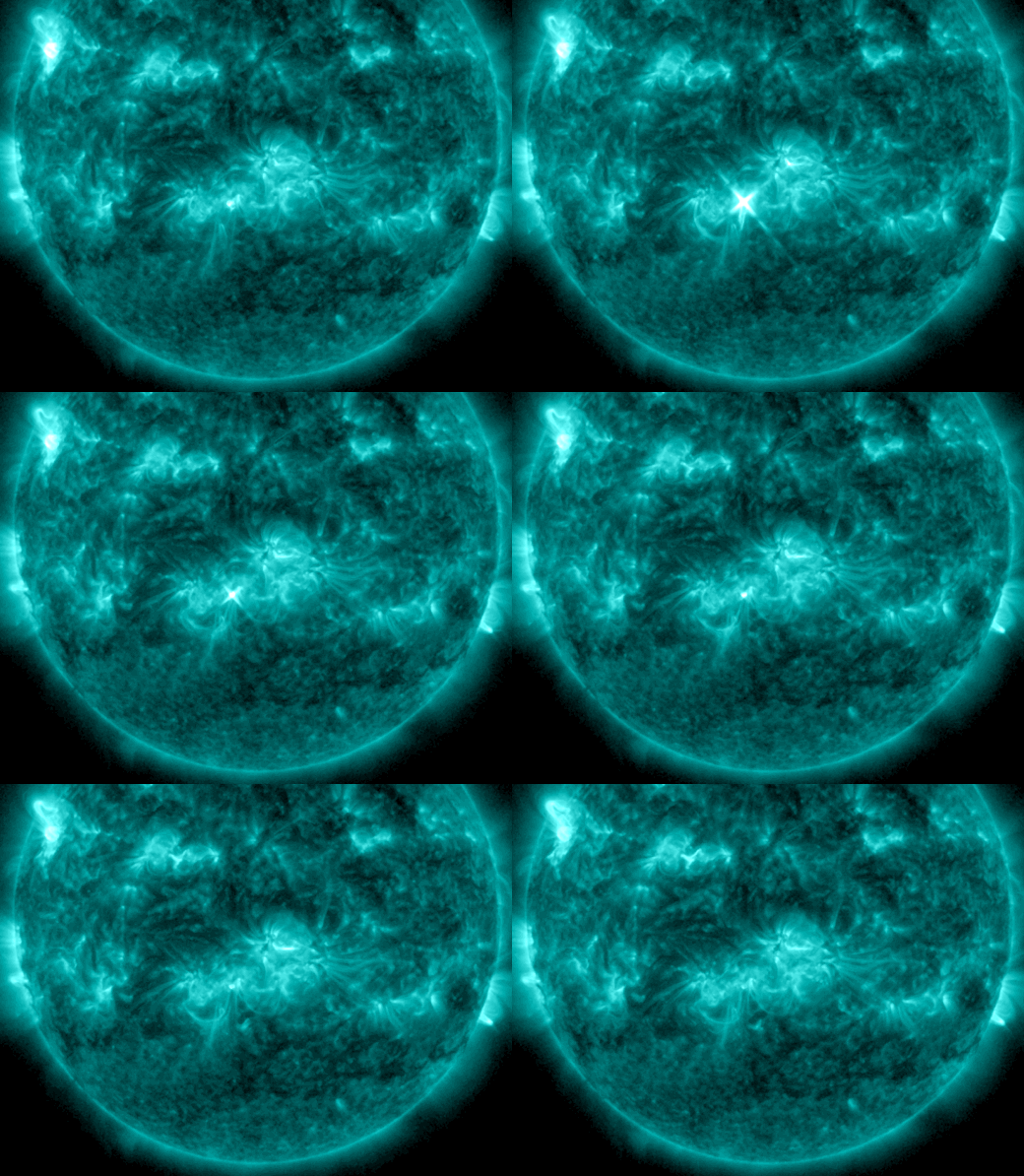
FTA:
"CHRISTMAS FLARE AND CME (UPDATED): Christmas began with a bang. At 0449 UT on Dec. 25th, active sunspot 3932 produced a strong M4.9-class solar flare. NOAA's GOES-16 satellite recorded the extreme ultraviolet flash above.
Soon after the flare, the USAF reported a Type II solar radio burst. This is a natural type of radio emission caused by shock waves inside CMEs. The drift rate of the Type II radio burst suggests that a CME will soon emerge from the blast site traveling a little faster than 1,000 km/s."
The sun's 11-year cycle:
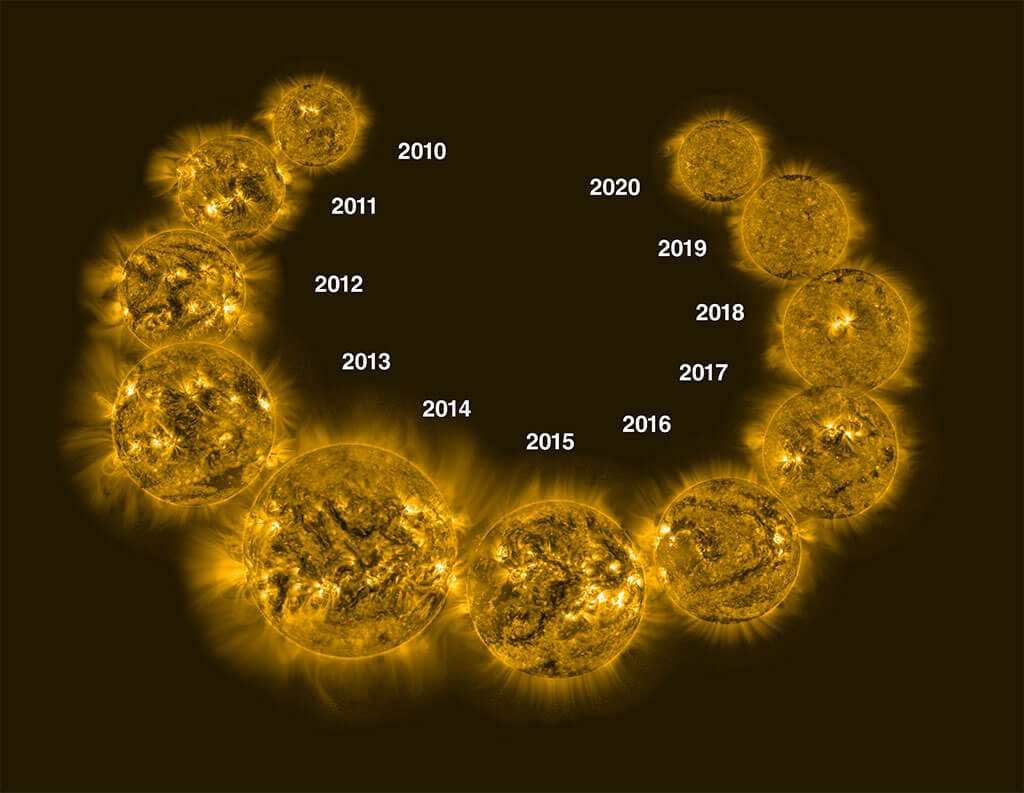
On 1-2 Sep 1859, a massive solar flare spewed electrified gas and subatomic particles toward Earth, wreaking havoc on telegraph networks which became known as the "Carrington Event" (and the most intense solar storm in recorded history).
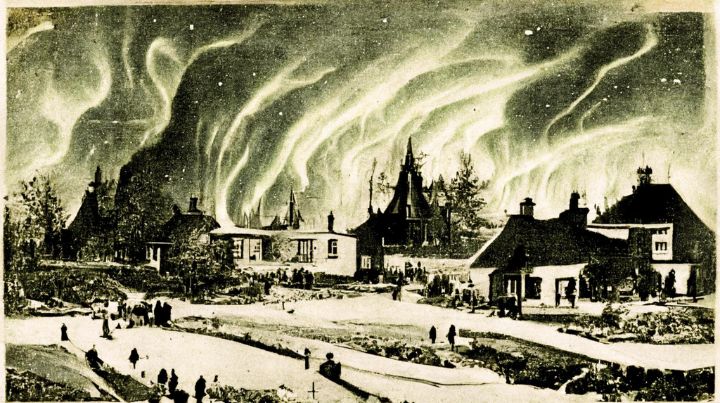
During this 1859 geo-magnetic solar cyclone, people reported "the sky was on fire."
Links:
https://spaceweather.com/
https://spaceplace.nasa.gov/solar-cycles/en/
https://www.history.com/news/a-perfect-solar-superstorm-the-1859-carrington-event

yagotme
(4,135 posts)Just send the probe at night. Problem solved...
Aussie105
(7,920 posts)I will go away now.


reACTIONary
(7,162 posts)... Another is "It's not a probe, it's a lander!"
yagotme
(4,135 posts)
reACTIONary
(7,162 posts).... Entry, Descent, and Landing.... Would definitely be tricky!
LudwigPastorius
(14,725 posts)
BWdem4life
(3,003 posts)I mean, let's not discount the possibility of other intelligent life in the universe, right?