
3D printers shown to emit potentially harmful nanosized particles
Source: Phys.org
A new study by researchers at the Illinois Institute of Technology shows that commercially available desktop 3D printers can have substantial emissions of potentially harmful nanosized particles in indoor air. The study, which was recently published in the journal Atmospheric Environment, is the first to measure airborne particle emissions from commercially available desktop 3D printers. Desktop 3D printers are now widely accessible for rapid prototyping and small-scale manufacturing in home and office settings. Many desktop 3D printers rely on a process where a thermoplastic feedstock is heated, extruded through a small nozzle, and deposited onto a surface to build 3D objects. Similar processes have been shown to have significant aerosol emissions in other studies using a range of plastic feedstocks, but mostly in industrial environments.
In this work, assistant professor Brent Stephens and graduate students in his Built Environment Research Group in the Department of Civil, Architectural and Environmental Engineering at Illinois Institute of Technology in Chicago, IL measured ultrafine particle concentrations resulting from the operation of a single type of popular commercially available desktop 3D printers inside an office space. Ultrafine particles (or UFPs) are small, nanosized particles less than 100 nanometers in diameter. The printers were used to print small plastic figures during normal operation. The resulting concentration measurements were then used to estimate UFP emission rates from these printers.
Estimates of emission rates of total UFPs were high, ranging from about 20 billion particles per minute for a 3D printer utilizing a lower temperature polylactic acid (PLA) feedstock to about 200 billion particles per minute for the same type of 3D printer utilizing a higher temperature acrylonitrile butadiene styrene (ABS) feedstock. The emission rates were similar to those measured in previous studies of several other devices and indoor activities, including cooking on a gas or electric stove, burning scented candles, operating laser printers, or even burning a cigarette.
Human inhalation of UFPs may be important from a health perspective. UFPs deposit efficiently in both the pulmonary and alveolar regions of the lung, as well as in head airways. Deposition in head airways can also lead to translocation to the brain via the olfactory nerve. The high surface areas associated with UFPs also lead to high concentrations of other adsorbed or condensed compounds. Several recent epidemiological studies have also shown that elevated UFP number concentrations are associated with adverse health effects, including total and cardio-respiratory mortality, hospital admissions for stroke, and asthma symptoms.
Read more: http://phys.org/news/2013-07-3d-printers-shown-emit-potentially.html
I was wondering about this and I'm not surprised in the least.
 = new reply since forum marked as read
Highlight:
NoneDon't highlight anything
5 newestHighlight 5 most recent replies
= new reply since forum marked as read
Highlight:
NoneDon't highlight anything
5 newestHighlight 5 most recent replies

MADem
(135,425 posts)
valerief
(53,235 posts)
Bernardo de La Paz
(60,320 posts)
mwrguy
(3,245 posts)it's a rethuglican dream come true.

Ednahilda
(195 posts)
Duer 157099
(17,742 posts)Hmmmm... print a gun, inhale deadly particles
jtuck004
(15,882 posts)musical instruments like a guitar, clothing, building, moon base...and perhaps a thousand other things. Lots of other things out there, but they don't make such good press on Fox News.
It's biggest plus is that is its very real potential to take manufacturing out of the hands of the rentiers, and their new friends the robots, and bring it much closer to control by the 99%.
Just like cars can be used in bank robberies, they have a lot of other uses that are much more useful, such as getting people to the hospital, or work, or hauling food, etc.
Btw, these so-called undetectable guns (which fire [i[detecable bullets, btw, mostly impractical as anything other than wall hangings, they were being made long before 3d printers came out. And while the 3d printer has the capability of making them faster, perhaps, they still mostly fall apart. Those other things, not being exposed to the force of the explosion, generally don't.
kestrel91316
(51,666 posts)
DainBramaged
(39,191 posts)

Dustlawyer
(10,539 posts)DainBramaged
(39,191 posts)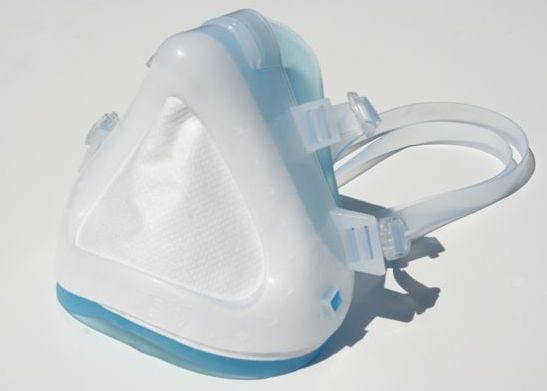
Taverner
(55,476 posts)There is a reason people at fabrication companies wear masks

PatrynXX
(5,668 posts)Thats bad. Got to see them make KWWL out of plastic on the news. had kids around having fun. adults is one thing but kids. this might be a big lawsuit. that might hurt the bottom line
Posteritatis
(18,807 posts)AdHocSolver
(2,561 posts)When I first heard about 3-D printers that emit nanoparticles, I wondered how long it would take for someone to figure out that the emission of microscopic particles into the air people breathe might be bad for one's health.
Sounds like nanoparticles are the equivalent of the tar and nicotine of inhaled cigarette smoke.
However, don't expect any action by the EPA or similar agencies to set some protective standards regarding 3-D printer use until our corporate rulers have made megaprofits on sales, and the sickness and/or death rate from nanoparticles becomes too great to ignore.
How long before the advertising campaigns emerge about how breathing nanoparticles is not merely harmless, but that it provides health benefits (just like with tobacco).
Between genetically modified food, fracking, global climate change, chemical pollution, overuse of antibiotics creating "super bugs", and now nanoparticles, which hazard will history pick for ending civilization (if not most life) on planet earth?
jtuck004
(15,882 posts)
Igel
(37,535 posts)jtuck004
(15,882 posts)if that might be a little more toxic.
We are all bathed in car exhaust on a daily basis, as well as the stuff you mentioned, so it becomes yet one more toxin, but some do deserve extra attention.

A Simple Game
(9,214 posts)Posteritatis
(18,807 posts)
shenmue
(38,598 posts)They are so cute.

PoliticAverse
(26,366 posts)Javaman
(65,711 posts)damn nanoparticles. I hate them so much!
Posteritatis
(18,807 posts)7962
(11,841 posts)NickB79
(20,356 posts)An endless stream of custom-designed LEGOS, pouring out of a home 3D printer, in every shape imaginable. I, er, I mean my children, could have so much fun!
It would be a dream come true.

WHEN CRABS ROAR
(3,813 posts)"chose the right 3D printer for your application"
Don't you just love tech?
PoliticAverse
(26,366 posts)
Xithras
(16,191 posts)What's the difference between printing something on this, and making it the old fashioned way using wood, a saw, and sandpaper?
My guess would be that the "old fashioned way" produces an order of magnitude MORE "UFP's".
Bernardo de La Paz
(60,320 posts)Read the article before getting bent out of shape, folks.
Posteritatis
(18,807 posts)hankthecrank
(653 posts)Just a start to DIY
http://www.makershed.com
Sears sold a machine that takes 3d patterns and cut them out of plastic or wood
Put any object in sand mold and take it out pour aluminum or brass
You can melt aluminum or brass with natural gas in a kiln
Nihil
(13,508 posts)> The emission rates were similar to those measured in previous studies of several
> other devices and indoor activities, including cooking on a gas or electric stove,
> burning scented candles, operating laser printers, or even burning a cigarette.
The primary difference with this scare headline is that 3D printers are a real risk
to the status quo w.r.t. manufacturing/shipping/selling/taxing plastic products.
No news here.