Teaching self-confidence can backfire and perpetuate inequality
 It’s true that self-confidence is beneficial, but the way in which it’s often taught is misguided and can be harmful
https://psyche.co/ideas/teaching-self-confidence-can-backfire-and-perpetuate-inequality
It’s true that self-confidence is beneficial, but the way in which it’s often taught is misguided and can be harmful
https://psyche.co/ideas/teaching-self-confidence-can-backfire-and-perpetuate-inequality

Has someone close to you – such as a parent, a teacher or a manager – ever urged you to try to be more self-confident? They likely had good intentions, thinking that being more confident would help you get on in life. But did you find that it actually made you feel frustrated and helpless? After all, it’s not as if you can just fake yourself into self-confidence. If so, you’ve experienced what we call ‘the confidence trap’: the popular but misguided belief that simply telling people to be more self-confident will improve their lives.
In many parts of Western society, children are lavished with praise intended to boost their self-confidence – even if they have simply tied their shoelaces or put on their jacket. Once old enough, they are encouraged to cultivate their own self-confidence. Take the hugely popular
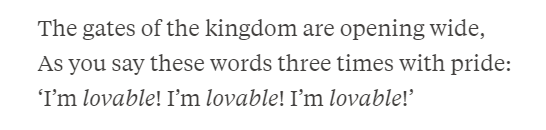
children’s book The Lovables in the Kingdom of Self-Esteem (1991), in which the author and professional coach Diana Loomans tells them:
Self-help books for adults are similar, typically filled with self-confidence exercises – from listing your achievements to telling yourself that you’re awesome, there is almost no excuse anymore not to be self-confident. As psychologists who study character development in children, it’s our belief that these self-confidence exercises are misguided. We are not suggesting that self-confidence isn’t beneficial. A large body of scientific research
shows that self-confident individuals are happier, healthier and more successful. We are suggesting that the way people usually go about encouraging self-confidence is counterproductive, even harmful.
One common misguided strategy many parents use is to
provide inflated praise, such as ‘You’re
amazing! You did
incredibly well!’ When we conducted in-home observations of parent-child interactions, we found that parents were especially inclined to dole out inflated praise to children with low self-esteem. While well-intentioned, this
research from 2017 shows that inflated praise can backfire, causing children with low self-esteem to worry that they won’t be able to live up to the standards implied by the praise.
snip

 = new reply since forum marked as read