The Atlantic Writers Project
https://www.theatlantic.com/the-writers-project/
https://web.archive.org/web/20220711161836/https://www.theatlantic.com/the-writers-project/
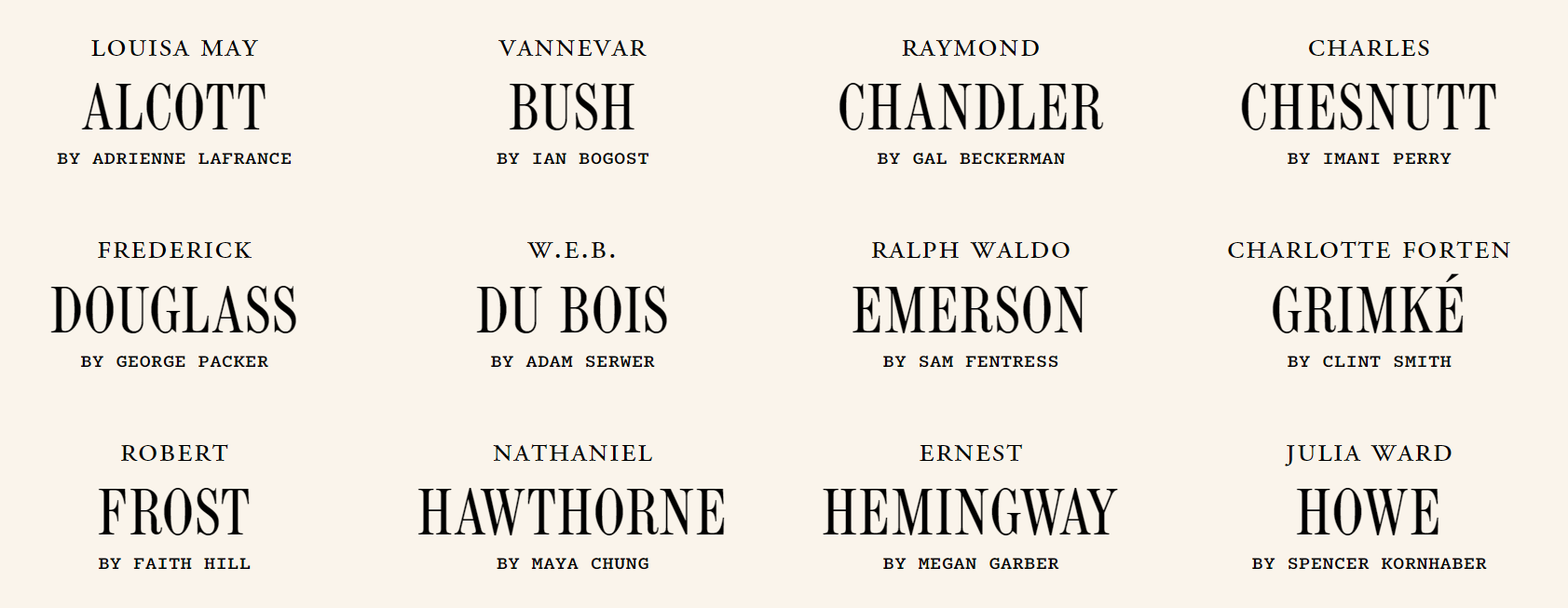
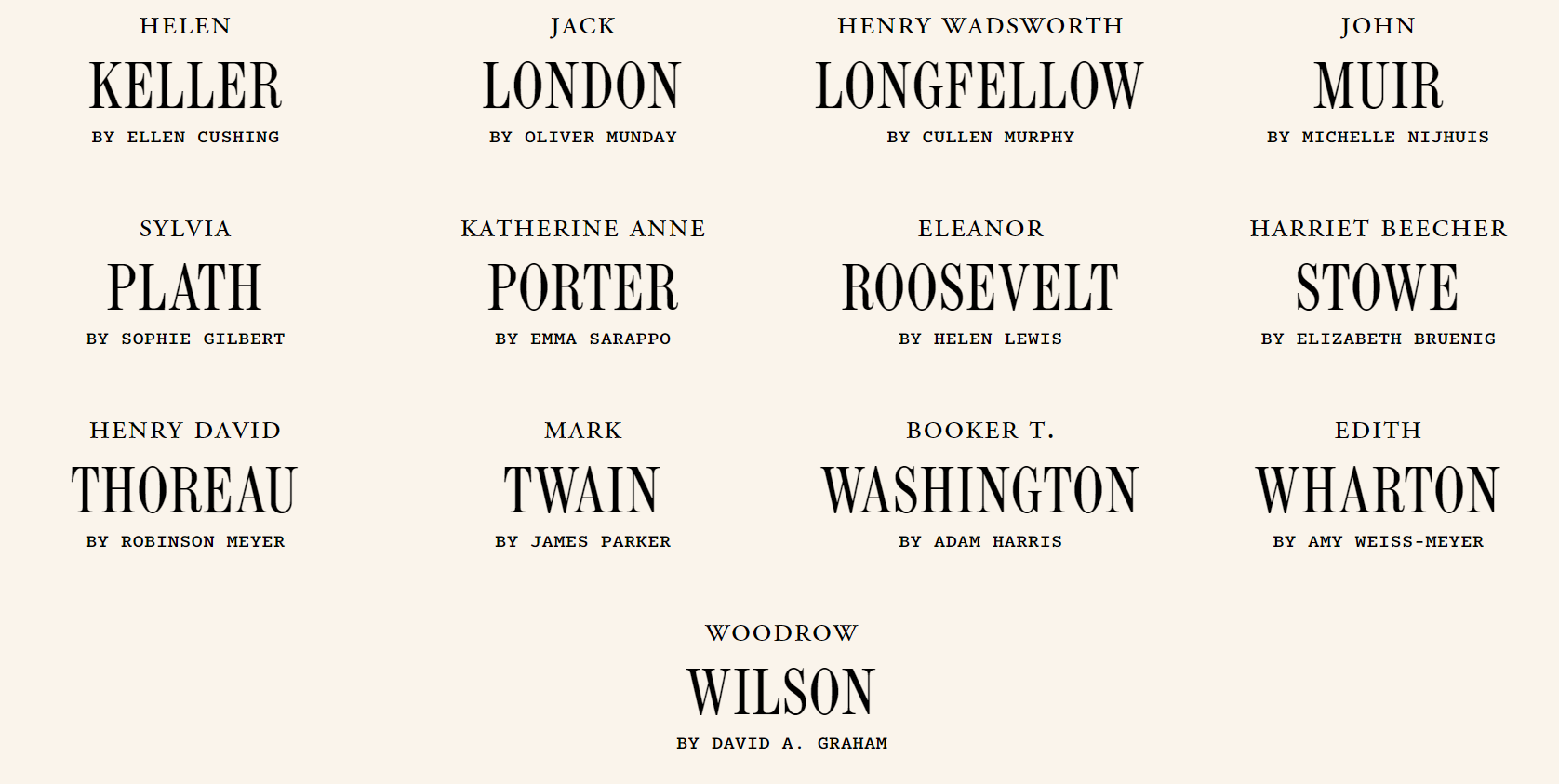 sample
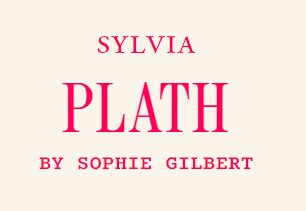 https://www.theatlantic.com/the-writers-project/#Plath

One of the thrills of reading Sylvia Plath is the abundance of versions to choose from. Sideline her poetry for a minute (just a minute) and you’re still left with her letters, almost 2,300 pages of performative exuberance and curated honesty riddled with exclamation points and yearning, many of them signed from “Sivvy.”
Her journals are tides of emotion and experimentation unleashed upon the page. (“Oh, I bite,” she wrote in August 1951. “I bite on life like a sharp apple … I have a well, deep, clear, and tartly sweet, of living.”) Then there’s the vivid disaffection of her lone novel,
The Bell Jar, published under a pseudonym in 1963, a recounting of the recurring depression that would lead to her death by suicide that same year.
Still, the version of Plath that endures over any other is
poet. More so than virtually any other artist’s work, her poetry is impossible to judge on its own terms outside her mental illness and her abandonment by her husband—the poet Ted Hughes—because the writing that made her name is inextricable from both. “I write, at the present, in blood, or at least with it,” Plath wrote in a letter dated February 1963, the month she died.
Ariel, the collection of poems mostly written in the last months of her life, comes in unnerving gasps of genius, raging with pain. This version of Plath, Hughes argues in the foreword to her journals, was her true self—the rest of her writings, he argues, are a “waste.”
It’s too easy to disagree. Plath was born in Boston in 1932, the daughter of Aurelia, a second-generation Austrian American, and Otto, a biologist who specialized in the study of honeybees. When Plath was 8, her father died; the following year,
her first published poem appeared in the
Boston Herald. However talented she was, Plath was equally ambitious—her letters tend to be dominated evenly by passion, humor, and what we might now call hustle, with pithy bites of envy in between. (“I keep reading about this damn adrienne cecile rich, only two years older than I, who is … regularly in all the top mags … Occasionally I retch quietly in the waste basket,” she wrote to a former boyfriend in 1955.)
While studying at Smith College in 1953, Plath won a national competition to become guest editor at
Mademoiselle in New York. The prize was prestigious, but the experience she found tawdry and discombobulating. Later that summer, after receiving electroconvulsive therapy for a serious depressive episode that she later expounded upon in
The Bell Jar, Plath made her first attempt to end her life. She was treated for the next several months at McLean Hospital in Massachusetts.
snip

 = new reply since forum marked as read