The DU Lounge
Related: Culture Forums, Support ForumsLearned more about asparagus fern than would be suspected.
So my grandmother had asparagus fern (not the "foxtail" type), elephant ears, copper plants, and the other kind of fern (foot long "spears" with paired leaves on either side of the stems). Those plants mainly meant "Grandmother's house" to me, not instilling a botanical or gardening thing in me. So in my 20s, on my first visit to New Orleans, there in hanging pots from the balconies were the asparagus and other fern, among other things, and my pleasant shock was, "This looks like Grandmother's house!"
So when I had my own place one of the things to make it my own was to plant the asparagus and coppers. The first thing I learned at a nursery was that hanging pots are not good for this area because we have a constant, hot wind, and using hanging pots "is like putting plants in an oven."
So I planted it into the ground. And then, handling them, found out that the "nice" asparagus fern has tiny little thorns.
A couple of years ago everything froze but some things came back, including the asparagus (we're talking FERNS, not the edible). Well, over the decades things have come and gone, and recently the formerly frozen asparagus was dying off, and I had gone so far as to shear all the foliage to the ground. So for the past few days I had made a note of digging it up for good. And last night dozing, I decided to do it this morning, thinking it would be easy with the little electric tiller.
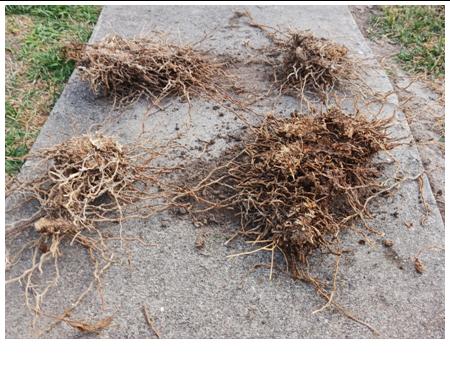
Lesson #2. So this morning got to it, at the crusty top "soil." Hah! there was a whole layer of stringy string things and the tiller got tangled shut down several times, then BOUNCED off of huge KNOTS the size of honeydew melons. The tiller basically quit with screeching. So I tried a pickaxe, and sure enough, there were those hard clumps that were tied down with all of those strings. Went to Plan C, the reciprocating saw, which was the answer once again - buzzing through all the tie-downs, liberating the hard clumps.
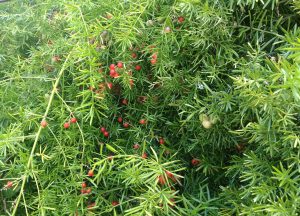
Lesson #3. In putting together this post, found the article below calling asparagus ferns INVASIVE and to be avoided! So the first pic is of the melon sized HARD (trunks?). The other is of the type of asparagus from the internet.
**********QUOTE********
https://nwdistrict.ifas.ufl.edu/hort/2017/03/29/prevent-asparagus-fern-escapes/
by Mark Tancig | Mar 29, 2017 | Invasive Species, Shrubs
As an extension agent, I’m always curious of what plants folks are using in the landscape. One plant I’ve been noticing more and more of in north Florida, both in containers and in landscape beds, is asparagus fern. Three different plant species go by the name asparagus fern – Sprenger’s fern (Asparagus aethiopicus), foxtail fern (Apsaragus densiflorus), and lace fern (Asparagus setaceus). Property owners should refrain from selecting these plants since they are another example of invasive, exotic species that can spread to natural areas and effect native plant communities.
Native to South Africa, Asparagus species are technically not a fern, but related to lilies, and, yes, asparagus. Its ease of growth has made them a go-to choice for gardeners looking for a hardy, attractive plant. Unfortunately, the red berries that follow the small, white, scented flowers are fed on and spread by birds. The seeds germinate easily and can become established in other parts of the garden or, even worse, a local natural area. The ability of Sprenger’s fern to spread into and disrupt natural ecosystems has earned it a spot on the Florida Exotic Pest Plant Council’s List of Invasive Species as a Category I invasive plant. Category I plants are reserved for those plants that have been documented as causing ecological harm to Florida’s ecosystems. Foxtail fern and lace fern should also be used with caution. ....
**************UNQUOTE********
 = new reply since forum marked as read
Highlight:
NoneDon't highlight anything
5 newestHighlight 5 most recent replies
= new reply since forum marked as read
Highlight:
NoneDon't highlight anything
5 newestHighlight 5 most recent replies

zuul
(14,704 posts)planted in the soil as ground cover at my house (New Orleans.) I love them. The thorns are a bit of a problem though.

UTUSN
(77,795 posts)I have never seen anything "invasive" about them that the article claims. I like them, too, moreso for my childhood memories. But am at the stage of getting rid of things, clearing out things to make things easier all around.
zuul
(14,704 posts)They don’t do as well there since the growing season is so short. The thorns surprised them too!

Bayard
(29,679 posts)I have a big asparagus fern that I've had for years. It gets pretty pitiful hanging in the bathroom over the winter, but I hang it on the porch for summer, and it gets beautiful and huge. Its getting the little red berries now, but no thorns. Its terribly root bound now, so I'm thinking of transplanting to a big pot that just became available (alas!) inside.
I'll have to look up the other ferns you named.
UTUSN
(77,795 posts)non-asparagus). The elephant ears and copper plants aren't ferns.