The DU Lounge
Related: Culture Forums, Support Forums10 Ways Our Great-Grandparents Screwed Over Women
Think some American politicians have shown a bad attitude toward women lately? The nineteenth century saw terrible things done to the fairer sex, some amounting to what we’d consider abuse – but which were considered normal at the time. Here are ten ways the Victorians perpetrated often-institutionalized wrongdoing on their womenfolk. We’ve come a long way, baby … but after a hundred and fifty years or so, there’s clearly still some work to be done.
Puerperal Fever

The fashion for hiring “male midwives,” also known as accoucheurs, to attend middle and upper class ladies in labor often proved deadly, as did the new “lying-in” hospitals. Because doctors went to their patients with their sleeves clotted with another patient’s blood, their hands unwashed, and a placenta or two in their coat pockets, women frequently succumbed to childbed or puerperal fever, an infection of the uterus causing a drawn out, agonizing death. Up to nine women in a hundred were infected, as many as three of them dying from septicemia. While some physicians noted the connection between simple hand washing and reduced rates of puerperal fever, many others rejected the theory.
Insanity Laws
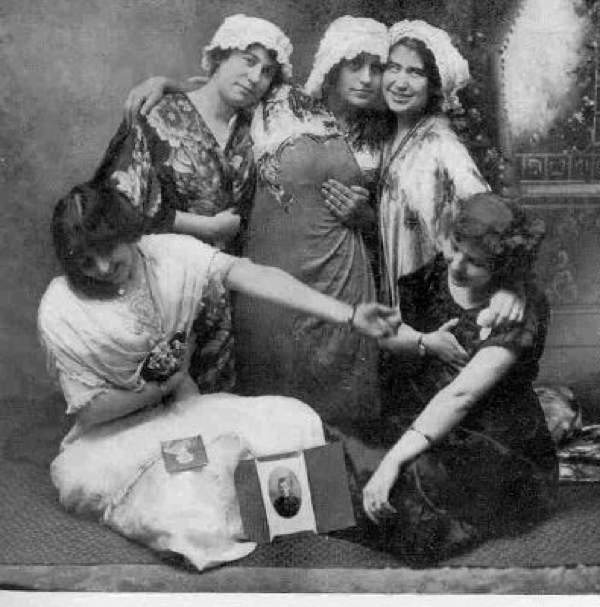
Throughout much of the nineteenth century, a husband, father, or other male authority figure could—and did—have a woman declared insane as easily as getting two doctors to sign the certificate, and they didn’t even have to see the patient. A man’s testimony was enough to get a female relative locked up in secret indefinitely. Some women suffered from “puerperal insanity,” or post partem depression and other mental illnesses, but others were imprisoned in an asylum for no greater cause than disagreement with established norms (such as declaring women should get the vote), a medical condition like epilepsy, the ever popular hysteria, or infidelity. Treatments were crude at best, cruel at worst. Doctors considered female patients in danger of developing “erotomania” or hypersexuality, and took steps accordingly.
Property Laws
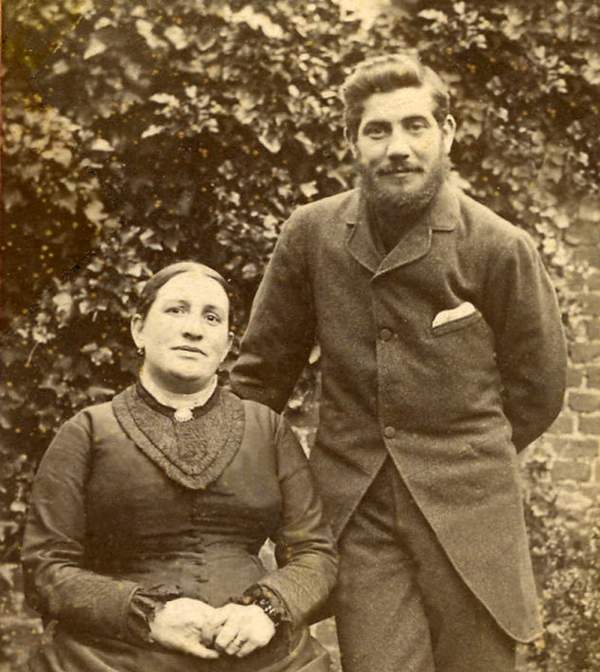
Married women prior to 1870 had no control over their own property, wages, money, inheritance, etc. Even a valuable gift became her husband’s property, and she had no legal recourse if he abused “their” assets. Women couldn’t buy or sell any property or business of any kind in their own name. From a legal standpoint, a woman owned nothing, not even the clothes on her back. Any dowries paid to the husband by his bride’s relatives could be specified for her own use by a prenuptial contract if the fiancé agreed. Until the passage of the Married Women’s Property Act in 1870 and 1884 in Britain established a wife’s rights in law, the only way to avoid being impoverished by an errant or corrupt spouse was to remain single. It would take until 1900 before all U.S. states passed similar laws.
Inheritance Laws

Until 1925 in Britain, in the case of someone dying intestate (without a will), a female heir could not inherit any “real” property, like valuable land, as long as there was a male heir. Instead, the law limited such women to personal property like jewelry, furniture or clothing. If the property was entailed—that is, legally bound in a specific way—then only a male heir could inherit, even if that heir was a very distant relative of the deceased. Often, if a woman was lucky enough to inherit something very valuable like an estate or investments, the inheritance was controlled by a (male) trustee, who decided how/when the female beneficiary received any benefits. Unless, of course, she was married.
Dissolution of Marriage (Divorce)
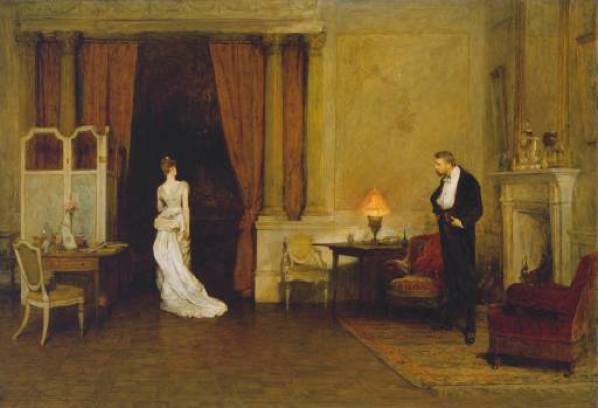
Early in the nineteenth century, divorce in England could be obtained only by an Act of Parliament. Later, a man could divorce his wife on the grounds of infidelity. But what about a wife if her husband proved vicious, abusive, and violent? In 1853, the British government passed a law setting up legal limits to the amount of force a man could use against his wife (not banning the abuse, mind you, just outlining boundaries for abusers). Even if a woman managed to obtain a divorce (though for her, only on the grounds of cruelty, incest, abandonment, or bigamy in addition to infidelity), she was left destitute. Worse, courts preferred to award custody of children to the husband until around 1878.
Non-Person
Well into the twentieth century, women were disregarded to the extent that legally speaking, they were non-persons. A woman couldn’t a open bank account in her own name, purchase any form of birth control, vote, sue someone in court, sign contracts, or make her own medical decisions. She wasn’t supposed to have sexual contact with a man other than her husband (rape was seen as the woman’s fault). Educational opportunities were minimal, even for the upper class. Women were supposed to take care of the household, bear children, obey social restrictions, and do very little else. Physical activity was frowned upon. For example, some physicians publicly spoke out against the dangers of the pernicious bicycle, which they feared might cause women to become “oversexed” because they straddled the saddle.
Contagious Diseases Prevention Acts
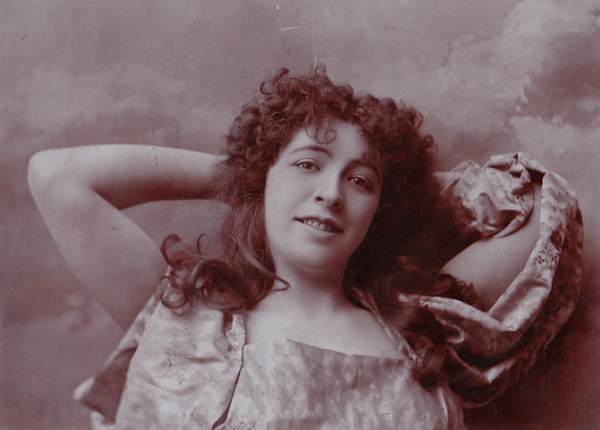
By the 1860s, the British government had suddenly realized that many of their soldiers and sailors suffered from venereal diseases like syphilis. In response, in 1864, the first attempt at regulating prostitution was passed as the Contagious Diseases Prevention Act. The law was directed solely at women. In a nutshell, any woman suspected of being a prostitute was required to submit to a physical examination. No warrant was required. Any woman in public, be she twelve years old or eighty, whom police thought might be selling sexual favors, whether they had evidence or not (for instance, just on the dodgy testimony of a jealous boyfriend), could be seized, taken to a police station, and forced to endure what amounted to painful sexual assault while a male policeman “examined’ her private parts! It’s worth noting that it was working class and poor women who generally suffered under these unfair laws.
Limits on Jobs
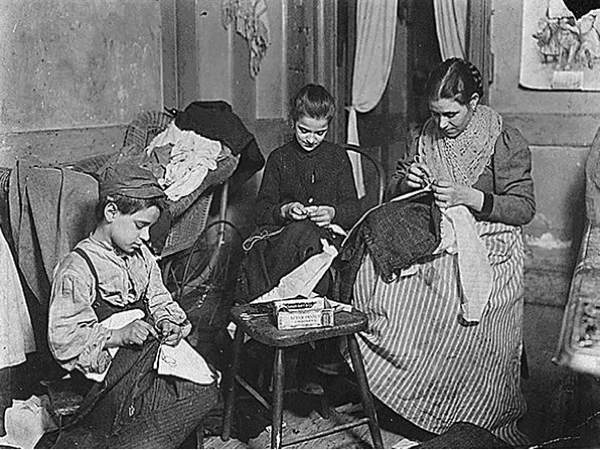
The Victorian era offered few employment opportunities for women. For upper and middle class ladies, going to work wasn’t even a consideration. Lower class women who had to support themselves and/or children and other family members were limited mostly to factories or sweatshops, domestic service, home industries like shirt sewing or paper flower making that paid a starvation wage – or prostitution. At one point, prostitution was so rife that in London alone, it was estimated as many as one in nine women sold herself to earn a living. Legitimate employment in a factory wasn’t that much better. Workers endured long hours, dangerous conditions, few health or safety protections under the law, and unfair wages.
Denial of the Right to Vote
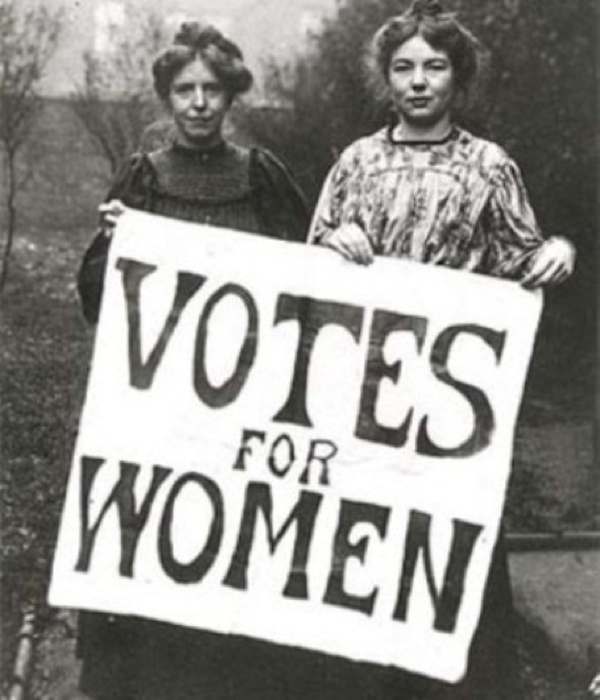
Unsurprisingly, nineteenth century men used a variety of rationales to deny women the vote. Anti-suffragette propaganda was denigrating, to say the least. Among the arguments used were that women weren’t interested in politics, men were mentally better suited to understanding the complexities of political issues, women were emotionally unstable, a woman’s place was in the home, participation in public activities like voting went against feminine modesty, etc. When suffragettes went on hunger strikes after being arrested, they were strapped down and force fed on the order of the authorities. This may sound like a simple medical procedure, but it was a horrific violation and a nightmarish experience.
Sexual Slavery
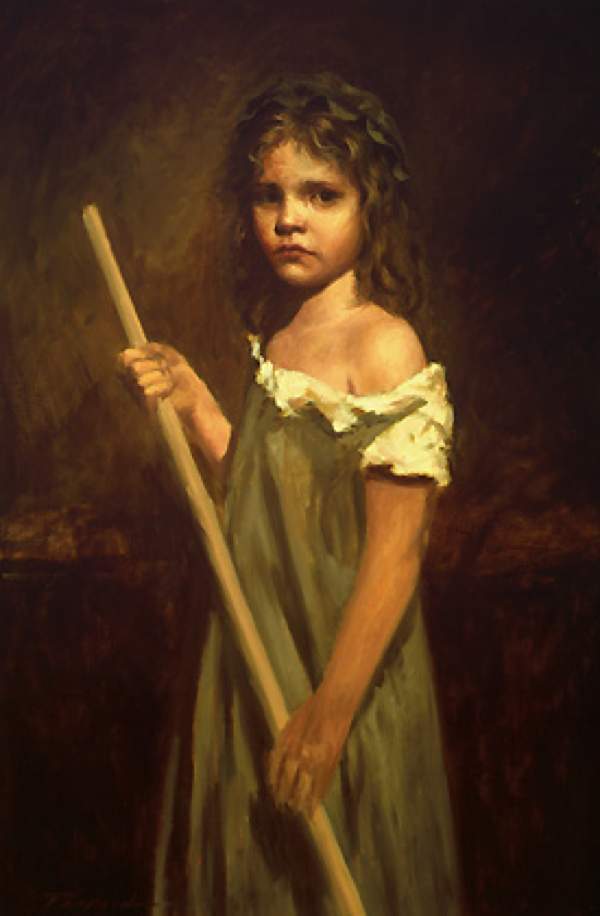
In the latter party of the nineteenth century, a series of articles in a British newspaper shocked Victorian society to the core. An investigative journalist discovered how easy and cheap it was to buy a female child for sexual purposes—₤5 was the going rate. It seemed wealthy male purchasers delighted in deflowering young virgins and would pay for the privilege. Brothel keepers in major cities bought adolescent girls as young as twelve or thirteen years old from impoverished families and put them to work, which usually began a life of sexual degradation and slavery. Corrupt police and clergymen looked the other way until W. T. Stead broke the story, calling it the Maiden Tribute of a Modern Babylon.
As you see, women put up with a lot in the nineteenth century. Women have gained some ground in first world countries since then – gained some rights – but somehow, full equality remains elusive in the 21st century.
 = new reply since forum marked as read
Highlight:
NoneDon't highlight anything
5 newestHighlight 5 most recent replies
= new reply since forum marked as read
Highlight:
NoneDon't highlight anything
5 newestHighlight 5 most recent replies

debm55
(60,612 posts)Last edited Fri Nov 3, 2023, 06:18 PM - Edit history (2)
ideas down through the generals to both boys and girls. Even though laws have changed, children are still raised by some to believe the antique ideas of women as second class citizens. We are not and we won't go back.

niyad
(132,440 posts)cross-posting this in Women's Rights And Issues? Thanks in advance.
This nightmare state of affairs is what the reichwing woman-haters would have us living in again if they can get away with it.

appalachiablue
(44,022 posts)I'm framing this and making copies for people who need to know the truth. Many thanks.

multigraincracker
(37,651 posts)She told me lots of stories about the rights of women in her life time. She was so proud of The Right to vote passed in her life time. She stashed money because she feared something might happen to dad and she would have nothing.

Diamond_Dog
(40,577 posts)Is there a link to this article? It’s unbelievable how women suffered during these times.
No doubt many extreme religious fanatics like our new Speaker wouldn’t mind returning to the days of hatred, cruelty, and subjugation of women like this.
NotHardly
(2,705 posts)
MLAA
(19,745 posts)The suffering of those who have gone before me is heartbreaking. The fact we still don’t have the ERA passed is disgraceful.
Duppers
(28,469 posts)But there were too many "traditional" women with their heads up their asses who opposed the amendment! My mother and my younger sister were among them.
(Of course, we would probably have disagreed on the rotation of the Earth.  I was never on good terms with either of them.)
MLAA
(19,745 posts)I remember thinking, hell if he can do it I can. I went on to be valedictorian instead of a B student all through elementary school. It didn’t occur to my dad to counsel me like he did my brother about getting an education or going into the military so he could support himself and a family. Again, I thought if he could go to engineering school so could I. He lost his way partway through and had to reset, so we ended up graduating on the same day at opposite ends of the state. My graduation was in the morning and his at night. Over the years dad told me many, many times how proud he was of me and he was sorry he never thought to encourage me in the same way he did my brother early on. But he certainly helped me one quarter when I screwed up my student loan and didn’t have money for one quarter 🙂.
Duppers
(28,469 posts)I sincerely mean you've earned the right to be proud! And I love to hear stories like yours.


2naSalit
(102,793 posts)Duppers
(28,469 posts)Thank you for posting this, Bayard.
Bookmarking & copying for my own records. Wish I'd had this info 50yrs ago to use as a rebuttal to a few female relatives when I was only standing up for my rights. Guess I "didn't know my place."  But I endured.


MLAA
(19,745 posts)


Bayard
(29,693 posts)
struggle4progress
(126,153 posts)Her parents sent her to a boarding school as a child. After about a week, she decided she didn't like it, marched down to the train station, got on the train home without sny ticket, and jawboned with the conductor until she got where she was headed

Boomerproud
(9,292 posts)I'm angry for them, don't know what their views were.