Economy
Related: About this forumWeekend Economists Wring Out the Old December 31, 2015-January 3, 2016
Umm, I stayed in tonight...it's too cold and I'm too tired from too much work and stress...although the car is fixed (under warranty), I am not. So for those homebodies and the physical cowards conservatives, NOT to be confused with the fiscal conservatives...

We've got a lot riding on this new year of 2016.
There's the Quadrennial Caucus Races, to borrow a term from "Alice in Wonderland"
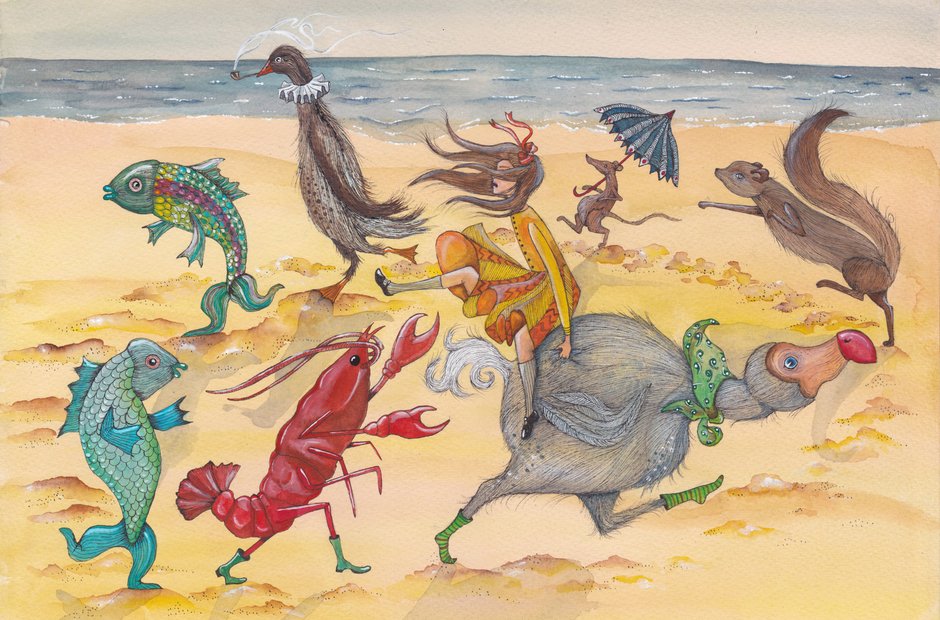
in which everyone runs in a circle until dry and warm...or elected President.
There's the Return to Normalcy (2016 version) in which the Federal Reserve, struck on the head by the Confidence Fairy, attempts to sink the economy once again by peremptorily raising interest rates for no good reason at all. The previous occurrence of this folly has gone down in history as The Mistake of 1937:
By the spring of 1937, production, profits, and wages had regained their 1929 levels. Unemployment remained high, but it was slightly lower than the 25% rate seen in 1933. The American economy took a sharp downturn in mid-1937, lasting for 13 months through most of 1938. Industrial production declined almost 30 percent and production of durable goods fell even faster.
Unemployment jumped from 14.3% in 1937 to 19.0% in 1938. Manufacturing output fell by 37% from the 1937 peak and was back to 1934 levels. Producers reduced their expenditures on durable goods, and inventories declined, but personal income was only 15% lower than it had been at the peak in 1937. In most sectors, hourly earnings continued to rise throughout the recession, which partly compensated for the reduction in the number of hours worked. As unemployment rose, consumers expenditures declined, thereby leading to further cutbacks in production.

Economists disagree about the causes of this downturn.
https://en.wikipedia.org/wiki/Recession_of_1937%E2%80%9338
And then, there is the Eternal War, in which the US keeps trying to destroy the USSR, not having noticed that it is no more, while President Vladimir Putin of Russia keeps pulling American bacon off the proverbial fire.
So, let's drink a toast to wash away the bad taste of old follies, and welcome in the new ones!
 = new reply since forum marked as read
Highlight:
NoneDon't highlight anything
5 newestHighlight 5 most recent replies
= new reply since forum marked as read
Highlight:
NoneDon't highlight anything
5 newestHighlight 5 most recent replies
Proserpina
(2,352 posts)Beginning Friday, minimum wage workers in Michigan will see a rise in their paycheck as the minimum wage is increasing for the first time since 2014. The state's hourly minimum wage will increase 35 cents from $8.15 to $8.50. That works out to $14 more a week and $728 more a year for full-time workers. The hourly minimum wage is now up more than $1 from before Sept. 1, 2014, and it will gradually increase every year. It's part of the state's Workforce Opportunity Wage Act of 2014 where the minimum wage is boosted over time. The tipped employee hourly minimum wage will also increase from $3.10 to $3.23.
Michigan is among 14 states where higher minimum wages will go into effect in the new year, according to the National Conference of State Legislatures. Michigan's wage will be tied for 14th-highest among the 45 states with a minimum wage.
The amount that employers can pay 16- and 17-year-olds — which is 85 percent of the minimum wage — will stay at $7.25, the equivalent of the federal minimum wage. But it will increase to $7.57 in 2017 and $7.86 in 2018.
On Jan. 1, 2017, the wage will again increase, this time to $8.40 and then to $9.25 on Jan. 1, 2018.
never let it be said that a GOP dominated state is full of pikers...it should be shouted from the rooftops!
Human101948
(3,457 posts)I think my salary was $5200 at that time. A low salary even for that time.
Just checked the inflation calculator. That $5 would now be slightly over $28.
So I think the increase is good but it is really cheap! We need it higher.
In 1960, the minmum wage was $10.34 in 2012 dollars--from what I can see that was the highest value ever.
Proserpina
(2,352 posts)Given that I’m against the very existence of the minimum wage itself, unless that is to be one set at $0, it might come as a surprise to find me welcoming the introduction of as many as 14 different higher minimum wages as we enter 2016. But welcome it I do, for all the pain that I think it’s going to cause to the younger and less trained workers out there in the economy. Because we’re now going to have at least 14 different natural experiments which we can study to really get to the bottom of whether rises in the minimum wage do indeed cost jobs, as theory would insist that they do. Sadly, it’s true that we’ve done this research before, over the last rise in the Federal minimum wage, but no one really seems to want to come to terms with the truth.
So, we’ve a number of rises in the minimum wage in different places:
California and Massachusetts are highest among the states, both increasing from $9 to $10 an hour, according to an analysis by the National Conference of State Legislatures. At the low end is Arkansas, where the minimum wage is increasing from $7.50 to $8. The smallest increase, a nickel, comes in South Dakota, where the hourly minimum is now $8.55.
The importance of this is that some, like the New York Times, are calling for full speed ahead to a $15 an hour national minimum wage.
Sooner or later, Congress has to set an adequate wage floor for the nation as a whole. If it does so in the near future, the new minimum should be $15.
And that just isn’t the correct answer. As, in fact, the New York Times itself used to know:
…
The idea of using a minimum wage to overcome poverty is old, honorable – and fundamentally flawed. It’s time to put this hoary debate behind us, and find a better way to improve the lives of people who work very hard for very little.
The headline to that piece was “The right minimum wage: $0.00″ which is entirely correct.
***************************************************
The economic theory here is really very simple indeed: demand curves slope downwards, raise the price of something and people buy less of it. So, insist that the price of labour rises and there will be fewer jobs. There are theoretical arguments running the other way, that poorer people spend all of their income instead of having savings so redirecting money from richer to poorer people will increase aggregate demand, for example. But while that effect is true it’s not a strong enough effect. It’s just not large enough.
The empirics of this are a bit more complex: we tend to see small or even no statistically significant effects of the minimum wage rises we’ve had in the past. The general agreement among scholars now being that modest minimum wage rises have modest effects: whether on poverty, incomes or unemployment. What we’d really like to know though is what is the effect of rises which are immodest? As a rise from $7.25 to $15 would be, well outside our historical experience? And that’s what is to be welcomed here. This actually happened last time the Federal minimum was raised, there were areas which already had higher minimums and were so not affected, areas which didn’t and thus were. By looking at the different effects it was possible to pull out the employment effects: higher minimum wages reduced employment. However, people don’t seem to want to accept that result. Thus here we’ve got another opportunity to study this with these natural experiments.
In some places the wage rise is going to be considerable, in others none and with other places having more or less modest rises. We’ve thus got just the circumstances we want to be able to study the effect. And people undoubtedly will study it too and we will gain more knowledge as a result. As we generally think that more knowledge about the world is a good thing then perhaps we should welcome these raises. However, we do need to remember what our aim is here. Theory tells us that a minimum wage is a bad idea. The current state of empirical knowledge says that modest minimums aren’t all that much of a problem but we think that immodest ones still might well be. And so we’re about to find out, over the next few years, what is that definition of “modest” that doesn’t matter all that much.
And of course what we should be doing as public policy is obvious. At present we really don’t know: in a few years’ time we will be much better informed. Thus any general rise in that Federal minimum should be delayed until we are better informed, until we have digested the implications of these varied more local rises.
Maybe a higher minimum wage in the future then, but most certainly not yet.
The author, published in Forbes, ought to consider the minimum wage a continuation of the banning of slavery...so as to keep over-privileged asses out of prison.

Hotler
(13,747 posts)
Proserpina
(2,352 posts)It's 10 years to the day that Jamie Dimon was promoted from chief operating officer to CEO at JPMorganChase (oddly, there is no press release announcing Jamie Dimnon's promotion to CEO on the bank's website, and none to announce he had added the responsibilities of chairman of the board, a year later).
The anniversary seems like an opportune time to review Dimon's performance over that period, which includes one of the most tumultuous in U.S. banking history.
Let's get down to brass tacks with the hard numbers representing the market's assessment: The following chart shows the total return performance of JPMorgan shares under Dimon's tenure:
interactive graph at link
The bank has managed to outperform its large-capitalization peer group by a limited margin (7.8% vs. 7.2% on annualized basis), but it has smashed a tighter peer group -- the S&P 500 Financials sector (XLF is the Financial Select SPDR Fund ETF). Moreover, the gap between its two closest comparables, universal banks Bank of America (10-year total return: -56%) and Citigroup (-88%) is much wider still (although I think it's fair to say that B of A and Citi set a very low bar).
On that basis, then, investors appear to have given Dimon a stellar report card. However, note that under his leadership, JPMorgan lost its crown as the most valuable U.S. bank to Wells Fargo in 2013, and it looks to be in no danger of reclaiming it any time soon (the difference is currently some $35 billion).
In terms of JPMorgan's operating record, the global financial crisis of 2008 to 2009 was Jamie Dimon's finest hour. What he himself labelled the bank's "fortress balance sheet" served it well, enabling it to sail through the crisis without so much as a single losing quarter.
Nearly seven years after the stock market's crisis low, JPMorgan is the only universal bank earning a return in excess of its cost of capital...
more praising with faint damns at link--and of course, it's all Jamie's effort--the taxpayer bailout doesn't account for anything, nor Geithner's leaning in on his crisis, nor anything else, like Justice Dept. mercy and neglect...
Hotler
(13,747 posts)Keep an eye on this guy, he's going places.  Looking for something to post about Jamie I came across this. We know the story we've heard it before. It's good to review once and a while, especially if it's not a bad read.
The $9 Billion Witness: Meet JPMorgan Chase's Worst Nightmar
She tried to stay quiet, she really did. But after eight years of keeping a heavy secret, the day came when Alayne Fleischmann couldn't take it anymore.
Fleischmann is the central witness in one of the biggest cases of white-collar crime in American history, possessing secrets that JPMorgan Chase CEO Jamie Dimon late last year paid $9 billion (not $13 billion as regularly reported – more on that later) to keep the public from hearing.
In February 2008, less than two years after joining the bank, Fleischmann was quietly dismissed in a round of layoffs. A few months later, proof would appear that her bosses knew all along that the boom-era mortgage market was rotten. That September, as the market was crashing, Dimon boasted in a ball-washing Fortune article titled "Jamie Dimon's SWAT Team" that he knew well before the meltdown that the subprime market was toast. "We concluded that underwriting standards were deteriorating across the industry." The story tells of Dimon ordering Boester's boss, William King, to dump the bank's subprime holdings in October 2006. "Billy," Dimon says, "we need to sell a lot of our positions. . . . This stuff could go up in smoke!"
http://www.rollingstone.com/politics/news/the-9-billion-witness-20141106
Proserpina
(2,352 posts)1. Exercise More: This is the most popular New Year’s resolution every year, and it is easy to see why — exercise makes you healthier and happier, and can reduce stress and improve your sleep. In short, regular exercise will give you everything you need to succeed both at home and in the office in 2016.
2. Snack Smarter: Rather than cutting out snacks altogether, try eating healthier, protein-packed snacks such as cottage cheese, trail mix or hard boiled eggs. These should keep you fueled all day long, from your morning meeting to date night.
3. Be More Charitable: Whether you volunteer at your local animal shelter or collect canned food for a soup kitchen, getting both your family and workplace involved in a cause is a great way to bond with your loved ones and increase your company’s connection to its surrounding community.
4. Establish a Routine: If you do not have a regular routine in place, it is easy for “nonessentials” like family dinner or employee checkins to fall through the cracks. Combat this head-on by establishing daily, weekly and monthly routines for 2016.
5. Get Organized: How many times have you had to stay an extra hour in the office because you could not find a crucial document? If this happens to you often, it is time to start living by the simple “a place for everything, and everything in its place” rule.
6. Quit Your Vices: Whether your weakness is tobacco or too much television, finally giving it up will give you more time and energy to focus on more important things, both in your work and personal lives.
7. Save Money: Having a solid nest egg to fall back on is crucial for your family’s security, and it also makes it easier for you to take bold risks in the workplace that you might otherwise not have had the confidence to pull off.
8. Manage Your Stress: Meditation, support groups, exercise — it is important to find whatever works for you in terms of stress relief, and then incorporating it into your daily routine. Balancing work and family life is stressful, and you need a healthy way to relieve that stress.
9. Stop Procrastinating: Whether it is a home DIY project or a new initiative at work, finally tackling those big projects will bring back tangible results, as well as a fair amount of self-satisfaction. Just remember to take each project one day at a time, so that they do not seem too daunting.
10. Improve Your Sleep: Getting a full eight hours can drastically improve your focus and drive, as well as your overall wellbeing. If you have serious sleep problems, there are plenty of solutions out there, ranging from herbal teas and candles to prescription drugs.
#11: vote for Bernie!

MattSh
(3,714 posts)Last edited Fri Jan 1, 2016, 09:31 AM - Edit history (1)
I'll get right on it, yes I will!
Oh, and yet another resolution...
#12 - Ignore the mainstream media
Proserpina
(2,352 posts)
Read on for an in-depth look at each one of these calls and how they fared....
Proserpina
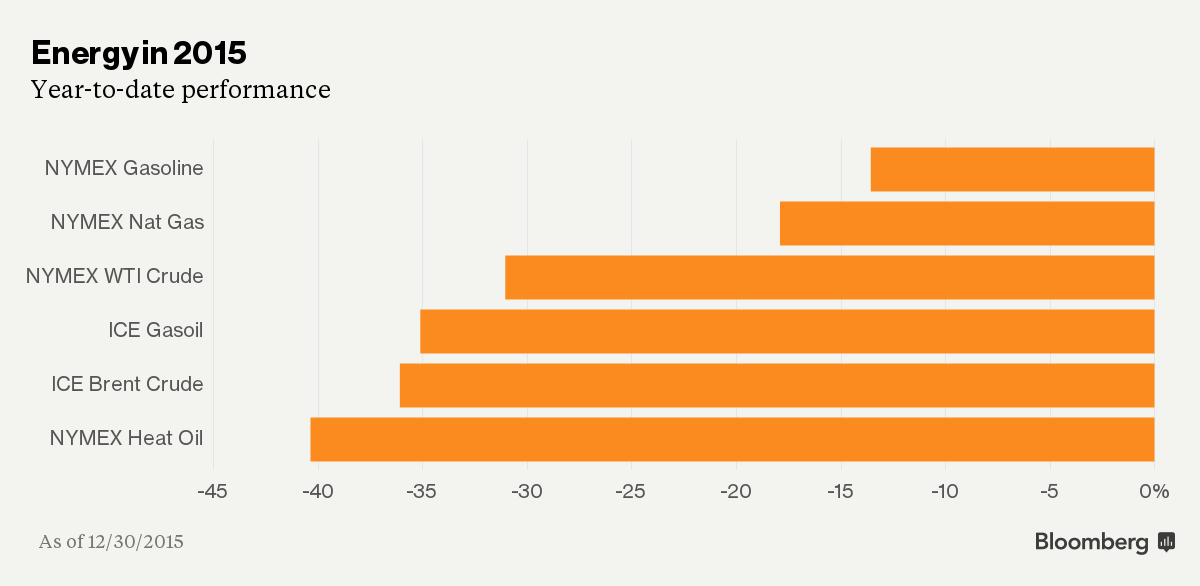
(2,352 posts)As oil-battered investors say farewell to 2015, Tom Kloza, founder and global head of energy analysis at data firm Oil Price Information Service, or OPIS, is offering a pretty dour outlook for crude-oil prices in 2016. Kloza is predicting that West Texas Intermediate crude-oil futures traded on the New York Mercantile Exchange CLG6, +1.28% will hit $32 a barrel.
On Thursday, the final day of the trading year for markets, WTI crude prices were at $37.76, or 3.6% higher. But over the longer term, Nymex-traded oil, the U.S. benchmark, has lost 30% of its value in 2015, while Brent crude, its European counterpart LCOG6, +3.13% fell 34%.
Investors might want to take heed of Kloza’s prognostication. After all, early last year he made a spot on call that crude prices would hit $35 a barrel in 2015.
The oil expert’s view this time is tied to the belief that U.S. shale producers won’t significantly pump the brakes much in their production levels in the new year. So far, shale production hasn’t substantially abated. On Wednesday, the Energy Information Administration showed U.S. crude oil stockpiles rose a greater-than-expected 2.6 million barrels in the week ended Dec. 25.
“I think next year is very similar to this year and I think there’s a good chance oil is going back to numbers reached back in December 2008,” Kloza told MarketWatch in an interview, echoing comments he made earlier on CNBC, in the video attached: see link
Proserpina
(2,352 posts)
Patrick Chappatte is an editorial cartoonist for The International New York Times

DemReadingDU
(16,002 posts)Proserpina
(2,352 posts)Writing in the Globe and Mail, University of Toronto Munk Chair of Innovation Studies Dan Breznitz explains how the TPP -- negotiated in secret without any oversight or accountability -- will enrich a few multinationals at the expense of US and Canadian growth, making the whole trade zone less competitive and more ripe to be overtaken by Chinese firms.
In sealing the broken patent and copyright system, the insane trade secrecy regime, and Investor-State Dispute Resolution systems beneath a lacquer of unbudgeable trade obligations, the US government has hung weights around the necks of new entrepreneurs and businesses.
Interestingly, this critique comes from a "Hayekian," right-wing proponent of free market capitalism, who says that by going far beyond trade, this "trade agreement" will cripple the economies of all who sign it.
All this extra cost, risk and uncertainty will have chilling effects that will stifle market experimentation. This leads to yet another problematic “benefit” of the TPP: Decreasing the Hayekian (as in Friedrich Hayek) efficiency of the market. That is, the ability of the markets to act as the best-learning and constantly improving system mankind has ever developed.
Trans-Pacific Partnership is a wonderful idea – for China /Dan Breznitz/Globe and Mail
http://www.theglobeandmail.com/report-on-business/rob-commentary/trans-pacific-partnership-is-a-wonderful-idea-for-china/article27939142/?cmpid=rss1
Proserpina
(2,352 posts)By Matthew Cunningham-Cook, who has written for the International Business Times, The New Republic, Jacobin, Aljazeera, and The Nation and has been a labor activist
In the debate surrounding the TPP and free trade generally, the emphasis placed by critics tends to be on the clearly counter-democratic nature of the deals–investor state dispute settlement, and regulatory cohesion that lowers standards across the board, to the benefit of large multinationals. Less discussed is the argument deployed most frequently by free trade advocates: the advantages of tariff and entry/exit barrier elimination.
And interestingly–it’s quite rare for progressives to advance tariffs as legitimate ways to stop deindustrialization, limit the power of the financial sector, and raise revenue. But there’s a reason why Wall Street hates tariffs so much. The Economist, the pied piper of the owner class, is obsessed with tariffs, always fearful of a return of Smoot-Hawley, the famous 1930 tariff that is a consistent bogeyman of right-wing economists of the Milton Friedman variety. Indeed, in a 2008 article, they quote Thomas Lamont, then a partner at JP Morgan, as saying “I almost went down on my knees to beg Herbert Hoover to veto the asinine Hawley-Smoot Tariff.”
The decision by progressives to focus exclusively on income and corporate taxation and not tariffs and export taxes is a mistake. Here’s why:
1) Tariffs and export taxes slow down the speed of capital.
2) Tariffs and export taxes promote industrialization.
3) Tariffs and export taxes promote food stability and local supply chains.
4) Tariffs and export taxes are ecologically sound.
5) Tariffs stabilize employment and communities.
details at link
All five reasons, combined, demonstrate that any Bernie Sanders-style discussion of reducing inequality and raising revenue must include discussion of significantly increasing tariffs and export taxes.
Proserpina
(2,352 posts)Proserpina
(2,352 posts)Q: How many economists does it take to change a light bulb?
A1: None. The darkness will cause the light bulb to change by itself.
A2: None. If it really needed changing, market forces would have caused it to happen.
A3: None. If the government would just leave it alone, it would screw itself in.
A4: None. There is no need to change the light bulb. All the conditions for illumination are in place.
A5: None. Because, look! It’s getting brighter! It’s definitely getting brighter!!!
A6: None. They’re all waiting for the unseen hand of the market to correct the lighting disequilibrium.
Proserpina
(2,352 posts)Q:What do you call an economist that makes a prediction?
A:Wrong.
Two economists are walking on the street. They notice a pile of horseshit, and the older one says to the younger one: “I’ll pay you twenty thousand if you eat that.”
The younger one ponders for a moment, then agrees and eats it.
They walk a bit more and run into another pile of horse feces. So the younger one tells the elder: “I’ll pay you twenty thousand if you eat that!”.
The older economist considers the offer and starts eating.
After a while the younger economists stops and asks: “What was the point of this? We both ate a pile shit and neither of us got richer.”
The older one answers: “What are you talking about? We both produced and received twenty thousand worth in income and services.”
A physician, an engineer, and an economist were discussing who among them belonged to the oldest profession. The physician said, “Remember, on the sixth day God took a rib from Adam and fashioned Eve, making him the first surgeon. Therefore, medicine is the oldest profession.”
The engineer replied, “But, before that, God created the heavens and earth from chaos, thus he was the first engineer. Therefore, engineering is an older profession than medicine.”
Then, the economist spoke up. “Yes,” he said, “But who do you think created the chaos?”
The First Law of Economists: For every economist, there exists an equal and opposite economist.
The Second Law of Economists: They’re both wrong.
Economists: purveyors of fictions upon which the superstructure of organized robbery is raised.
(apologies to Ambrose Bierce)
Q: What do you call an Economist who tells the truth?
A: Unemployed.
A farmer and two bankers are shipwrecked on an island. Two weeks later help finally arrives. The bankers greet their rescuer who remarks how well they look.
BankerA: “we realised the potential of the natural resources on this island were tremendous”.
BankerB: “I created some fiat money, we divided it up. I lent BankerA ten times my share for a coconut farm startup, he invested ten times his share in an accountancy startup.”
Rescuer: “well that’s amazing, only where is it all, I don’t see any produce – how did you actually survive?”
BankerA: “We each used our debt to invest in futures given the fertile land it was clear the land could generate wealth once labour was applied. We both realised significant paper profits. Oh and we ate the farmer”
—-
Bankers live off our backs.
Castro and his band of rebels had just taken Havana and declared victory. Standing at the top of a grand, winding staircase, Castro wasted no time in forming his government. “Who amongst you is an economist?” he asked. Che Guevara enthusiastically waved his hand shouting, “Me! Me!”. Castro promptly said, “Then you are our new Finance Minister!”. After all the positions had been handed out, Che pulled Castro aside and asked, “Why did you make me Finance Minister?”. Castro explained, “Because you said you were an economist”. And Che replied, “I thought you asked who was a Communist!”.
This is supposed to be a true story. Che Guevara was actually Finance Minister of Cuba…
Mark fiore: the year in one breath
http://www.markfiore.com/mark-fiore-blog/item/cartoons/2015-the-year-in-one-breath
MattSh
(3,714 posts)May we all have many more!
DemReadingDU
(16,002 posts)Ghost Dog
(16,881 posts)
Proserpina
(2,352 posts)http://www.bloomberg.com/news/articles/2015-12-30/pending-sales-of-u-s-existing-homes-unexpectedly-decrease
Contracts to purchase previously owned U.S. homes unexpectedly fell in November, confirming earlier figures that showed the industry lost momentum toward the end of the year.
The index of pending home sales dropped 0.9 percent after a revised 0.4 percent gain the prior month, figures from the National Association of Realtors showed Wednesday in Washington. The median forecast of 28 economists surveyed by Bloomberg called for an increase of 0.7 percent.
The pullback underscores concern raised by the slump in sales of existing homes last month, which the real-estate agents’ group argued was primarily caused by new mortgage-lending rules that delayed closings. Rising prices and a limited supply of properties on the market are also playing a role in holding back buyers, making for a slow recovery in housing...
more
Proserpina
(2,352 posts)The number of Americans filing applications for unemployment benefits rose more than projected during the Christmas week, reaching the highest level in almost six months, perhaps reflecting typical swings during holidays.
Jobless claims jumped by 20,000 to 287,000 in the week ended Dec. 26, a report from the Labor Department showed on Thursday in Washington. The median forecast of 30 economists surveyed by Bloomberg called for 270,000. Applications haven’t been this high since the week ended July 4, the American Independence Day holiday.
While there was nothing unusual in the state-level data, the jump could have been caused by the volatility introduced when the numbers are adjusted for seasonal variations, a Labor Department spokesman said as the figures were released to the press. Limited firings, steady hiring and an unemployment rate at more than a seven-year low underscore job market improvement that allowed the Federal Reserve to lift interest rates this month for the first time since 2006.
“We do have to discount the heightened volatility we have around this time of the year,” said Mike Englund, chief economist at Action Economics LLC in Boulder, Colorado, who correctly projected the jump. “When the dust settles, we’ll see claims drop back down. There will be continued slow improvement in the labor market.”
more
Proserpina
(2,352 posts)
Proserpina
(2,352 posts)
Proserpina
(2,352 posts)Proserpina
(2,352 posts)...The phrase “Auld Lang Syne” translates to “times gone by,” and, while Americans expect to hear this song every New Year’s, few know what the Scottish lyrics actually mean...
Robert Burns, the Scottish poet, wrote “Auld Lang Syne,” in 1788. His life was not an easy one. Perhaps his suffering and hardships imbued his poetry with its signature passion and intensity. When his father died, his farm was on the brink of failure, and Burns and his brother moved the family to a new farm in an effort to stay afloat. The labor that the farm required seemed to leave Burns with a heart condition that afflicted him later in life. Known as the “peasant poet,” Burns fathered at least a dozen children, with several women, and after leaving the farm he spent most of his career compiling traditional Scottish folk songs that celebrate life, love, work, drinking, and friendship, using warm melodies and emotional chords. “Auld Lang Syne” was not intended to be a holiday standard, but in 1929 the legendary bandleader Guy Lombardo (known as Mr. New Year) used it to connect two radio programs during a live performance at the Roosevelt Hotel, in New York. Lombardo’s band played “Auld Lang Syne” just as the clock struck midnight. A tradition was born. Lombardo brought in the new year with the song for almost fifty years, from the stock market crash in 1929 to his last performance, during the country’s bicentennial, in 1976. Lombardo died in 1977.
We two have run about the slopes, and picked the daisies fine;
But we’ve wandered many a weary foot, since auld lang syne.
We two have paddled in the stream, from morning sun till dine;
But seas between us broad have roared since auld lang syne.
And there’s a hand, my trusty friend!
And give us a hand o’ thine!
And we’ll take a right good-will draught, for auld lang syne.
Should old acquaintance be forgot, and never brought to mind?
Should old acquaintance be forgot, and auld lang syne?
Proserpina
(2,352 posts)
DemReadingDU
(16,002 posts)Proserpina
(2,352 posts)Hogmanay (HOG-mə-NAY) is the Scots word for the last day of the year and is synonymous with the celebration of the New Year (Gregorian calendar) in the Scottish manner. It is normally followed by further celebration on the morning of New Year's Day (1 January) or, in some cases, 2 January—a Scottish Bank Holiday. The origins of Hogmanay are unclear, but may be derived from Norse and Gaelic observances. Customs vary throughout Scotland, and usually include gift-giving and visiting the homes of friends and neighbours, with special attention given to the first-foot, the first guest of the new year.
The etymology of the word is obscure. The earliest proposed etymology comes from the 1693 Scotch Presbyterian Eloquence, which held that the term was a corruption of the Greek αγία μήνα, or "Holy Month". The three main modern theories derive it from a French, Norse or Gaelic root.
The word is first recorded in a Latin entry in 1443 annals as hagnonayse. The first appearance in English came in 1604 in the records of Elgin, as hagmonay. Subsequent 17th-century spellings include Hagmena (1677), Hogmynae night (1681), and Hagmane (1693) in an entry of the Scotch Presbyterian Eloquence.
Although "Hogmanay" is currently the predominant spelling and pronunciation, a number of variant spellings and pronunciations have been recorded, including:
Hoghmanay
Hagman(a)e
Hagmonay
Hagmonick
Hanginay (Roxburghshire)
Hangmanay
Hogernoany (Shetland)
Hogminay/Hogmenay/Hogmynae
Hoguemennay
Huggeranohni (Shetland)
Hu(i)gmanay
with the first syllable variously being /hɔg/, /hog/, /hʌg/, /hʌug/ or /haŋ/.
Possible French etymologies
It may have been introduced to Middle Scots via French. The most commonly cited explanation is a derivation from the northern French dialectal word hoguinané, or variants such as hoginane, hoginono and hoguinettes, those being derived from 16th century Middle French aguillanneuf meaning either a gift given at New Year, a children's cry for such a gift, or New Year's Eve itself. Compare also the apparent Spanish cognate aguinaldo/aguilando with a suggested Latin derivation of hoc in anno "in this year."
This explanation is supported by a children's tradition, observed up to the 1960s in some parts of Scotland at least, of visiting houses in their locality on New Year's Eve and requesting and receiving small treats such as sweets or fruit. The second element would appear to be l'an neuf (the New Year), with some sources suggesting a druidical origin of the practice overall. Compare those to Norman hoguinané and the obsolete customs in Jersey of crying ma hodgîngnole, and in Guernsey of asking for an oguinane, for a New Year gift (see also La Guiannee). In Québec, "la guignolée" was a door-to-door collection for the poor.
Other suggestions include au gui mener ("lead to the mistletoe"
 , a gueux mener ('bring to the beggars'), au gui l'an neuf ('at the mistletoe the new year', or (l')homme est né ('(the) man is born').
Possible Goidelic etymologies
Fraser and Kelley report a Manx new-year song that begins with the line "To-night is New Year's Night, Hogunnaa" but did not record the full text in Manx. Other sources parse this as hog-un-naa and give the modern Manx form as Hob dy naa. Manx dictionaries though give Hop-tu-Naa (Manx pronunciation: [hopʰ tθu neː]), generally glossing it as "Hallowe'en", same as many of the more Manx-specific folklore collections.
In this context it is also recorded that in the south of Scotland, for example Roxburghshire, there is no <m>, the word thus being Hunganay, which could suggest the <m> is intrusive. However, in spite of these recorded Manx forms, no satisfactory etymology has been proposed for Hop-tu-Naa within Goidelic.
Another theory occasionally encountered is a derivation from the phrase thog mi an èigh/eugh ([hok mi ˈɲeː]) I raised the cry, which, in pronunciation, resembles Hogmanay, as part of the rhymes traditionally recited at New Year but it is unclear if this is simply a case of folk etymology.
Overall, Gaelic consistently refers to the New Year's Eve as Oidhche na Bliadhn(a) Ùir(e) "The Night of the New Year" and Oidhche Challainn "The Night of the Calends".
Possible Norse etymologies
Some authors reject both the French and Goidelic theories, and instead suggest that the ultimate source both for the Norman French, Scots, and Goidelic variants of this word have a common Norse root. It is suggested that the full forms
"Hoginanaye-Trollalay/Hogman aye, Troll a lay" (with a Manx cognate Hop-tu-Naa, Trolla-laa)
"Hogmanay, Trollolay, give us of your white bread and none of your gray"
invoke the hill-men (Icelandic haugmenn, cf Anglo-Saxon hoghmen) or "elves" and banishes the trolls into the sea (Norse á læ "into the sea"
. Repp furthermore makes a link between Trollalay/Trolla-laa and the rhyme recorded in Percy's Relics Trolle on away, trolle on awaye. Synge heave and howe rombelowe trolle on away, which he reads as a straightforward invocation of troll-banning.
Origins
The roots of Hogmanay perhaps reach back to the celebration of the winter solstice among the Norse, as well as incorporating customs from the Gaelic celebration of Samhain. The Vikings celebrated Yule, which later contributed to the Twelve Days of Christmas, or the "Daft Days" as they were sometimes called in Scotland. Christmas was not celebrated as a festival and Hogmanay was the more traditional celebration in Scotland. This may have been a result of the Protestant Reformation after which Christmas was seen as "too Papist".
Customs
There are many customs, both national and local, associated with Hogmanay. The most widespread national custom is the practice of first-footing, which starts immediately after midnight. This involves being the first person to cross the threshold of a friend or neighbour and often involves the giving of symbolic gifts such as salt (less common today), coal, shortbread, whisky, and black bun (a rich fruit cake) intended to bring different kinds of luck to the householder. Food and drink (as the gifts) are then given to the guests. This may go on throughout the early hours of the morning and well into the next day (although modern days see people visiting houses well into the middle of January). The first-foot is supposed to set the luck for the rest of the year. Traditionally, tall, dark men are preferred as the first-foot.
Local customs
Areas of Scotland often developed their own Hogmanay rituals.
An example of a local Hogmanay custom is the fireball swinging that takes place in Stonehaven, Aberdeenshire, in northeast Scotland. This involves local people making up "balls" of chicken wire filled with old newspaper, sticks, rags, and other dry flammable material up to a diameter of 2 feet (0.61 m), each attached to about 3 feet (0.91 m) of wire, chain or nonflammable rope. As the Old Town House bell sounds to mark the new year, the balls are set alight and the swingers set off up the High Street from the Mercat Cross to the Cannon and back, swinging the burning balls around their heads as they go.
At the end of the ceremony, any fireballs that are still burning are cast into the harbour. Many people enjoy this display, and large crowds flock to see it, with 12,000 attending the 2007/2008 event. In recent years, additional attractions have been added to entertain the crowds as they wait for midnight, such as fire poi, a pipe band, street drumming and a firework display after the last fireball is cast into the sea. The festivities are now streamed live over the Internet. Another example of a pagan fire festival is the burning the clavie in the town of Burghead in Moray.
In the east coast fishing communities and Dundee, first-footers once carried a decorated herring while in Falkland in Fife, local men marched in torchlight procession to the top of the Lomond Hills as midnight approached. Bakers in St Andrews baked special cakes for their Hogmanay celebration (known as "Cake Day"
and distributed them to local children.
In Glasgow and the central areas of Scotland, the tradition is to hold Hogmanay parties that involve singing, dancing, eating of steak pie or stew, storytelling and drink. These usually extend into the daylight hours of 1 January.
Institutions also had their own traditions. For example, amongst the Scottish regiments, officers waited on the men at special dinners while at the bells, the Old Year is piped out of barrack gates. The sentry then challenges the new escort outside the gates: "Who goes there?" The answer is "The New Year, all's well."
An old custom in the Highlands, which has survived to a small extent and seen some degree of revival, is to celebrate Hogmanay with the saining (Scots for 'protecting, blessing') of the household and livestock. Early on New Year's morning, householders drink and then sprinkle 'magic water' from 'a dead and living ford' around the house (a 'dead and living ford' refers to a river ford that is routinely crossed by both the living and the dead). After the sprinkling of the water in every room, on the beds and all the inhabitants, the house is sealed up tight and branches of juniper are set on fire and carried throughout the house and byre. The juniper smoke is allowed to thoroughly fumigate the buildings until it causes sneezing and coughing among the inhabitants. Then all the doors and windows are flung open to let in the cold, fresh air of the new year. The woman of the house then administers 'a restorative' from the whisky bottle, and the household sits down to its New Year breakfast.
"Auld Lang Syne"
The Hogmanay custom of singing "Auld Lang Syne" has become common in many countries. "Auld Lang Syne" is a Scots poem by Robert Burns, based on traditional and other earlier sources. It is now common to sing this in a circle of linked arms that are crossed over one another as the clock strikes midnight for New Year's Day, though it is only intended that participants link arms at the beginning of the final verse, co-ordinating with the lines of the song that contain the lyrics to do so. Typically, it is only in Scotland this practice is carried out correctly.
Auld Lang Syne is now sung regularly at "The Last Night of the Proms" in London by the full audience with their arms crossed over one another.
Proserpina
(2,352 posts)
Could one solution to climate change be to harvest the power of sunlight where it shines brightest on the planet? Should we solar panel the Sahara desert?
Four experts discuss the radical proposal with the BBC World Service Inquiry programme:
http://www.bbc.co.uk/programmes/p03bbk9m
Dr Gerhard Knies co-founded TREC, a network of experts on sustainable energy that gave rise to the Desertec initiative, which aimed to provide Europe with clean energy by harnessing sustainable power from sun-rich deserts.
"Fifteen minutes after I learned about the nuclear accident at Chernobyl, I made an assessment of how much energy comes from the sun to the earth. It was about 15,000 times as much as humanity was using, so it was not a question of the source, it was a question of the technology.
"When the climate change issue became more prominent, I said we have to pull forward this solution, because it solves the industrial vulnerability problem of our civilisation, and at the same time, the climate vulnerability.
Proserpina
(2,352 posts)Amateur traders try to ride coattails of market manipulators
Regulators are stepping up efforts to fight market abuses
...For a one-time payment of 6,800 yuan ($1,050), Liu’s firm provides a crash course on stock manipulators in China: how to anticipate their targets, how to spot their trades and -- most importantly -- how to profit by following in their tracks. The three-month class is one of at least 100 across the country that promise insight into Zhuang Jia, a local term for market manipulators that portrays them as holding the upper hand.
The courses, along with hundreds of books on the subject, show how law-abiding investors are adapting to a market that even China’s state-run media acknowledge has become rife with manipulation. Instead of avoiding suspected Zhuang Jia targets, many of the nation’s 97 million individual investors actively seek them out -- hoping to ride the artificial gains in manipulated shares and sell before they inevitably collapse.
“If you want to make a quick buck from the stock market, you’d better look for stocks with manipulators,” explains Chen Yifeng, a 37-year-old accountant at a state-owned company in Shanghai who has about 100,000 yuan of his personal portfolio invested in local shares. “You just need to pull out faster than them.”
SHADES OF 1929!
Proserpina
(2,352 posts)The Federal Reserve on Wednesday awarded $277.45 billion of one-day fixed-rate reverse repurchase agreements to 82 bidders at an interest rate of 0.25 percent, the New York Fed said on its website.
The reverse repurchase agreement program is seen as a critical policy tool for the Fed to drain money from the financial system in an effort to achieve its interest rate objectives.
Wednesday's auction ranked as the third-largest ever for the reverse repo program. It was also by far the largest since the Fed earlier this month raised interest rates for the first time in nearly a decade. At that time, the U.S. central bank also began the formal use of reverse repos to control the lower bound of its targeted range for overnight lending rates among banks. The size of Wednesday's operation was exceeded only by a $339.48 billion auction on June 30, 2014, and a $300 billion one on Sept. 30, 2014, and suggests the operation set for Thursday, the last of the year, may see even greater demand from the dealers and funds authorized to participate.
Demand for the deals typically rises at the end of each quarter as financial institutions shore up balance sheets by using the Fed as a counterparty to lower their regulatory risk profiles. In the transactions, banks and other qualified financial institutions park their cash with the Fed overnight, receiving Treasury securities as collateral and 0.25 percent in interest.
The Fed has said it is prepared to offer all of the nearly $2.5 trillion of Treasuries on its balance sheet as collateral should the demand arise.
http://www.reuters.com/article/us-usa-fed-reverserepos-idUSKBN0UD1NH20151230
Proserpina
(2,352 posts)For years, Vladimir Putin used Vnesheconombank (VEB) to pay for "special projects," from the Sochi Olympics to covert acquisitions in Ukraine to oligarch bailouts. Now, the state bank needs a rescue of its own and it could be the Kremlin's costliest yet. VEB was supposed to be the financial supercharger of the Russian president's state-directed capitalism, using its government backing to raise billions at low rates on western markets and pumping them into ventures the Kremlin wanted funded, some concealed from public view with code names like "Lily of the Valley." Hit by Western sanctions last year, VEB has stopped new lending. The cost of its bailout could reach 1.3 trillion rubles ($24.67 billion), according to several senior government officials, ballooning the budget deficit at a time when plunging oil prices are forcing spending cuts.
"The government can't just leave it alone to face the problems caused by the financial and economic situation in the country, speaking directly, by various kinds of sanction pressures," Prime Minister Dmitry Medvedev told a VEB board meeting discussing rescue options on December 22. The Finance Ministry has submitted proposals to aid VEB in 2016 to the government for approval, with some measures ready to be carried out in the first quarter, Svetlana Nikitina, an aide to the finance minister, said in Moscow on Tuesday. The plan provides for boosting capital to ensure the bank's ability to pay creditors, as well as supporting liquidity and cleaning up assets, she said.
Over the past eight years, VEB came to epitomise Putin's hybrid system that combined elements of market financing with tight Kremlin control, funding billions in industrial and infrastructure projects back in the days when oil prices were high and foreign credit was easy.
But US and EU sanctions imposed in 2014 over the Ukraine crisis cut off VEB's access to international financial markets, leaving it without a source of cheap funding and facing as much as $US16 billion in foreign-currency debt just as the ruble began its plunge. At the same time, falling oil prices accelerated Russia's slide into recession, pushing many of VEB's projects deeper into the red. Putin earlier this month said many development agencies "have turned into garbage dumps for bad debts," in what officials said was a clear reference to VEB. Losses on the bank's huge catalogue of Kremlin-mandated projects could reach 1.2 trillion rubles, according to the Finance Ministry, or nearly half the expected budget deficit for next year. VEB faces $7.3 billion in debt repayments over the next few years and effectively has only one source of significant funding -- the state.
"It's an SPV," or special-purpose vehicle, for pet projects, said Andrei Movchan, economist at the Carnegie Moscow Centre. "It was an institution for saving bankrupt businesses. Alas, by taking on those risks, it went bankrupt itself."
VEB got its start under Soviet founder Vladimir Lenin as a bank to finance foreign trade. Putin overhauled it in 2007. Flush with cash from high oil prices, he pumped 180 billion rubles (worth about $7.3 billion at the time) in to boost capital and took over at chairman of the board a year later. "Putin believed when he set up the state corporation that it would become a development institution," like state-run lenders in Germany and Japan, Alexei Kudrin, who was finance minister at the time, said this month...
And that, ladies and gentlemen, is how the West thought it could destroy Russia...the obvious error here was going to the outside world for funding, instead of relying on available national capital. The logical thing for Putin to do is hit up the oligarchs...drain the hoards of the Obscenely Wealthy amongst the citizenry...a kinder, gentler 1917...or simply print more fiat currency. But wait, it gets better...
Starting in 2009, VEB spent $8 billion to finance deals allowing unnamed Russian investors to buy up steel plants in eastern Ukraine and keep them running. For several years, VEB carried the holdings in its records under code names -- "Lily of the Valley" and "Iris" -- to conceal the extent of its exposure, according to two people familiar with VEB's finances. Dmitriev disclosed the lending in an interview with Russian state TV in 2013, saying the bank was a "savior" for the vital Ukrainian metals sector.
Since then, fighting between Ukrainian forces and Russian- backed separatists in the region has damaged many of the plants VEB paid for. A senior Russian official said it's not even clear whether VEB has any claims to the assets now because the transactions were conducted offshore.
Russian bankers are pretty smart, I'm sure they will figure out a way to clean it all up, while the West sinks slowly in its inherent corruption...
Proserpina
(2,352 posts)...Kiev is "in a state of default" regarding its obligations toward Moscow and legal proceedings would ensue, the ministry said.
"Russia's finance ministry (...) has initiated procedures required for an immediate lawsuit against Ukraine," the statement said, adding that the lawsuit would be heard in a British court.
Ukraine announced last month it would not make the payment on its debt to Moscow after Putin vowed to sue Kiev if it failed to pay by the end of 2015.
The debt stems back to 2013 when Russia loaned $3 billion to the Kremlin-backed president Viktor Yanukovych, before pro-European protests that led to his downfall.
Ukrainian authorities say it is not a sovereign loan by one state to another but rather a transaction made via the financial markets that is subject to terms agreed with other creditors...
Proserpina
(2,352 posts)...Putin mentioned that capital has been cut off from outside Russia. He also noted the fall of revenue from the declining oil price. “Despite the complicated market conditions and objective difficulties, you were able to ensure your companies’ steady operation and preserved your workforce. We have carefully analysed what is happening at specific enterprises, and we can see that even where there are temporary difficulties, you have done everything to keep the staff on, even if it meant reducing their working hours. In general, I believe this is absolutely the right approach: it is vital to treat people with great care, particularly highly qualified personnel.”
There was no mention of capital controls to restrict the oligarchs from exporting their dividends and capital, nor of the deoffshorization programme requiring them to return their capital and reinvest it in Russia. For the start-to-finish history of that programme, read this. A year ago, Putin mentioned his offer of amnesty for capital returned to Russia; last week he ignored it. “Our response to external limitations,” Putin told the oligarchs, “is greater entrepreneurial freedom and the protection of property and rights of all those who are working and conducting their business honestly.”
more
Proserpina
(2,352 posts)It has now been more than two and a half years since the Cyprus Steal , the first “bail-in” perpetrated in the Western world, occurred. Before reviewing the history of this newest financial atrocity, it is necessary to define the terms.
The term “bail-in” describes a scenario in which a bank confiscates private property to indemnify itself for losses it has suffered. A bail-in is a totally lawless theft of assets, as there is no principle of law (of any kind) that could authorize such a seizure of private property. And in fact, there are many principles of law that demonstrate the lawlessness at work here. As with much of the financial crime jargon, “bail-in” is simply another gibberish euphemism like “quantitative easing” or “derivatives.” As custodians of the financial assets of their clients, banks represent a form of trustee. The purpose of any trust relationship is to provide absolute security to the beneficiary of the trust (i.e., the legal owner of the property). Thus, one of the most fundamental principles of our legal system is non-encroachment regarding the property held in the custody of a trustee. From a legal standpoint, it is like there is an invisible and impenetrable wall that surrounds the trust property. The only exceptions to this wall (ever) occur when the trust beneficiary makes a legal request for some disbursement or related transaction, when the trust itself directs some form of action (in the interests of the trust beneficiary), or when the trust allows the trustee to manage the trust assets on behalf of the beneficiary. The idea of trustees using assets for their own benefit or (worse) claiming ownership of any trust assets represents one of the most serious forms of financial crime in Western civilization.
Here it is necessary to back up and address the “reason” (excuse) behind this newest form of systemic bank crime. The “bail-in” is the ultra-insane culmination of the “too big to fail” doctrine. By this doctrine, any and all assets, public or private, in our financial system can and will be sacrificed (stolen by the Big Banks) to prevent any of the Big Banks from “failing” – that is, going bankrupt as a consequence of their own reckless gambling. The legal and economic principles violated by the concept of “too big to fail” are too numerous to list. However, they begin with the following objections:
1) The concept of “too big to fail” is contrary to numerous tenets of capitalism. In any capitalist/free market system, insolvent entities are supposed to fail in order to correct the misallocation of assets. Any entity that grows to become an existential threat to the system is simply too big to exist.
2) Banks should never be allowed to gamble. Period. There would have been no need for the $10’s of trillions in “bail-outs” given to this crime syndicate following the Crash of ’08 if our puppet governments had not previously erased our laws that prevented such gambling.
3) “Too big to fail” is based on an overtly criminal premise called systemic blackmail: “Give us everything we demand, or we’ll blow up the financial system.” It is extortion in perpetuity: financial slavery.
Note how (2) and (3) relate directly back to (1). Why shouldn’t banks gamble with their clients’ assets? Because by doing so they not only jeopardize the property they are holding in trust but also become a threat to the financial system. Why shouldn’t financial entities be allowed to grow so big they become an existential threat to the system? Because size (as we now see) gives these Big Banks the leverage necessary to blackmail our corrupt, limp-wristed governments, perpetually.
So what is the only possible way to put an end to this Big Bank blackmail? Well, should our corrupt governments ever decide to once again enforce our anti-trust laws, we can end the cycle by smashing these Big Banks “down to size,” or down to the largest size allowed by law. Indeed, “too big to fail” is the ultimate example of why we need anti-trust laws and why they need to be vigorously enforced.
Anti-trust laws are anti-corruption laws. For decades, there has been almost no enforcement of our anti-corruption laws. The result is a global economy now almost totally dominated by just one of the major (and illegal) oligopolies that has emerged: the crime syndicate readers know as the One Bank .
It is this crime syndicate that engages in the systemic blackmail of “too big to fail,” supposedly to indemnify its Big Bank tentacles for the losses they incur. However, in almost every case, these “losses” are nothing but an accounting sham: paper losses owed by one Big Bank tentacle to another. No entity could ever be bankrupted by a “debt” owed to its right hand by its left.
The “losses” do not even exist, but the blackmail and fraud is all too real. Having totally depleted the public treasuries of most Western nations with its “bail-out” extortion following the Crash of ’08, the One Bank needed a new mechanism of theft by which to continue its permanent, institutionalized blackmail.
The bankers demanded that they be allowed to steal private assets (already in their custody), directly, any time they claimed to suffer a “substantial loss.” Our puppet governments, as usual, caved to the crime syndicate’s demands, and the “bail-in” was born.
What is at risk with a “bail-in?” According to the (perversely named) Financial Stability Board : any and every paper asset in the custody of the Big Banks and (potentially) any paper asset in the custody/control of our governments. The Financial Stability Board is one of the propaganda mouthpieces of the Big Bank crime syndicate, and its “guidelines” have been directly cited as authority by several of these puppet regimes, including the Canadian government.
*************************************************************
How do people protect themselves from the massive bail-ins that are imminent as the Next Crash approaches? There is only one way: get your assets (i.e., your wealth) out of all paper instruments. This includes the fraudulent paper currencies of our fiat-currency/ fractional-reserve Ponzi scheme system. Hold only enough wealth in paper instruments to satisfy current cash-flow requirements and short-term “emergencies.”
For the longer term financial Armageddon that is now inevitable, the only secure form of wealth-preservation is the oldest-and-surest tool for that task: precious metals . Rather than offering holders short- or medium-term protection for their wealth, gold and silver represent lifetime security, what people are supposed to have, and what most people still think they have when they entrust their wealth to a bank.
Once upon a time, we had strong, vigorously enforced laws that made a bank the safest place to store paper assets. That is no longer. Now banks are where your wealth is most likely to be stolen – and by the bank itself. Thanks to the bail-in, the term “bank robbery” now has an entirely different meaning.
Proserpina
(2,352 posts)The only safe haven is absolute secrecy of one's wealth and where it is...and not giving it to a government or a TBTF bank to "manage".
Or poverty. That's pretty secure.
Proserpina
(2,352 posts)http://www.forbes.com/sites/greatspeculations/2015/12/31/buffetts-bad-year-puts-berkshire-shares-in-a-funk/?utm_campaign=yahootix&partner=yahootix&ref=yfp
Berkshire Hathaway has mightily underperformed the S&P 500 in 2015 with the flagship shares down 11.47% compared with a 0.21% increase in the S&P 500. The difference in total return versus its benchmark is even more pronounced–more than 13 percentage points–since Berkshire does not pay a dividend. The media seems to have noticed as the Financial Times trumpeted “Buffett’s Worst Year Since 2009″ in a headline Wednesday morning. The reasons given in that article for Berkshire’s poor share price performance, however, were almost laughable...An analyst cited low oil prices souring sentiment on Berkshire’s railroad holdings (Burlington Northern Santa Fe) as a possible reason for the poor performance of Berkshire shares. A cursory glance at Berkshire’s third quarter 10-Q would show that fuel is a major cost item for BNSF, and that the positive impact of lower diesel prices more than offset the revenue reduction caused by diminished demand for rail shipments of crude. Net net, BNSF’s pretax earnings rose 11.1% in the third quarter. The railroad business has been Berkshire’s strongest business in 2015, hardly a reason investors would sell the stock.
Make no mistake, Berkshire’s shares are lagging the markets because Buffett’s public share investments have underperformed this year. The market views Buffett as a fund manager, and The Oracle seems to have misplaced his mojo. While Berkshire’s losses on its positions in American Express and IBM have been widely noted, it’s also not lost on the markets that Berkshire’s wholly-owned businesses have posted lackluster results in 2015. Regardless of the cause, a 13-percentage point underperformance is simply brutal, and Berkshire shareholders must be surprised. It all seemed so promising at the end of the first quarter as, on March 25, Buffett announced plans to merge Heinz (co-owned with Brazilian private equity firm 3G) into the newly-created KraftHeinz for a tidy profit. The KraftHeinz deal was a triumph of financial engineering, but that euphoria quickly faded as the market examined the rest of Berkshire.
Sometimes investors are so consumed with the cult of Buffett that they overlook the fact that Berkshire is by nature a holding company. At this point Berkshire’s individual holdings just do not seem very attractive. This is not a new phenomenon–I noted that in my column for Forbes of March 5, 2015 (here)–but as we end 2015 I am even more convinced in the veracity of that call. As of the end of the third quarter Berkshire’s portfolio of public securities was valued at $110.3 billion, down from $117.5 billion at year-end 2014. The losses from Buffett’s Big Four shareholdings for the first three quarters of 2015 were startling:
American Express –$2.9 billlion (BRK’s position was worth $11.2 billion at 9/30/2015 vs. $14.1 billion at 12/31/2014.)
Wells Fargo – $1.3 billion ($25.2 billion vs. $26.5 billion.)
IBM – $0.6 billion ($11.7 billion vs. $12.3 billion.)
Coca-Cola – $0.9 billion ($16.0 vs. $16.9 billion.)
While those performances were poor enough, the other equity securities Berkshire owns (which represented 42% of the total portfolio) combined to produce a loss of about $1.5 billion for the first nine months of 2015. Not even the most ardent Buffett defender could describe this as anything but a horrible performance in a year that has seen the S&P 500 eke out a slight gain (with one day to go). Coke and Wells have recovered somewhat in the fourth quarter, but IBM and AmEx have continued to decline, and the poor performances from those two stocks will define Berkshire’s full-year investing performance.
Compounding the situation is the fact the Berkshire’s portfolio of preferred shares (Wrigley, Dow, Bank of America, and Restaurant Brands) has performed even worse than its common holdings. That portfolio produced a cumulative decline in fair value of nearly 10% for the first three quarters of 2015. That’s another $1.7 billion in value destroyed.
Berkshire’s operating businesses have suffered in 2015 from an increase in auto insurance claims (GEICO) declining U.S industrial activity (across BRK’s industrial segment) and continuing sluggish growth in the domestic food service business (McLane). In fact, apart from the fuel-cost-driven gains at BNSF, which I described above, it’s difficult to find a Berkshire business that is performing better in 2015 than in 2014. Add it all up and Berkshire’s book value per share amounted to $151,086 at the end of the third quarter. At Wednesday’s closing price of $200,081 per share, Berkshire’s Class A shares commanded a multiple of 1.32x book value. While that multiple has compressed somewhat in 2015 it is still well north of the 1.2x book threshold at which Berkshire’s board has authorized share repurchases.
So, as I said in my earlier piece, Buffett doesn’t believe Berkshire shares are cheap enough to buy today, and you shouldn’t either. That’s been one of my best calls of 2015, and I don’t see any fundamental reason to alter my negative stance on Berkshire Hathaway shares as we enter 2016.
Proserpina
(2,352 posts)In a clash of the titans, Warren Buffett just defeated Elon Musk.
The fight was over solar net-metering in Nevada, a state that has the fifth largest installed solar capacity in the country. Nevada is home to Tesla’s ‘Gigafactory,’ which will produce batteries for electric vehicles. In addition to CEO of Tesla, Elon Musk is also the chairman of SolarCity, and net-metering – the policy that allows homeowners with solar panels to be paid for the power they produce – is central to solar economics. But while Musk has quite a bit of sway in the Silver State, he came up short against Warren Buffett. NV Energy, a major Nevada utility and subsidiary of Buffett’s Berkshire Hathaway, strongly opposed the net-metering provision.
Earlier this year the Nevada state legislature ordered the Public Utility Commission (PUC) to formulate a new net-metering payment by the end of 2015 after the state maxed out the allotted 235 megawatt net-metering program. Vivint Solar, another solar developer, pulled out of Nevada last summer after the net-metering program became fully subscribed, which forced solar installations to grind to a halt. The impasse meant that a lot was riding on the PUC’s decision...Just days before a New Year deadline, the Nevada Public Utility Commission (PUC) voted 3-0 to slash the payments that homeowners receive for solar energy and also increase charges on them. The solar industry cried foul, saying that the PUC decision was made without evidence or debate, and that it “flies in the face of Nevada law, which requires the state to 'encourage private investment in renewable energy resources, stimulate the economic growth of this State; and enhance the continued diversification of the energy resources used in this State' through net metering,” as Bryan Miller, Senior Vice President of Public Policy at solar developer Sunrun, said in a statement. “We believe the Commission, appointed by Governor Sandoval, has done the exact opposite today.”
The move also does not grandfather in homeowners who have already installed solar, even though many of those people likely made solar investments based on the net-metering payments. The retroactive penalty could be a death blow for solar in Nevada, and one that the solar industry says might also be illegal. The Alliance for Solar Choice, an industry trade group, filed a lawsuit against the PUC. Sunrun also filed a lawsuit against Nevada Governor Brian Sandoval (R) in order to obtain records of text messages between him and NV Energy lobbyists. The main proponent of the move is Warren Buffett’s NV Energy, which pays residential homes for the solar energy they produce. NV Energy says that lowering payments avoids shifting the costs to other ratepayers. NV Energy proposed to lower net-metering payments and to increase fixed charges on solar homes, a decision that the PUC went with. The PUC decision will cut those payments by 75 percent...SolarCity threatened to leave the state if the PUC moved forward on slashing the net-metering payments. "It will destroy the rooftop solar industry in one of the states with the most sunshine...There is so much wrong with the decision, the only option for the PUC is to reject it," SolarCity’s CEO Lyndon Rive told Bloomberg ahead of the vote. "The one beneficiary of this decision would be NV Energy, whose monopoly will have been protected." After the PUC voted to roll back net-metering payments, SolarCity followed through on its threat. On December 23, SolarCity announced that it would stop selling and installing solar panels in Nevada. "The PUC has protected NV Energy's monopoly, and everyone else will lose," SolarCity’s Rive said. "We have no alternative but to cease Nevada sales and installations, but we will fight this flawed decision on behalf of our Nevada customers and employees."
NV Energy said it was reviewing the PUC’s decision to determine how it would affect its customers.
Big bad Warren Buffett, unmasked at last
Proserpina
(2,352 posts)After 14 years of talks, members of the World Trade Organization have effectively ended the Doha round of negotiations. That was not unexpected given how fruitless these discussions have been. Now, world leaders need to think anew about the global trading system.
Countries had hoped that the talks, named after the capital of Qatar, where they began in late 2001, would substantially lower trade barriers, contribute to development in poor nations and tackle difficult issues like agricultural subsidies that were not resolved in earlier pacts, like the General Agreement on Tariffs and Trade.
Failure to achieve this ambitious agenda has undermined the credibility of the multilateral trading system and hurt the least-developed countries, which are desperate to export more of their goods to richer countries.
At a meeting of the W.T.O. in mid-December in Nairobi, trade ministers from more than 160 countries failed to agree that they should keep the negotiations going. In recent years, it became clear that the talks, which were originally supposed to conclude in 2005, were paralyzed because neither developed economies like the United States and the European Union nor developing countries like China and India were willing or able to make fundamental concessions...
more
Proserpina
(2,352 posts)There is $1.2 quadrillion invested in derivatives alone.
The graphic is too small for easy viewing, and it has errors so I cannot reproduce it, but see link:
http://www.marketwatch.com/story/this-is-how-much-money-exists-in-the-entire-world-in-one-chart-2015-12-18?siteid=YAHOOB
Hotler
(13,747 posts)I would say that that chart was awesome, but I'm trying to stop saying the word awesome and I'll just say that chart speaks very loud. Frist I started to tear up a bit and then I went right to full laughter. I laugh when I see things that are insane, fucked up, or about to be fucked up. It's gotten me in trouble before. 
Proserpina
(2,352 posts)http://www.huffingtonpost.com/entry/wall-street-lobbying-washington_568445d8e4b06fa68881dc33?utm_hp_ref=business&ir=Business§ion=business
So, that happened. It was a tough year to be a bank lobbyist in the nation's capital. Wall Street's biggest banks worked both houses of Congress, the Obama administration and five independent regulatory agencies, all to come away at year's end with approximately … nothing. An interest group accustomed to playing on offense was, at times, forced into defensive mode, protecting its turf with only modest success.
Listen to podcast at link for details
Proserpina
(2,352 posts)... In late March, Warren—along with West Virginia Sen. Joe Manchin—thrust Social Security into the spotlight by adding an amendment to a congressional budget resolution calling for an increase in benefits. The move seemed like so much political theater. After all, there was zero chance the measure would pass the Republican-controlled Congress. But the deft legislative maneuver forced Senate Democrats to take a stand on the issue. As Mother Jones enthused prophetically, “Warren just turned Social Security expansion—once a progressive pipe-dream—into a tough-to-ignore 2016 issue.”
No kidding. Now, all three Democratic candidates are competing to expand the program. Martin O’Malley and Bernie Sanders are calling for increasing retirement benefits, while Hillary Clinton is advocating a tax credit for those who take time out of the paid workforce to manage family responsibilities. On the other hand, with the exception of Donald Trump, all the leading Republican contenders are campaigning on promises of raising the retirement age or taking other steps to cut back on Social Security payments, likely setting up a clear contrast for voters in the general election next year. (Marco Rubio, for example, supports raising the retirement age and would increase benefits for low-income retirees by reducing the growth in benefits for wealthier seniors.)
Warren also contributed to breaking a five-year logjam over a Department of Labor effort to expand investor protection for retirement accounts. At the beginning of the year, the effort appeared to be foundering, derailed yet again by fierce financial services industry pushback...
more
Proserpina
(2,352 posts)... The S&P 500, which tracks the biggest U.S.-listed companies closed down almost 1 percent on Thursday at 2,043 points. It ended the year down 0.73 percent after three straight years of double digit gains.
It marks a significant change from the 11.5 percent gain posted in 2014 and is also some way off forecasts collated by CNBC in December 2014. A mean average of the ten analysts' calls suggested the benchmark would finish 2015 at 2,185 points, with a gain of just over 6 percent.
Many, if not all, banks updated or changed their outlooks as the year progressed – and some still got it wrong.
more
Proserpina
(2,352 posts)The village of Bal Harbour, population 2,513, may have a tiny footprint on the northern tip of Miami Beach, but its police department had grand aspirations of going after international drug traffickers, and making a few million dollars while they were at it.
The Bal Harbour PD and the Glades County Sheriff’s Office set up a giant money laundering scheme with the purported goal of busting drug cartels and stemming the surge of drug dealing going on in the area. But it all fell apart when federal investigators and the Miami-Herald found strange things going on.
The two-year operation, which took in more than $55 million from criminal groups, resulted in zero arrests but netted $2.4 million for the police posing as money launderers. Members of the 12-person task force traveled far and wide to carry out their deals, from Los Angeles to New York to Puerto Rico.
Along the way, the small-town cops got a taste of luxury as they used the money for first-class flights, luxury hotels, Mac computers and submachine guns. Meanwhile, the Bal Harbour PD and Glades County Sheriffs were buying all sorts of fancy new equipment...
“They were like bank robbers with badges,” said Dennis Fitzgerald, an attorney and former Drug Enforcement Administration agent who taught undercover tactics for the U.S. State Department. “It had no law enforcement objective. The objective was to make money.”
The operation, which was not fully reported to federal authorities, funneled millions of dollars to overseas criminals and interfered with investigations being carried out on known money launderers...
more--unbelievable!
Hotler
(13,747 posts)skimming from their cash cow. 
 Agent Mike.
Proserpina
(2,352 posts)Proserpina
(2,352 posts)Yves Smith would add growing threat of deflation to the list.
Proserpina
(2,352 posts)http://www.washingtonsblog.com/2015/12/2015-first-pre-election-year-end-red-since-great-depression.html
The year before elections is almost always the best year for stocks.
Investors notes:
Pre-election years takes the top spot as the best-performing year for stocks.
UBS reports:
to the polls.
The Stock Trader’s Almanac notes (via a press release by publisher Wiley):
But in 2015, the Dow closed down for the year … 2.2% into the red.
Proserpina
(2,352 posts)Jeff Bezos--Amazon
Thomas Peterffy-- chairman of electronic broker Interactive Brokers Group
Dustin Moskovitz & Mark Zuckerberg--Facebook Founders
Larry Page, Sergey Brin & Eric Schmidt--Google Guys
Jan Koum--sold WhatsApp to Facebook for $22 billion in cash and stock in 2014
Micky Arison--chairman of Carnival Cruise Line
Mark Shoen--owner of Amerco, the company that owns U-Haul
details at link
Proserpina
(2,352 posts)In some circles, “redistribution” of wealth has become a dirty word, and recent efforts to make the tax system more progressive have run into serious political resistance, above all from Republicans. But whatever your political party, you are unlikely to approve of the illegal use of tax havens. As it turns out, a lot of wealthy people in the United States, Europe, and elsewhere have been hiding money in foreign countries—above all, Switzerland, Luxembourg, and the Virgin Islands. As a result, they have been able to avoid paying taxes in their home countries. Until recently, however, officials have not known the magnitude of that problem.
But people are paying increasing attention to it. A vivid new documentary, The Price We Pay, connects tax havens, inequality, and insufficient regulation of financial transactions. The film makes a provocative argument that a new economic elite—wealthy managers and holders of capital—is now able to operate on a global scale, outside the constraints of any legal framework. In a particularly chilling moment, it shows one of the beneficiaries of the system cheerfully announcing on camera: “I don’t feel any remorse about not paying taxes. I think it’s a marvelous way in life.”
Gabriel Zucman, who teaches at the University of California at Berkeley, has two goals in his new book, The Hidden Wealth of Nations: to specify the costs of tax havens, and to figure out how to reduce those costs. While much of his analysis is technical, he writes with moral passion, even outrage; he sees tax havens as a “scourge.” His figures are arresting. About 8 percent of the world’s wealth, or $7.6 trillion, is held in tax havens. In 2015, Switzerland alone held $2.3 trillion in foreign wealth. As a result of fraud from unreported foreign accounts, governments around the world lose about $200 billion in tax revenue each year. Most of this amount comes from the evasion of taxes on investment income, but a significant chunk comes from fraud on inheritances. In the United States, the annual tax loss is $35 billion; in Europe, it is $78 billion. In African nations, it is $14 billion.
The fractions of wealth held abroad are highly variable. In Europe, it is about 10 percent. In African and Latin countries, it is much higher—between 20 percent and 30 percent. In Russia, it is a whopping 52 percent. It follows that while tax havens hit wealthy nations hardest in absolute terms, they can have especially destructive effects on poorer or developing countries, because such a high percentage of their money is offshore. Zucman does not explain why this is so, but it is possible to speculate that one reason is rampant corruption within both the public and private sectors. The extraordinarily high figure for Russia might be best understood as involving money corruptly acquired or invested, which suggests an important point: all uses of tax havens are not the same. Sometimes government officials are the ones who are evading taxes, and they do not want to stop that evasion...
more
Proserpina
(2,352 posts)MattSh
(3,714 posts)-18C, or -0.4F It wasn't supposed to be this cold this morning.
The original from the 1949 movie Neptune's Daughter.
Proserpina
(2,352 posts)I'll have to find a copy of this film...the composer wrote the Guys and Dolls songs, too.
DemReadingDU
(16,002 posts)I had no idea that song was from such an old movie, as old as me. lol
Proserpina
(2,352 posts)http://www.nytimes.com/2016/01/01/opinion/privilege-pathology-and-power.html?ref=opinion
Wealth can be bad for your soul. That’s not just a hoary piece of folk wisdom; it’s a conclusion from serious social science, confirmed by statistical analysis and experiment. The affluent are, on average, less likely to exhibit empathy, less likely to respect norms and even laws, more likely to cheat, than those occupying lower rungs on the economic ladder.
And it’s obvious, even if we don’t have statistical confirmation, that extreme wealth can do extreme spiritual damage. Take someone whose personality might have been merely disagreeable under normal circumstances, and give him the kind of wealth that lets him surround himself with sycophants and usually get whatever he wants. It’s not hard to see how he could become almost pathologically self-regarding and unconcerned with others.
So what happens to a nation that gives ever-growing political power to the superrich?
Modern America is a society in which a growing share of income and wealth is concentrated in the hands of a small number of people, and these people have huge political influence — in the early stages of the 2016 presidential campaign, around half the contributions came from fewer than 200 wealthy families. The usual concern about this march toward oligarchy is that the interests and policy preferences of the very rich are quite different from those of the population at large, and that is surely the biggest problem.
But it’s also true that those empowered by money-driven politics include a disproportionate number of spoiled egomaniacs. Which brings me to the current election cycle...But Mr. Trump isn’t the only awesomely self-centered billionaire playing an outsized role in the 2016 campaign...There have been some interesting news reports lately about Sheldon Adelson, the Las Vegas gambling magnate. Mr. Adelson has been involved in some fairly complex court proceedings, which revolve around claims of misconduct in his operations in Macau, including links to organized crime and prostitution. Given his business, this may not be all that surprising. What was surprising was his behavior in court, where he refused to answer routine questions and argued with the judge, Elizabeth Gonzales. That, as she rightly pointed out, isn’t something witnesses get to do...Then Mr. Adelson bought Nevada’s largest newspaper. As the sale was being finalized, reporters at the paper were told to drop everything and start monitoring all activity of three judges, including Ms. Gonzales. And while the paper never published any results from that investigation, an attack on Judge Gonzales, with what looks like a fictitious byline, did appear in a small Connecticut newspaper owned by one of Mr. Adelson’s associates.
O.K., but why do we care? Because Mr. Adelson’s political spending has made him a huge player in Republican politics — so much so that reporters routinely talk about the “Adelson primary,” in which candidates trek to Las Vegas to pay obeisance. Are there other cases? Yes indeed, even if the egomania doesn’t rise to Adelson levels...
a look on the inside, from an insider
Proserpina
(2,352 posts)In spite of its second default in five months, the U.S. territory will fulfill obligations to 11 out of 13 bondholders on Monday. Puerto Rico will default on part of the nearly US$1 billion in debt repayments due to its bondholders on Jan. 4, its second default in five months. Officials of the U.S. territory said that it will not be able to pay two of the 13 obligations to its bondholders due on Monday, CNBC reports, leaving the Puerto Rico Infrastructure Financing Authority and the Puerto Rico Public Finance Corporation a combined total of US$37.3 million out of pocket.
The other 11 bondholders will be paid according to the general obligation debt requirements, using funds in part scavenged from the Highways & Transportation Authority, the Infrastructure Financing Authority and the Convention Center District Authority bonds.
The resulting US$163 million clawed back came after an unprecedented executive order made by Puerto Rico Governor Alejandro Garcia Padilla to redirect funds destined for tax-supported bonds to paying back debt obligations. When no further payments were made into the trusts since the “clawback” executive order was issued, Puerto Rican officials were compelled to announce the default. The default could lead to lawsuits from debtors. When asked about a shutdown of key government services, Garcia Padilla told reporters at a press conference, "We have to do all we can to avoid that situation," Reuters reports.
White House officials responded to the announcement of the default saying that it demonstrated the extent of Puerto Rico’s debt crisis, and urged the Congress to grant an aid package.
good luck with that
This content was originally published by teleSUR at the following address:
"http://www.telesurtv.net/english/news/Puerto-Rico-to-Default-on-37-million-But-Meet-GO-Debt-20151231-0001.html". If you intend to use it, please cite the source and provide a link to the original article. www.teleSURtv.net/english
Proserpina
(2,352 posts)
Proserpina
(2,352 posts)Hotler
(13,747 posts)I have no hope. I see no future.
Nothing is going to change without an uprising by the American people. Voting every two to four years isn't going to do it. I very much would like to see Bernie win the election, but deep down I feel that the PTB will not let him near the Whitehouse. They can't afford to.
Proserpina
(2,352 posts)Global developments in finance and geopolitics are prompting a rethinking of the structure of banking and of the nature of money itself. Among other interesting news items:
- In Russia, vulnerability to Western sanctions has led to proposals for a banking system that is not only independent of the West but is based on different design principles.
- In Iceland, the booms and busts culminating in the banking crisis of 2008-09 have prompted lawmakers to consider a plan to remove the power to create money from private banks.
- In Ireland, Iceland and the UK, a recession-induced shortage of local credit has prompted proposals for a system of public interest banks on the model of the Sparkassen of Germany.
- In Ecuador, the central bank is responding to a shortage of US dollars (the official Ecuadorian currency) by issuing digital dollars through accounts to which everyone has access, effectively making it a bank of the people.
***************************************************
Developments in Russia
In a November 2015 article titled “Russia Debates Unorthodox Orthodox Financial Alternative,” William Engdahl writes:
Engdahl notes that the financial sanctions launched by the US Treasury in 2014 have forced a critical rethinking among Russian intellectuals and officials. Like China, Russia has developed an internal Russian version of SWIFT Interbank payments; and it is now considering a plan to restructure Russia’s banking system. Engdahl writes:
On September 15, 2013, Sergei Glazyev, one of Vladimir Putin’s economic advisers, presented a series of economic proposals to the Presidential Russian Security Council that also suggest radical change is on the horizon. The plan is aimed at reducing vulnerability to western sanctions and achieving long-term growth and economic sovereignty. Particularly interesting is a proposal to provide targeted lending for businesses and industries by providing them with low-interest loans at 1-4 percent, financed through the central bank with quantitative easing (digital money creation). The proposal is to issue 20 trillion rubles for this purpose over a five year period. Using quantitative easing for economic development mirrors the proposal of UK Labour Leader Jeremy Corbin for “quantitative easing for people.”
**********************************************************
Iceland’s Radical Money Plan
Iceland, too, is looking at a radical transformation of its money system, after suffering the crushing boom/bust cycle of the private banking model that bankrupted its largest banks in 2008. According to a March 2015 article in the UK Telegraph:
“The findings will be an important contribution to the upcoming discussion, here and elsewhere, on money creation and monetary policy,” Prime Minister Sigmundur David Gunnlaugsson said. The report, commissioned by the premier, is aimed at putting an end to a monetary system in place through a slew of financial crises, including the latest one in 2008.
Under this “Sovereign Money” proposal, the country’s central bank would become the only creator of money. Banks would continue to manage accounts and payments and would serve as intermediaries between savers and lenders. The proposal is a variant of the Chicago Plan promoted by Kumhof and Benes of the IMF and the Positive Money group in the UK.
*********************************************
Public Banking Initiatives in Iceland, Ireland and the UK
A major concern with stripping private banks of the power to create money as deposits when they make loans is that it will seriously reduce the availability of credit in an already sluggish economy. One solution is to make the banks, or some of them, public institutions. They would still be creating money when they made loans, but it would be as agents of the government; and the profits would be available for public use, on the model of the US Bank of North Dakota and the German Sparkassen (public savings banks).
In Ireland, three political parties – Sinn Fein, the Green Party and Renua Ireland (a new party) — are now supporting initiatives for a network of local publicly-owned banks on the Sparkassen model. In the UK, the New Economy Foundation (NEF) is proposing that the failed Royal Bank of Scotland be transformed into a network of public interest banks on that model. And in Iceland, public banking is part of the platform of a new political party called the Dawn Party.
**********************************************************
Ecuador’s Dinero Electronico: A National Digital Currency
So far, these banking overhauls are just proposals; but in Ecuador, radical transformation of the banking system is under way.
Ever since 2000, when Ecuador agreed to use the US dollar as its official legal tender, it has had to ship boatloads of paper dollars into the country just to conduct trade. In order to “seek efficiency in payment systems and to promote and contribute to the economic stability of the country,” the government of President Rafael Correa has therefore established the world’s first national digitally-issued currency.
Unlike Bitcoin and similar private crypto-currencies (which have been outlawed in the country), Ecuador’s dinero electronico is operated and backed by the government. The Ecuadorian digital currency is less like Bitcoin than like M-Pesa, a private mobile phone-based money transfer service started by Vodafone, which has generated a “mobile money” revolution in Kenya.
Western central banks issue digital currency for the use of commercial banks in their reserve accounts, but it is not available to the public. In Ecuador, any qualifying person can have an account at the central bank; and opening one is as easy as walking into a participating financial institution and exchanging paper money for electronic money stored on their smartphones.
Ecuador’s banks and other financial institutions were ordered in May 2015 to adopt the digital payment system within the next year, making them “macro-agents” of the Electric Currency System.
According to a National Assembly statement:
That means there is no fear of the bank going bankrupt or of bank runs or bail-ins. Nor can the digital currency be devalued by speculative short selling. The government has declared that these are digital US dollars trading at 1 to 1 – take it or leave it – and the people are taking it. According to an October 2015 article titled “Ecuador’s Digital Currency Is Winning Hearts!”, the currency is actually taking the country by storm; and other countries in Latin America and Africa are not far behind.
The president of the Ecuadorian Association of Private Banks observes that the digital currency could be used to finance the public debt. However, the government has insisted that this will not be done. According to an economist at Ecuador’s central bank:
***********************************************************
Banking Moves into the 21st Century
The catastrophic failures of the Western banking system mandate a new vision. These transformations, current and proposed, are constructive steps toward streamlining the banking system, eliminating the risks that have devastated individuals and governments, democratizing money, and promoting sustainable and prosperous economies.
They also raise some provocative questions:
- Would issuing “quantitative easing” to the tune of 20 trillion rubles for Russian development and trade trigger hyperinflation?
- Could merging the Iceland version of the Chicago Plan with a public banking initiative return the power to create money to the public without collapsing credit?
- How does the Ecuadorian national digital currency mesh with the “war on cash” underway in Europe?
These and related questions will be explored in later articles. Stay tuned.
Ellen Brown is an attorney, founder of the Public Banking Institute, and author of twelve books including the best-selling Web of Debt. Her latest book, The Public Bank Solution, explores successful public banking models historically and globally. Her 300+ blog articles are at EllenBrown.com. Listen to “It’s Our Money with Ellen Brown” on PRN.FM.
http://www.informationclearinghouse.info/article43690.htm
Hotler
(13,747 posts)Our democracy is an illiusion. Pay no attention to the man behind the curtain.
Proserpina
(2,352 posts)DemReadingDU
(16,002 posts)One does have a voice in voting for local government officials, and school board members.
National elections?

Proserpina
(2,352 posts)Thanks for hanging in for two long weekends...there's been a lot of news in spite of the holidays.
Proserpina
(2,352 posts)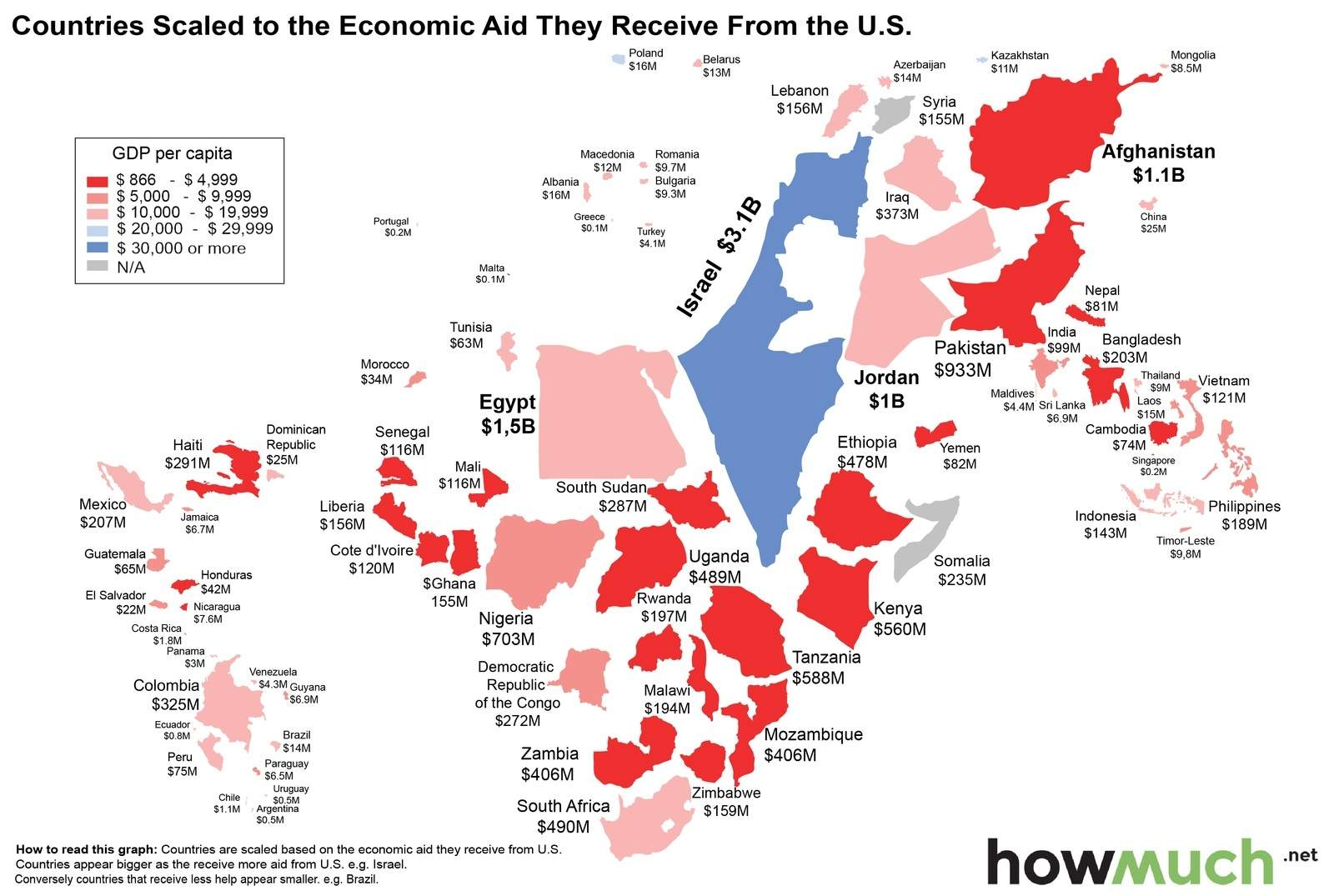
Proserpina
(2,352 posts)Proserpina
(2,352 posts)United States Vice President Joe Biden has never been one to hold his tongue. He certainly didn’t in his recent trip to Kiev. In a speech before Ukraine’s Parliament, Biden told legislators that corruption was eating Ukraine “like a cancer,” and warned Ukrainian President Petro Poroshenko that Ukraine had “one more chance” to confront corruption before the United States cuts off aid.
Biden’s language was undiplomatic, but he’s right: Ukraine needs radical reforms to root out graft. After 18 months in power, Poroshenko still refuses to decisively confront corruption. It’s time for Poroshenko to either step up his fight against corruption — or step down if he won’t.
When it comes to Ukrainian corruption, the numbers speak for themselves. Over $12 billion per year disappears from the Ukrainian budget, according to an adviser to Ukraine’s National Anti-Corruption Bureau. And in its most recent review of global graft, anti-corruption watchdog Transparency International ranked Ukraine 142 out of 174 countries on its Corruption Perceptions Index — below countries such as Uganda, Nicaragua and Nigeria. Ordinary Ukrainians also endure paying petty bribes in all areas of life. From vehicle registration, to getting their children into kindergarten, to obtaining needed medicine, everything connected to government has a price.
The worst corruption occurs at the nexus between business oligarchs and government officials. A small number of oligarchs control 70 percent of Ukraine’s economy, and over the years have captured and corrupted Ukraine’s political and judicial institutions. As a result, a “culture of impunity” was created, where politicians, judges, prosecutors and oligarchs collude in a corrupt system where everyone but the average citizen benefits.
While there are numerous examples of high-level corruption in Ukraine, a few stand out for their sheer brazenness. In one case, $1.8 billion of an IMF loan to Ukraine meant to support the banking system instead disappeared into various offshore accounts affiliated with PrivatBank in Ukraine, which is owned by Ihor Kolomoisky — one of Ukraine’s leading oligarchs...
more
Proserpina
(2,352 posts)On December 23rd, Gallup headlines “Ukrainians Disillusioned With Leadership,” and reports that “nearly nine in 10 Ukrainians (88%) say corruption is widespread in their government, and about eight in 10 (81%) see the same widespread problem in their country’s businesses.” 8% of Ukrainians now say they “have confidence … about the national government.” 17% approve of the job-performance of their President, Petro Poroshenko. While the pre-coup President, Viktor Yanukovych, was in office, 2010-2014, that figure had been averaging about 23%, and was never as low as Poroshenko’s is now.
Gallup reports, “fewer Ukrainians now say their leadership is taking them in the right direction than before the revolution,” but that statement calling this coup a ‘revolution’ embodies the propaganda-lie of one of Gallup’s main clients, the U.S. government itself, which calls the U.S. coup in Ukraine in February 2014 a “revolution,” when every honest and knowledgeable person now knows that this U.S. government claim — that it had helped install democracy instead of having ended it in Ukraine on 20 February 2014 — to have been a lie. Even the founder of the “private CIA” firm Stratfor has called the overthrow of Yanukovych “the most blatant coup in history.” It had been that because it was the first coup to be videoed by numerous people from many different angles with their cellphones and by TV cameras, uploaded to the Web by even anti-Yanukovych countries such as the UK’s BBC; and those videos, the best compilation of which is here, make clear that this was, indeed, a coup d’etat, no authentic revolution at all, such as the U.S. government claims.
Furthermore, the EU’s investigator who had been assigned to report to their Foreign Affairs Minister Cathy Ashton about the overthrow, reported to her that it had been a coup, and that even Petro Poroshenko himself said that “our” side — meaning the anti-Yanukovych people, had done it. Subsequently, evidence came to light showing how it had been organized: the organization for it had started in the U.S. Embassy in Kiev by no later than March 2013. Then, after all of that preparation, on 4 February 2014, the U.S. State Department’s Victoria Nuland gave the final instruction to the U.S. Ambassador in Kiev, to have Arseniy Yatsenyuk appointed to run the country after the coup, and he became appointed 18 days later, on 22 February 2014, to run the country as Prime Minister, until a new President would be elected ‘democratically’; but, even the election of President Poroshenko on 25 May 2014 was no democratic event, because the U.S. government didn’t want residents in the area of Ukraine that had voted over 90% for Yanukovych to be voting in that election. That area of Ukraine (which historically had been a part of Russia) was called Donbass, and it had no say whatsoever in determining Ukraine’s President after the coup, because the new coup-imposed Ukrainian government was already bombing it, starting on 9 May 2014. None of this could have happened without that ‘revolution’: U.S. President Barack Obama’s very bloody coup in Ukraine.
Here is the man whom the U.S. Ambassador in Kiev, Geoffrey Pyatt, worked with to organize the coup (or ‘revolution’), the co-founder of one of the two racist-fascist, or ideologically nazi, political parties in Ukraine. But Pyatt’s appointee (Andriy Parubiy) left the coup’s gun-play and military planning to that man’s paramilitary friend (Dmitriy Yarosh) who had founded the other of the two Ukrainian nazi parties.
And then, right after the coup, America’s stooge who now was running Ukraine for the U.S. regime, Arseniy Yatsenyuk, installed leaders of Ukraine’s two rabidly anti-Russian racist fascist or nazi parties into all of the top internal security and military positions, in order to carry out what they called the ‘Anti Terrorist Operation’ (ATO), or program to exterminate and drive out the residents of Donbass. The prestigious fascist U.S. think tank, the Brookings Institution, urged Obama to increase the firebombings of Donbass, but he decided not to follow that advice, at that particular time...
Proserpina
(2,352 posts)China faces a "sudden stop" in its economy in 2016, as the government loses its ability to prop up state-subsidized industries and capital flight prompts a significant devaluation of the country's yuan, according to the analyst who accurately forecast Russia's stock-market crash in 1998.
JP Smith, who worked at Deutsche Bank before leaving last year to start independent research firm Ecstrat, says conditions in China look as ominous as those in the U.S. on the eve of the 2008 financial crisis, and in Korea just before the 1997 Asian crisis. As a result, Chinese stocks face greater downside potential than those of any other global market, he wrote in a Dec. 17 report.
The projection contrasts with the outlooks of many investors and analysts who are betting China's economy is on track for a gentle slowdown. Bank of America predicted in a report this month that the country will undergo a gradual currency devaluation as it shifts to a services-based economy.
Market forces probably will trump Chinese authorities' ability to control the economy and capital flows through official dictates, according to Smith.
"Companies across a number of key industries appear to be on the verge of a liquidity crisis, while the efficacy of repeated monetary and fiscal stimulus measures appears to be diminishing," Smith wrote. "It is clear that the underlying pressure for capital to leave China is likely to increase further over 2016.