Environment & Energy
Related: About this forum
Flammability hazards of typical fuels used in wind turbine nacelle
The paper I'll discuss briefly comes from the Wiley journal Fire and Materials: Wang Zhenhua, You Fei, Guillermo Rein, Jiang Juncheng, Han Xuefeng, Han Junhua, Sun Wei, Flammability hazards of typical fuels used in wind turbine nacelle Fire and Materials. 2018; 42: 770–781.
The paper caught my eye because I have been interested, for sometime in thermal analysis techniques, although quite honestly I have never been able to convince my management to buy a TGA/DSC system, although we've looked at several such units and have had presentations from a number of companies that make them. (There isn't much call for it immediately.)
As I frequently point out, often with appeal to the : Master Register of Wind Turbines the lifetime of wind turbines is short. In this comprehensive database, one can follow the decline in performance of wind turbines and learn that an average lifetime for a wind turbine is less than 18 years. Some last considerably longer than that, others revert to landfill in less than 5 years, some even in less than a year.
Most of the wind turbines that fail simply wear out and become useless hulks, but accidents are well known: I'll show a graphic below giving some real numbers.
I often point out that wind turbine plants are often situated in wilderness rendered into industrial parks. When they are located in once virgin forest, some of the forest, that not needed for access roads for huge diesel trucks, some of the forest is left intact.
It should surprise no one that the grotesque failure of so called "renewable energy" to address climate change has left forests all over the world in flames, particularly in the last several years where desiccating extreme heat events are observed where never seen previously.
Ignition sources are to be, um, discouraged, not that the "renewable energy will save us" - so called "renewable energy" has not and is not saving us - crowd really cares about huge networks of wires to hook all this crap us, or the fact that these units do catch fire.
Most wind turbine accidents are not fires, but one can easily insert the search term, wind turbine fires, into Google, click on images, and see lots and lots of them.
A favorite of mine is one in which the burning vanes trace out beautiful helices of smoke in the sky; a video can be found on the internet.
Anyway, the introductory text from the paper:
For double-fed induction generator–type wind turbines, the main components usually include rotor (hub and blades); nacelle (generator, gearbox, brake, electronic controller, transformer, and control system); tower; and base,4 among which the nacelle is regarded to be core. Until now, the nacelles of modern wind (MW capacity) turbines have reached dimensions of a small single-family dwelling room.5 However, a traditional wind turbine nacelle is generally a small, confined, and crowed space, in which high-value electrical equipment and the 4 flammable materials, such as sound-insulation polyurethane foam, glass fiber-reinforced polymer shell, electric cables, transformer oil, hydraulic oil, gear oil, and other lubricants, are housed.6 Therefore, oil leakage, hot work, bad ventilation, high-speed braking, overheating of electrical components, aging and breakdown of cables, and poor maintenance could cause a fire. An extensive documentation of wind turbine accidents is provided by the Caithness Windfarm Information Forum database (see Figure 1).7 This database includes all documented cases of wind turbine–related accidents that can be found and confirmed through press reports or official releases. By the end of 2017, among 2186 documented cases, there were nearly 316 fires (14.5%), rating second after blade failure (17.2%). Actually, there is a growing trend of wind turbine fires due to increasing installations of wind power equipment.
Figure 1:

The caption:
For the period covered by the graphic, with the largest number of accidents taking place in 2017, around 180, probably of the result of more and more of this future trash being built because of a mentality that is reminiscent of a cargo cult, in "percent talk" fires had declined to around 14 percent, around 40 in real numbers.
The paper continues:
I think the need would be less "urgent" if we simply stopped building these unicorn chimeras that have proved to be a phantasm, at least for anyone serious about climate change. That's just my opinion though.
I often remark that wind turbines, because of their low capacity utilization, require redundant back up systems, and as almost all of these are dangerous fossil fueled power plants, the wind industry does nothing more to entrench fossil fuel abuse. The next paragraph gives a rather stark account of the other dangerous fossil fuel dependence on these systems:
Presently, few studies have been done on wind turbine fires, especially those regarding fire behavior of typical fuels inside nacelles and assessments of their fire hazard. Some work only focused on fire causes and relevant fire protection systems from the viewpoint of engineering, such as the selection of proper and a high-efficiency automatic fire-fighting system...
I added the bold.
A table from the paper:

The TGA (thermogravimetric analysis) curves:
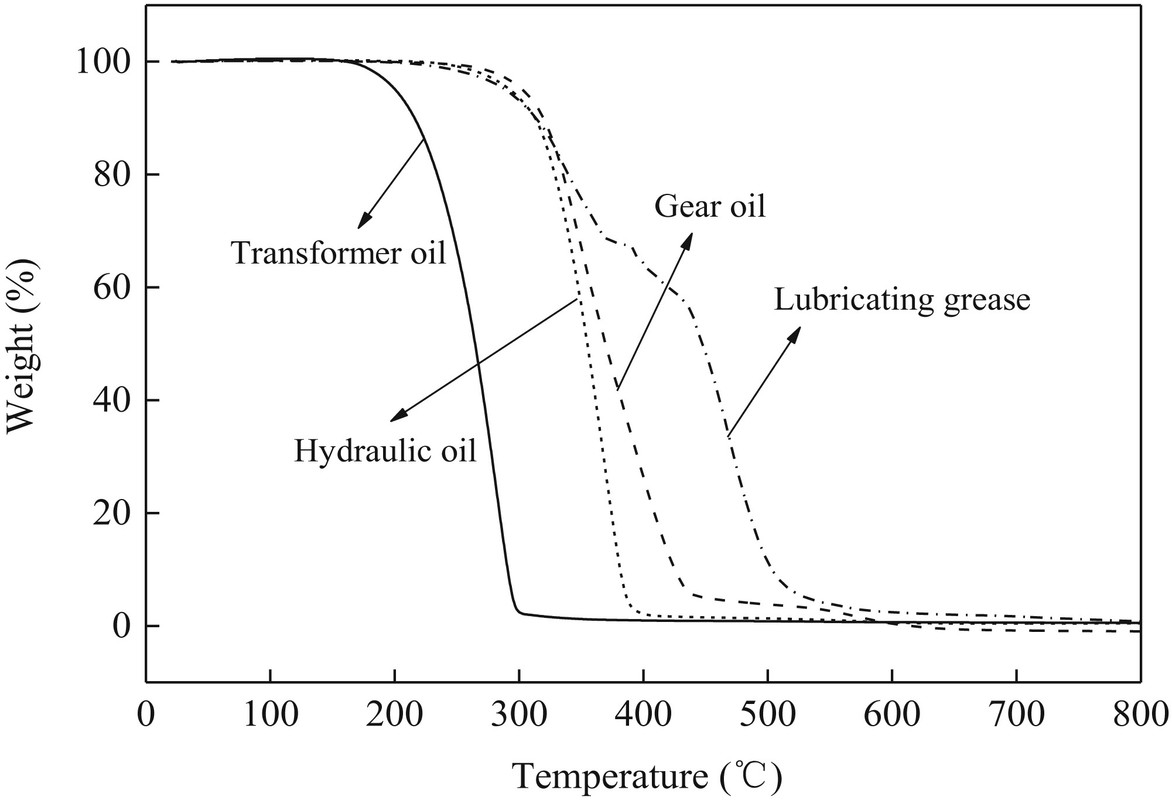
The caption:

The caption:
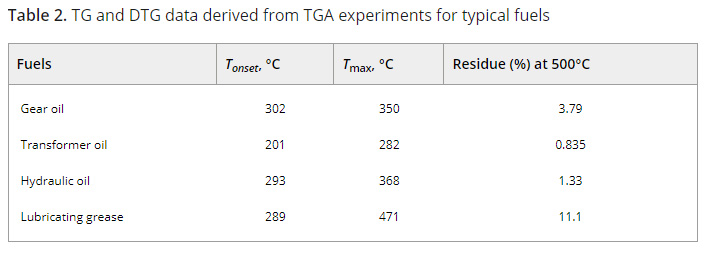
Another table based on this data of the combustion of this stuff:
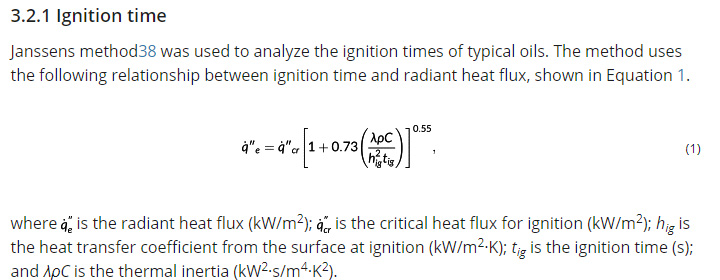
Here's a cool equation from the paper, posted as a graphics object, with which I was unfamiliar (I'm not much of a student of fire science) :
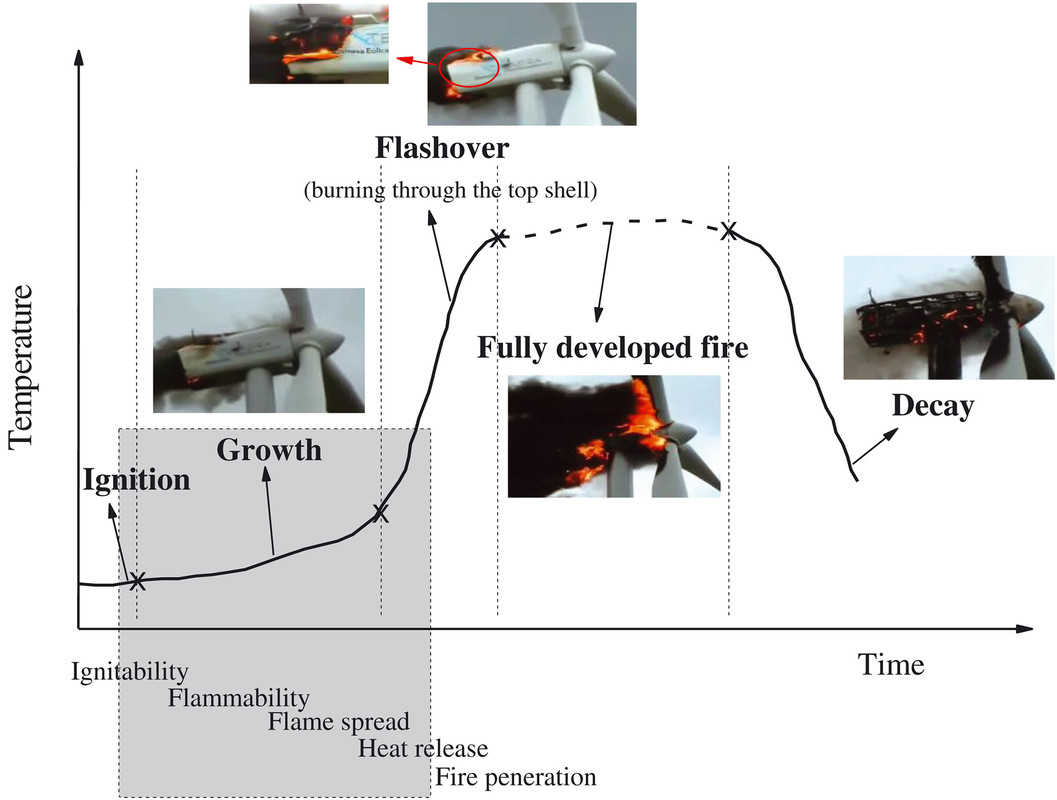
Additional figures from the paper:
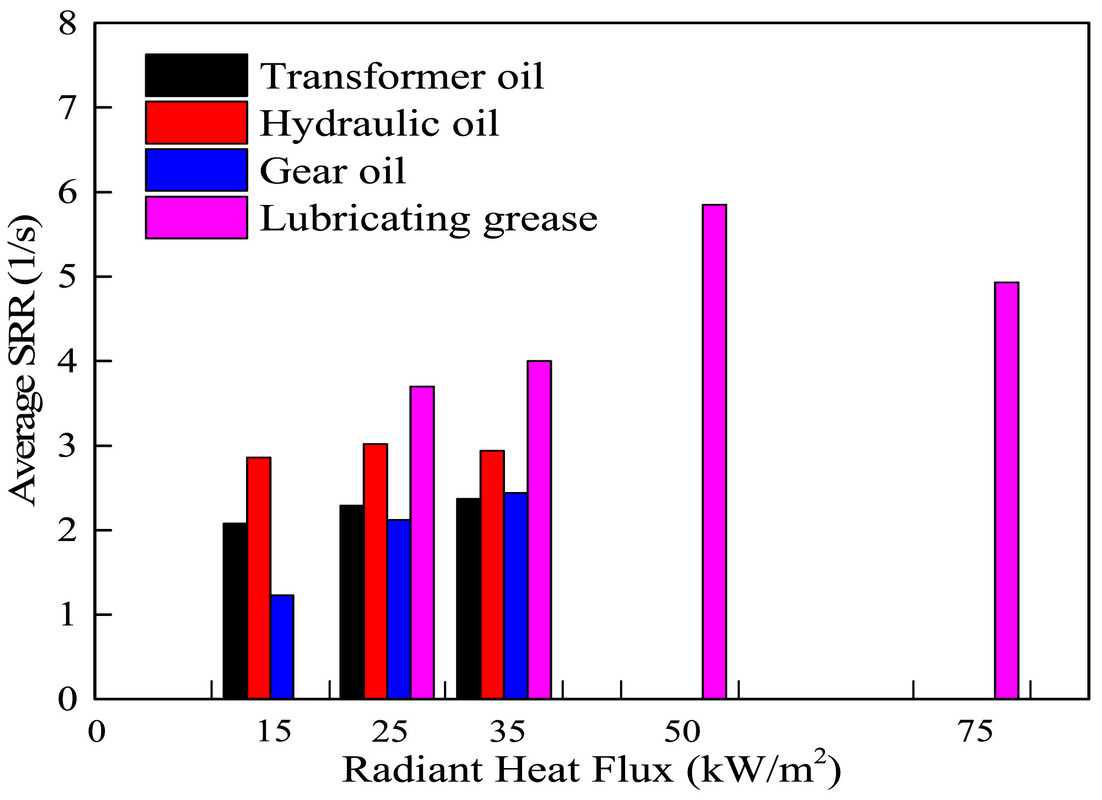
The caption:
There's a lot of stuff discussed in this fine, detailed paper, but I've run out of time to comment on it.
It would be acceptable, of course, had all the decades of cheering for wind energy had done something to address climate change. It didn't. It isn't. It won't.
Of course, the point of the wind and solar industry as is often demonstrated, the nation of Germany being the most egregious case, was never even remotely interested in addressing climate change. It was always about the willful destruction of valuable nuclear energy infrastructure. It was always about indulging the dopey fantasies thrown about lazily anti-nukes that exposure to low level radiation would be extremely deadly, a malign embrace of the LNT that has ended up causing tens of millions, hundreds of millions of deaths, because nuclear energy saves lives that would otherwise be lost to air pollution, and now, extreme temperatures.
Nuclear energy is not risk free. I would note that this paper describes instantaneous deaths - which count for more on a disability lost years of life (DALY) calculation - from the wind industry that is higher than the instanteous deaths attributed to radiation from the big boogeyman at Fukushima.
But the biggest risk of the wind industry has nothing to do with fires or other wind accidents. The biggest risk is that the wind industry generates more complacency than energy, the bizarre and demonstrably false belief that everything will be OK, so long as we worship the wind and the sun.
Everything is not OK. It hasn't been OK for a long time. It won't be OK as long as we continue of this path of fantasy.
Have a nice day.
 = new reply since forum marked as read
Highlight:
NoneDon't highlight anything
5 newestHighlight 5 most recent replies
= new reply since forum marked as read
Highlight:
NoneDon't highlight anything
5 newestHighlight 5 most recent replies

Gore1FL
(22,951 posts)Until the storage of waste can be dealt with, nuclear energy is the most costly source of energy. Renting secure space for millions of years is not really economically viable.
Wind is better than coal.

John ONeill
(88 posts)If you dig a hole to put the spent fuel in, you don't actually have to pay a million years' rent in advance - or ever, it's well below the biosphere. However, the longer the delay on building these deep depositories, the better. Nature managed to build and operate a number of natural fission reactors in Gabon, Africa, about two billion years ago. They ran, on and off, for millions of years. Although they were under a rainforest, the fission products have only moved a few metres since then. The casks now used can quite safely store the 'very lightly used' fuel. It's not 'spent' -when we're ready to use it, 99% of the energy is still there. Reactors capable of doing this are already being planned, or are operating, in the US, China, India, Russia, and Canada.