Environment & Energy
Related: About this forumPhotos from space show 11,000 beavers are wreaking havoc on the Alaskan tundra as savagely as wildfi
Source: Business Insider
Photos from space show 11,000 beavers are wreaking havoc on the Alaskan tundra as savagely as wildfire
Morgan McFall-Johnsen
Tue, January 3, 2023 at 5:15 PM EST·6 min read
Beavers are taking over the Alaskan tundra, completely transforming its waterways, and accelerating climate change in the Arctic.
The changes are so sudden and drastic that they're clearly visible from space.
As the Arctic tundra warms, woody plants are growing along its rivers and streams, creating perfect habitats for beavers.
As the furry rodents move into these waterways, they make themselves at home by doing what they do best: chewing and carrying wood to build dams, and clogging rapid rivers and streams to make lush ponds.
What was once a thin line of water cutting across the tundra has become a train of bulbous beaver ponds:
-snip-
Read more: https://news.yahoo.com/photos-space-show-11-000-221546256.html
 = new reply since forum marked as read
Highlight:
NoneDon't highlight anything
5 newestHighlight 5 most recent replies
= new reply since forum marked as read
Highlight:
NoneDon't highlight anything
5 newestHighlight 5 most recent replies

Voltaire2
(15,377 posts)The beavers are not causing global warming and thawing out the tundra. We are doing that.

hlthe2b
(114,669 posts)Poorly disguised excuse to resume beaver hunting?

Klondike Kat
(946 posts)Beavers doing what comes naturally shouldn't really surprise anyone.
hlthe2b
(114,669 posts)to aid in recovery from wildfires
Beavers were hunted nearly to extinction by humans, causing major environmental damage, including more frequent flooding, smaller wetlands, diminished water quality, and less resilience to drought. This damage is being repaired by reintroducing beavers to former habitats.
https://regeneration.org/nexus/beavers

pazzyanne
(6,761 posts)
Eugene
(67,293 posts)is throwing things out of balance and starting yet another feedback loop.
jaxexpat
(7,794 posts)My beaver, Bucky, would kick your butt if she weren't so busy. It's not easy living with a beaver. My hot tub looks like the set of "Sometimes a Great Notion". Never give a beaver a Keurig for Arbor Day unless you like talking to the HOA bitch at all hours.

GB_RN
(3,587 posts)The description is accurate. Beavers are members of the rodent family, cousins to squirrels, mice, rats, chipmunks, etc,.
jaxexpat
(7,794 posts)You tell that to 60 lb's of cellulose addicted housemate and you're gonna lose a kitchen table leg. At the least.

BumRushDaShow
(172,207 posts)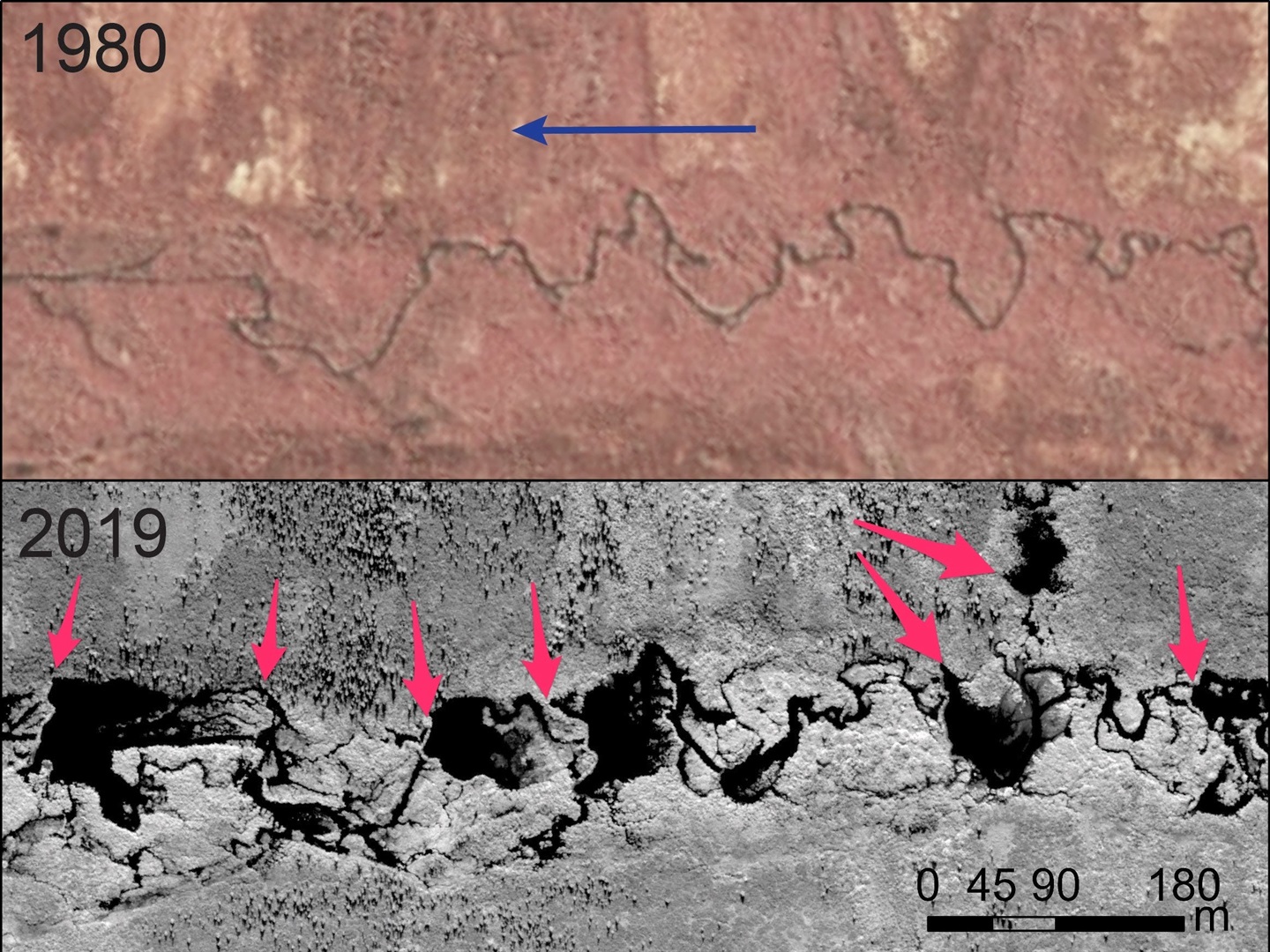

jaxexpat
(7,794 posts)By the time you finish reading this, it'll be 12,000 Alaskan beaver. Which, statistically speaking, means more Republicans. Just sayin'.
pirsquared
(77 posts)jaxexpat
(7,794 posts)You couldn't tell by me that beavers have fewer incisors than rabbits. You'd have to ask the live oak, that used to be in my front yard, now slowly circling my tub drain.
BumRushDaShow
(172,207 posts)
I think what it is establishing is that a lot of that tundra that might have once been permafrost, now has the top layers of their soil thawed, and that has altered the places where these animals have been able to establish themselves - like how you have more and more stranded polar bears in unexpected places.
jaxexpat
(7,794 posts)Let's move to Canadia and raise wildebeests. They won't mind the company.
Beaver pelts as a cash crop until the gnus come in. What a plan!
BumRushDaShow
(172,207 posts)the wooly mammoths.


hatrack
(65,136 posts)Beavers gonna beaver.
BumRushDaShow
(172,207 posts)and they would make good Mummers!


Wicked Blue
(9,016 posts) Botany
(77,848 posts)... which causes climate change?

Deep State Witch
(12,755 posts)I'm sure that the wolves and other predators will soon figure out where there is an overpopulation of beavers, and take care of that issue.

docgee
(870 posts)How do more ponds accelerate climate change?
Nice way of saying "read the article, dipshit'.


Random Boomer
(4,417 posts)That heat in the water escalates the thawing out of the tundra around the pond, which then releases more methane.
TeamProg
(6,630 posts)Evolve Dammit
(21,815 posts)Wounded Bear
(64,628 posts)They are moving north as temps increase.

Traildogbob
(13,158 posts)Overpopulation of any species, plants, Animals, Protista, Monerans or Fungi will wreak havoc on the ecosystem they are in. When control mechanisms for them are removed. Beavers can and do create flooded acreage that most times are food producing areas, or are Timberlands and like it or not, people are hired to eradicate then. Many of My Wildiife grads were hired by Feds to eliminate problem animals. Some used dynamite to blow up Dams and trapping was used to kill them. You never live trap and relocate species to be an issue somewhere else. Some students are hired to kill birds near major airports. In Minnesota, beavers are trapped to protect timberland from floods. Interestingly, the beaver tails are a main staple to feed the wolves at the International Wolf Center in Ely.
Would anyone complain if another “Rodentia” was trapped and eliminated in say, New York City? Would anyone allow rats and the snakes they attract dwell peacefully in your homes? Cockroaches, they are in the animal kingdom. Maybe if rats had flat, or fury tails they would get some love. Beavers reproduce just like rats, as they are big rats. The real problem is overpopulation of another species of animal. One that takes and consumes everything and contributes nothing back to the ecosystem. They destroy all systems they touch to make way for their own perceived needs, and leave poison in their wake.
We have taken away habitat for countless species that are like refugees, moving to where they have a chance to survive. Nature will ultimately thin out the bad players. The new Covid may just be the beginning. One species is the most Destructive of all, and contributes nothing, we do not even offer organic materials back to the soil, or feed detritus organisms, so if Mother Nature needs to balance, which one would she eliminate for the best of the whole?

Martin Eden
(15,871 posts)In response to changing ecology some species will thrive, and others will suffer.
What we're seeing in the Alaskan tundra is a natural consequence to manmade climate change which has, overall, mostly bad consequences for us.
jaxexpat
(7,794 posts)Which is probably a pretty good thing when you appreciate just how serious a >6' beaver with 6" teeth could get to your personal ecology.
Martin Eden
(15,871 posts)Than the rabbit from Monty Python's Holy Grail. 
jaxexpat
(7,794 posts)But it would have been a good match to record.

Historic NY
(40,130 posts)In the old days they were regularly trapped for their pelts. W/o controls, they can close interstates too. DEC seems to have been asleep on the job at the Stewart Airport Buffer Zone. For decades, they have had to relocate them, they might be letting the place go forever wild but even back when it was a farming community from 1729 to 1970s they were regularly hunted or trapped. Old farm ponds have become lakes.
https://wpdh.com/beavers-causing-mile-long-backup-on-busy-hudson-valley-highway/]

Farmer-Rick
(12,786 posts)Use to be a huge beaver population here around my farm but they aren't around anymore. They created a pond but that has washed out years ago.
Do they prefer the cold? Is the heat causing their migration?
jaxexpat
(7,794 posts)We figured the great influx of coyotes culled them out of the neighborhood. When I was a kid the Ohio river flood plain was all rabbits, the occasional fox and birds. When I came home, 1982, to live after around 6 years away there were deer eating the edges of the soybean fields and ground hogs digging up the foundations of tobacco barns. They pretty much disappeared, as did the rabbits, when the coyotes came in the mid 80's. The beaver increase peaked in the late 90's. Haven't lived there since 2003 so I'm unaware of the latest "scourge". Probably penguins. A lot of the species migration must be from habitat disturbance. There was a push for drainage in the 70's which opened up a lot of woodland to farming. Whatever was living in those old swampy woods had to move somewhere. I've seen deer swim the river from Indiana. They had to be pretty determined because the river is around 3/4 to 1 mile wide there. 20 miles wide during winter-spring flood. Female and a fawn, both made it, and we watched them come ashore. It seemed you could have walked up to them and petted them as they stood there, they were so tired.

Kick in to the DU tip jar?
This week we're running a special pop-up mini fund drive. From Monday through Friday we're going ad-free for all registered members, and we're asking you to kick in to the DU tip jar to support the site and keep us financially healthy.
As a bonus, making a contribution will allow you to leave kudos for another DU member, and at the end of the week we'll recognize the DUers who you think make this community great.