Environment & Energy
Related: About this forum
Swiss nuclear power plant shuts down reactor due to the heat
The reason for the shutdown of one reactor unit on Tuesday is the high water temperature of the River Aare, as announced by the operator Axpo on Wednesday. The output of the two water-cooled reactors was already reduced by half last Sunday.
Until now, the Aare at the site of the nuclear power plant near Döttingen was still below 25 degrees, according to the press release. Axpo is complying with federal directives by throttling its nuclear power plant. The measure is intended to protect the flora and fauna in the river from excessive pollution.
https://www.swissinfo.ch/eng/climate-adaptation/beznau-nuclear-power-plant-shuts-down-one-of-its-reactors-due-to-the-heat/89617209
 = new reply since forum marked as read
Highlight:
NoneDon't highlight anything
5 newestHighlight 5 most recent replies
= new reply since forum marked as read
Highlight:
NoneDon't highlight anything
5 newestHighlight 5 most recent replies

OKIsItJustMe
(22,160 posts)Most fusion plants under development suffer from the same problem. They generate steam to drive a turbine. Things can be done to improve this somewhat.
Early “Gen IV” fission reactors will probably also use essentially the same method, using a nuclear reaction to boil water to drive a steam turbine. It’s the nature of the beast, but it can be improved.
https://thebreakthrough.org/blog/nuclear-reactors-dont-need-to-be-so-thirsty
This is one of the reasons why I like the Helion fusion reactor. Assuming it works according to plan, it will get away from this operating scheme, generating electricity directly from the fusion reaction.

IbogaProject
(6,076 posts)Helion Energy, Inc. is an American fusion research company, located in Everett, Washington.[2] They are developing a magneto-inertial fusion technology to produce helium-3 and fusion power via aneutronic fusion,[3][4] which could produce low-cost clean electric energy using a fuel that can be derived exclusively from water.[5]https://en.wikipedia.org/wiki/Helion_Energy
Helion uses a combination of deuterium and 3
He as fuel. Deuterium and 3He allows mostly aneutronic fusion, releasing only 5% of its energy in the form of fast neutrons. Commercial 3He is rare and expensive. Instead Helion produces 3He by deuteron–deuteron (D–D) side reactions to the deuterium – 3He reactions. D–D fusion has an equal chance of producing a 3He atom and of producing a tritium atom plus a proton. Tritium beta decays into more 3He with a half-life of 12.32 years. Helion plans to capture the 3He produced this way and reuse it as fuel. Helion has a patent on this process.[15]
https://en.wikipedia.org/wiki/Aneutronic_fusion
Another one is based on abundant B11, which gives off three alpha particles for direct electricity conversion and they turn into regular He rapidly.
OKIsItJustMe
(22,160 posts)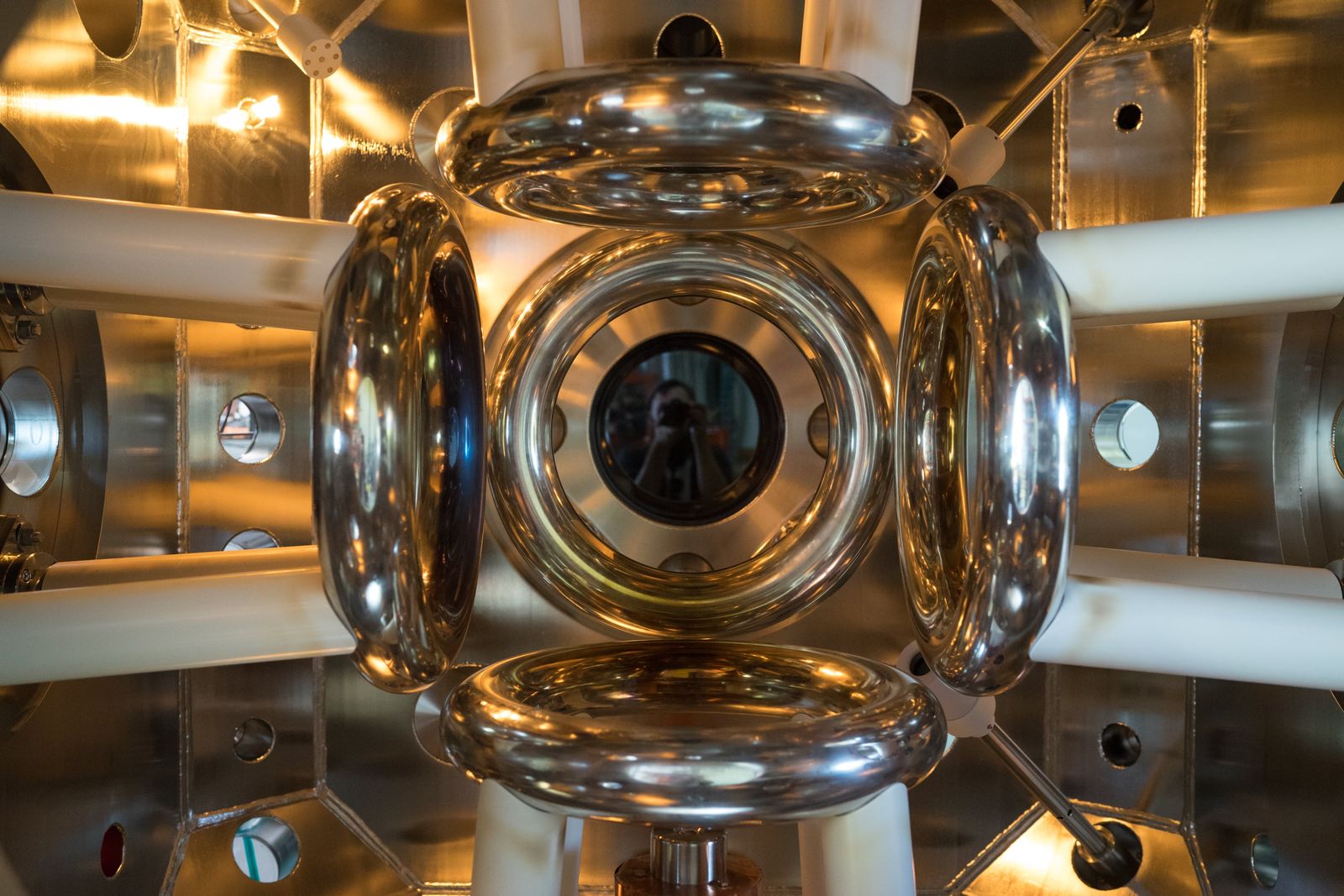
IbogaProject
(6,076 posts)And I am excited there are several competing concepts. EMC2fusion's is very interesting.
Bussard's choice was to fuse boron-11 with protons; this reaction is aneutronic (does not produce neutrons). An advantage of p-11B as a fusion fuel is that the primary reactor output would be energetic alpha particles, which can be directly converted to electricity at high efficiency using direct energy conversion. Direct conversion has achieved a 48% power efficiency[39] against 80–90% theoretical efficiency.[11]
https://en.wikipedia.org/wiki/Polywell
Here is a little more about B11 from https://en.wikipedia.org/wiki/Aneutronic_fusion
Boron
Many studies of aneutronic fusion concentrate on the p–11B reaction,[25][26] which uses easily available fuel. The fusion of the boron nucleus with a proton produces energetic alpha particles (helium nuclei).
Since igniting the p–11B reaction is much more difficult than D–T, alternatives to the usual tokamak fusion reactors are usually proposed, such as inertial confinement fusion.[27] One proposed method uses one laser to create a boron-11 plasma and another to create a stream of protons that smash into the plasma. The proton beam produces a tenfold increase of fusion because protons and boron nuclei collide directly. Earlier methods used a solid boron target, "protected" by its electrons, which reduced the fusion rate.[28] Experiments suggest that a petawatt-scale laser pulse could launch an 'avalanche' fusion reaction,[27][29] although this remains controversial.[30] The plasma lasts about one nanosecond, requiring the picosecond pulse of protons to be precisely synchronized. Unlike conventional methods, this approach does not require a magnetically confined plasma. The proton beam is preceded by an electron beam, generated by the same laser, that strips electrons in the boron plasma, increasing the protons' chance to collide with the boron nuclei and fuse.[28]

Kick in to the DU tip jar?
This week we're running a special pop-up mini fund drive. From Monday through Friday we're going ad-free for all registered members, and we're asking you to kick in to the DU tip jar to support the site and keep us financially healthy.
As a bonus, making a contribution will allow you to leave kudos for another DU member, and at the end of the week we'll recognize the DUers who you think make this community great.