Environment & Energy
Related: About this forum
Biomass Power Plants and the Global Burden Nanomagnetite Particle Emissions.
The paper I'll briefly discuss in this post is this one: Uncovering the Global Burden and Future Trajectories of Nanomagnetite Particle Emissions from Biomass Power Plants Zhiqiang Shi, Yujie Cui, Mengyuan Wang, Jiayuan Wu, Xiaojing Yang, Miao Xu, Zuoshun Niu, and Yi Yang Environmental Science & Technology 2026 60 (17), 13063-13074.
Like the other forms of so called "renewable energy" the combustion of biomass in all of its forms, whether it involves agricultural products like corn or strip mining old growth and new growth forests, is not sustainable on a planet with 8 billion people on it. The idea that so called "renewable energy" is clean and safe, approaching even remotely the cleanliness and sustainability of nuclear energy is clearly absurd if one bothers to look at the numbers and effects.
I'm not going to spend a lot of time on this post, since I really don't have it, but in Chinese scientists who have acceded to the world leadership after US science was killed by a moron, have published this paper. It's introduction:
Anthropogenic-source NMPs are generated primarily through high-temperature industrial and combustion processes, including steel manufacturing and fossil-fuel combustion, in which iron-bearing minerals undergo thermochemical transformations into magnetite. (7,13) Among these sources, coal-fired power plants have recently been identified as an important contributor to atmospheric NMPs. (14,15) Our previous work systematically characterized the formation mechanisms and emission potential of NMPs in representative coal-fired power plants. (15,16) We showed that the transformation of iron-bearing minerals under locally reducing furnace conditions produces abundant NMPs, and that their emissions vary substantially with boiler configuration and dust removal technology. These findings collectively highlight the sensitivity of NMP formation to both feedstock composition and combustion technology. As global energy systems transition away from coal, biomass power plants (BPPs) have become an increasingly important component of low-carbon power portfolios. (17,18) Their installed capacity grew from about 20 GW in 2010 to over 150 GW in 2022, (19) underscoring the accelerating adoption of biomass as a carbon-neutral energy source worldwide. Biomass fuels can also contain iron-bearing minerals derived from soil inputs and ash-rich agricultural residues, which can favor magnetite formation under high-temperature combustion conditions. (20,21) Consistent with this, related studies have reported measurable ferrimagnetic signatures in biomass-combustion dust from Poland, 0.79–8.98 wt % iron oxides in biomass power ash from the Upper Rhine Region (Germany/France), and 6.7 wt % magnetite in woody biomass fly ash from an operating BPP in Japan. (22−24) Despite the rapid expansion of BPPs, current emission inventories largely target conventional pollutants, including PM2.5, NOx, SO2, and trace elements, (25−27) whereas source-specific NMP emission factors and inventories for BPPs remain lacking. Compared with coal-fired power plants, expectations for NMP emissions are further complicated by the wide range of biomass fuels and large variability in mineral composition, indicating the need for dedicated measurement and modeling efforts.
To address this gap, this study links toxicological evidence with emission quantification (Figure 1). In vitro assays first demonstrate that NMPs represent a disproportionately toxic subfraction of fine particles (FPs, the the less than 1 μm fraction)...
Some figures from the text:
Figure 1:
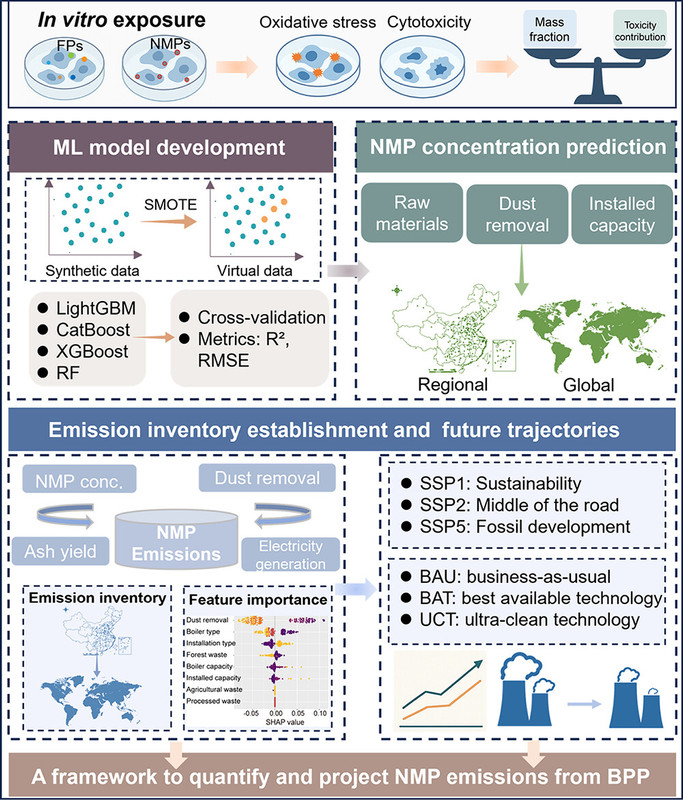
The caption:
Where the problem is considered serious, note North America where, despite it's failure to address the collapse and poisoning of the planetary atmosphere, so called "renewable energy" remains popular, and fossil fuels, albeit unpopular but essential because the useless solar and wind industries depend on it, remains necessary:
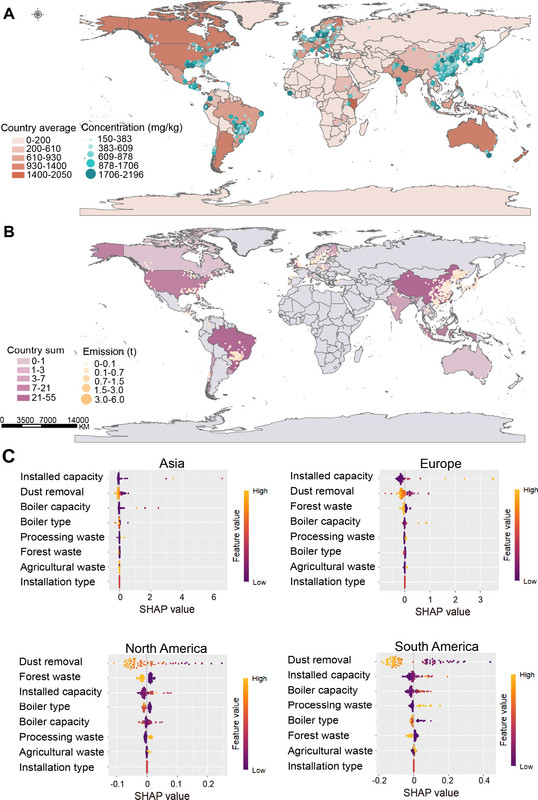
The caption:
Some soothsaying, based perhaps on the dubious belief that there will be, in 2050, forests to strip mine since the failure to address extreme global heating has led to many burning in vast uncontrollable wild fires that also, presumably, result in the distribution of ferric nanoparticles:
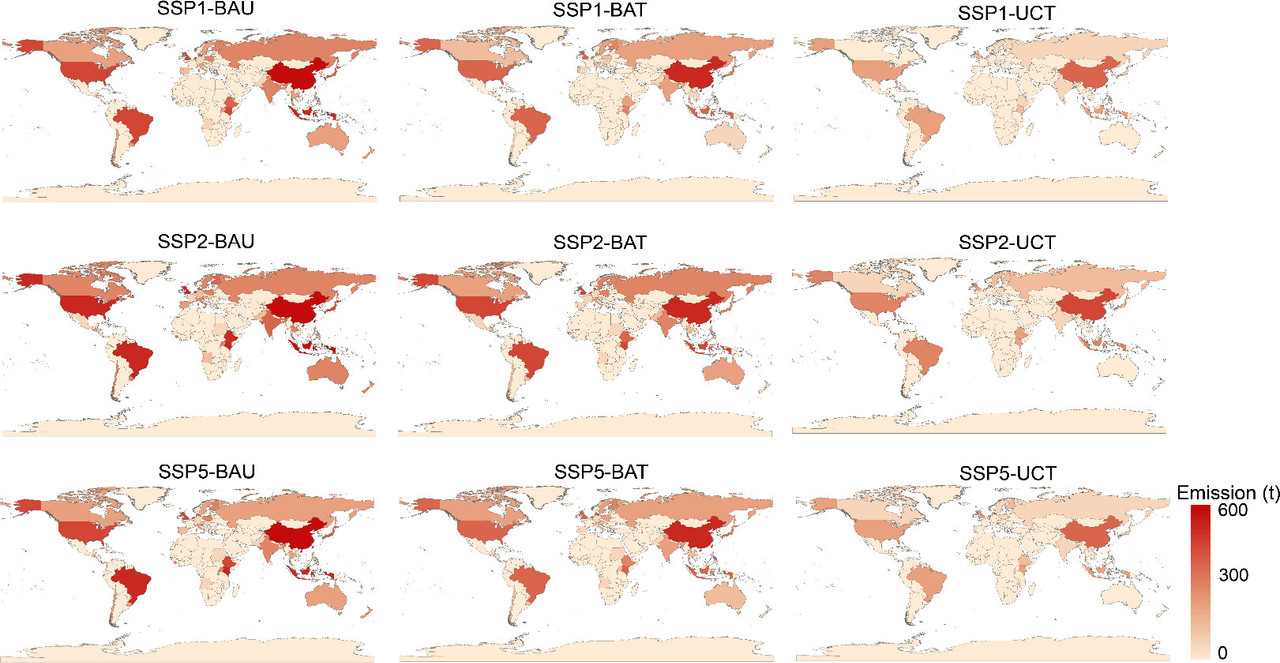
The caption:
Particular "scenarios" in my personal opinion are meaningless; there are no scenarios in which biomass combustion is sustainable.
Some remarks from the paper's conclusion:
In China, unit-level emissions closely follow differences in dust removal performance and feedstock characteristics, leading to pronounced provincial contrasts where modernization of control systems has progressed unevenly...
I have a low opinion of any text referring to "energy transitions," of any type, although its use in parlance is ubitiquous. It's nonsense. There is no "energy transition." We are burning more fossil fuels than at any point in history.
I trust you're having a nice weekend; happy Father's Day if you are involved, as I am, in fatherhood.