Science
Related: About this forumDestroyer of Worlds
By George Monbiot, published in the Guardian 25th March 2014
You want to know who we are? Really? You think you do, but you will regret it. This article, if you have any love for the world, will inject you with a venom – a soul-scraping sadness – without an obvious antidote.
The Anthropocene, now a popular term among scientists, is the epoch in which we live: one dominated by human impacts on the living world. Most date it from the beginning of the industrial revolution. But it might have begun much earlier, with a killing spree that commenced two million years ago. What rose onto its hindlegs on the African savannahs was, from the outset, death: the destroyer of worlds.
Before Homo erectus, perhaps our first recognisably-human ancestor, emerged in Africa, the continent abounded with monsters. There were several species of elephants. There were sabretooths and false sabretooths, giant hyaenas and creatures like those released in The Hunger Games: amphicyonids, or bear dogs, vast predators with an enormous bite.
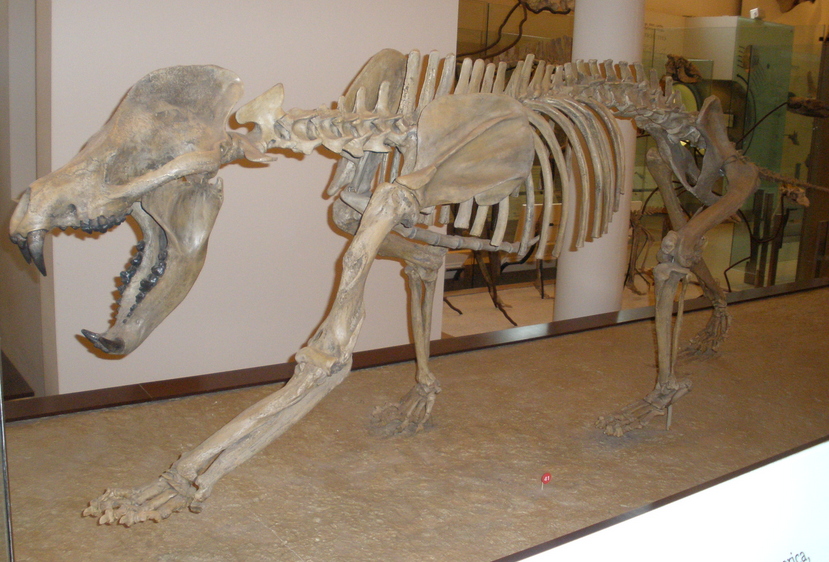
Professor Blaire van Valkenburgh has developed a means by which we could roughly determine how many of these animals there were(1). When there are few predators and plenty of prey, the predators eat only the best parts of the carcass. When competition is intense, they eat everything, including the bones. The more bones a carnivore eats, the more likely its teeth are to be worn or broken. The breakages in carnivores’ teeth were massively greater in the pre-human era(2).
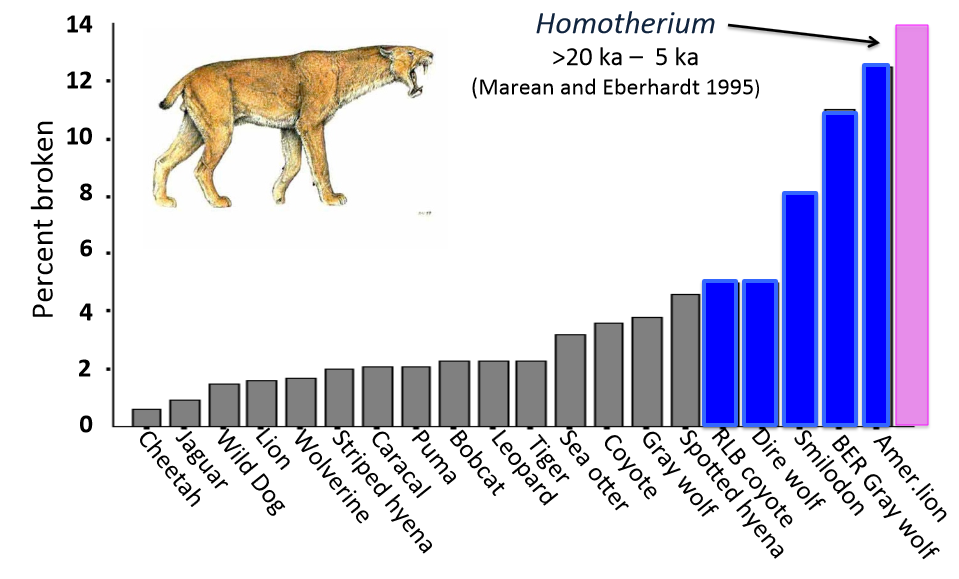
Not only were there more species of predators, including species much larger than any found on earth today, but they appear to have been much more abundant – and desperate. We evolved in a terrible, wonderful world – that was no match for us.
more
http://www.monbiot.com/2014/03/24/destroyer-of-worlds/
 = new reply since forum marked as read
Highlight:
NoneDon't highlight anything
5 newestHighlight 5 most recent replies
= new reply since forum marked as read
Highlight:
NoneDon't highlight anything
5 newestHighlight 5 most recent replies

denbot
(9,950 posts)North American mega fauna fossils don't show enough evidence of human predation to point to our ancestors as the cause of the N.A. mega fauna demise.

n2doc
(47,953 posts)I have never seen a paper demolished as elegantly and decisively as this was at last week’s conference. The archaeologist Todd Surovell demonstrated that the mismatch is just what you would expect if humans were responsible(11). Mass destruction is easy to detect in the fossil record: in one layer bones are everywhere, in the next they are nowhere. But people living at low densities with basic technologies leave almost no traces. With the human growth rates and kill rates you’d expect in the first pulse of settlement (about 14,000 years ago), the great beasts would have lasted only 1,000 years. His work suggests that the most reliable indicator of human arrival in the fossil record is a wave of large mammal extinctions.
denbot
(9,950 posts)In order to hunt large prey, and defend against large predators, early man would require constant stone tool production which would leave evidence. In many regions there are limited sources of cherts and obsidian which would tend to concentrate tool production in localized areas, and these sites can be dated.
I will read the full article as soon as I can find a little time.

sofa king
(10,857 posts)Before stone tools, the fire-sharpened spear did the same job--apparently up to 400000 years ago.
My guess is that the tactic was to surround or corner the prey with a dozen or more people (if possible), then slowly move in, with most of the people keeping their spears firmly planted in the ground with one foot. Eventually the giant creature would charge or recoil into a planted spear, its own mass and inertia would cause severe soft tissue damage, and that would be the beginning of the end. (The trick has been rediscovered countless times, including by greek hoplites, English billmen, armies that had to fight against elephants, and so on.)
Whatever the case, even today the Kalihari and others will happily stick a giant creature a few times, back off, and follow it until it weakens--a good way to avoid injury.
I'm not even sure that bone can be scratched by most wooden weapons; certainly the evidence for it would be much more subtle and difficult to detect.

Kick in to the DU tip jar?
This week we're running a special pop-up mini fund drive. From Monday through Friday we're going ad-free for all registered members, and we're asking you to kick in to the DU tip jar to support the site and keep us financially healthy.
As a bonus, making a contribution will allow you to leave kudos for another DU member, and at the end of the week we'll recognize the DUers who you think make this community great.