NASA lit a fire in space to keep future astronauts safe (video)
By Elizabeth Howell 7 hours ago
NASA deliberately set a fire in a spacecraft to see if a "smoke eater" and carbon dioxide scrubber could make future moon missions safer for astronauts.
The experiment, called Spacecraft Fire Safety Demonstration Project IV, or Saffire IV, continues a research program aimed at better understanding how fire behaves in space. There are six experiments planned in all, with each iteration taking place inside a cargo spacecraft, Cygnus, made by Northrop Grumman. This latest Saffire experiment focused on testing prototype equipment that could be used on Orion spacecraft bound for the moon, where NASA wants to land astronauts in 2024 under the Artemis program.
NASA hires Cygnus capsules to send experiments, food and other necessities to astronauts on the International Space Station. Since the unoccupied spacecraft is deliberately destroyed in Earth's atmosphere after each mission, it presents an ideal platform to test how fire ignites, grows and spreads in space. Investigators wait until Cygnus is a safe distance from the orbiting laboratory, then light the flame while the spacecraft heads for its demise.
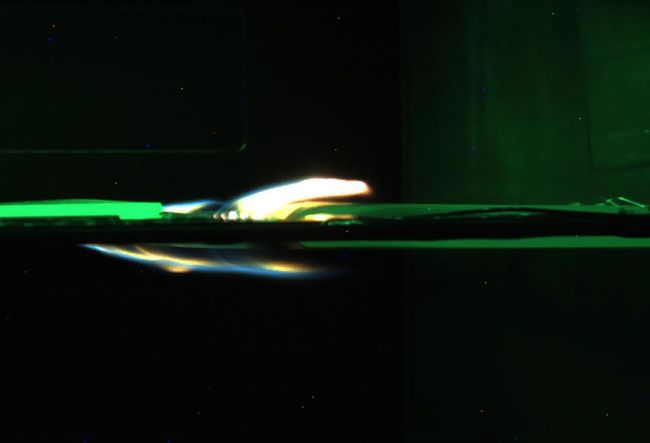
An edge-on view of spacecraft material set on fire in space as part of NASA's Saffire IV experiment. (Image credit: NASA)
"We want to take what we learned from the first three Saffire experiments and see how flames spread and grow in other spacecraft conditions," Gary Ruff, Saffire project manager at NASA's Glenn Research Center in Cleveland, said in a statement. "We also loaded Saffire IV with more diagnostic equipment to see how effectively we can detect fires, measure combustion products, and evaluate future fire response and clean-up technologies."
More:
https://www.space.com/fire-in-space-nasa-cygnus-spaceraft-saffire-4-video.html?utm_source=notification
