Science
Related: About this forum
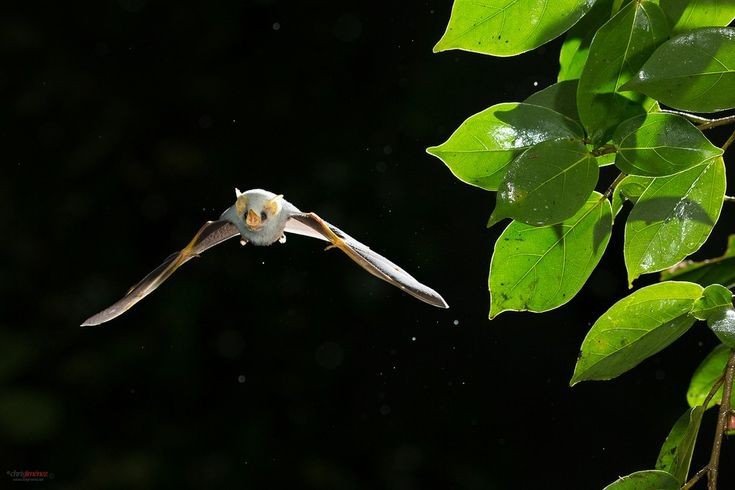
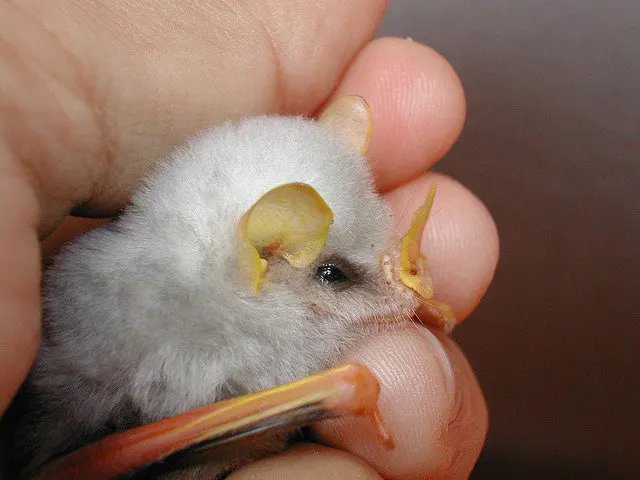
A tiny bat that can fit in your palm

Tent-making bats defy negative stereotypes by living in harmony with each other (Credit: Credit: Minden Pictures/Alamy)
Described as "cute" even in formal scientific journals, Costa Rica's tent-making bats defy negative stereotypes by living in harmony with each other and inspiring conservation.
By Reena Shah
27 January 2021
I drove to Sarapiquí, a little-known region in Costa Rica, during a brief respite of dry weather between Hurricanes Eta and Iota in search of a miniature tropical bat. Here, conservation efforts big and small are fighting to preserve a lowland tropical rainforest with astonishing biodiversity, including one of the smallest and most adorable mammals: Ectophylla alba, also known as the Honduran white bat or Caribbean tent-making bat.
I'd been warned that these bats aren't always easy to find. They live in selected lowland rainforest habitats from Honduras to eastern Panama. In Costa Rica, I tried my luck at Tirimbina Rainforest Center, a 345-hectare private reserve. At first glance, the neighbourhood seemed an unlikely locale for a rainforest. Pineapple plantations dominated on all sides and spiky green shrubs stretched to the horizon. But tucked away behind an unassuming green gate was an ecological oasis that protects nearly 4,000 species of plants and animals.
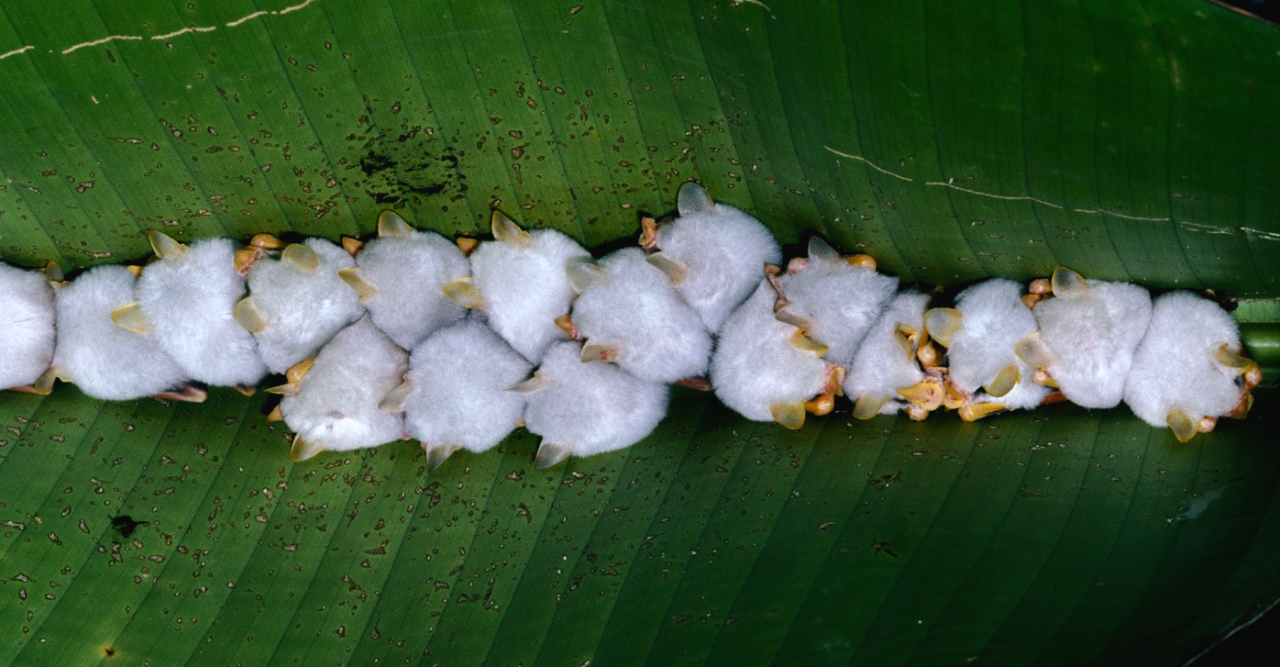
My guide, Emmanuel Rojas Valerio, led me across a 270m chain-linked suspension bridge over the roaring Sarapiquí River. In the middle of the river was the small island of "La Isla", once a biologist's heaven for studying the bats due to its abundance of heliconia plants. The tent-making bats chew a perforated ridge into heliconia leaves, similar in shape to banana leaves, to form tents where they roost during the day. The plants are easily shaken, which is one of the reasons they make suitable homes. The leaves become alarm bells as soon as predators, such as snakes, owls and opossums, touch them, giving the bats a chance to escape.
In 2015, severe flooding wiped out La Isla. Though, by the look of it now, I wouldn't have known. Enormous cecropia and balsa trees had already grown taller than the bridge, and dense vegetation obscured the island floor. The tiny bats, however, haven't yet returned. Scientists speculate that the understory is too crowded with new growth, making it hard for them to easily leave their tents.
More:
http://www.bbc.com/travel/story/20210126-the-central-american-bat-that-can-fit-in-your-palm





 = new reply since forum marked as read
Highlight:
NoneDon't highlight anything
5 newestHighlight 5 most recent replies
= new reply since forum marked as read
Highlight:
NoneDon't highlight anything
5 newestHighlight 5 most recent replies

Karadeniz
(24,746 posts)Are too cute to lose them.

Rhiannon12866
(255,525 posts)

nam78_two
(17,188 posts)
Rhiannon12866
(255,525 posts)And the walls of these caves were covered with hibernating bats. They may have been cute, too, but it was tough to tell since they were all asleep. 

Response to Rhiannon12866 (Reply #5)
nam78_two This message was self-deleted by its author.
nam78_two
(17,188 posts)That every cool new species one encounters already appears to be approaching near threatened status.
Humans - a significant chunk at any rate - are pretty destructive. I wonder about this when I read about humans colonizing other planets - in theory at any rate. Fortunately, there are no current options permitting us to despoil new planets. I shudder to think about our species being unleashed on untouched eco-systems.
In theory at least, it would be a good idea to accomplish homeostasis with one planet before moving on to others  . Agent Smith from The Matrix did have a valid point.
But at least Rojas Valerio's story is positive. Trite but true-education is the solution. It just takes a long time.