Welcome to DU! The truly grassroots left-of-center political community where regular people, not algorithms, drive the discussions and set the standards. Join the community: Create a free account Support DU (and get rid of ads!): Become a Star Member Latest Breaking News Editorials & Other Articles General Discussion The DU Lounge All Forums Issue Forums Culture Forums Alliance Forums Region Forums Support Forums Help & Search

NNadir

(38,049 posts)
Wed Mar 17, 2021, 10:24 PM Mar 2021

The greenhouse gas emissions of indoor cannabis production in the United States

The paper I'll discuss in this post is this one: The greenhouse gas emissions of indoor cannabis production in the United States (Summers, H.M., Sproul, E. & Quinn, J.C. Nat Sustain (2021))

The abstract of the paper, which should be open sourced, says it all:

The resulting life cycle GHG emissions range, based on location, from 2,283 to 5,184 kg CO2-equivalent per kg of dried flower. The life cycle GHG emissions are largely attributed to electricity production and natural gas consumption from indoor environmental controls, high-intensity grow lights and the supply of carbon dioxide for accelerated plant growth.


Some excerpts from the full text:

Understanding the greenhouse gas (GHG) emissions of commercial cannabis production is essential for consumers, the general public and policy makers to improve decision making to mitigate the effects of climate change. Since recreational legalization was pioneered in Colorado in 2012, the US legal cannabis industry has rapidly grown from a US$3.5 billion industry to US$13.6 billion in annual sales, with states like Colorado selling more than 530 tonnes of legally grown cannabis product every year1,2. Additionally, with 48% of adults in the United States having tried cannabis at some point in their life and 13% of adults having consumed in the last year, substantial demand exists at the consumer level3. Despite its rapid growth and widespread use, there is minimal quantitative understanding of the GHG emissions from legal indoor cannabis cultivation.

The initial amendment legalizing recreational cannabis in Colorado required the majority of cannabis product to be sold at a collocated retail location4. This restriction led to cultivation practices occurring within the city limits of Denver, CO. This, along with security, theft and quality concerns, consequently led to the cultivation of cannabis indoors. Although data concerning the exact amount of cannabis by cultivation method are not currently publicly available for the United States, a recent survey of producers in North America showed that 41% of respondents indicated that their grow operations occur solely indoors5. It is well known that indoor cannabis cultivation requires significant energy input, reflected in high utility bills and industry reports4,6,7,8,9. However, many of these large energy loads, along with other material inputs required to cultivate indoor cannabis, have not yet been equated to GHG emissions.

Previously, rudimentary quantifications of GHG emissions from indoor cannabis have been performed by equating emissions with electricity use from monthly bills6,7. However, this approach omits additional GHG emissions from other energy sources, such as natural gas, upstream GHG emissions from the production and use of material inputs, and downstream GHG emissions from the handling of waste. The most thorough report quantifying GHG emissions from indoor cannabis is from Mills10, which states that growing 1 kg of cannabis indoors releases 4,600 kg of carbon dioxide equivalent (CO2e). However, the scope of the work was intended to be a central estimate, representing a singular US location case study for the industry’s general practices. Furthermore, Mills10 conducted this study prior to legalization and only used data from small-scale experimental systems, thus lacking validation of full-scale commercial grow operations...

...An indoor cannabis cultivation model was developed to track the necessary energy and materials required to grow cannabis year-round in an indoor, warehouse-like environment. This environment maintains climate conditions as required for the cannabis plants, yielding a consistent product regardless of weather conditions. The model calculates the necessary energy to maintain these indoor climate conditions by using a year’s worth of hourly weather data from more than 1,000 locations in the United States11. The analysed locations are independent of current legal status and represent hypothetical grow facilities in all 50 US states. The model then converts the required energy, supplied from electricity and natural gas, into GHG emissions through electrical grid emissions data from 26 regions in the United States12 and life cycle inventory (LCI) data13,14...


Here's a look some pictures from the paper:

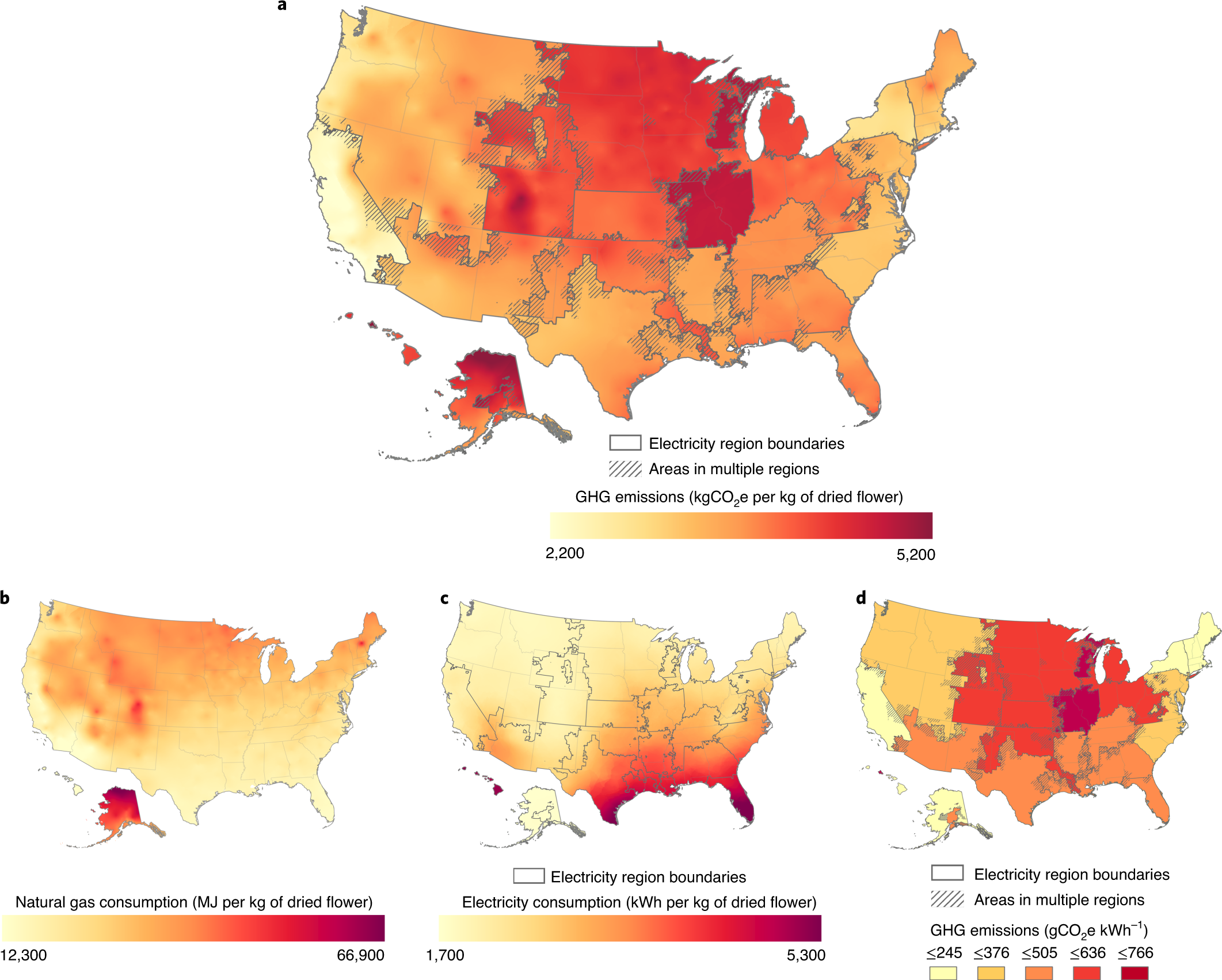
Fig. 1: Life cycle GHG emissions and energy intensities from indoor cannabis cultivation modelled across the United States.
From: The greenhouse gas emissions of indoor cannabis production in the United States


The caption:

a, Cumulative GHG emissions from cultivating cannabis indoors interpolated within eGRID electricity region boundaries. eGRID, Emissions and Generation Resource Integrated Database. b, Natural gas required to maintain indoor environmental conditions. c, Electricity required to maintain indoor environmental conditions and high-intensity grow lights. d, GHG emissions for the US electricity regions modelled. Full resolution figures are provided in Supplementary Figs. 1–4.


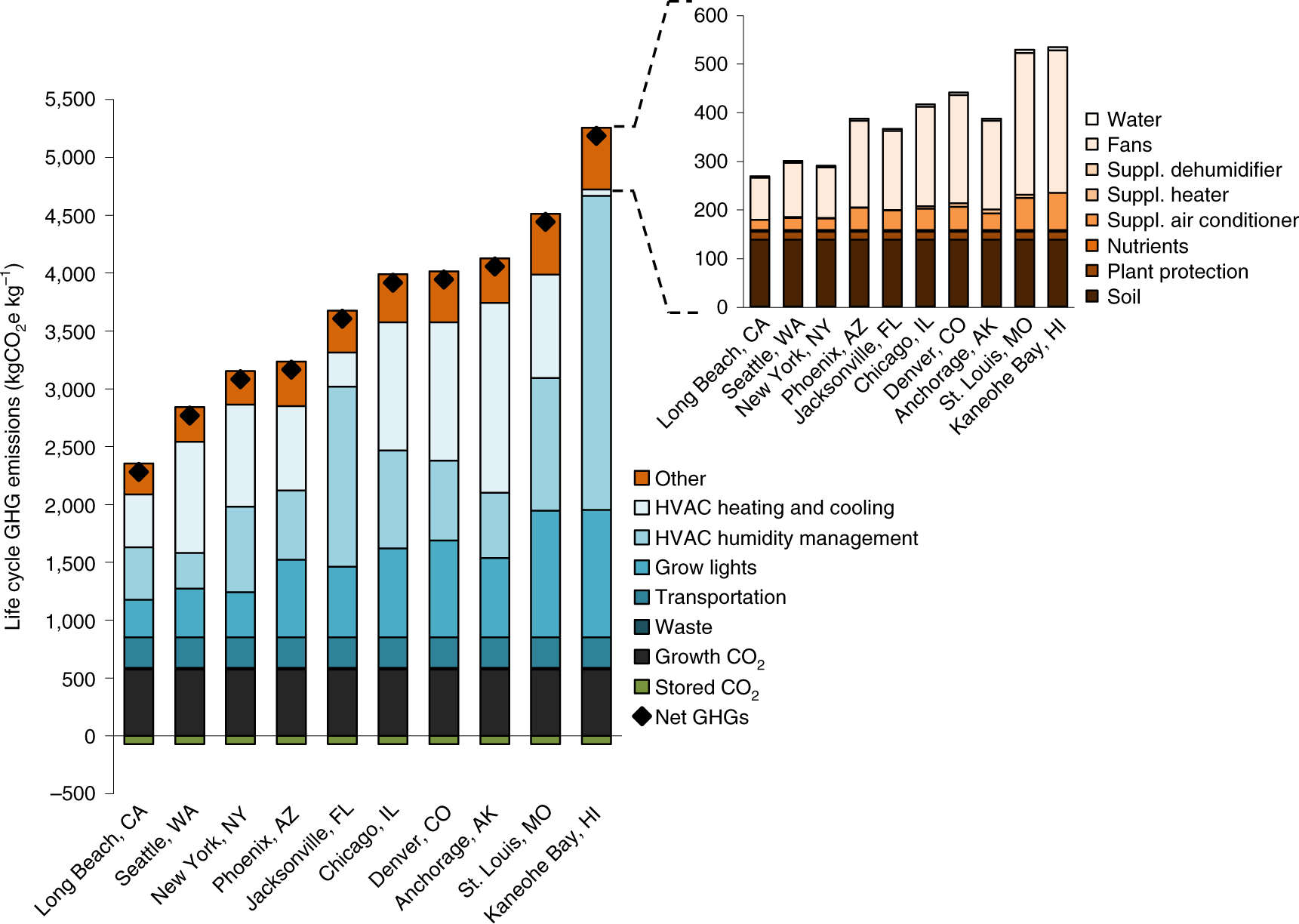
Fig. 2: Breakdown of life cycle GHG emissions contributions from indoor cannabis cultivation.


The caption:

GHG emissions from indoor cannabis production at ten of the 1,011 locations modelled. The GHG emissions totals represent individual simulation results based on modelling input parameters specific to each location. The positive values represent released GHG emissions and the negative value represents stored GHG emissions based upon the model system boundary. The HVAC labels in the main figure refer to the major equipment used to manipulate outside air to meet inside condition criteria, whereas the indoor environmental controls in ‘Other’ are supplemental (suppl.) systems representing additional equipment located inside grow rooms that aid in maintaining environmental conditions.


Some technical details of growing conditions:

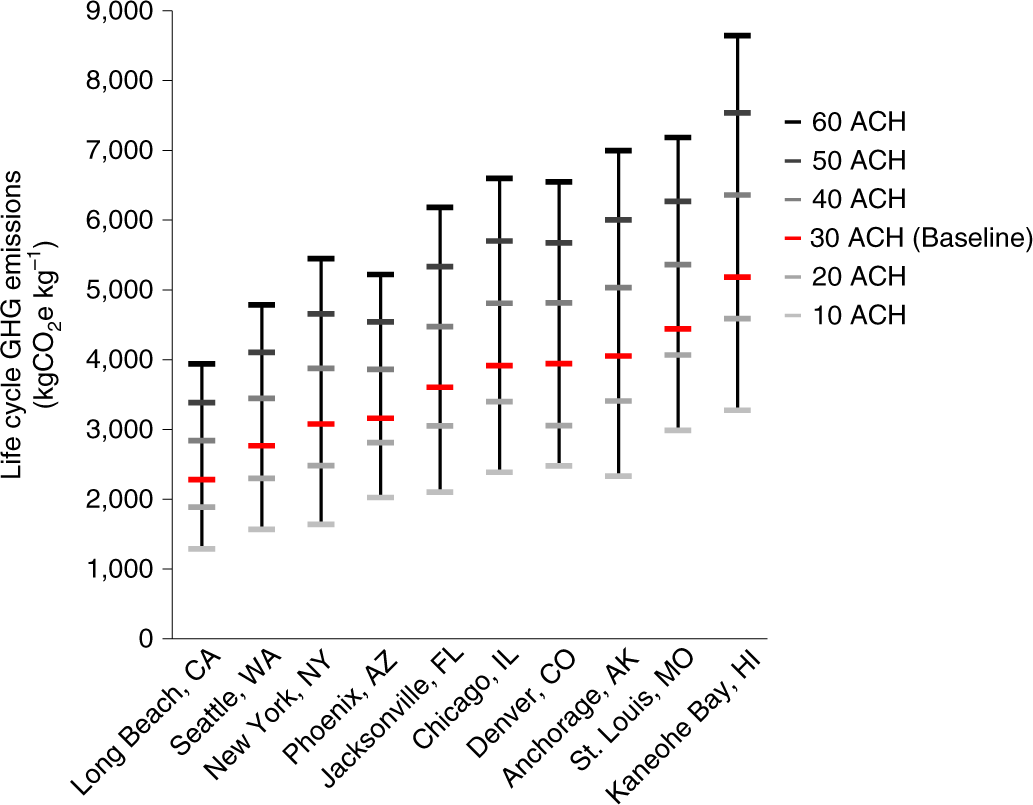
The HVAC systems are responsible for modifying air temperature and humidity to an allowable range before being supplied to the cannabis plants. This is critical to maintaining plant health as sudden changes in temperature and humidity can shock the plants and ultimately lead to crop damage and product loss. Additionally, cannabis plants require a regular supply of fresh air to help moderate humidity and oxygen levels. In this work, an air supply rate of 30 volumetric air changes per hour (ACH) was assumed. This value represents the average value from the literature, which reports values as high as 60 ACH and as low as 12 ACH (Supplementary Table 1). For comparison, the recommended ventilation for homes is 0.35 ACH and operating rooms in hospitals require a minimum of 15 ACH15,16. Air condition modifications and supply by HVAC are cumulatively shown to be the largest contributor to overall GHG emissions regardless of location (see Supplementary Table 2 for all contributions).


"ACH" apparently plays a big role:

Fig. 3: Sensitivity analysis of ACH.

From: The greenhouse gas emissions of indoor cannabis production in the United States


The caption:

Impact of ACH on GHG emissions from indoor cannabis cultivation for the same ten locations displayed in Fig. 2. The baseline assumption for this study was 30 ACH, shown in red.
'

Some commentary in the conclusion:

Although there are many hurdles associated with shifting cannabis growth to legal and well-regulated greenhouse and outdoor cultivation practices, preliminary investigations into the potential difference in GHG emissions when switching to greenhouse and outdoor cultivation practices indicated reductions of 42 and 96%, respectively6,7. It is important to note that these reports are limited in scope and resolution as the GHG emissions are based primarily on electricity consumption through monthly bills. Therefore, the current state of the industry would benefit from understanding the true GHG emissions of greenhouse and outdoor cultivation at a similar resolution to the work presented here to allow real comparison between the three cultivation methods. The results of this study affirm that more than 80% of the GHG emissions from all indoor cannabis locations assessed are caused by practices directly linked to indoor cultivation methods, specifically indoor environmental control, high-intensity grow lights and the supply of CO2 for increased plant growth. If indoor cannabis cultivation were to be fully converted to outdoor production, these preliminary estimates show that the state of Colorado, for example, would see a reduction of more than 1.3% in the state’s annual GHG emissions (2.1 MtCO2e)24.


Was it Bob Dylan who said: "I would not feel so alone; everybody must get stoned?"

Whatever.

All this expense, for no other reason than the need to avoid reality...

History will not forgive us, nor should it.

Have a nice day tomorrow.
3 replies = new reply since forum marked as read
Highlight: NoneDon't highlight anything 5 newestHighlight 5 most recent replies
The greenhouse gas emissions of indoor cannabis production in the United States (Original Post) NNadir Mar 2021 OP
grow yer own outdoors and smoke leaves. in the old days nobody knew about buds msongs Mar 2021 #1
Now do the same analysis of hot house tomatoes and lettuce... sanatanadharma Mar 2021 #2
You may wish to contact the authors of the scientific paper... NNadir Mar 2021 #3

msongs

(73,754 posts)
1. grow yer own outdoors and smoke leaves. in the old days nobody knew about buds
Wed Mar 17, 2021, 10:53 PM
Mar 2021

and leaves was it. kicked u on your behind, those leaves.

sanatanadharma

(4,089 posts)
2. Now do the same analysis of hot house tomatoes and lettuce...
Thu Mar 18, 2021, 09:27 AM
Mar 2021

... or commercially grown green house flowers.

NNadir

(38,049 posts)
3. You may wish to contact the authors of the scientific paper...
Thu Mar 18, 2021, 10:18 AM
Mar 2021

...or do a Google Scholar search to answer this question.

It's not my paper, and I only reported on it.

This said, it is well known that different species require different growing conditions, and it may be a very different animal, um, I mean plant, I mean situation. I'm not entirely sure if a multiton to kg ratio applies, but if you find something otherwise, feel free to post it here.

Latest Discussions»Culture Forums»Science»The greenhouse gas emissi...