General Discussion
In reply to the discussion: OK. I'll say it. Yes, I'd rather risk Iran having nukes than [View all]
polly7
(20,582 posts)"The world’s largest Open Air Prison:" Gaza’s Shrinking Borders
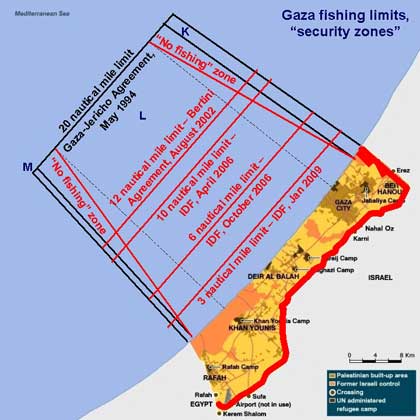
Forty-two years of military occupation and sixteen years of the Oslo Process have made Gaza a smaller place. Already one of the most densely-populated strips of land in the world, its population has grown during this period from less than 360,000 in 1967 to 1.5 million today. Meanwhile, its borders have not only become more impermeable, but they have been progressively closing in on what some have called “the world’s largest open air prison.”
In the early years following Israel’s seizure of the Gaza Strip during the Six-Day War in June 1967, Palestinians, Israelis, and internationals routinely crossed the border between Israel and Gaza without much difficulty. Palestinian fishermen routinely sailed as far out to sea as necessary to secure a good day’s catch. International freighters continued to arrive at Gaza Port to unload their goods and take on Palestinian fruits, flowers, and other products. Among the first casualties of the Israeli occupation was the loss of trade and tourism with Egypt, but life went on for most Gaza residents. Over the years, many would eventually find employment in Ashdod, Ashkelon, Be’er Sheva, Tel Aviv, and elsewhere inside Israel, mostly in construction and services – 130,000 workers commuting from Gaza to Israel at its peak.
However, owing to the heightened tensions of occupation of both Gaza and the West Bank, illegal Israeli settlement activity, successive breakdowns in the peace process, and the Palestinian Intifadas, the situation of Gaza residents continued to deteriorate. Employment inside Israel for Gaza residents was largely cut off by Israel during the Second Intifada beginning in September 2000, and completely eliminated with the economic siege imposed on Hamas in Gaza in January 2006.
http://www.blacklistednews.com/?news_id=6820
Edit history
Recommendations
0 members have recommended this reply (displayed in chronological order): = new reply since forum marked as read
Highlight:
NoneDon't highlight anything
5 newestHighlight 5 most recent replies
RecommendedHighlight replies with 5 or more recommendations
= new reply since forum marked as read
Highlight:
NoneDon't highlight anything
5 newestHighlight 5 most recent replies
RecommendedHighlight replies with 5 or more recommendations