General Discussion
In reply to the discussion: Covid infections are up by 68%, over the past two weeks, in my county [View all]
BumRushDaShow
(172,846 posts)with respect to some of the old diseases - like TB and Leprosy (the latter nowadays called "Hansen's Disease" and both caused by bacteria), although not eradicated, they have been controllable. But you have the old viruses like Smallpox and Yellow Fever and with these, the former was one where quite a bit of effort was put into place around the world to completely eradicate it, and it became one of the earliest infections that prompted the concept of the use of a "vaccine" to help the body fight it (in terms of purposely giving someone small amounts of it to trigger an immune response). Another that got such an international effort was Polio to try to eradicate that (and for the most part it has been except for recently, when a mutated form has been found). But then some like Yellow Fever continue to require "boosters" due to the waning immunity and its vector for spread has generally been via mosquitoes.
I think at some point, the long-term goal is to reduce the spread which reduces the mutations and that is harder to do with the respiratory viruses like flu, RSV, and now COVID-19 due to how they can move through the air.
And regarding those with "bullet proof" immune systems - I think they will always be an enigma IMHO. These are people who claim that "they never had a cold" (and "colds" are caused by a myriad of rhino and/or coronaviruses) or flu. So it's possible that there are a subset of people whose immune systems can clear infections rapidly, but they have rarely been in comprehensive studies to determine a "how and why".
BUT they are now starting to look at some of these folks - particularly those who live in households where all but one might have contracted the virus,and a couple studies have found that it might be due to those who had prevoius coronavirus-laden "colds" (vs the more typical rhinoviruses) that triggered the creation and infusion of T-cells that might have been protective -
- https://www.cnbc.com/2022/02/03/why-do-some-people-get-covid-while-others-dont.html
- https://med.stanford.edu/news/all-news/2021/07/stanford-study-ties-milder-covid-19-symptoms-to-prior-run-ins-wi.html
And with respect to your questions about inflammation - and this might answer some of the other questions - I actually found an article last week (posted in this thread) that might not only be the answer to why the severity for some people and not others, but it could even be applicable to the effects of other viruses -
Study reveals how COVID-19 triggers severe immune response
By NANCY FLIESLER | Boston Children’s April 6, 2022 Research
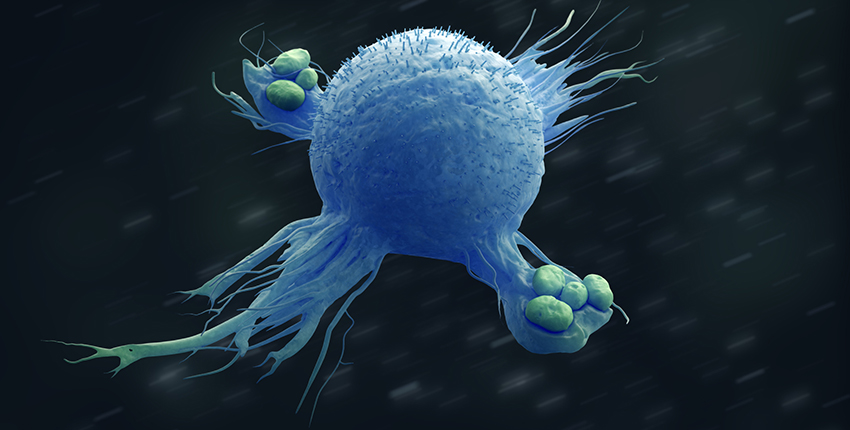
Illustration of a macrophage battling bacteria. Image: urfingus/iStock/Getty Images Plus
This article is part of Harvard Medical School’s continuing coverage of COVID-19.
A study led by researchers at Harvard Medical School and Boston Children’s Hospital explains for the first time why COVID-19 causes severe inflammation in some people, leading to acute respiratory distress and multi-organ damage. Surprisingly, the study also finds that antibodies that people develop when they contract COVID-19 sometimes lead to more inflammation, while antibodies generated by mRNA COVID-19 vaccines seem not to. Findings were published April 6 in Nature. The team was led by Judy Lieberman, HMS professor of pediatrics at Boston Children’s; Caroline Junqueira, HMS research associate in pediatrics at Boston Children’s; and Michael Filbin, HMS assistant professor of emergency medicine at Massachusetts General Hospital.
“We wanted to understand what distinguishes patients with mild versus severe COVID-19,” said Lieberman. “We know that many inflammatory markers are elevated in people with severe disease, and that inflammation is at the root of disease severity, but we hadn’t known what triggers the inflammation.”
Fiery death of immune cells
The investigators analyzed fresh blood samples from patients with COVID-19 coming to the emergency department at Mass General. They compared these with samples from healthy people and from patients with other respiratory conditions. They also looked at lung autopsy tissue from people who had died from COVID-19. They found that SARS-CoV-2 can infect monocytes—immune cells in the blood that act as sentinels or early responders to infection—as well as macrophages, similar immune cells in the lungs. Once infected, the team found, both types of cells die a fiery death called pyroptosis that releases an explosion of powerful inflammatory alarm signals. “In the infected patients, about 6 percent of blood monocytes were dying an inflammatory death,” said Lieberman. “That’s a large number to find, because dying cells are rapidly eliminated from the body.”
Examining the lung tissue from people who died from COVID-19, they found that about a quarter of the macrophages in the tissue were dying. When the researchers studied the cells for signs of SARS-CoV-2, they found that about 10 percent of monocytes and 8 percent of lung macrophages were infected. The fact that monocytes and macrophages can be infected with SARS-CoV-2 was a surprise, since monocytes don’t carry ACE2 receptors, the classic entry portal for the virus, and macrophages have low amounts of ACE2. Lieberman thinks SARS-CoV-2 infection of monocytes might have previously been missed in part because researchers often study frozen blood samples, in which dead cells do not show up.
More: https://hms.harvard.edu/news/inflammatory-insights
The "Nature" magazine publication of this is here - https://www.nature.com/articles/s41586-022-04702-4
They found that the SARS CoV2 virus was able to directly attack some of the "first responders" of the immune system and the result can cause a near-catastrophic set of processes that not only destroys those cells, but when doing so, they release chemicals in the body that cause high levels of additional inflammation. They indicated that this was unexpected because this phenomena was previously undetected due to the standard means for testing and for sample storage (freezing) that would have made it difficult to actually find what were the "carcasses" of the immune system left behind. I.e., the tests were designed to detect "live" cells that would reanimate when thawed, but would miss any dead ones, and the presence of destroyed cells (and which types) was actually needed for quantification to determine what is actually happening.
This type of thing seems to suggest that since it doesn't happen "universally", it could be an outcome if someone's genetics has created a variant army of cells that make up an immune response, that is more prone to attack, and if some of those variant immune cells are destroyed, they can produce an excess of agents that cause the heightened inflammation beyond what occurs with other people.
I would think this might have some ramifications regarding long-COVID and why some get it and others don't.
With some of the auto-immune diseases like HIV or Rheumatoid Arthritis, these are conditions where (at least definitely in the former), the virus actually attacks the immune system. And believe it or not, at least one of the new treatments for COVID-19 actually uses one of the "cocktail" drugs used to treat HIV - Pfizer's Paxlovid that uses ritonavir. In the latter disease, it has been speculated that RA (something one of my sisters has had for over 20 years) can also be caused by some viral or bacterial infection that triggers an abnormal immune response.
In the case of HIV, which is a retrovirus, it can reprogram cells to do the attacking and something I just read this morning included some initial research about fragments of SARS CoV2 being potentially able to do some retrovirus-like reactions - https://www.pnas.org/doi/10.1073/pnas.2105968118
And since you mention propensity to pick up any kind of virus, my sis who has RA also had chronic tonsillitis through her childhood to the point when finally, as a teen, she ended up getting her tonsils removed. She also had bad allergies. So I think there is definitely some kind of genetic thing going on there!
And as a sidenote to the ACE2 inhibitors (I actually take lisinopril myself), they have so far found little or no impact of those medicines on how COVID-19 behaves (e.g., noted here) - probably because those meds are targeting the "circulating (shed) " enzyme that can cause inflammation and narrowing of the blood vessels, whereas it is normally found "stationary" in certain organs (previously mentioned like the lungs, heart, kidneys etc) and the "receptors" are where COVID-19 will attach. But due to the complex mechanisms, some of those inhibitors can also enhance the presence of ACE2 elsewhere (possibly at the stationary locations giving the virus more opportunities to attach), which would ultimately produce a "stalemate" of sorts - helping in some cases and possibly hurting in others.
So there continues to be more calls to research it a bit more.
Edit history
Recommendations
0 members have recommended this reply (displayed in chronological order): = new reply since forum marked as read
Highlight:
NoneDon't highlight anything
5 newestHighlight 5 most recent replies
RecommendedHighlight replies with 5 or more recommendations
= new reply since forum marked as read
Highlight:
NoneDon't highlight anything
5 newestHighlight 5 most recent replies
RecommendedHighlight replies with 5 or more recommendations