Welcome to DU!
The truly grassroots left-of-center political community where regular people, not algorithms, drive the discussions and set the standards.
Join the community:
Create a free account
Support DU (and get rid of ads!):
Become a Star Member
Latest Breaking News
Editorials & Other Articles
General Discussion
The DU Lounge
All Forums
Issue Forums
Culture Forums
Alliance Forums
Region Forums
Support Forums
Help & Search
General Discussion
In reply to the discussion: Raskin brings up a truly horrifying scenario [View all]
BumRushDaShow
(174,063 posts)46. "Virginia sterilized thousands in the last century"
It wasn't just in "the last century", it was a mere 8 years ago in VA (with a 2014 plea deal vasectomy - a rare imposition on a male) and the allegations of "immigrant sterilization operations" carried out by ICE, just 2 years ago in Georgia in 2020.
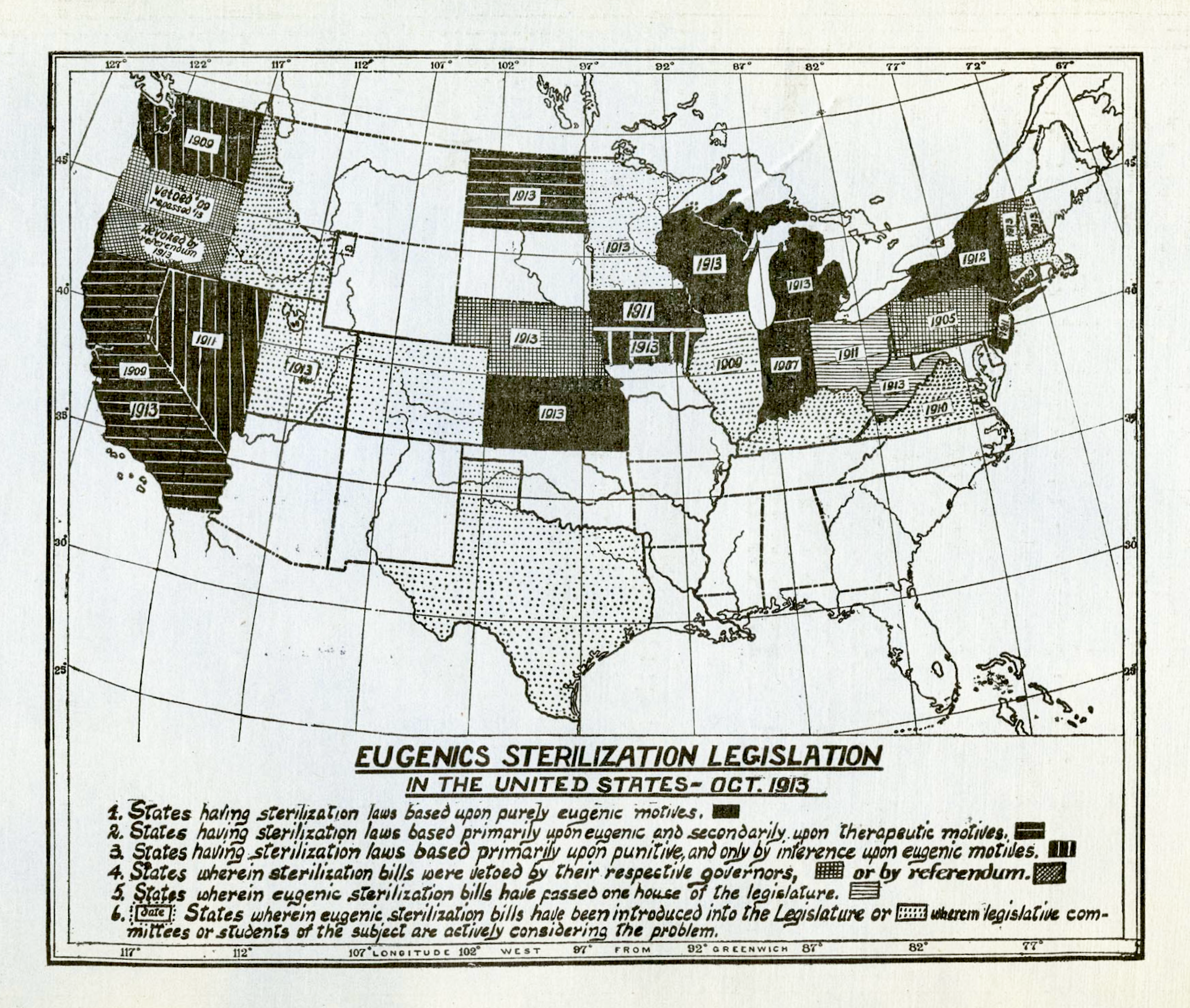
But he is correct that in the prior century, a number of states engaged in Eugenics -
Forced sterilization policies in the US targeted minorities and those with disabilities – and lasted into the 21st century
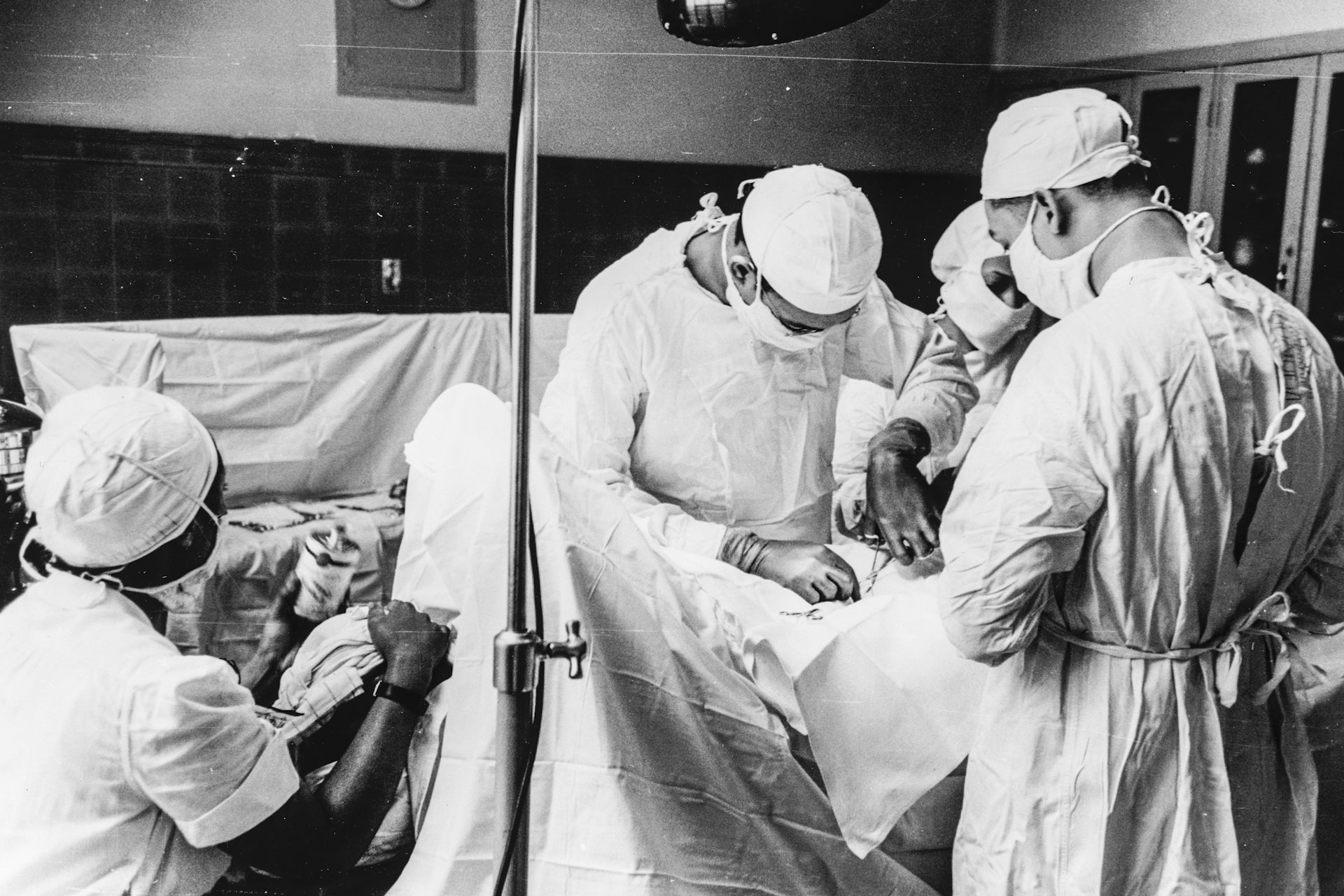
An operation taking place in 1941 on South Side of Chicago. Library of Congress
Alexandra Minna Stern, University of Michigan
In August 1964, the North Carolina Eugenics Board met to decide if a 20-year-old Black woman should be sterilized. Because her name was redacted from the records, we call her Bertha.
She was a single mother with one child who lived at the segregated O'Berry Center for African American adults with intellectual disabilities in Goldsboro. According to the North Carolina Eugenics Board, Bertha had an IQ of 62 and exhibited “aggressive behavior and sexual promiscuity.” She had been orphaned as a child and had a limited education. Likely because of her “low IQ score,” the board determined she was not capable of rehabilitation.
Instead the board recommended the “protection of sterilization” for Bertha, because she was “feebleminded” and deemed unable to “assume responsibility for herself” or her child. Without her input, Bertha’s guardian signed the sterilization form.
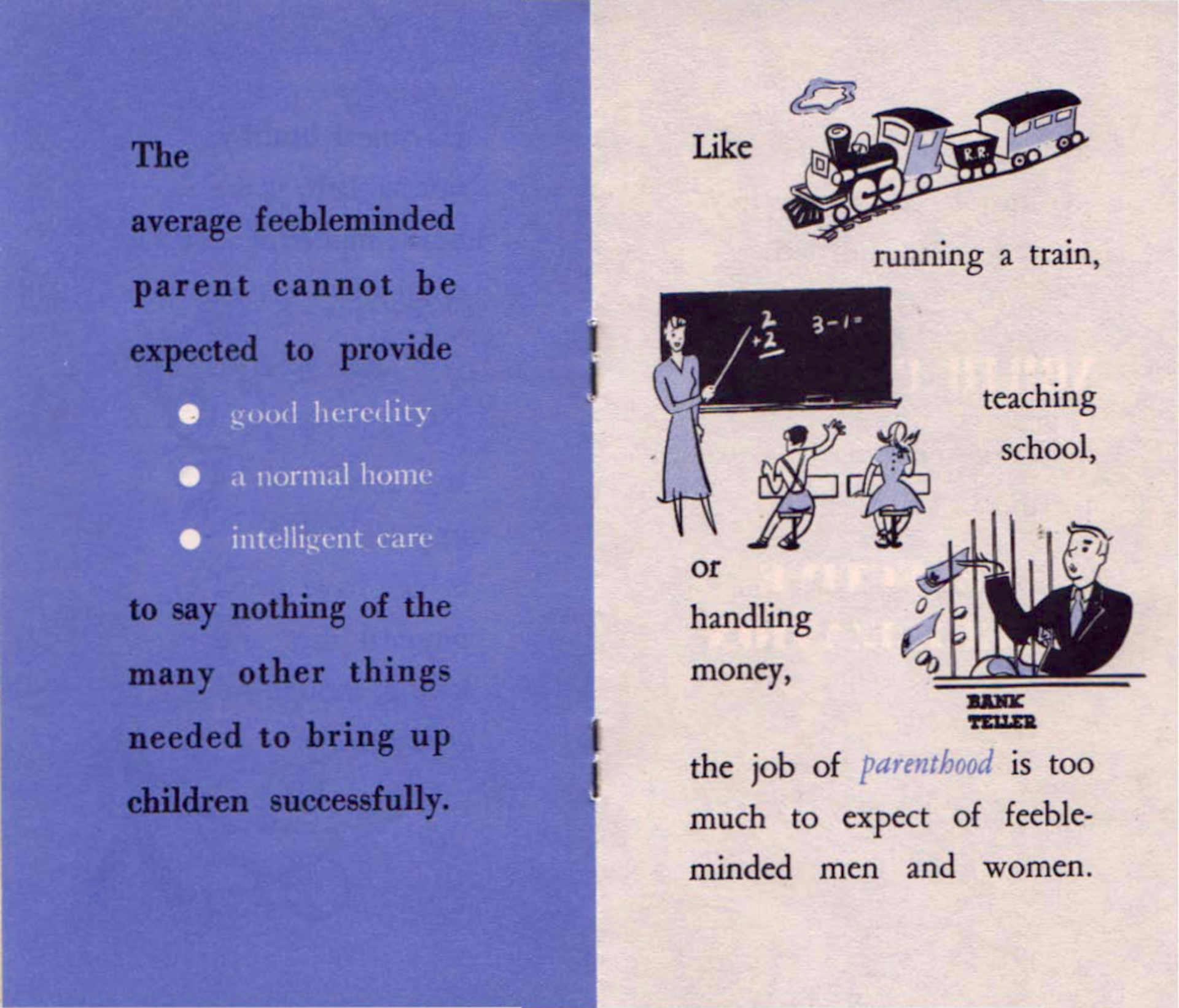
A pamphlet extolling the benefit of selective sterilization published by the Human Betterment League of North Carolina, 1950. North Carolina State Documents Collection/State Library of North Carolina
Bertha’s story is one of the 35,000 sterilization stories we are reconstructing at the Sterilization and Social Justice Lab. Our interdisciplinary team explores the history of eugenics and sterilization in the U.S. using data and stories. So far, we have captured historical records from North Carolina, California, Iowa and Michigan.
https://ihpi.umich.edu/news/forced-sterilization-policies-us-targeted-minorities-and-those-disabilities-and-lasted-21st
An operation taking place in 1941 on South Side of Chicago. Library of Congress
Alexandra Minna Stern, University of Michigan
In August 1964, the North Carolina Eugenics Board met to decide if a 20-year-old Black woman should be sterilized. Because her name was redacted from the records, we call her Bertha.
She was a single mother with one child who lived at the segregated O'Berry Center for African American adults with intellectual disabilities in Goldsboro. According to the North Carolina Eugenics Board, Bertha had an IQ of 62 and exhibited “aggressive behavior and sexual promiscuity.” She had been orphaned as a child and had a limited education. Likely because of her “low IQ score,” the board determined she was not capable of rehabilitation.
Instead the board recommended the “protection of sterilization” for Bertha, because she was “feebleminded” and deemed unable to “assume responsibility for herself” or her child. Without her input, Bertha’s guardian signed the sterilization form.
A pamphlet extolling the benefit of selective sterilization published by the Human Betterment League of North Carolina, 1950. North Carolina State Documents Collection/State Library of North Carolina
Bertha’s story is one of the 35,000 sterilization stories we are reconstructing at the Sterilization and Social Justice Lab. Our interdisciplinary team explores the history of eugenics and sterilization in the U.S. using data and stories. So far, we have captured historical records from North Carolina, California, Iowa and Michigan.
https://ihpi.umich.edu/news/forced-sterilization-policies-us-targeted-minorities-and-those-disabilities-and-lasted-21st
I won't even go into the "Norplant" fiasco (note the below happened when Pete Wilson (R) was governor of CA) -
Implanted Birth Control Device Renews Debate Over Forced Contraception
By Tamar Lewin
Jan. 10, 1991
Less than a month after the Federal Government approved a new birth control device that is implanted under a woman's skin, the long-lasting device is the focus of a renewed debate over forced contraception. A county judge in California has ordered that a woman convicted of child abuse use the device for three years as a condition of probation. Experts in medical ethics say that because of the ease in using the device, which is not yet on the market, other judges may be tempted to order its use in cases where women are seen as unfit to be parents.
The device, Norplant, was approved by the Food and Drug Administration on Dec. 10 and was widely hailed as a "dream method" of birth control because it could easily be implanted in a woman's arm, remaining effective for up to five years. The device, the first substantially new contraceptive in 25 years, consists of several soft, matchstick-size rubber tubes that are placed under the skin of the woman's upper arm, where they release the female hormone progestin, one of the components of birth control pills. With the exception of sterilization, Norplant is expected to be the most effective contraceptive, because it does not depend on a person's remembering to use it.
"Norplant presents a special temptation to judges because it's so long lasting and doesn't require any cooperation after it's implanted, and can be monitored by a parole officer just by looking at the woman's arm," said Dr. George Annas, director of the program on law, medicine and ethics at the Boston University School of Medicine. "I think we're going to see more of these cases. It's kind of amazing that this has happened already, when hardly any physicians even know how to implant this thing." In the California case, Tulare County Superior Court Judge Howard Broadman last week ordered the implantation of the device in Darlene Johnson, a 27-year-old mother of four who pleaded guilty to beating two of her children with a belt.
The order was issued at her sentencing, without notice to either the woman or her lawyer, Charles Rothbaum. Judge Broadman is to reconsider the order at a hearing this morning on a motion filed by Mr. Rothbaum. Mr. Rothbaum said his client had been completely taken by surprise by the Judge's decision. In a plea agreement arranged earlier, Ms. Johnson was to be sentenced to one year in jail and three years of probation. He said she had agreed to the Judge's order only because she was afraid that if she refused she would go to jail for four years. Mr. Rothbaum said he did not know how much Ms. Johnson had understood about Norplant, because he was not at the hearing.
(snip)
https://www.nytimes.com/1991/01/10/us/implanted-birth-control-device-renews-debate-over-forced-contraception.html
By Tamar Lewin
Jan. 10, 1991
Less than a month after the Federal Government approved a new birth control device that is implanted under a woman's skin, the long-lasting device is the focus of a renewed debate over forced contraception. A county judge in California has ordered that a woman convicted of child abuse use the device for three years as a condition of probation. Experts in medical ethics say that because of the ease in using the device, which is not yet on the market, other judges may be tempted to order its use in cases where women are seen as unfit to be parents.
The device, Norplant, was approved by the Food and Drug Administration on Dec. 10 and was widely hailed as a "dream method" of birth control because it could easily be implanted in a woman's arm, remaining effective for up to five years. The device, the first substantially new contraceptive in 25 years, consists of several soft, matchstick-size rubber tubes that are placed under the skin of the woman's upper arm, where they release the female hormone progestin, one of the components of birth control pills. With the exception of sterilization, Norplant is expected to be the most effective contraceptive, because it does not depend on a person's remembering to use it.
"Norplant presents a special temptation to judges because it's so long lasting and doesn't require any cooperation after it's implanted, and can be monitored by a parole officer just by looking at the woman's arm," said Dr. George Annas, director of the program on law, medicine and ethics at the Boston University School of Medicine. "I think we're going to see more of these cases. It's kind of amazing that this has happened already, when hardly any physicians even know how to implant this thing." In the California case, Tulare County Superior Court Judge Howard Broadman last week ordered the implantation of the device in Darlene Johnson, a 27-year-old mother of four who pleaded guilty to beating two of her children with a belt.
The order was issued at her sentencing, without notice to either the woman or her lawyer, Charles Rothbaum. Judge Broadman is to reconsider the order at a hearing this morning on a motion filed by Mr. Rothbaum. Mr. Rothbaum said his client had been completely taken by surprise by the Judge's decision. In a plea agreement arranged earlier, Ms. Johnson was to be sentenced to one year in jail and three years of probation. He said she had agreed to the Judge's order only because she was afraid that if she refused she would go to jail for four years. Mr. Rothbaum said he did not know how much Ms. Johnson had understood about Norplant, because he was not at the hearing.
(snip)
https://www.nytimes.com/1991/01/10/us/implanted-birth-control-device-renews-debate-over-forced-contraception.html
I'm still waiting for a forced (vs "plea deal" ) vasectomy for abusive fathers.
Edit history
Please sign in to view edit histories.
Recommendations
0 members have recommended this reply (displayed in chronological order):
59 replies
 = new reply since forum marked as read
Highlight:
NoneDon't highlight anything
5 newestHighlight 5 most recent replies
RecommendedHighlight replies with 5 or more recommendations
= new reply since forum marked as read
Highlight:
NoneDon't highlight anything
5 newestHighlight 5 most recent replies
RecommendedHighlight replies with 5 or more recommendations
= new reply since forum marked as read
Highlight:
NoneDon't highlight anything
5 newestHighlight 5 most recent replies
RecommendedHighlight replies with 5 or more recommendations
How long before they start taking babies away from unfit (as they deem) mothers?
NightWatcher
May 2022
#2
Christo-Fascists. I think you are correct. They are crazy and are fomenting violence.
Evolve Dammit
May 2022
#51
Just to be clear, I was in no way suggesting that this ruling is anything but a horrible event.
StevieM
May 2022
#26
Yes that is how it happened back then. Selling babies was a lucrative business.
Irish_Dem
May 2022
#27
Congressman Raskin is a constitutional law scholar and he is correct on this
LetMyPeopleVote
May 2022
#23
What happened to the UNITED STATES? The incessant regressionism is akin to refighting the Civil War.
live love laugh
May 2022
#34
Mr. Raskin, as a fellow Democrat, I have to remind you that you're the constitutionalist.
ancianita
May 2022
#45
"Have the House and Senate ENUMERATE the rights that the Constitution doesn't."
BumRushDaShow
May 2022
#48
Maybe not. They still have women and girls and grandkids in their lives. So it's real for them, too.
ancianita
May 2022
#50
Gotta get more women on the bench and in prosecutors offices. This is legalized malevolence.
ancianita
May 2022
#47