Welcome to DU!
The truly grassroots left-of-center political community where regular people, not algorithms, drive the discussions and set the standards.
Join the community:
Create a free account
Support DU (and get rid of ads!):
Become a Star Member
Latest Breaking News
Editorials & Other Articles
General Discussion
The DU Lounge
All Forums
Issue Forums
Culture Forums
Alliance Forums
Region Forums
Support Forums
Help & Search
General Discussion
In reply to the discussion: A "pink slime" news outlet is an outlet that makes a planted story look like local news. [View all]
mahatmakanejeeves
(69,895 posts)3. As election looms, a network of mysterious 'pink slime' local news outlets nearly triples in size
As election looms, a network of mysterious ‘pink slime’ local news outlets nearly triples in size
By Priyanjana Bengani
AUGUST 4, 2020
EDITOR’S NOTE: This is the second of our four pieces on this network. In December 2019, we first established the scope of the “pink slime” network distributing algorithmic stories and conservative talking points. In October 2021, we found that the network had received funding from multiple dark money groups as well as collaborated with advocacy groups on topics to cover prior to the 2020 Election.
The run-up to the 2020 November elections in the US has produced new networks of shadowy, politically backed “local news websites” designed to promote partisan talking points and collect user data. In December 2019, the Tow Center for Digital Journalism reported on an intricately linked network of 450 sites purporting to be local or business news publications. New research from the Tow Center shows the size of that network has increased almost threefold over the course of 2020, to over 1,200 sites.
Identifying these new sites is a result of further analysis of the closely linked entities with conservative ties illustrated in Figure 1 (below). The Tow Center focused predominantly on Metric Media, Franklin Archer, Local Government Information Services (LGIS), and Locality Labs. Both Metric Media and Franklin Archer claim to be the largest local news provider in the US, though many of their sites have low visibility in both search and social media. Over 90 percent of their stories are algorithmically generated using publicly available data sets or by repurposing stories from legitimate sources. In the remaining stories that have an authentic byline, there is often a conservative bent. As reported by the Lansing State Journal and The Guardian, this includes articles about voter fraud using data from the Heritage Foundation, negative pieces about elected Democratic representatives, and stories supporting conservative candidates. This low-cost automated story generation has come to be known as pink slime journalism. In addition to the hundreds of titles that ape the look and feel of local news, our research has detected new sites in this network that address single subjects, appeal to religious orientation, and focus on business news.
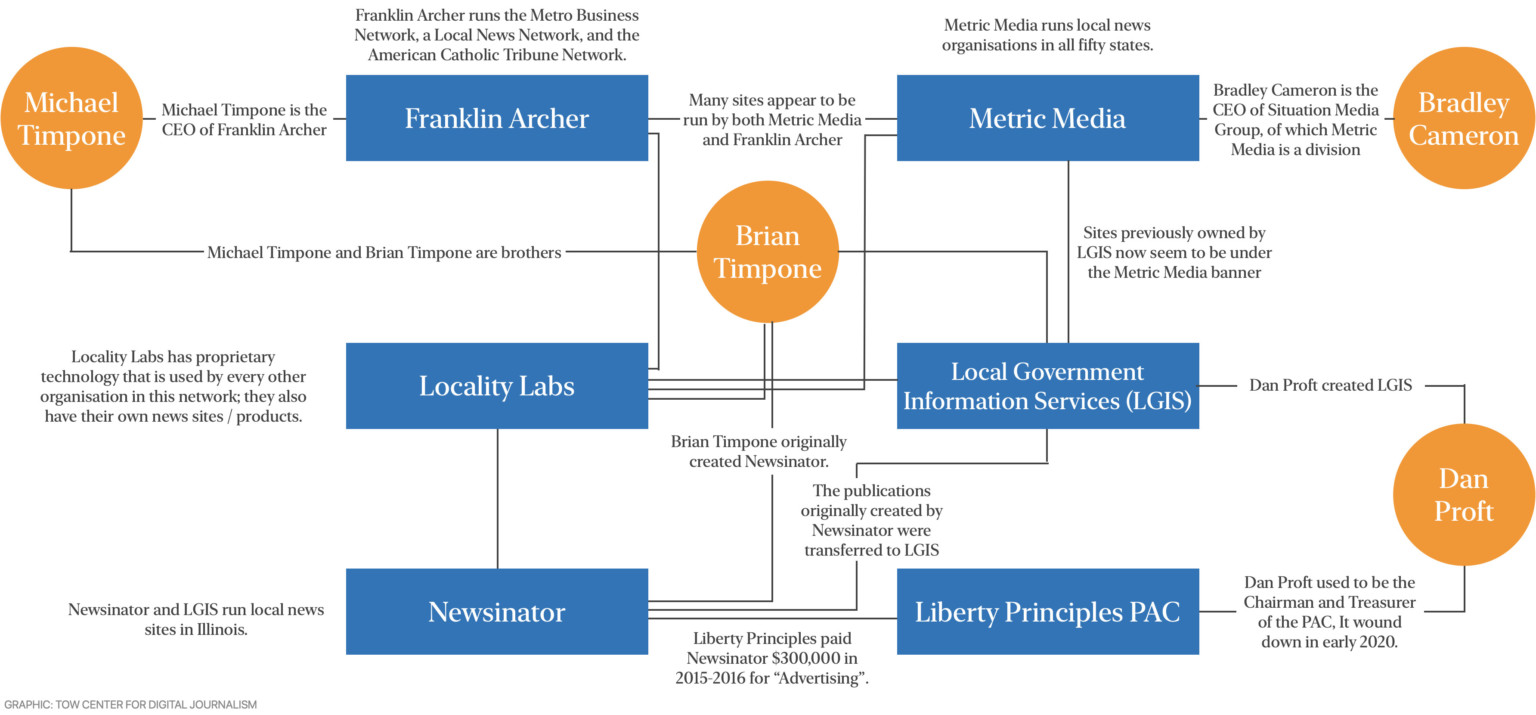
Figure 1: The organizational structure of the network
The recent increase in activity is in line with the election cycle. It is becoming an increasingly common campaign strategy for pacs and single-interest lobbyists to fund websites that borrow credibility from news design to help advance particular agendas. The proliferation of politically funded local news sites across the political spectrum raises questions about how these entities represent themselves to the public, and how they are categorized by search engines and social platforms.
{snip}
Evolution and Sprawl of the Network in 2020
The bulk of sites that went live in 2020 are under the Metric Media banner. In 2019, when we were first looking at Metric Media, its https://lansingsun.com/about_us" target="_blank">stated goal was to launch “hundreds [of sites] nationwide to inform citizens about news in their local communities.” Today, the language on the same page indicates it has reached the goal of creating “hundreds” of sites. A website lists its publications by state, along with a one-line explanation of what the company is: “a digital firm managing the online presence of the portfolio of local news sites known as Metric Media.” Based on passive DNS data (RiskIQ and DNSDB Scout), by the end of January 2020, Metric Media had publications devoted to all but one of the forty states that weren’t already covered in 2019; the domains for these were registered in the second half of 2019. The one exception was Illinois, which we cover in more detail further down.
{snip}
By Priyanjana Bengani
AUGUST 4, 2020
EDITOR’S NOTE: This is the second of our four pieces on this network. In December 2019, we first established the scope of the “pink slime” network distributing algorithmic stories and conservative talking points. In October 2021, we found that the network had received funding from multiple dark money groups as well as collaborated with advocacy groups on topics to cover prior to the 2020 Election.
The run-up to the 2020 November elections in the US has produced new networks of shadowy, politically backed “local news websites” designed to promote partisan talking points and collect user data. In December 2019, the Tow Center for Digital Journalism reported on an intricately linked network of 450 sites purporting to be local or business news publications. New research from the Tow Center shows the size of that network has increased almost threefold over the course of 2020, to over 1,200 sites.
Identifying these new sites is a result of further analysis of the closely linked entities with conservative ties illustrated in Figure 1 (below). The Tow Center focused predominantly on Metric Media, Franklin Archer, Local Government Information Services (LGIS), and Locality Labs. Both Metric Media and Franklin Archer claim to be the largest local news provider in the US, though many of their sites have low visibility in both search and social media. Over 90 percent of their stories are algorithmically generated using publicly available data sets or by repurposing stories from legitimate sources. In the remaining stories that have an authentic byline, there is often a conservative bent. As reported by the Lansing State Journal and The Guardian, this includes articles about voter fraud using data from the Heritage Foundation, negative pieces about elected Democratic representatives, and stories supporting conservative candidates. This low-cost automated story generation has come to be known as pink slime journalism. In addition to the hundreds of titles that ape the look and feel of local news, our research has detected new sites in this network that address single subjects, appeal to religious orientation, and focus on business news.
Figure 1: The organizational structure of the network
The recent increase in activity is in line with the election cycle. It is becoming an increasingly common campaign strategy for pacs and single-interest lobbyists to fund websites that borrow credibility from news design to help advance particular agendas. The proliferation of politically funded local news sites across the political spectrum raises questions about how these entities represent themselves to the public, and how they are categorized by search engines and social platforms.
{snip}
Evolution and Sprawl of the Network in 2020
The bulk of sites that went live in 2020 are under the Metric Media banner. In 2019, when we were first looking at Metric Media, its https://lansingsun.com/about_us" target="_blank">stated goal was to launch “hundreds [of sites] nationwide to inform citizens about news in their local communities.” Today, the language on the same page indicates it has reached the goal of creating “hundreds” of sites. A website lists its publications by state, along with a one-line explanation of what the company is: “a digital firm managing the online presence of the portfolio of local news sites known as Metric Media.” Based on passive DNS data (RiskIQ and DNSDB Scout), by the end of January 2020, Metric Media had publications devoted to all but one of the forty states that weren’t already covered in 2019; the domains for these were registered in the second half of 2019. The one exception was Illinois, which we cover in more detail further down.
{snip}
Edit history
Please sign in to view edit histories.
Recommendations
0 members have recommended this reply (displayed in chronological order):
14 replies
 = new reply since forum marked as read
Highlight:
NoneDon't highlight anything
5 newestHighlight 5 most recent replies
RecommendedHighlight replies with 5 or more recommendations
= new reply since forum marked as read
Highlight:
NoneDon't highlight anything
5 newestHighlight 5 most recent replies
RecommendedHighlight replies with 5 or more recommendations
= new reply since forum marked as read
Highlight:
NoneDon't highlight anything
5 newestHighlight 5 most recent replies
RecommendedHighlight replies with 5 or more recommendations
A "pink slime" news outlet is an outlet that makes a planted story look like local news. [View all]
mahatmakanejeeves
May 2022
OP
Isn't there an FCC, though? Isn't Oak Park River Forest H.S or the local district board entitled
ancianita
May 2022
#5
As election looms, a network of mysterious 'pink slime' local news outlets nearly triples in size
mahatmakanejeeves
May 2022
#3
I don't think so. I use Google News a lot, and I don't see links to these fake sites. NT
mahatmakanejeeves
Jun 2022
#12
In case you're wondering who falls for this stuff and spread it as much as he can:
mahatmakanejeeves
Jun 2022
#13