Welcome to DU!
The truly grassroots left-of-center political community where regular people, not algorithms, drive the discussions and set the standards.
Join the community:
Create a free account
Support DU (and get rid of ads!):
Become a Star Member
Latest Breaking News
Editorials & Other Articles
General Discussion
The DU Lounge
All Forums
Issue Forums
Culture Forums
Alliance Forums
Region Forums
Support Forums
Help & Search
General Discussion
In reply to the discussion: DU Feature Request Thread [View all]
Celerity
(54,563 posts)37. it is taco Friday here in Sweden
How ‘Taco Friday’ Became a Swedish Tradition
Toppings include pineapples, peanuts, and cucumbers.
https://www.atlasobscura.com/articles/what-is-taco-friday
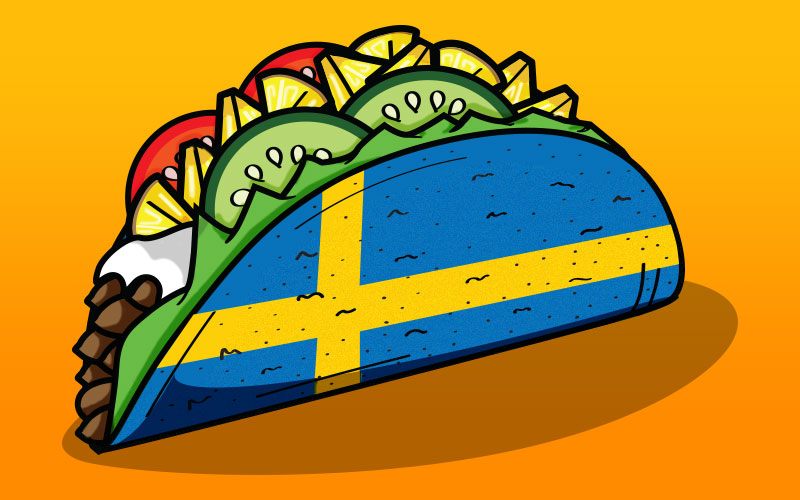
SWEDISH FOOD COLUMNIST DANIELLA ILLERBRAND remembers her first Taco Friday well. She was 14, and it was the first time her parents, who cooked everything from scratch, decided it was okay to buy ready-made ingredients like tortillas and spices. “That was a big deal for us,” says Illerbrand, who works for Sweden Foodtech, an organization that works with food startups and businesses. “My parents liked traveling, so they were into trying something new.” It was her first real Fredagsmys, or Cozy Friday, a beloved Swedish tradition. Across the Scandinavian country, families stay home on Friday night, watch TV, and eat Tex-Mex-style tacos. This dinner choice is so common that, for most Swedes, Cozy Friday is also Taco Fredag, or Taco Friday.

A few elements conspired to make Taco Friday a Swedish institution. In 1990, the country was emerging from a financial crisis, and Swedes were eager to spend again and try new things. Around the same time, government deregulation of television allowed advertising for the first time. Prior to that, Swedes had only seen on-screen ads in cinemas. The Swedish chips company OLW popularized the slogan “Now it’s cozy Friday time” in its commercials. These days, most Swedes can still hum the catchy jingle by heart. This is widely believed to be the origin of the term Fredagsmys, and in 2007, it was even adopted into the Swedish dictionary. Chips are still part of many Swedes’ Cosy Friday routine, but it’s Tex-Mex that truly benefited from the idea of staying in and eating processed foods on the sofa. Old El Paso, which had been attempting to break into the market in the 1980s, experienced success as its ads demonstrated taco assembly.
Meanwhile, the Swedish spice company Nordfalks, which marketed their Tex-Mex products to appeal to a Swedish audience, eventually changed its name to Santa Maria due to the popularity of its tortillas and tacos. Their TV spots suggested tacos as a staple of Cozy Fridays, and for Swedes, who were already used to smörgåsbord or potluck-style meals piled onto one plate, tacos were something new and exciting, yet familiar too. “Commercials were very important in showing how you could put together tacos because before that we didn’t have anything where you could put it together in front of the TV like that,” says Richard Tellström, a food historian and professor at Stockholm University. Soon enough, grocers and restaurants rallied around the idea, promoting Cozy Friday with discounts and take-out specials. Taco Fridays even became a staple of Sweden’s free lunch programs for schoolchildren. “I remember being a teenager when you would start having dinners for school functions at restaurants, and the restaurant would make a taco buffet,” says Illerbrand. “That was, like, the best thing ever.”
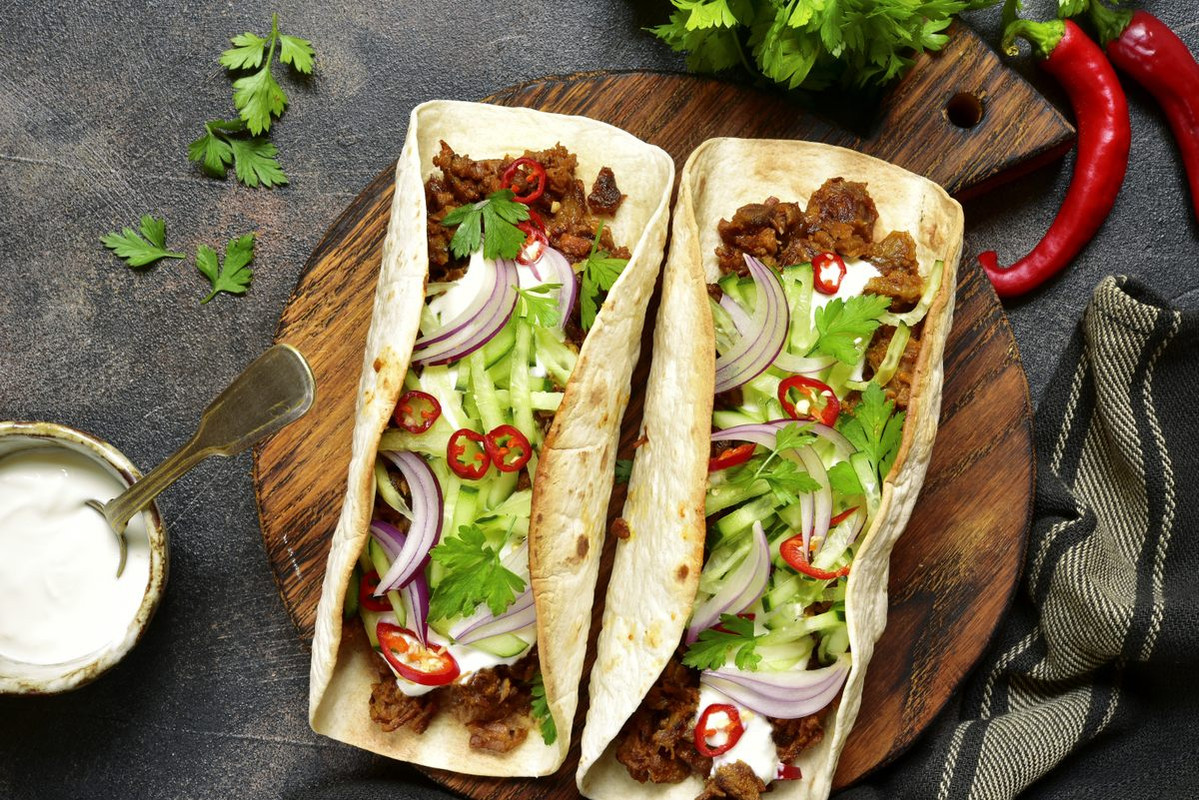
Tex-Mex was a hot American import, just like the series and movies on the tube. But once it arrived, it morphed, becoming infused with Swedish food culture. Spin-off recipes emerged, such as taco pie (also available in frozen food aisles), taco soup, taco pizza, and taco burgers. “Anything where you could add the packaged spice mix, really,” says Tellström. Americans might recognize the ground meat, soft or hard tortilla shells, peppers, onion, tomatoes, and guacamole of Swedish tacos, but not necessarily the cucumber, peanuts, pineapple, and yoghurt sauces that Swedes added to suit their own cultural tastes. Cucumbers, which are perhaps the most curious ingredient, reflect a particularly Swedish love affair: Historically, Sweden’s summer months were jokingly called “cucumber time,” and you’ll still find cucumber on most dinner tables. It may be pickled, sliced and doused with vinegar and salt, or atop a salad; it’s also often a topping on kebab pizza, another ubiquitous national dish imported and adapted for the Swedish palate.
snip
https://www.sciencedirect.com/science/article/abs/pii/S0195666312000529?via%3Dihub
Abstract
This paper explores the meaning of the Mexican dish tacos for Swedish consumers. As such, this study examines the relationship between ethnic food and food culture in light of contemporary changing food rituals. The results reveal that the Swedish food ritual of Friday dinner can be enacted through eating tacos. Friday dinner is a point in time and space at which family members gather, after a busy week following divergent schedules that keep them from eating together, and to which children's food preferences are central. Tacos fulfil all the requirements for a quick-to-cook yet social dish that enables hardworking but time-constrained families to eat together. The much-debated informal and fragmented character of food consumption in contemporary society is accommodated in the taco meal.
Highlights
► Ethnic food that adapts diners to an individualized consumer society is easily accepted. ► The concept of cultural fitness suggests that certain ethnic food is more easily integrated in specific food cultures. ► The informalization and fragmentization of food consumption is accommodated within the taco meal.
Introduction
Food routines and rituals have changed as contemporary society has developed traits described as globalized, individualized, and informalized (Marshall, 2005, Warde, 1997). The dismantling of social and moral institutions and the effects in terms of individualized consumption choice are well described in sociology (Giddens, 1991, Habermas, 1987, Miller, 1994). Research into food and culture does not regard individualization as necessarily opposed to ritualistic food behaviour (Gronow and Warde, 2001, Marshall, 2005, Tivadar and Luthar, 2005), but poses a number of interesting questions about how food rituals have changed in response to socio-cultural movements that have shaped a highly individualized consumption society. Research in this area is interested in the relationship between traditional food and convenience food in western eating practices (Bryant and Dundes, 2008, Carrigan et al., 2006, Guerrero et al., 2009, Olsen et al., 2007, Pieniak et al., 2009, Warde, 1999). The present study of the integration of the Mexican dish tacos into Swedish eating practices and food rituals sheds light on how food rituals have been influenced by ethnic food, given eroded social eating structures and individualized/globalized food consumption. Among ethnic cuisines consumed by Europeans outside the UK, Mexican ranks third, just behind Chinese (first) and Indian (second) (Datamonitor, 2005). Outside the UK, Mexican food is the second most popular ethnic cuisine in all Europe (Datamonitor, 2005). However, the Scandinavian countries (i.e., Denmark, Sweden, and Norway) are responsible for consuming almost forty percent of the Mexican food consumed in Europe (Santa Maria, 2011; information based on AC Nielsen data and population statistics in key countries). In fact, Sweden and Norway have the highest per capita consumption of Mexican food compared to the most important European countries; the per capita consumption of these two countries is four times higher than in other European countries (Santa Maria, 2011; information based on AC Nielsen data and population statistics in key countries). The taco meal has become well integrated into Swedish food culture (Ekström and Norén, 2011, Expressen, 2011, GP, 2010). This integration of tacos as a Swedish meal is particularly true for families with children (Expressen, 2011, GP, 2010). Forty percent of 12 year old Swedish children reported eating tacos at least three times a month (Livsmedelsverkat, 2004). Tacos together with pizza, are ranked as the most popular dishes among Swedish 10-year-olds (Johansson et al., 2006). Recipes on how to make Swedish tacos are commonly available (Den Bruna Maten, 2012, ICA, 2012) making the case that the Swedish taco meal is an example of ”cultural hybridization”, mixing Swedish and Mexican food culture (Pieterse, 1994). One of the largest retailers in Sweden, ICA, declares in a TV commercial “We in ICA love Sweden and we want to demonstrate it with an offer for the most Swedish of the Swedish: tacos!” (ICA, 2011). Why have tacos in particular, and not any Chinese or Indian dish, come to be regarded as an honorary Swedish food? What is the role of Swedish food culture in the successful integration of this Mexican dish into Swedish eating practices? These are the questions this study seeks to answer, moving beyond individual explanations of ethnic food consumption (Rossiter and Chan, 1998, Verbeke and Poquiviqui López, 2005). The present article aims to describe the meaning of eating tacos for Swedish consumers. The results indicate that the integration of tacos into Swedish food culture is connected to the Swedish family, the Swedish traditional meal, the characteristics of tacos, and the benefits tacos bring to families (e.g., a low-risk meal solution, a meeting point). In sum, tacos have a good fit with Swedish culture that has enabled them to be incorporated into Swedish food culture.
The outline of the study is as follows. The second section reviews the literature in the field of food rituals and the integration of ethic food. The concept of cultural fitness is introduced to describe the blending of ethnic food into specific food cultures in terms of a match between the food cultural traits and the blending properties of ethnic food. The third section presents the phenomenological methodology of the study. The findings are presented in the fourth section in terms of tacos as doing Swedish family where negotiation between parents and children, low risk and safe meal solutions, convenience and meeting point are important aspects. The fifth and concluding section discusses the contributions of this study and implications for future research.
snip
Toppings include pineapples, peanuts, and cucumbers.
https://www.atlasobscura.com/articles/what-is-taco-friday
SWEDISH FOOD COLUMNIST DANIELLA ILLERBRAND remembers her first Taco Friday well. She was 14, and it was the first time her parents, who cooked everything from scratch, decided it was okay to buy ready-made ingredients like tortillas and spices. “That was a big deal for us,” says Illerbrand, who works for Sweden Foodtech, an organization that works with food startups and businesses. “My parents liked traveling, so they were into trying something new.” It was her first real Fredagsmys, or Cozy Friday, a beloved Swedish tradition. Across the Scandinavian country, families stay home on Friday night, watch TV, and eat Tex-Mex-style tacos. This dinner choice is so common that, for most Swedes, Cozy Friday is also Taco Fredag, or Taco Friday.
A few elements conspired to make Taco Friday a Swedish institution. In 1990, the country was emerging from a financial crisis, and Swedes were eager to spend again and try new things. Around the same time, government deregulation of television allowed advertising for the first time. Prior to that, Swedes had only seen on-screen ads in cinemas. The Swedish chips company OLW popularized the slogan “Now it’s cozy Friday time” in its commercials. These days, most Swedes can still hum the catchy jingle by heart. This is widely believed to be the origin of the term Fredagsmys, and in 2007, it was even adopted into the Swedish dictionary. Chips are still part of many Swedes’ Cosy Friday routine, but it’s Tex-Mex that truly benefited from the idea of staying in and eating processed foods on the sofa. Old El Paso, which had been attempting to break into the market in the 1980s, experienced success as its ads demonstrated taco assembly.
Meanwhile, the Swedish spice company Nordfalks, which marketed their Tex-Mex products to appeal to a Swedish audience, eventually changed its name to Santa Maria due to the popularity of its tortillas and tacos. Their TV spots suggested tacos as a staple of Cozy Fridays, and for Swedes, who were already used to smörgåsbord or potluck-style meals piled onto one plate, tacos were something new and exciting, yet familiar too. “Commercials were very important in showing how you could put together tacos because before that we didn’t have anything where you could put it together in front of the TV like that,” says Richard Tellström, a food historian and professor at Stockholm University. Soon enough, grocers and restaurants rallied around the idea, promoting Cozy Friday with discounts and take-out specials. Taco Fridays even became a staple of Sweden’s free lunch programs for schoolchildren. “I remember being a teenager when you would start having dinners for school functions at restaurants, and the restaurant would make a taco buffet,” says Illerbrand. “That was, like, the best thing ever.”
Tex-Mex was a hot American import, just like the series and movies on the tube. But once it arrived, it morphed, becoming infused with Swedish food culture. Spin-off recipes emerged, such as taco pie (also available in frozen food aisles), taco soup, taco pizza, and taco burgers. “Anything where you could add the packaged spice mix, really,” says Tellström. Americans might recognize the ground meat, soft or hard tortilla shells, peppers, onion, tomatoes, and guacamole of Swedish tacos, but not necessarily the cucumber, peanuts, pineapple, and yoghurt sauces that Swedes added to suit their own cultural tastes. Cucumbers, which are perhaps the most curious ingredient, reflect a particularly Swedish love affair: Historically, Sweden’s summer months were jokingly called “cucumber time,” and you’ll still find cucumber on most dinner tables. It may be pickled, sliced and doused with vinegar and salt, or atop a salad; it’s also often a topping on kebab pizza, another ubiquitous national dish imported and adapted for the Swedish palate.
snip
https://www.sciencedirect.com/science/article/abs/pii/S0195666312000529?via%3Dihub
Abstract
This paper explores the meaning of the Mexican dish tacos for Swedish consumers. As such, this study examines the relationship between ethnic food and food culture in light of contemporary changing food rituals. The results reveal that the Swedish food ritual of Friday dinner can be enacted through eating tacos. Friday dinner is a point in time and space at which family members gather, after a busy week following divergent schedules that keep them from eating together, and to which children's food preferences are central. Tacos fulfil all the requirements for a quick-to-cook yet social dish that enables hardworking but time-constrained families to eat together. The much-debated informal and fragmented character of food consumption in contemporary society is accommodated in the taco meal.
Highlights
► Ethnic food that adapts diners to an individualized consumer society is easily accepted. ► The concept of cultural fitness suggests that certain ethnic food is more easily integrated in specific food cultures. ► The informalization and fragmentization of food consumption is accommodated within the taco meal.
Introduction
Food routines and rituals have changed as contemporary society has developed traits described as globalized, individualized, and informalized (Marshall, 2005, Warde, 1997). The dismantling of social and moral institutions and the effects in terms of individualized consumption choice are well described in sociology (Giddens, 1991, Habermas, 1987, Miller, 1994). Research into food and culture does not regard individualization as necessarily opposed to ritualistic food behaviour (Gronow and Warde, 2001, Marshall, 2005, Tivadar and Luthar, 2005), but poses a number of interesting questions about how food rituals have changed in response to socio-cultural movements that have shaped a highly individualized consumption society. Research in this area is interested in the relationship between traditional food and convenience food in western eating practices (Bryant and Dundes, 2008, Carrigan et al., 2006, Guerrero et al., 2009, Olsen et al., 2007, Pieniak et al., 2009, Warde, 1999). The present study of the integration of the Mexican dish tacos into Swedish eating practices and food rituals sheds light on how food rituals have been influenced by ethnic food, given eroded social eating structures and individualized/globalized food consumption. Among ethnic cuisines consumed by Europeans outside the UK, Mexican ranks third, just behind Chinese (first) and Indian (second) (Datamonitor, 2005). Outside the UK, Mexican food is the second most popular ethnic cuisine in all Europe (Datamonitor, 2005). However, the Scandinavian countries (i.e., Denmark, Sweden, and Norway) are responsible for consuming almost forty percent of the Mexican food consumed in Europe (Santa Maria, 2011; information based on AC Nielsen data and population statistics in key countries). In fact, Sweden and Norway have the highest per capita consumption of Mexican food compared to the most important European countries; the per capita consumption of these two countries is four times higher than in other European countries (Santa Maria, 2011; information based on AC Nielsen data and population statistics in key countries). The taco meal has become well integrated into Swedish food culture (Ekström and Norén, 2011, Expressen, 2011, GP, 2010). This integration of tacos as a Swedish meal is particularly true for families with children (Expressen, 2011, GP, 2010). Forty percent of 12 year old Swedish children reported eating tacos at least three times a month (Livsmedelsverkat, 2004). Tacos together with pizza, are ranked as the most popular dishes among Swedish 10-year-olds (Johansson et al., 2006). Recipes on how to make Swedish tacos are commonly available (Den Bruna Maten, 2012, ICA, 2012) making the case that the Swedish taco meal is an example of ”cultural hybridization”, mixing Swedish and Mexican food culture (Pieterse, 1994). One of the largest retailers in Sweden, ICA, declares in a TV commercial “We in ICA love Sweden and we want to demonstrate it with an offer for the most Swedish of the Swedish: tacos!” (ICA, 2011). Why have tacos in particular, and not any Chinese or Indian dish, come to be regarded as an honorary Swedish food? What is the role of Swedish food culture in the successful integration of this Mexican dish into Swedish eating practices? These are the questions this study seeks to answer, moving beyond individual explanations of ethnic food consumption (Rossiter and Chan, 1998, Verbeke and Poquiviqui López, 2005). The present article aims to describe the meaning of eating tacos for Swedish consumers. The results indicate that the integration of tacos into Swedish food culture is connected to the Swedish family, the Swedish traditional meal, the characteristics of tacos, and the benefits tacos bring to families (e.g., a low-risk meal solution, a meeting point). In sum, tacos have a good fit with Swedish culture that has enabled them to be incorporated into Swedish food culture.
The outline of the study is as follows. The second section reviews the literature in the field of food rituals and the integration of ethic food. The concept of cultural fitness is introduced to describe the blending of ethnic food into specific food cultures in terms of a match between the food cultural traits and the blending properties of ethnic food. The third section presents the phenomenological methodology of the study. The findings are presented in the fourth section in terms of tacos as doing Swedish family where negotiation between parents and children, low risk and safe meal solutions, convenience and meeting point are important aspects. The fifth and concluding section discusses the contributions of this study and implications for future research.
snip
Edit history
Please sign in to view edit histories.
Recommendations
2 members have recommended this reply (displayed in chronological order):
83 replies
 = new reply since forum marked as read
Highlight:
NoneDon't highlight anything
5 newestHighlight 5 most recent replies
RecommendedHighlight replies with 5 or more recommendations
= new reply since forum marked as read
Highlight:
NoneDon't highlight anything
5 newestHighlight 5 most recent replies
RecommendedHighlight replies with 5 or more recommendations
= new reply since forum marked as read
Highlight:
NoneDon't highlight anything
5 newestHighlight 5 most recent replies
RecommendedHighlight replies with 5 or more recommendations
I'd like smilies to open at the top of the smilies page, right now it opens to the bottom
ms liberty
May 2024
#56
Or folks spamming the recs for visibility or to sway readers in a contrarian way. ❤️
littlemissmartypants
May 2024
#50
Ya beat me to it, my reply #70. ON EDIT, well just re-reread "retain anonymity" cancels out!
UTUSN
May 2024
#71
a warning icon for those posts that lead to paywalls or sign ins required, subscriptions required. clickbaits all nt
msongs
May 2024
#14
Too sleepy to think of anything Just wanted to say "Thanks" for all hard work you put in on this 👍
electric_blue68
May 2024
#29
Those look great! Tacos are slowly coming to France, though the Lyon 'tacos' have been here for awhile
GoneOffShore
May 2024
#55
NOoooooo!!!!! - upthread was going to ask a poster not to scuttle suggestions & here I am
UTUSN
May 2024
#75
The ability to expand/collapse threads would be nice. Also, regarding the "New in (x) Forums" sections ...
sl8
May 2024
#57