General Discussion
In reply to the discussion: Millennials don't want to be coddled, they want jobs! [View all]jtuck004
(15,882 posts)Last edited Thu Dec 6, 2012, 03:17 AM - Edit history (1)
Data from the October BLS and JOLTS reports:
12,258 - Unemployed - http://www.bls.gov/news.release/empsit.t01.htm
8,344 - Part-Time for Economic Reasons - http://www.bls.gov/news.release/empsit.t08.htm
6,142 - Not in Labor Force and Want a Job - http://www.bls.gov/web/empsit/cpseea38.htm
26,744,000 jobs needed/wanted as of the date of that report.
vs
3.6 million job openings in Jolts Survey - http://www.bls.gov/news.release/jolts.nr0.htm
- on the last business day of September, essentially unchanged from August.
So we are about 23-24 million jobs short, adding a couple million people a year to the population.
Millions of good-paying jobs have been disappeared, millions of others have been replaced with much less.
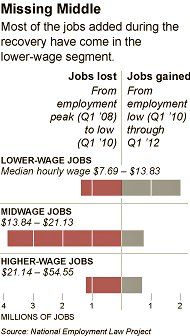
Here.
The fastest growth in jobs is in the category that IF you are paid for full time at the top of that range, your pay is roughly $27,760. The Federal Poverty level for a family of 4 is $23,050, widely considered to be too low a number (school lunches are free at that level, 50% off at twice the poverty level.
50% of ALL Idaho school students qualify for free or reduced price lunch, Here.
Some of the kids say that school lunch or breakfast is the only meal they can count on. Look in those eyes on Friday and know that some won't eat again until Monday. (It occurs to me that if they really want to improve the performance of students, educators, parents, and interested others could do worse than go on strike until the parents are paid fairly, and maybe we invest enough that we get rid of the barrier of tuition for adults in vo-techs and universities. Those things would likely increase the teacher's performance evaluation more than any technique they use. If parents could model for the kids that we REALLY think education is more important than just paying it lip service, imagine the impact).
But I digress. It used to be that people went into manufacturing, and the multiplier effect of such work from the skills, knowledge, and problems that needed to be resolved would create new businesses to supply the existing ones, or simply meet a new demand. We don't get that from coffee servers and home care aides that make $7.69 to $13.83.
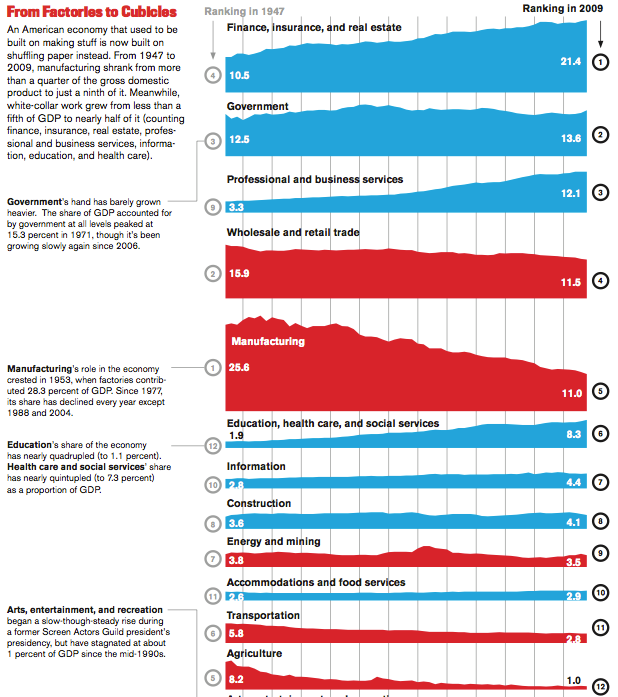
Here.
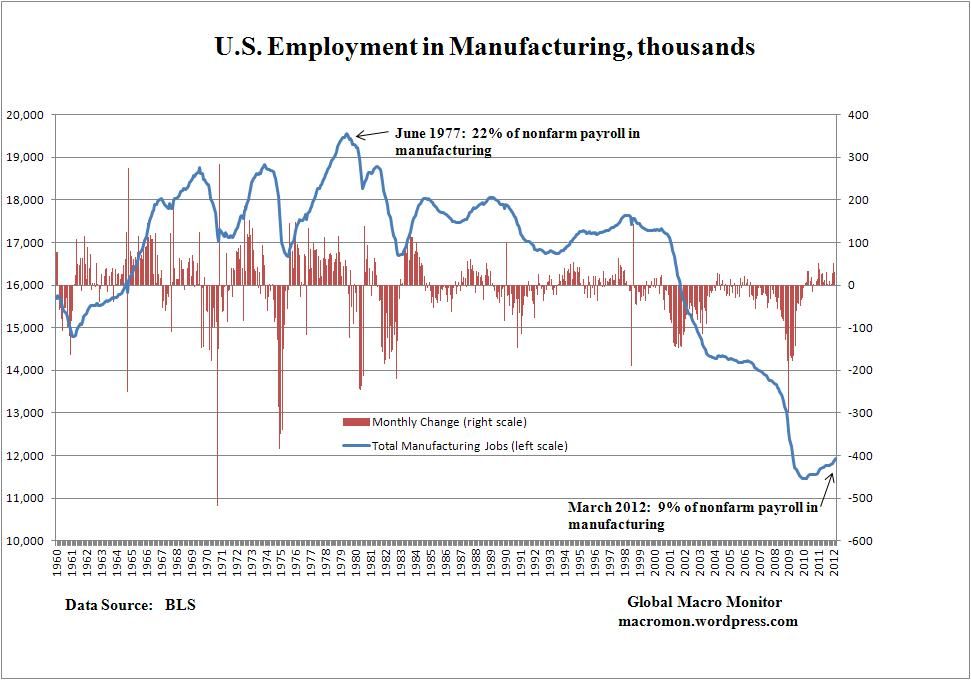
Manufacturing is more productive, but without millions of jobs that are likely gone forever. That's another loss of a job creation engine which we used to enjoy.
Generally speaking, then, the kinds of jobs you speak of are the ones which exist in more sufficient numbers when demand is pushing employment, and 24 million people aren't looking for work.
Today is different, and not likely to get substantially better for at least the next 10 years. To bring us back we would need at least $10-20 Trillion invested in the industries we have let get old and rusty since 1980, and at least as big an investment in people to train them on newer technologies, so they can operate the machines our capitalists encouraged the Chinese to invest in so greedy bastards can make money from others' labor, and destroy our economy because we are aren't doing enough.
Edit history
Recommendations
0 members have recommended this reply (displayed in chronological order): = new reply since forum marked as read
Highlight:
NoneDon't highlight anything
5 newestHighlight 5 most recent replies
RecommendedHighlight replies with 5 or more recommendations
= new reply since forum marked as read
Highlight:
NoneDon't highlight anything
5 newestHighlight 5 most recent replies
RecommendedHighlight replies with 5 or more recommendations