Welcome to DU!
The truly grassroots left-of-center political community where regular people, not algorithms, drive the discussions and set the standards.
Join the community:
Create a free account
Support DU (and get rid of ads!):
Become a Star Member
Latest Breaking News
Editorials & Other Articles
General Discussion
The DU Lounge
All Forums
Issue Forums
Culture Forums
Alliance Forums
Region Forums
Support Forums
Help & Search
General Discussion
Showing Original Post only (View all)
Susan Klebold: "I Will Never Know Why" [View all]
I believe this article was posted on Oprah's 'O' magazine in October of this year. I read it for the first time today and am posting it because whatever people's reaction may be to Susan Klebold's own story, I think it adds valuable information that we did not have before into the background of the tragic story of Colombine.
I Will Never Know Why
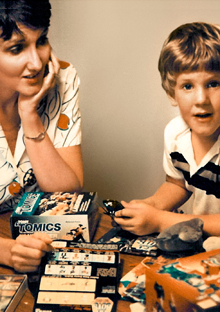
Susan and Dylan Klebold celebrating Dylan's fifth birthday.
Oprah's comment on the article:
Since the day her son participated in the most devastating high school shooting America has ever seen, I have wanted to sit down with Susan Klebold to ask her the questions we've all wanted to ask—starting with "How did you not see it coming?" and ending with "How did you survive?" Over the years, Susan has politely declined interview requests, but several months ago she finally agreed to break her silence and write about her experience for O. Even now, many questions about Columbine remain. But what Susan writes here adds a chilling new perspective. This is her story. — Oprah
Susan Klebold's account of the horror of that day as the story unfolded and she came to realize that her son was responsible for one of the worst school massacres in US history:
Just after noon on Tuesday, April 20, 1999, I was preparing to leave my downtown Denver office for a meeting when I noticed the red message light flashing on my phone. I worked for the state of Colorado, administering training programs for people with disabilities; my meeting was about student scholarships, and I figured the message might be a last-minute cancellation. But it was my husband, calling from his home office. His voice was breathless and ragged, and his words stopped my heart. "Susan—this is an emergency! Call me back immediately!"
The level of pain in his voice could mean only one thing: Something had happened to one of our sons. In the seconds that passed as I picked up the phone and dialed our house, panic swelled within me; it felt as though millions of tiny needles were pricking my skin. My heart pounded in my ears. My hands began shaking. I tried to orient myself. One of my boys was at school and the other was at work. It was the lunch hour. Had there been a car accident?
>>>>
In the weeks and months that followed the killings, I was nearly insane with sorrow for the suffering my son had caused, and with grief for the child I had lost. Much of the time, I felt that I could not breathe, and I often wished that I would die. I got lost while driving. When I returned to work part-time in late May, I'd sit through meetings without the slightest idea of what was being said. Entire conversations slipped from memory. I cried at inappropriate times, embarrassing those around me. Once, I saw a dead pigeon in a parking lot and nearly became hysterical. I mistrusted everything—especially my own judgment.
Seeing pictures of the devastation and the weeping survivors was more than I could bear. I avoided all news coverage in order to function. I was obsessed with thoughts of the innocent children and the teacher who suffered because of Dylan's cruelty. I grieved for the other families, even though we had never met. Some had lost loved ones, while others were coping with severe, debilitating injuries and psychological trauma. It was impossible to believe that someone I had raised could cause so much suffering. The discovery that it could have been worse—that if their plan had worked, Dylan and Eric would have blown up the whole school—only increased the agony.
Read more: http://www.oprah.com/world/Susan-Klebolds-O-Magazine-Essay-I-Will-Never-Know-Why/4#ixzz2FLNG8SfG
The level of pain in his voice could mean only one thing: Something had happened to one of our sons. In the seconds that passed as I picked up the phone and dialed our house, panic swelled within me; it felt as though millions of tiny needles were pricking my skin. My heart pounded in my ears. My hands began shaking. I tried to orient myself. One of my boys was at school and the other was at work. It was the lunch hour. Had there been a car accident?
>>>>
In the weeks and months that followed the killings, I was nearly insane with sorrow for the suffering my son had caused, and with grief for the child I had lost. Much of the time, I felt that I could not breathe, and I often wished that I would die. I got lost while driving. When I returned to work part-time in late May, I'd sit through meetings without the slightest idea of what was being said. Entire conversations slipped from memory. I cried at inappropriate times, embarrassing those around me. Once, I saw a dead pigeon in a parking lot and nearly became hysterical. I mistrusted everything—especially my own judgment.
Seeing pictures of the devastation and the weeping survivors was more than I could bear. I avoided all news coverage in order to function. I was obsessed with thoughts of the innocent children and the teacher who suffered because of Dylan's cruelty. I grieved for the other families, even though we had never met. Some had lost loved ones, while others were coping with severe, debilitating injuries and psychological trauma. It was impossible to believe that someone I had raised could cause so much suffering. The discovery that it could have been worse—that if their plan had worked, Dylan and Eric would have blown up the whole school—only increased the agony.
Read more: http://www.oprah.com/world/Susan-Klebolds-O-Magazine-Essay-I-Will-Never-Know-Why/4#ixzz2FLNG8SfG
Unbearable heartbreak for everyone involved including the families of the perpetrators who do not even have the 'right' to grieve for their own loss coupled with the feelings of guilt and the anger of the public, often against them too.
There has to be a way to stop these massacres but right now, I don't know how.
40 replies
 = new reply since forum marked as read
Highlight:
NoneDon't highlight anything
5 newestHighlight 5 most recent replies
= new reply since forum marked as read
Highlight:
NoneDon't highlight anything
5 newestHighlight 5 most recent replies
= new reply since forum marked as read
Highlight:
NoneDon't highlight anything
5 newestHighlight 5 most recent replies
Yes, I thought that was a very kind thing for him to do. In the Amish massacre, they
sabrina 1
Dec 2012
#3
After reading the Dave Cullen book on Columbine, I found Klebold's story to be classically tragic.
Tommy_Carcetti
Dec 2012
#4
Okay, maybe I misunderstood your comment. I don't think this article answered that
sabrina 1
Dec 2012
#16
Not sure I agree with that line of reasoning. Most people don't even consider
sabrina 1
Dec 2012
#29
Exactly NOBODY would have been shot if there hadn't been access to guns, regardless of mental health
riderinthestorm
Dec 2012
#21
Newsweek ran a terrific article on the pastors who tried to counsel the Klebold and Harris families
riderinthestorm
Dec 2012
#23
I never heard that story before. I do remember the girl they mention and had no
sabrina 1
Dec 2012
#32
I agree it is commendable that she does not blame 'bullies' as the media reported.
sabrina 1
Dec 2012
#14
They got the guns through friends, who illegally sold them to them under the table
riderinthestorm
Dec 2012
#22
Well, the truth is most people who end up committing horrific crimes like this
sabrina 1
Dec 2012
#39