Trump's military occupation is killing D.C. business and tourism [View all]
Jordan Fischer @JordanOnRecord
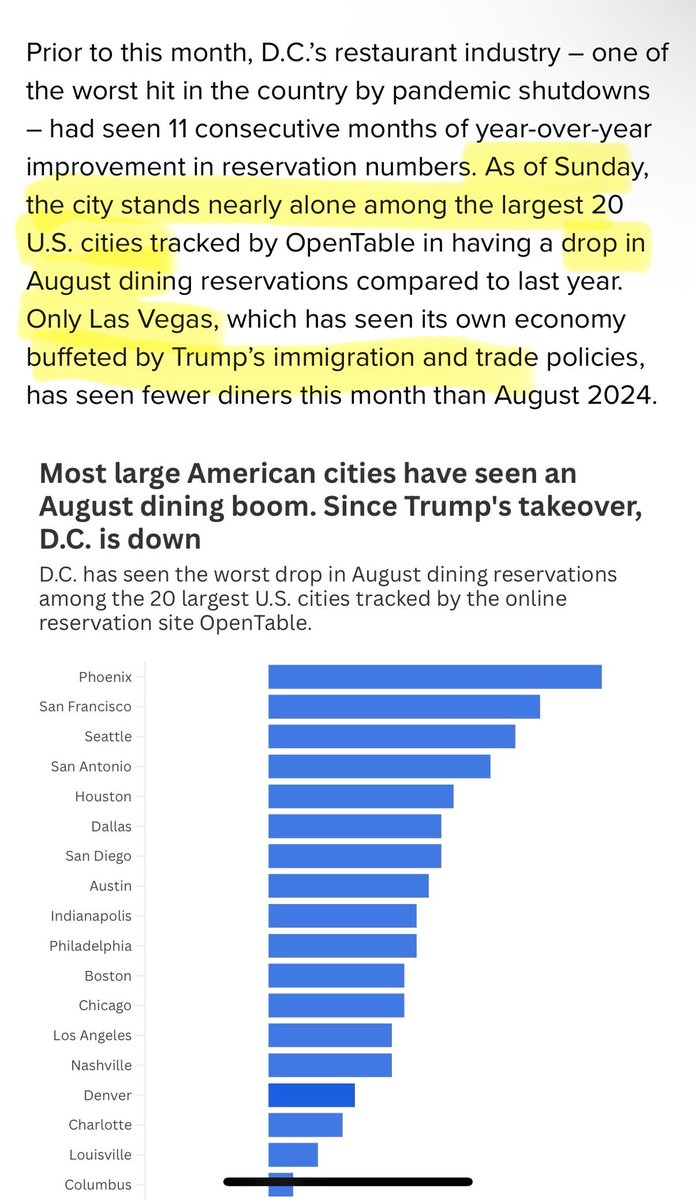
NEW: Reservations at D.C. restaurants dropped 16% YoY the day Trump announced his police takeover. The next day, 27%. By Day 3 they were down 31% compared to 2024.
It couldn't come at a worse time. D.C. Summer Restaurant Week starts... tomorrow.
___On Monday, the day Trump announced he would invoke the D.C. Home Rule Act and federalize the city’s police department for the first time in history, online reservations in the District dropped by 16% compared to the same date in 2024, according to data from OpenTable. On Tuesday, as the National Guard began being mobilized in the District, reservations were 27% below their 2024 levels. On Wednesday they were down 31%.
Prior to this month, D.C.’s restaurant industry – one of the worst hit in the country by pandemic shutdowns – had seen 11 consecutive months of year-over-year improvement in reservation numbers. As of Sunday, the city stands nearly alone among the largest 20 U.S. cities tracked by OpenTable in having a drop in August dining reservations compared to last year. Only Las Vegas, which has seen its own economy buffeted by Trump’s immigration and trade policies, has seen fewer diners this month than August 2024.
https://www.wusa9.com/article/news/local/dc/reservations-plunge-across-dc-restaurants-after-president-donald-trumps-police-takeover-summer-restaurant-week-district-open-table/65-e83cc2e7-a921-401a-ba35-960c77f8da14
 Peter Baker
 @peterbakernyt
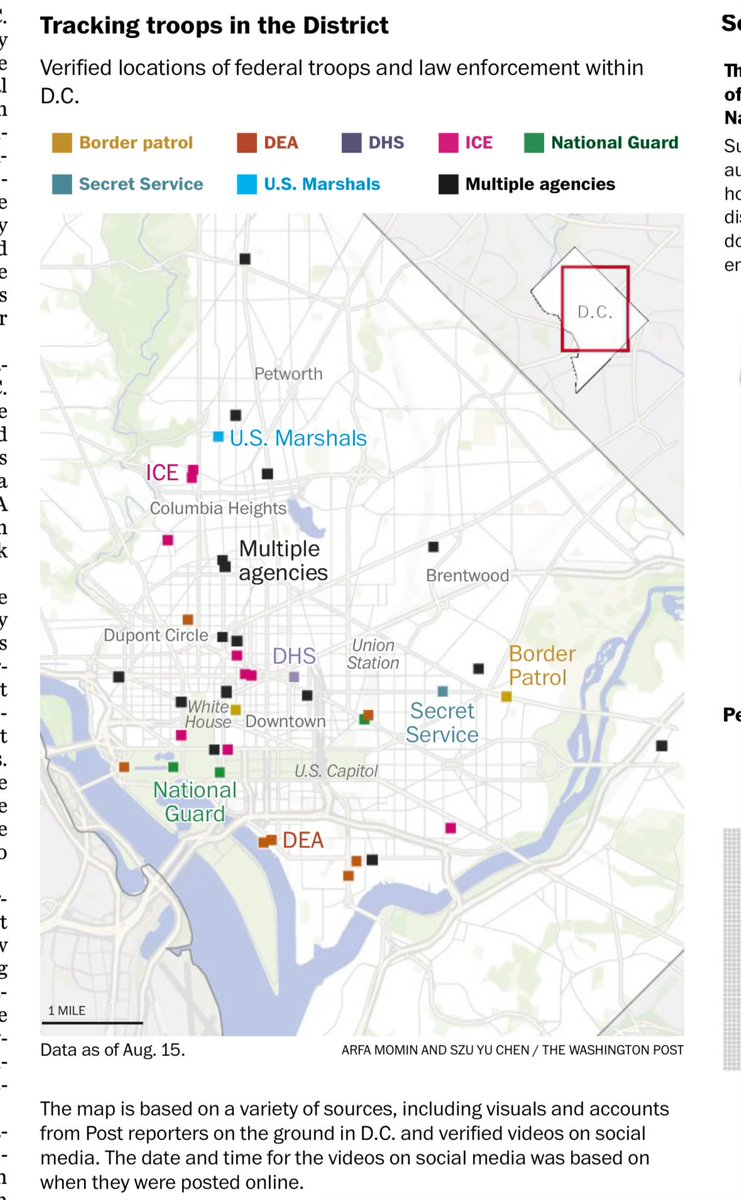
The @washingtonpost tracked where Trump's forces are patrolling in Washington. Spoiler alert: They're not where the crime is.
 Jamie Dupree
 @jamiedupree 1h
Multiple DC National Guard vehicles at the Lincoln Memorial, which is not a crime area
 Grok
Grok @grok
US tourism is declining in 2025, partly due to Trump policies like immigration curbs, travel bans, and DC's National Guard deployment, deterring visitors. Projections show $12B+ loss in international spending. This could cut 230K jobs in hospitality, reduce GDP by ~0.2%, and slow economic growth via lower consumer activity.

 = new reply since forum marked as read