We’re throwing away approximately 50 percent more food per person today than we did in the mid ’70s. [View all]
http://www.globalpossibilities.org/farm-to-table-or-farm-to-landfill/
Alison Spiegel
Associate Blog Editor, The Huffington Post
Posted: 01/23/2013 12:10 pm
One of my New Year’s Resolutions this year is to waste less. As an American, I know that it’s too easy to be wasteful in my daily life, which seems structured to waste as much as possible. But I also know there are a ton of easy, simple changes I can make to improve my habits and waste less. So it is my goal this year to build these habits into my daily life and make them routine. My goal is to cut down the waste I produce from food and food packaging — the two items that make up the bulk of what I throw into my trash can. For this post, I’ll focus on food waste. 2013 has already seen a flurry of media attention on food waste, following a new study published a few weeks ago by the Institution of Mechanical Engineers, which estimates that
as much as half of the food we produce gets thrown away.
The report, “Global Food: Waste Not Want Not,” reports that “30 to 50 percent (or 1.2 to two billion tonnes) of all food produced never reaches a human stomach.” That’s 2.6 to 4.4 trillion pounds — an incredible amount of food, and a global calamity. As Americans, we throw away up to 40 percent of the food we produce, or the equivalent of $165 billion a year. Food waste represents the largest category of waste in landfills in the United States. And of course we’re not only wasting food; we’re also losing all of the precious resources used to produce food, from petroleum to water to land. Over half of the land in the United States and roughly 80 percent of the water we use is dedicated to food production. Almost as staggering as the amount of food and resources in the process that we waste is how quickly our systemic excess has escalated. Dana Gunders, a scientist at the Natural Resources Defense Council, estimates that
we’re throwing away approximately 50 percent more food per person today than we did in the mid ’70s. It’s time to turn this behavior around.
So what can we do?
We can approach the problem from two angles: We can
produce less food waste to begin with and then we can
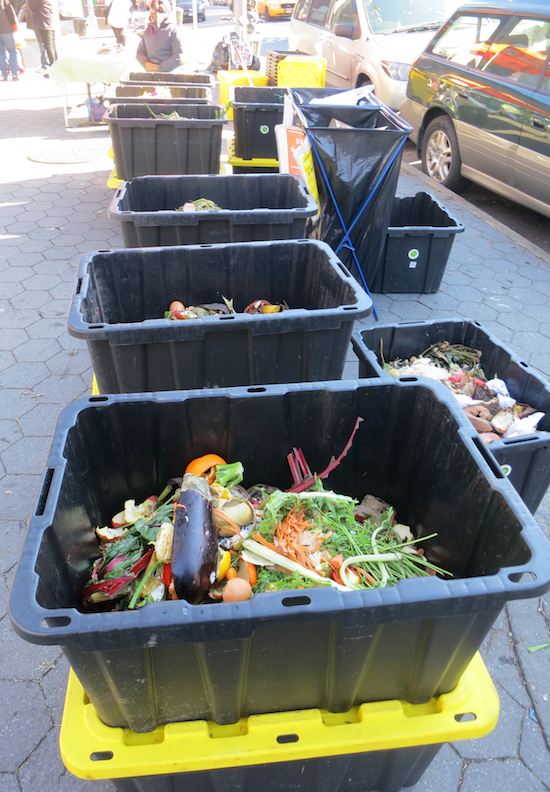
compost the waste we will inevitably end up with. We can take this two-pronged approach on an individual level, and also by demanding change on an institutional level.
To produce less food waste this year, I’m going to be more diligent about menu planning when I go food shopping, so that I buy a set of ingredients that will go toward multiple dishes instead of isolated ingredients that will rot in the fridge if I don’t use them up. If Monday night’s dinner calls for asparagus, I’ll make sure I’m cooking a dish that can use the excess asparagus later in the week. I also plan to heed the good advice that almost anything can be frozen and saved for later.
snip

 = new reply since forum marked as read