General Discussion
In reply to the discussion: There really is no defense of the extra-judicial killings. There just isn't. [View all]triplepoint
(431 posts)Last edited Thu Feb 7, 2013, 07:34 AM - Edit history (4)
--The same result as when Germany sent V1 "Buzz Bombs" into England...except the V1 wasn't as accurate and didn't return from its mission. Our drones are teleoperated/actively guided (human-in-the-loop "radio controlled" while the V1 was autonomous, with a simple autopilot. That's the only control difference that I have noticed about them thus far. If one now realizes that the modern armed drone aircraft is actively human-controlled, then it is virtually human piloted, and achieves results similar or slightly worse than what a human-borne attack aircraft achieves.
.
.
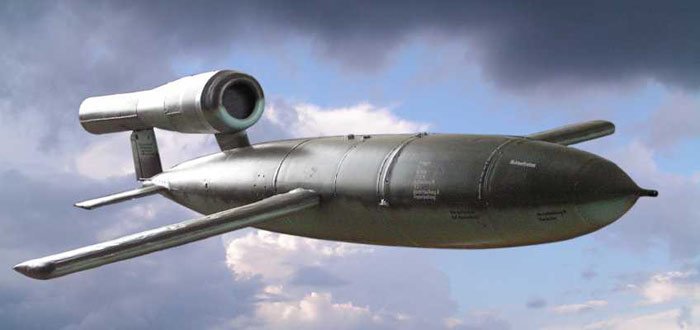
V-1 Buzz Bomb (ancestor of the Cruise Missile)
.
.
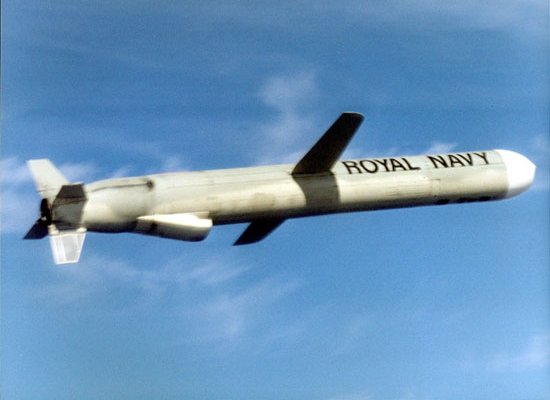
Tomahawk Cruise Missile
.
.

Predator Drone
.
..

F-20 Tigershark
.
.
So, this is not much different than what organized crime engages in when it seeks to eliminate its enemies....except of course that the Mafia does it while on the ground. Under international Law, this is very likely illegal. The UN should and I hope it does conclude as much. So, what recourse do they have after that? Do UN member countries sign off on arrest warrants for those who ordered up these assassinations? What about the collateral damage these assassination missions cause? What an effective anti-American sentiment recruiting tool these drone attacks continue to be. Is this the new face of U.S. Hegemony in the World? Is this the "Big Stick" that the late President Teddy Roosevelt said we should carry while walking softly?
Some background info on The V-1 Buzz Bomb
The V-1 was developed at Peenemünde Airfield by the German Luftwaffe during the Second World War. During initial development it was known by the codename "Cherry Stone". The first of the so-called Vergeltungswaffen series designed for terror bombing of London, the V-1 was fired from "ski" launch sites along the French (Pas-de-Calais) and Dutch coasts. The first V-1 was launched at London on 13 June 1944, one week after (and prompted by) the successful Allied landing in Europe. At its peak, more than one hundred V-1s a day were fired at southeast England, 9,521 in total, decreasing in number as sites were overrun until October 1944, when the last V-1 site in range of Britain was overrun by Allied forces. This caused the remaining V-1s to be directed at the port of Antwerp and other targets in Belgium, with 2,448 V-1s being launched. The attacks stopped when the last site was overrun on 29 March 1945. In total, the V-1 attacks caused 22,892 casualties (almost entirely civilians).
V-1 missile or flying bomb or buzz bomb
German missile of World War II. The forerunner of modern cruise missiles, it was about 25 ft (8 m) long and had a wingspan of about 18 ft (5.5 m). It was launched from catapult ramps or sometimes from aircraft; it carried an explosive warhead of almost 1,900 lbs (850 kg) and had an average range of 150 mi (240 km). More than 8,000 V-1s were launched against London in 1944–45, and a smaller number against Belgium. The V-1 guidance system used a simple autopilot to regulate height and speed. A weighted pendulum system provided fore-and-aft attitude measurement to control pitch (damped by a gyrocompass, which it also stabilized). There was a more sophisticated interaction between yaw, roll, and other sensors: a gyrocompass (set by swinging in a hangar before launch) gave feedback to control each of pitch and roll, but it was angled away from the horizontal so that controlling these degrees of freedom interacted: the gyroscope stayed trued up by feedback from the magnetic field, and from the fore and aft pendulum. This interaction meant that rudder control was enough without a separate banking mechanism. A countdown timer driven by a vane anemometer on the nose determined when target range had been reached, accurately enough for area bombing. Before launch the counter was set to a value that would reach zero upon arrival at the target in the prevailing wind conditions. As the missile flew, the airflow turned the propeller and every 30 rotations of the propeller counted down one number on the counter. This counter triggered the arming of the warhead after about 60 km (38 miles). When the count reached zero, two detonating bolts were fired. Two spoilers on the elevator were released, the linkage between the elevator and servo was jammed and a guillotine device cut off the control hoses to the rudder servo, setting the rudder in neutral. These actions led the V-1 into a steep dive. While this was originally intended to be a power dive, in practice the dive caused the fuel flow to cease, which stopped the engine. The sudden silence after the buzzing alerted listeners that the V-1 would impact soon. The fuel problem was quickly fixed and by the time the last V-1 fell, the majority had impacted under full power. Almost 30,000 V-1s were made. Approximately 10,000 were fired at England; 2,419 reached London, killing about 6,184 people and injuring 17,981. The greatest density of hits were received by Croydon, on the SE fringe of London.
.
.
Reference Links:
https://en.wikipedia.org/wiki/V-1_flying_bomb
http://www.reference.com/browse/buzz-bomb
Edit history
Recommendations
0 members have recommended this reply (displayed in chronological order): = new reply since forum marked as read
Highlight:
NoneDon't highlight anything
5 newestHighlight 5 most recent replies
RecommendedHighlight replies with 5 or more recommendations
= new reply since forum marked as read
Highlight:
NoneDon't highlight anything
5 newestHighlight 5 most recent replies
RecommendedHighlight replies with 5 or more recommendations