Welcome to DU!
The truly grassroots left-of-center political community where regular people, not algorithms, drive the discussions and set the standards.
Join the community:
Create a free account
Support DU (and get rid of ads!):
Become a Star Member
Latest Breaking News
Editorials & Other Articles
General Discussion
The DU Lounge
All Forums
Issue Forums
Culture Forums
Alliance Forums
Region Forums
Support Forums
Help & Search
General Discussion
In reply to the discussion: What America will look like once global warming melts the polar ice caps [View all]
Uncle Joe
(65,588 posts)89. Methane traps 34 more times heat than carbon dioxide and methane's lifespan isn't fixed but subject
to the amount of oxygen in the atmosphere.
As deforestation continues less oxygen will be produced.
http://en.wikipedia.org/wiki/Atmospheric_methane
Atmospheric methane is the methane present in Earth's atmosphere. Atmospheric methane levels are of interest due to methane's impact on climate change, as it is one of the most potent greenhouse gases on Earth. The 100-year global warming potential of methane is 34,[1] i.e. over a 100-year period, it traps 34 times more heat per mass unit than carbon dioxide and 32 times the effect when accounted for aerosol interactions.[2]
(snip)
Early in the Earth's history—about 3.5 billion years ago—there was 1,000 times as much methane in the atmosphere as there is now. The earliest methane was released into the atmosphere by volcanic activity. During this time, Earth's earliest life appeared. These first, ancient bacteria added to the methane concentration by converting hydrogen and carbon dioxide into methane and water. Oxygen did not become a major part of the atmosphere until photosynthetic organisms evolved later in Earth's history. With no oxygen, methane stayed in the atmosphere longer and at higher concentrations than it does today.
(snip)
Methane in the Earth's atmosphere is an important greenhouse gas with a global warming potential of 34 over a 100-year period. This means that a methane emission will have 34 times the impact on temperature of a carbon dioxide emission of the same mass over the following 100 years. Methane has a large effect for a brief period (a net lifetime of 12.4 years in the atmosphere), whereas carbon dioxide has a small effect for a long period (over 100 years). Because of this difference in effect and time period, the global warming potential of methane over a 20 year time period is 86. The Earth's methane concentration has increased by about 150% since 1750, and it accounts for 20% of the total radiative forcing from all of the long-lived and globally mixed greenhouse gases.[4] Usually, excess methane from landfills and other natural producers of methane are burned so CO2 is released into the atmosphere instead of methane because methane is such a more effective greenhouse gas. Recently methane emitted from coal mines has been successfully converted to electricity.
(snip)
Although records of permafrost are limited, recent years (1999 to 2007) have seen record thawing of permafrost in Alaska and Siberia. Recent measurements in Siberia show that the methane released is five times greater than previously estimated.[15] Melting yedoma, a type of permafrost, is a significant source of atmospheric methane (about 4 Tg of CH4 per year).
Possible adverse effects projected as the gas escapes into the atmosphere from the Arctic permafrost are estimated to have the potential of a sixty trillion dollar impact on the world economy.[16]
As for large quantities of methane being released, it's already beginning and will accelerate as global temperatures rise.
http://en.wikipedia.org/wiki/Arctic_methane_release
The Arctic region is one of the many natural sources of the greenhouse gas methane.[1] Global warming accelerates its release, due to both release of methane from existing stores, and from methanogenesis in rotting biomass.[2] Large quantities of methane are stored in the Arctic in natural gas deposits, permafrost, and as submarine clathrates. Permafrost and clathrates degrade on warming, thus large releases of methane from these sources may arise as a result of global warming.[3][4] Other sources of methane include submarine taliks, river transport, ice complex retreat, submarine permafrost and decaying gas hydrate deposits.[5]
(snip)
In 2008 the United States Department of Energy National Laboratory system[14] identified potential clathrate destabilization in the Arctic as one the most serious scenarios for abrupt climate change, which have been singled out for priority research. The U.S. Climate Change Science Program released a report in late December 2008 estimating the gravity of the risk of clathrate destabilization, alongside three other credible abrupt climate change scenarios.[15]
Sea ice loss is correlated with warming of Northern latitudes. This has melting effects on permafrost, both in the sea,[16] and on land.[17] Lawrence et al. suggest that current rapid melting of the sea ice may induce a rapid melting of arctic permafrost.[17][18] This has consequential effects on methane release,[3] and wildlife.[17] Some studies imply a direct link, as they predict cold air passing over ice is replaced by warm air passing over the sea. This warm air carries heat to the permafrost around the Arctic, and melts it.[17] This permafrost then releases huge quantities of methane.[19] Methane release can be gaseous, but is also transported in solution by rivers.[5] NewScientist states that "Since existing models do not include feedback effects such as the heat generated by decomposition, the permafrost could melt far faster than generally thought."[20]
There is another possible mechanism for rapid methane release. As the Arctic ocean becomes more and more ice free, the ocean absorbs more of the incident energy from the sun. The Arctic ocean becomes warmer than the former ice cover and much more water vapour enters the air. At times when the adjacent land is colder than the sea, this causes rising air above the sea and an off-shore wind as air over the land comes in to replace the rising air over the sea. As the air rises, the dew point is reached and clouds form, releasing latent heat and further reinforcing the buoyancy of the air over the ocean. All this results in air being drawn from the south across the tundra rather than the present situation of cold air flowing toward the south from the cold sinking air over the Arctic ocean. The extra heat being drawn from the south further accelerates the warming of the permafrost and the Arctic ocean with increased release of methane.[citation needed]
When the other tipping points which you didn't address are taken in to account along with major spikes in methane release, that being more heat absorbing dark land mass and ocean surface area particulary close to Antarctica, Eastern Antarctica will start behaving more as Western Antarctica.
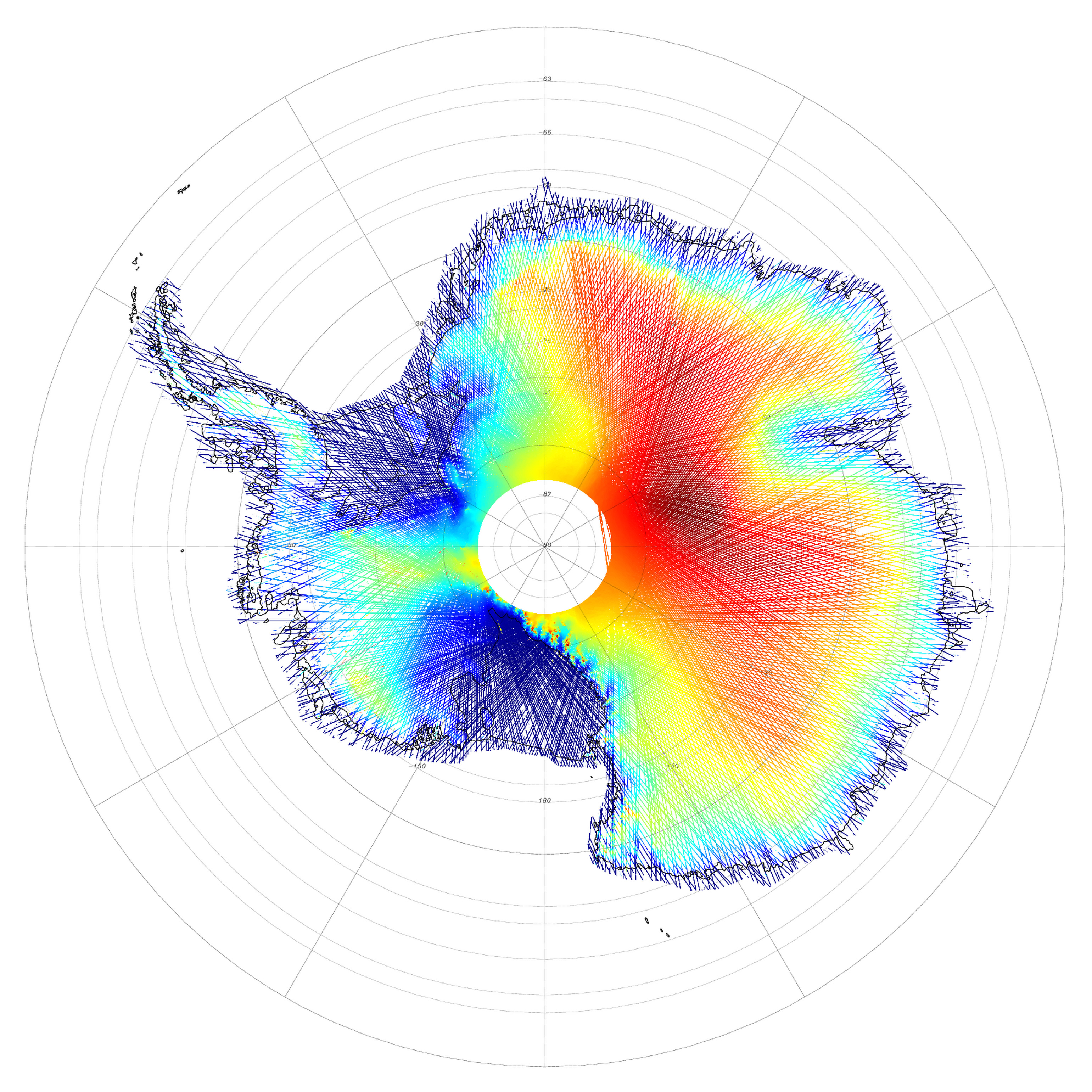
Of course all of Eastern Antarctica doesn't even have to melt to facilitate global catastrophe in regards global warming's impact to human civilization.
Edit history
Please sign in to view edit histories.
Recommendations
0 members have recommended this reply (displayed in chronological order):
89 replies
 = new reply since forum marked as read
Highlight:
NoneDon't highlight anything
5 newestHighlight 5 most recent replies
RecommendedHighlight replies with 5 or more recommendations
= new reply since forum marked as read
Highlight:
NoneDon't highlight anything
5 newestHighlight 5 most recent replies
RecommendedHighlight replies with 5 or more recommendations
= new reply since forum marked as read
Highlight:
NoneDon't highlight anything
5 newestHighlight 5 most recent replies
RecommendedHighlight replies with 5 or more recommendations
What America will look like once global warming melts the polar ice caps [View all]
kpete
Nov 2013
OP
I tell people we will have beach front property (in Raleigh) as snarky joke - but looking at the map
NRaleighLiberal
Nov 2013
#1
Florida, New York City, Boston, D.C., and New Orleans all on the bottom of the sea
davidn3600
Nov 2013
#2
Most waterfront buildings weren't here in 1900. No reason to believe they'll be here in 2110.
FarCenter
Nov 2013
#44
Yes and the same corporations that ripped us off getting into this situation will....
Theyletmeeatcake2
Nov 2013
#82
Your post doesn't take methane in to account along with other feedbacks and tipping points,ie:
Uncle Joe
Nov 2013
#62
Most ice is in the East Antarctic; methane has a short lifetime in the atmosphere
FarCenter
Nov 2013
#83
Methane traps 34 more times heat than carbon dioxide and methane's lifespan isn't fixed but subject
Uncle Joe
Nov 2013
#89
Cool beans. With a little bit of dredging I could build a marina in lower forty
Brother Buzz
Nov 2013
#27