Welcome to DU!
The truly grassroots left-of-center political community where regular people, not algorithms, drive the discussions and set the standards.
Join the community:
Create a free account
Support DU (and get rid of ads!):
Become a Star Member
Latest Breaking News
Editorials & Other Articles
General Discussion
The DU Lounge
All Forums
Issue Forums
Culture Forums
Alliance Forums
Region Forums
Support Forums
Help & Search
General Discussion
Showing Original Post only (View all)
Obamacare: It's Obama's signature achievement [View all]
Let’s begin with the meme threatening that healthcare reform will lead to a serious decline in full-time employment as employers reduce workforce hours to below 30 per week in the effort to avoid their responsibility to provide health benefits to their employees.
It turns out that there has, in fact, been no such rush to reduce work hours. Indeed, numbers released last week reveal that precisely the opposite is taking place.
According to the Bureau of Labor Statistics (BLS), the number of part-time workers in the United States has fallen by 300,000 since March of 2010 when the Affordable Care Act was passed into law. What’s more, in the past year alone—the time period in which the nation was approaching the start date for Obamacare—full-time employment grew by over 2 million while part-time employment declined by 230,000.
And it gets even more interesting.
It turns out that there has, in fact, been no such rush to reduce work hours. Indeed, numbers released last week reveal that precisely the opposite is taking place.
According to the Bureau of Labor Statistics (BLS), the number of part-time workers in the United States has fallen by 300,000 since March of 2010 when the Affordable Care Act was passed into law. What’s more, in the past year alone—the time period in which the nation was approaching the start date for Obamacare—full-time employment grew by over 2 million while part-time employment declined by 230,000.
And it gets even more interesting.
http://www.dailykos.com/story/2014/03/18/1285643/-Every-Democrat-who-wants-to-win-should-memorize-Rick-Ungar-s-piece-on-the-FACTS-about-Obamacare
Under Obamacare, Disney World Will Promote Its Part-Time Workers To Full-Time Status
http://www.democraticunderground.com/10023767654
STUDY: Average Obamacare Plans Are Cheaper Than Employer-Sponsored Ones
http://www.democraticunderground.com/10024415004
CBO: Guys, We Didn't Say Obamacare Would Cost 2.5 Million Jobs
http://www.democraticunderground.com/1014723823
Obamacare boosting household income and spending
http://www.democraticunderground.com/10024606074
The heatlh care law also raised the payroll tax for high income earners and taxed investment income.
Net Investment Income Tax
A new Net Investment Income Tax goes into effect starting in 2013. The 3.8 percent Net Investment Income Tax applies to individuals, estates and trusts that have certain investment income above certain threshold amounts. The IRS and the Treasury Department have issued proposed regulations on the Net Investment Income Tax. Comments may be submitted electronically, by mail or hand delivered to the IRS. For additional information on the Net Investment Income Tax, see our questions and answers.
Additional Medicare Tax
A new Additional Medicare Tax goes into effect starting in 2013. The 0.9 percent Additional Medicare Tax applies to an individual’s wages, Railroad Retirement Tax Act compensation, and self-employment income that exceeds a threshold amount based on the individual’s filing status. The threshold amounts are $250,000 for married taxpayers who file jointly, $125,000 for married taxpayers who file separately, and $200,000 for all other taxpayers. An employer is responsible for withholding the Additional Medicare Tax from wages or compensation it pays to an employee in excess of $200,000 in a calendar year. The IRS and the Department of the Treasury have issued proposed regulations on the Additional Medicare Tax. Comments may be submitted electronically, by mail or hand delivered to the IRS. For additional information on the Additional Medicare Tax, see our questions and answers.
http://www.irs.gov/uac/Affordable-Care-Act-Tax-Provisions
A new Net Investment Income Tax goes into effect starting in 2013. The 3.8 percent Net Investment Income Tax applies to individuals, estates and trusts that have certain investment income above certain threshold amounts. The IRS and the Treasury Department have issued proposed regulations on the Net Investment Income Tax. Comments may be submitted electronically, by mail or hand delivered to the IRS. For additional information on the Net Investment Income Tax, see our questions and answers.
Additional Medicare Tax
A new Additional Medicare Tax goes into effect starting in 2013. The 0.9 percent Additional Medicare Tax applies to an individual’s wages, Railroad Retirement Tax Act compensation, and self-employment income that exceeds a threshold amount based on the individual’s filing status. The threshold amounts are $250,000 for married taxpayers who file jointly, $125,000 for married taxpayers who file separately, and $200,000 for all other taxpayers. An employer is responsible for withholding the Additional Medicare Tax from wages or compensation it pays to an employee in excess of $200,000 in a calendar year. The IRS and the Department of the Treasury have issued proposed regulations on the Additional Medicare Tax. Comments may be submitted electronically, by mail or hand delivered to the IRS. For additional information on the Additional Medicare Tax, see our questions and answers.
http://www.irs.gov/uac/Affordable-Care-Act-Tax-Provisions
Health Insurers Will Be Charged to Use New Exchanges
http://www.nytimes.com/2012/12/01/health/health-insurers-will-be-charged-to-use-new-exchanges.html
Obamacare also improved the Medicaid drug rebate program, which is one of the best.
Medicaid Drug Rebate Program
<...>
The Medicaid Drug Rebate Program is a partnership between CMS, State Medicaid Agencies, and participating drug manufacturers that helps to offset the Federal and State costs of most outpatient prescription drugs dispensed to Medicaid patients. Approximately 600 drug manufacturers currently participate in this program. All fifty States and the District of Columbia cover prescription drugs under the Medicaid Drug Rebate Program, which is authorized by Section 1927 of the Social Security Act.
The program requires a drug manufacturer to enter into, and have in effect, a national rebate agreement with the Secretary of the Department of Health and Human Services (HHS) in exchange for State Medicaid coverage of most of the manufacturer’s drugs. When a manufacturers markets a new drug and electronically lists it with the FDA, they must also submit the drug to the Drug Data Reporting (DDR) system. This ensures that states are aware of the newly marketed drug. In addition, Section II(g) of the Rebate Agreement explains that labelers are responsible for notifying states of a new drug’s coverage. Labelers are required to report all covered outpatient drugs under their labeler code to the Medicaid Drug Rebate Program. They may not be selective in reporting their NDC's to the program. Manufacturers are then responsible for paying a rebate on those drugs each time that they are dispensed to Medicaid patients. These rebates are paid by drug manufacturers on a quarterly basis and are shared between the States and the Federal government to offset the overall cost of prescription drugs under the Medicaid Program.
http://www.medicaid.gov/Medicaid-CHIP-Program-Information/By-Topics/Benefits/Prescription-Drugs/Medicaid-Drug-Rebate-Program.html
<...>
The Medicaid Drug Rebate Program is a partnership between CMS, State Medicaid Agencies, and participating drug manufacturers that helps to offset the Federal and State costs of most outpatient prescription drugs dispensed to Medicaid patients. Approximately 600 drug manufacturers currently participate in this program. All fifty States and the District of Columbia cover prescription drugs under the Medicaid Drug Rebate Program, which is authorized by Section 1927 of the Social Security Act.
The program requires a drug manufacturer to enter into, and have in effect, a national rebate agreement with the Secretary of the Department of Health and Human Services (HHS) in exchange for State Medicaid coverage of most of the manufacturer’s drugs. When a manufacturers markets a new drug and electronically lists it with the FDA, they must also submit the drug to the Drug Data Reporting (DDR) system. This ensures that states are aware of the newly marketed drug. In addition, Section II(g) of the Rebate Agreement explains that labelers are responsible for notifying states of a new drug’s coverage. Labelers are required to report all covered outpatient drugs under their labeler code to the Medicaid Drug Rebate Program. They may not be selective in reporting their NDC's to the program. Manufacturers are then responsible for paying a rebate on those drugs each time that they are dispensed to Medicaid patients. These rebates are paid by drug manufacturers on a quarterly basis and are shared between the States and the Federal government to offset the overall cost of prescription drugs under the Medicaid Program.
http://www.medicaid.gov/Medicaid-CHIP-Program-Information/By-Topics/Benefits/Prescription-Drugs/Medicaid-Drug-Rebate-Program.html
The ACA increased the Medicaid rebate percentage.
http://www.medicaid.gov/AffordableCareAct/Timeline/Timeline.html
Issue Brief - Medicare Drug Negotiation and Rebates
<...>
Best Price. A third argument is that it makes sense for Medicare to receive the best price available for prescription drugs, just like Medicaid and the VA. In Medicaid, the drug manufacturer provides the federal government discounts for drugs, which are shared with the states. The discount is either the minimum drug amount or an amount based on the best price paid by private drug purchasers, whichever is less. Current law requires drug companies to charge Medicaid 23 percent less than the average price they receive for the sale of a drug to retail pharmacies. Drug companies also must provide another discount if a drug’s price rises faster than the rate of inflation (Thomas and Pear, 2013)...Medicaid rebates, if applied to Part D, would save the federal government money. According to a 2011 study conducted by the Office of the Inspector General (OIG) for the U.S. Department of Health and Human Services, Medicaid rebates were three times greater than the discounts negotiated by Part D for 100 brand name drugs. In 68 of these drugs, Medicaid rebates were twice as high as rebates granted by the drug companies for Medicare drugs (OIG HHS, 2011; Hulsey, 2013). Similarly, a 2008 study of drug pricing information by the U.S. House Committee on Oversight and Government Reform found that Part D paid, on average, 30 percent more for drugs than Medicaid (Hulsey, 2013).
- more -
http://www.ncpssm.org/PublicPolicy/Medicare/Documents/ArticleID/1138/Issue-Brief-Medicare-Drug-Negotiation-and-Rebates
<...>
Best Price. A third argument is that it makes sense for Medicare to receive the best price available for prescription drugs, just like Medicaid and the VA. In Medicaid, the drug manufacturer provides the federal government discounts for drugs, which are shared with the states. The discount is either the minimum drug amount or an amount based on the best price paid by private drug purchasers, whichever is less. Current law requires drug companies to charge Medicaid 23 percent less than the average price they receive for the sale of a drug to retail pharmacies. Drug companies also must provide another discount if a drug’s price rises faster than the rate of inflation (Thomas and Pear, 2013)...Medicaid rebates, if applied to Part D, would save the federal government money. According to a 2011 study conducted by the Office of the Inspector General (OIG) for the U.S. Department of Health and Human Services, Medicaid rebates were three times greater than the discounts negotiated by Part D for 100 brand name drugs. In 68 of these drugs, Medicaid rebates were twice as high as rebates granted by the drug companies for Medicare drugs (OIG HHS, 2011; Hulsey, 2013). Similarly, a 2008 study of drug pricing information by the U.S. House Committee on Oversight and Government Reform found that Part D paid, on average, 30 percent more for drugs than Medicaid (Hulsey, 2013).
- more -
http://www.ncpssm.org/PublicPolicy/Medicare/Documents/ArticleID/1138/Issue-Brief-Medicare-Drug-Negotiation-and-Rebates
Medicare Improvements
The ACA contains several important improvements to the Medicare program, many of which are already helping seniors today.
1) Closing the donut hole
2) Improving senior’s access to preventive medical services
<...>
Medicaid Long Term Services and Supports Improvements
Several provisions in the ACA will make it easier for seniors to get long‐term services and supports at home and in the community. Medicaid provides funding for long‐term care services in institutions, such as nursing homes and in the community. Seniors prefer to receive care in their homes, and it is generally less expensive, however, most states spend their Medicaid primarily on institutional care. The ACA includes incentives to encourage states to shift Medicaid spending from institutions to the community, so that individuals who require long‐term care services may receive care in least‐restrictive environment. These incentives are not directly impacted by the Court’s decision to limit the Medicaid expansion. Elements of the ACA that enhance home and community long‐term care include:
- more -
http://www.ncpssm.org/Portals/0/pdf/aca-analysis.pdf
The ACA contains several important improvements to the Medicare program, many of which are already helping seniors today.
1) Closing the donut hole
a. Medicare Part D covers the cost of medications up to a certain point. Between that point, and a catastrophic coverage threshold, the older adult must pay out of pocket for medication (this gap in coverage is often called the Part D “donut hole”). One in four beneficiaries fall in this gap, and end up paying an average of $3,610 out of pocket on drug expenses.
b. The ACA requires drug manufacturers to reduce prices for Medicare enrollees in the donut hole. Beginning in 2011, brand‐name drug manufacturers must provide a 50% discount on brand‐name and biologic drugs for Part D enrollees in the donut hole. By 2013, Medicare will begin to provide an additional discount on brand‐name and biologic drugs for enrollees in the donut hole. By 2020, Part D enrollees will be responsible for only 25% of donut hole drug costs.
c. This is a benefit seniors are getting now, and will continue to get as a result of this decision.
2) Improving senior’s access to preventive medical services
a. Prior to the ACA, Medicare beneficiaries were required to pay a deductible and 20% copay for many preventive health services.
b. The ACA eliminated cost‐sharing for many preventive services and introduced an annual wellness visit for beneficiaries.
c. The ACA also eliminated cost‐sharing for screening services, like mammograms, Pap smears, bone mass measurements, depression screening, diabetes screening, HIV screening and obesity screenings.
d. This is a benefit seniors are getting now, and will continue to get as a result of this decision.
<...>
Medicaid Long Term Services and Supports Improvements
Several provisions in the ACA will make it easier for seniors to get long‐term services and supports at home and in the community. Medicaid provides funding for long‐term care services in institutions, such as nursing homes and in the community. Seniors prefer to receive care in their homes, and it is generally less expensive, however, most states spend their Medicaid primarily on institutional care. The ACA includes incentives to encourage states to shift Medicaid spending from institutions to the community, so that individuals who require long‐term care services may receive care in least‐restrictive environment. These incentives are not directly impacted by the Court’s decision to limit the Medicaid expansion. Elements of the ACA that enhance home and community long‐term care include:
1) Community First Choice Option (CFCO) provides participating states with a six percentage point increase in federal Medicaid matching funds for providing community‐based attendant services and supports to individuals who would otherwise be confined to a nursing home or other institution.
2) Balancing Incentive Payment Program targets increased federal matching funds to states that spend less than half of their Medicaid long‐term care expenditures on community‐based care. This spring, six states received grants to improve their community‐based care.
3) Extending Medicaid’s spousal impoverishment protection provisions to spouses of individuals who seek long‐term care in the community. This rule goes into effect in 2014.
- more -
http://www.ncpssm.org/Portals/0/pdf/aca-analysis.pdf
Obamacare fulfilling promise to older Americans
http://www.dailykos.com/story/2014/02/18/1278514/-Obamacare-filling-promise-to-older-nbsp-Americans
How Obamacare Could Revolutionize Addiction Treatment
http://thinkprogress.org/health/2013/09/12/2609501/obamacare-revolutionize-addiction-services/
New Federal Rule Requires Insurers to Offer Mental Health Coverage
http://www.nytimes.com/2013/02/21/health/new-federal-rule-requires-insurers-to-offer-mental-health-coverage.html
Obamacare Insurance Must Now Cover Gay Spouses, Too
http://talkingpointsmemo.com/livewire/obamacare-gay-spouses
More Doctors, Hospitals Partner to Coordinate Care for People with Medicare
http://www.hhs.gov/news/press/2013pres/01/20130110a.html
Dental Services Are Coming Back For California's Low-Income Adults
http://www.democraticunderground.com/10024538225
Multi-State Plan Program and the New Health Insurance Marketplace
http://www.opm.gov/healthcare-insurance/multi-state-plan-program/#url=Factsheet
New Loan Program Helps Create Customer-Driven Non-Profit Health Insurers
http://www.cms.gov/CCIIO/Resources/Grants/new-loan-program.html
Obama just launched single-payer in America
http://www.democraticunderground.com/10024088437
Uh... we should be thanking *Bernie Sanders and Ron Wyden* for single payer in America.
http://www.democraticunderground.com/10024088636
Uninsurance Rate Falls To Five-Year Low As 3.3 Million Enroll In Obamacare
http://thinkprogress.org/health/2014/02/12/3284581/uninsurance-rate-year-obamacare-enrollments/
UPDATE: ACA Signups: Lots of Stuff Happened Today
http://www.democraticunderground.com/10024689326
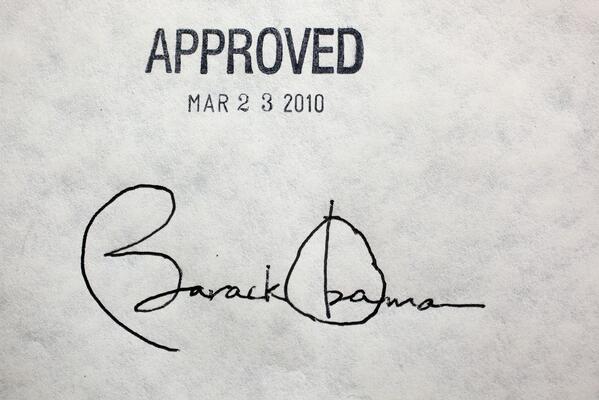
http://www.democraticunderground.com/10022853977
Thanks President Obama. Thanks for fighting harder than anyone else to benefit every American.
76 replies
 = new reply since forum marked as read
Highlight:
NoneDon't highlight anything
5 newestHighlight 5 most recent replies
= new reply since forum marked as read
Highlight:
NoneDon't highlight anything
5 newestHighlight 5 most recent replies
= new reply since forum marked as read
Highlight:
NoneDon't highlight anything
5 newestHighlight 5 most recent replies
I've been pointing that out too ... the same folks claiming the voters aren't excited ...
JoePhilly
Mar 2014
#7
If you are talking to a potential Dem voter ... what will you say about the ACA?
JoePhilly
Mar 2014
#16
I love your posts, ProSense. The links are good and always produce even more than expected.
mountain grammy
Mar 2014
#61