Welcome to DU!
The truly grassroots left-of-center political community where regular people, not algorithms, drive the discussions and set the standards.
Join the community:
Create a free account
Support DU (and get rid of ads!):
Become a Star Member
Latest Breaking News
Editorials & Other Articles
General Discussion
The DU Lounge
All Forums
Issue Forums
Culture Forums
Alliance Forums
Region Forums
Support Forums
Help & Search
General Discussion
Showing Original Post only (View all)
John Yoo of the "torture creative class" is not a happy camper right now. [View all]
Back in 2009 Katha Pollitt wrote an article at The Nation about how those who were the architects of the torture program were faring quite well for themselves. John Yoo was one of them.
Those of the "torture creative class" and how they got rewarded.
Yoo is only one of those who are mentioned, and of course there were Cheney, Wolfowitz, Rumsfeld, and Feith.
What I mean is, I should have been a member of the torture creative class--a conceptual torturer, a facilitator of torture, perhaps an inventor of torture law, an architect of the torture archipelago, a dissimulator, concealer, denier, rationalizer, minimizer and pooh-pooher of torture. As a word person, I could have come up with circumlocutions to confuse the media, bureaucratic phrases like "special methods of questioning" and "enhanced interrogation techniques." According to New York Times public editor Clark Hoyt, just figuring out whether to call a given action "harsh" or "brutal" has kept editors busy for years! Or I could have written copy for the CIA. For example, I could have suggested they call putting people in coffinlike boxes full of insects "studio picnics," because studio apartments are small and picnics have bugs, and I could have nicknamed waterboarding "drinking tea with Vice President Cheney," although come to think of it, waterboarding is a euphemism already. Maybe that's why people didn't catch on that it was the same thing we prosecuted Japanese interrogators for doing in World War II. In the Tokyo trials it was called "the water treatment," or "the water cure," or just plain "water torture." Calling it "water torture" was probably what got those Japanese into trouble. That, and losing the war.
Why should I have joined the torture creative class? Because now I would be having a great life.
She mentions Yoo.
John Yoo. In 2002, while working for the Office of Legal Counsel (OLC), Yoo wrote a crucial memo saying that terror suspects weren't covered by US commitments to treaties and agreements banning torture. Now Yoo is a tenured professor of law at Berkeley. Eat your heart out, Ward Churchill! And he isn't hiding away in his office, either. This semester Yoo's a visiting prof at Chapman University School of Law, where he spoke at a public forum and defended torture as necessary to protect the country. "Was it worth it?" he asked, according to the Los Angeles Times. For John Yoo, definitely.
This year UC Berkeley students, alumni and a group of lawyers are protesting John Yoo's faculty chair endowment.
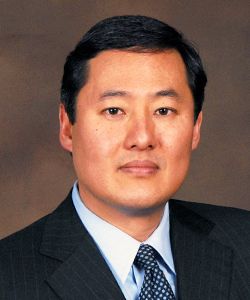
UC Berkeley students, alumni and a group of lawyers in the Bay Area initiated an online petition last week to rescind UC Berkeley School of Law professor John Yoo’s recent faculty chair endowment.
Spearheaded by the Bay Area chapter of the National Lawyers Guild, the petition was launched after Yoo was announced as a newly endowed faculty chair along with four other law professors in June. Yoo has been in the spotlight of controversy ever since he co-authored a series of memorandums, dubbed the “Torture Memos,” during the administration of former president George W. Bush.
Wikipedia has some of the Torture Memos.
This week John Yoo published an op ed in the New York Daily News about his opinion of the torture revelations.
A torture report for the dustbin
The release of a Senate report on Bush-era interrogation policies could have prompted an informed, responsible debate over intelligence and the war on terror. But not the report that saw the light of day Tuesday.
Because of fundamental mistakes made at its very birth, Sen. Dianne Feinstein’s accounting offers a dispiriting, partisan attack on American intelligence agencies at a time when we need them more than ever.
Bizarrely, Feinstein and her staffers refused even to interview the very CIA officials who ordered and carried out the program in question. Because Republicans saw where the train was headed, they refused to participate in the review.
The slanted approach to the investigation sadly colored its conclusions — which are questionable, to put it charitably.
Muckety has a flow chart.

A former editor of the Yale Law Journal and clerk to U.S. Supreme Court Justice Clarence Thomas, he is beloved by many on the right and mocked by many on the left.
He wrote the torture memos as a deputy assistant attorney general in the George W. Bush administration.
He has responded to the Senate report in a Time magazine post, saying that a president responding to terrorist attacks “must obtain intelligence as soon as possible to stop the next attack. Under these emergency conditions, a chief executive would reasonably give the green light to limited, but aggressive interrogation methods that did not cause any long-term or permanent injury. You might even approve waterboarding in the time of emergency.”
The Senate report found that torture was ineffective in unearthing information that could prevent future attacks, a finding disputed by former Vice President Dick Cheney and others in the Bush administration.
The interactive Muckety map above shows Yoo’s current and former connections.
In 2011 The Guardian UK summed up the problems this torture culture has caused for our country.
The reason why torture is universally prohibited in international and domestic law the world over, however, is not because it is ineffective or counterproductive (though it is). Torture has been universally prohibited because in the aftermath of the second world war, the nations of the world agreed, under the leadership of the United States, that respect for basic human dignity required the absolute prohibition of torture under any circumstance.
The acts of torture that John Yoo and other Bush administration officials so proudly defend are nothing less than war crimes that, in the absence of accountability, continue to undermine the United States' claim to respect the rule of law.
56 replies
 = new reply since forum marked as read
Highlight:
NoneDon't highlight anything
5 newestHighlight 5 most recent replies
= new reply since forum marked as read
Highlight:
NoneDon't highlight anything
5 newestHighlight 5 most recent replies
= new reply since forum marked as read
Highlight:
NoneDon't highlight anything
5 newestHighlight 5 most recent replies
John Yoo of the "torture creative class" is not a happy camper right now. [View all]
madfloridian
Dec 2014
OP
It's not like he has to worry about the administration prosecuting him. n/t
PoliticAverse
Dec 2014
#1
hey! you criminalize policy differences, and next thing you know the GOP will start being MEAN!
MisterP
Dec 2014
#8
Tonight one of the guests on MSNBC referred to Yoo as a "political hack," which ....
Hekate
Dec 2014
#10
Yes, what is his background?...Was there some recognizable path to his fascism?
whathehell
Dec 2014
#44
They should go after the foreign programs....particularly those in countries
msanthrope
Dec 2014
#19
I recommend that none of them leave the country. I suspect the international criminal court may not
OregonBlue
Dec 2014
#22
Yeah sure, the report was partisan, irresponsible, shameless, blah blah blah..
SomethingFishy
Dec 2014
#39